
A Ceasefire is Easy. Preventing the Next War is Hard.
The first serious test of the Iran–U.S. memorandum was never going to be the signing ceremony. The real test was always going to come the moment pressure returned. That moment arrived quickly. On June 22, senior officials from both sides completed an initial round of talks in Switzerland after a tense opening marked by renewed uncertainty over traffic through the Strait of Hormuz and fresh public threats from President Donald Trump.
Yet despite the atmosphere, mediators Qatar and Pakistan announced a 60-day roadmap toward a final agreement. That is the proper lens through which to view the memorandum. It is not a peace settlement. It is an effort to determine whether a military ceasefire can be transformed into a political framework capable of preventing the next escalation.
The document is more substantial than the phrase “memorandum of understanding” might suggest. Its 14 published points establish a sequence of immediate and interim measures: an end to military operations, the gradual lifting of the U.S. naval blockade on Iranian ports, Iran’s best-efforts commitment to restore commercial traffic through Hormuz without charge for 60 days, oil-export waivers, access to frozen funds, a freeze on new U.S. sanctions, and the creation of an executive mechanism to oversee implementation. The parties are also given up to 60 days to negotiate a final agreement. These are not symbolic provisions. They create concrete expectations and, if implemented, will carry significant economic and military consequences.
What the memorandum does not do is resolve the issues that made the war and the broader crisis so dangerous in the first place. Instead, it postpones the hardest questions: the future of uranium enrichment, the disposition and verification of enriched material, the timing and scope of sanctions relief, the deployment of military forces near Iran, and the regional conflicts linked to the agreement. The text affirms that Iran will not develop or acquire nuclear weapons and promises negotiations over a mechanism for managing the enriched-material stockpile under International Atomic Energy Agency supervision. Yet the core terms of that arrangement remain unsettled. The memorandum is not a grand bargain disguised as an interim deal. It is a deliberately sequenced agreement, designed to stabilize the most immediate military and economic pressures before attempting to tackle disputes that neither side could resolve while conflict was ongoing.
That sequencing begins with Hormuz for a reason. The strait is not merely another item in a diplomatic package. It is the pressure point that exposed the costs of continued conflict to the entire world at once. The memorandum links the restoration of commercial shipping to the easing of the U.S. blockade while establishing a timetable that allows technical and military obstacles to be addressed. This is a form of reciprocal restraint. Washington gains a pathway back to predictable maritime traffic. Tehran receives relief from restrictions that have constrained its economic room for maneuver. Neither side is required to publicly abandon its broader position before receiving something tangible in return.
The same logic underpins the temporary nuclear status quo. During the interim period, Iran is expected to maintain the current state of its nuclear program, while the United States is expected to refrain from imposing new sanctions or deploying additional military forces in the region. That is not a solution to the nuclear dispute. Rather, it is an attempt to prevent either side from changing the facts on the ground while negotiations continue. In diplomacy, that distinction matters. Negotiations rarely survive when one party believes the other is using talks merely as cover for strengthening its position through new coercive measures. The interim freeze is intended to reduce that temptation, even if it cannot eliminate it entirely.
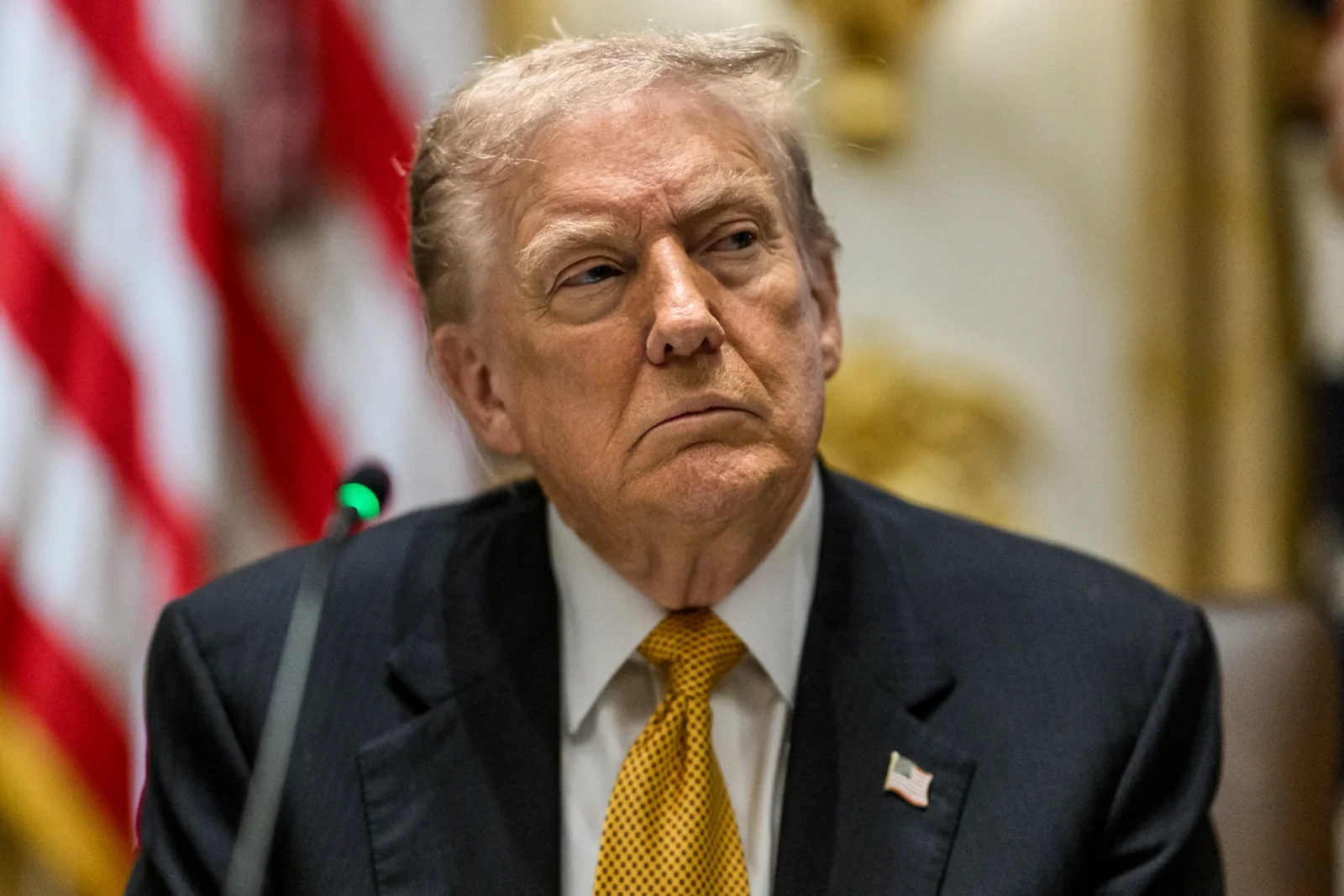
Critics nevertheless have a serious case to make. They will argue that the memorandum grants Iran economic breathing room and diplomatic legitimacy before it has accepted durable nuclear restrictions, while leaving Washington vulnerable to another round of coercion centered on Hormuz. They will also point out that the language of the agreement is ambitious while its enforcement mechanisms remain uncertain. President Trump himself described the framework as nonfinal and publicly threatened renewed bombing if Tehran did not “behave,” a statement that sits uneasily alongside the memorandum’s pledge to refrain from the threat or use of force. These concerns are not peripheral. They go directly to the document’s central weakness. A ceasefire cannot become fully credible when both sides continue to speak as though war remains the default method of enforcement.
Still, the alternative to an imperfect interim framework is not a perfect comprehensive agreement waiting just beyond the horizon. More likely, it is a return to the cycle that has already imposed costs on Iranian civilians, U.S. forces, Gulf economies, shipping companies, and the wider region. The memorandum’s value lies in whether it can make escalation less automatic. For that to happen, the executive mechanism cannot become a ceremonial committee. It must evolve into a functioning channel capable of addressing incidents at sea, disputes over oil waivers and financial transfers, alleged ceasefire violations, and the inevitable political shocks that will accompany negotiations over enrichment and sanctions.
The provision concerning Lebanon makes that challenge even more difficult. The memorandum treats the cessation of fighting “on all fronts” as part of the same framework, meaning that regional actors can influence the fate of what is ostensibly a bilateral U.S.–Iran process. Recent reporting has already demonstrated how violence in Lebanon and disagreements over compliance can weigh heavily on negotiations. That reality should dispel any illusion that Washington and Tehran can isolate their diplomacy from the broader region. A political ceasefire must be more than a promise not to fire directly at one another. It requires channels capable of preventing an incident in Lebanon, the Gulf, or the airspace around Iran from becoming the spark for a wider conflict.
The test over the next two months is therefore practical rather than rhetorical. Do commercial vessels move through Hormuz with increasing confidence? Do the promised waivers, financial transfers, and reductions in maritime restrictions begin to function as intended? Do technical discussions produce a credible pathway on the nuclear file rather than simply another extension? And when one side alleges a violation, is there a functioning process capable of containing the dispute before it spills onto television screens, into oil markets, and onto the desks of military planners? Those indicators matter far more than declarations of victory issued in Tehran or Washington.
The memorandum’s most significant contribution may be its refusal, however temporary, to demand total victory from either side. It acknowledges a basic reality of the conflict: the United States can wield enormous military force without necessarily producing a stable political outcome, while Iran can impose substantial regional costs without escaping the limits of its economic and military position. Any sustainable arrangement will require both governments to accept that pressure alone cannot secure all of their objectives. The memorandum will fail if it becomes little more than a pause for rearmament and renewed threats. But if it succeeds in creating habits of restraint, verifiable interim measures, and a credible pathway toward resolving the nuclear and sanctions disputes, it could become the bridge between a ceasefire that merely pauses a war and one that begins to prevent the next one.