Why the West Keeps Losing the Balkans
Europe’s strategic map has been redrawn by Russia’s war in Ukraine, China’s rise, and the widening split between Western democracies and Eurasian authoritarianisms. Nowhere is that shift more visible, and more volatile, than in the Balkans, long a crossroads where larger powers collide and project influence. Serbia, oscillating between its EU ambitions and a traditional alignment with Moscow, has become a junction where competing interests intersect and intensify.
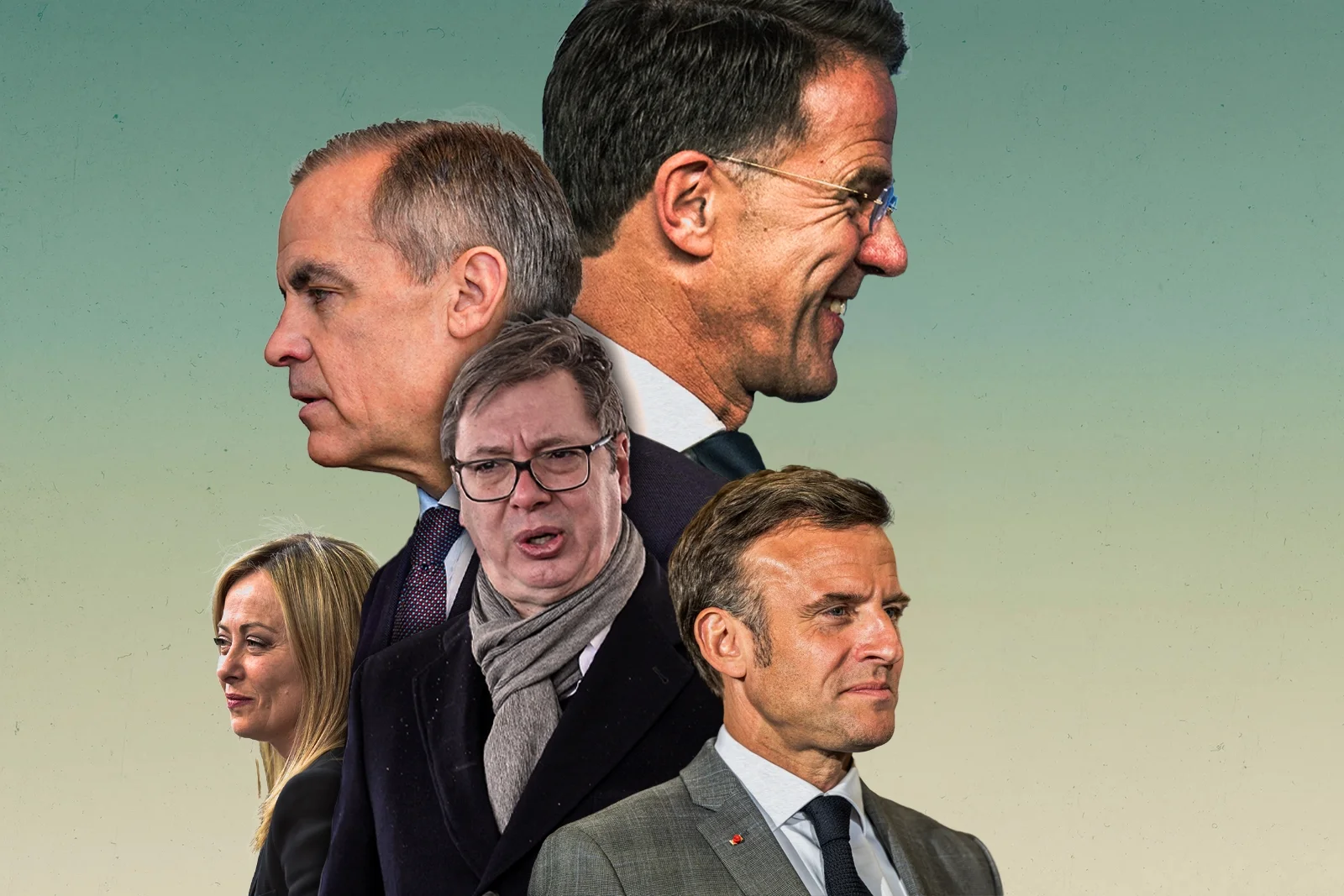
Berlin views Serbia as a potential supplier of lithium, a critical mineral for the energy transition. At the same time, Paris sees an opportunity to deepen its footprint through the sale of Rafale fighter jets. These national pursuits may be defensible on narrow geoeconomic grounds. Yet they sit uneasily with a broader Western objective: constraining Russian and Chinese leverage across the region and shoring up a coherent Euro-Atlantic approach to the Balkans.
At the heart of today’s contest, in broad strokes, are two poles—Russia and the West—even as intra-European competition complicates the picture. NATO and the EU seek stability, faster integration, and a firmer perimeter against Kremlin influence. Russia, isolated in the West after invading Ukraine, has treated Serbia as its principal conduit in Southeast Europe. Through media networks, cultural and religious ties, and vocal support on the question of Kosovo, Moscow helps to keep a permanent source of tension alive. The result has been a theater of hybrid pressure: political destabilization, election meddling, and the instrumentalization of minority issues that keep institutions on edge and reform on hold.
Layered atop this is a quiet rivalry within the EU itself. Germany stresses political stability and energy/mineral security, lithium above all, while France has emphasized military and industrial influence, as with the Rafale package. Too often, these vectors are poorly harmonized with common EU policy, creating gaps that Belgrade exploits with tactical agility. What emerges is a dissonant Western message and an enlarged space for transactional politics.
Serbia’s own doctrine has evolved amid this shifting order. Since Russia’s seizure of Crimea in 2014, Belgrade has floated the need to re-examine its strategic posture in light of long-standing expansionist currents in the region and new global alignments. The full-scale Russian invasion of Ukraine in February 2022, and the sharpening confrontation between the West and a looser Russo-Chinese axis, accelerated that reassessment. Middle powers and peripheral states have leaned into “balancing,” diversifying their partnerships to preserve maneuvering room. In this schema, the Balkans is sometimes cast as a buffer between the EU/NATO and Russia, an image Serbia has been happy to encourage, positioning itself as a pivotal actor that can profit from tension while avoiding final choices.
But Serbia is neither Turkey nor Britain, and the costume of a regional swing state fits awkwardly. Belgrade appeared to calculate that courting Berlin with lithium and Paris with Rafales would soften Europe’s stance on red-line issues, accepting de facto control of northern Kosovo, tolerating the entrenchment of Republika Srpska, and widening Serbia’s influence in Montenegro and North Macedonia. Europe, for its part, tried to believe that sweetening the pot would pry Serbia from Moscow’s orbit. The wager worked only partially. As time passes, it looks less like a win-win and more like a bargain that risks rewarding hedging behavior without securing alignment.
Belgrade describes its course as “active neutrality.” On paper, Serbia is an EU candidate and a major beneficiary of EU development funds. In practice, it maintains intimate political, security, and cultural ties with Russia, seen domestically as the historic patron of Serbian interests in Kosovo. Meanwhile, China has become a strategic partner, financing infrastructure, acquiring industrial assets, and helping to digitize surveillance and logistics systems under the Belt and Road umbrella. The upshot is a triangular dependence: Chinese capital, Russian energy, and European subsidies, an unstable equilibrium that geostrategists would label multiple dependence.
This triple entanglement gives Serbia room to maneuver, but it also invites pressure from all sides. NATO wants stabilization in the north of Kosovo, harmonization of security policy, and a durable de-escalation framework. The EU still sees Serbia as “the key to the Balkans,” the hinge on which meaningful regional integration turns. Russia treats Serbia as a fulcrum for propaganda and energy leverage; Moscow’s loud defense of the “Kosovo question” remains its most potent tether on Belgrade. Beijing, for its part, is methodically converting Serbia into a platform for expansion into Central and Southern Europe through roads, rail, ports, and green-energy ventures. The more Serbia zigzags to avoid a definitive choice, the more the costs of ambiguity mount.
Domestic politics have grown more brittle under this pressure. The past year has seen persistent mass protests, reflecting a society polarized between a nationalist “Serbian world” narrative, one that anchors identity and security thinking to Russia, and a constituency that favors a European future. The rhetoric of ethnic solidarity, amplified by disinformation ecosystems, keeps the electorate emotionally primed and politically cautious. The specter of serious internal unrest, while not preordained, no longer reads as far-fetched in a climate where illiberal consolidation and external meddling feed off each other.
All the while, the economics of energy transition have raised the stakes. The Jadar project, first developed by Rio Tinto, promises one of Europe’s largest deposits of lithium, a bottleneck mineral for batteries and the electrification push. For Germany’s auto industry, from Volkswagen to BMW and Mercedes, near-shore supply is a strategic hedge against dependency on China and other distant markets. That logic makes Serbia an attractive partner and tests whether geoeconomic imperatives can be reconciled with the EU’s long-term political and security goals in the Balkans.
From here, two broad scenarios dominate policymaker debate. In one scenario, Serbia is nudged by sanctions risk, market access incentives, and domestic fatigue toward genuine alignment with the EU. This constrains Russian sway and leads to a negotiated settlement that ends expansionist policies at the expense of Albanians, opening the door to real normalization with Kosovo. In the other, which many in the region view as likelier absent sustained Western focus, Belgrade leans into a Eurasian orientation, tightening bonds with Moscow and Beijing and consolidating its role as an eastern gateway for their ambitions. That road would bring creeping isolation from Brussels and recurrent regional crises. In such a scenario, North Macedonia once again finds itself as a frontier line, evoking earlier eras when external empires set the region’s outer limits.
The stakes reach beyond the Balkans. If the region integrates, it signals the vitality and gravitational pull of the West; if it remains hostage to Serbian-Russian-Chinese maneuvering, it will expose the EU’s vulnerabilities and strategic incoherence. The Balkans are not merely a chessboard on which others play; they are also players with agency. The choices of local elites, and the societies that empower them, will determine where the region ultimately anchors.
For Berlin and Paris, the lesson should be clear. Pursuing narrow geoeconomic wins in Serbia may look attractive quarter to quarter, but strategically, it proves counterproductive. It muddies the Western message, props up a regime structurally tied to Moscow, and telegraphs that Europe lacks a common line on the Balkans. A firmer, integrated policy—one that aligns industrial deals with rule-of-law benchmarks, conditions media freedom and electoral integrity, and takes concrete steps toward resolving the dispute with Kosovo —would reduce the space for hedging and restore credibility to the EU’s enlargement promise.
To date, Serbia has profited from ambiguity. The West has indulged it. Russia and China have exploited it. The longer that triangle persists, the more likely the region slips into managed instability: not open war, but chronic friction. Breaking that cycle will require Europe to think and act like a bloc in the Balkans, to match its minerals strategy with its security interests, and to insist that any partnership with Belgrade comes with clarity about the political future it is meant to build.