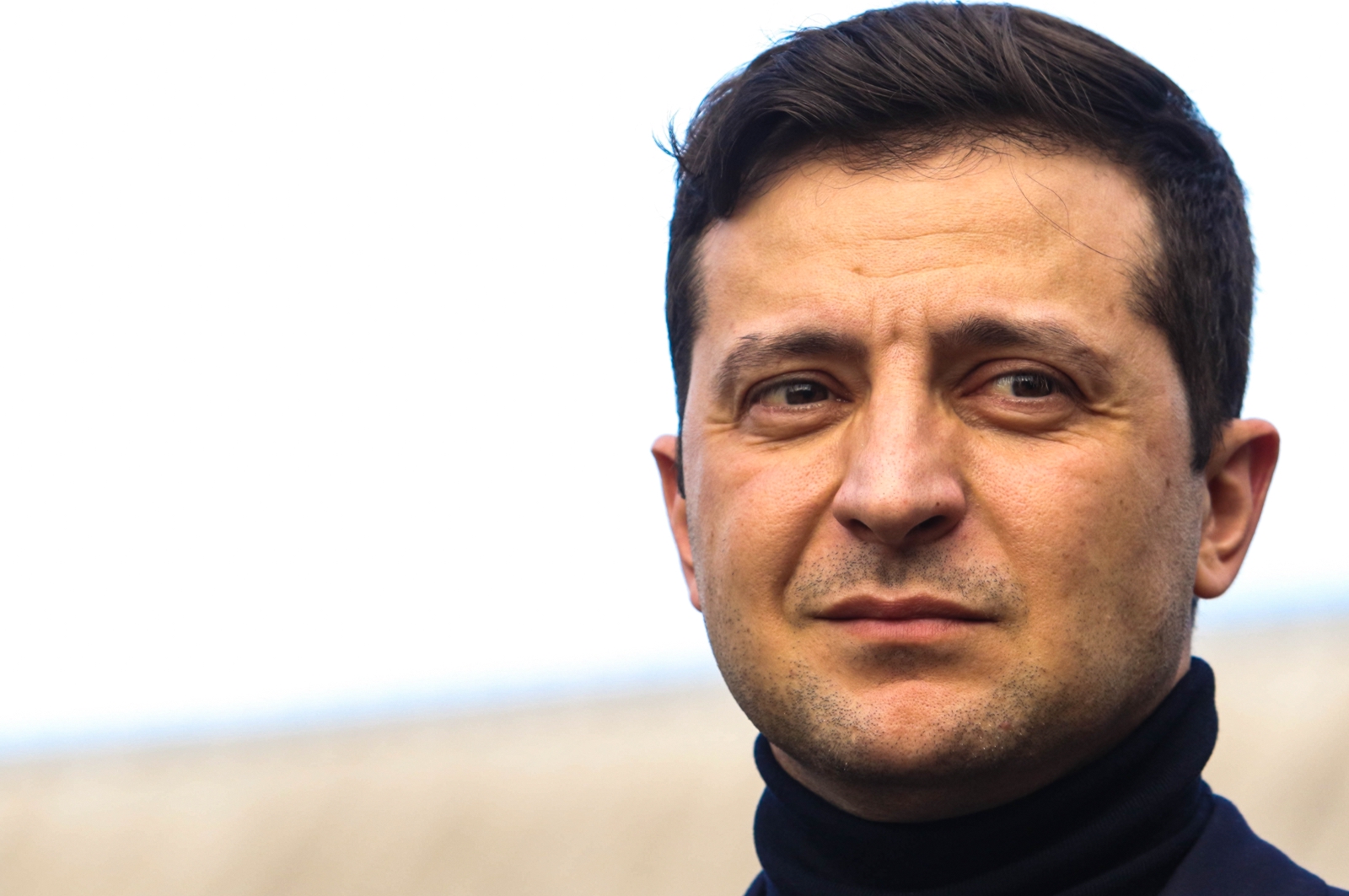
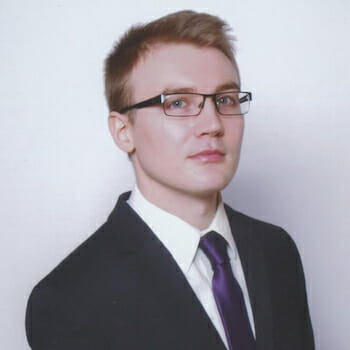
Mike Wilson on Teaching Ukraine to Shoot Back
Mike Wilson is a United States Marine Corps veteran, entrepreneur, and founder of the Association of Ukrainian Cowboys. Since Russia’s first invasion of Ukraine in 2014, he has devoted years to supporting Ukrainian service members through marksmanship training, veterans’ outreach, ministry, and community-building.
Best known in Kyiv for creating the Western Saloon—a gathering place that blends American frontier culture with wartime solidarity—Wilson has spent more than a decade helping Ukrainians prepare for the realities of war. In this interview with Scott Douglas Jacobsen, he reflects on the foreign policy decisions he believes shaped today’s geopolitical landscape, explains how Marine Corps marksmanship influenced his work with Ukrainian troops, and discusses why better battlefield training can save lives.
Scott Douglas Jacobsen: During a previous interview, Nobel Peace Prize laureate Oleksandra Matviichuk of the Center for Civil Liberties argued that we are not living in the world of Emmanuel Macron, Donald Trump, or Friedrich Merz, but in the world shaped by Barack Obama. She was speaking historically, suggesting that the consequences of major policy decisions often emerge years later. Do you see today’s geopolitical landscape in similar terms?
Mike Wilson: From my perspective, many of the trends began during the Clinton administration. I believe the United States accelerated the movement of manufacturing and industrial capacity overseas, particularly to China.
I see (Bill) Clinton as the first president who consistently apologized for America on the international stage. In my view, that trajectory continued under Obama and produced even greater economic and geopolitical consequences. I believe those policies contributed to economic pressures and to a period marked by numerous military interventions.
Jacobsen: The Obama administration also carried out significantly more drone strikes than the George W. Bush administration, yet that aspect of Obama’s foreign policy is rarely discussed today. Why do you think that is?
Wilson: Nobody talks about that.
Jacobsen: Obama also received the Nobel Peace Prize less than a year after taking office, before his presidency had produced any major foreign policy achievements. Looking back, how did you view that decision, and how did it compare with your own experience as a Marine trained during the Cold War?
Wilson: I thought it was a joke when I first heard that Obama had received the Peace Prize. I honestly assumed someone was kidding. Then I found out he had actually won it. To me, it made no sense to receive such an award before demonstrating any accomplishments.
As a Cold War-era Marine, I was trained for offensive and defensive operations against the Soviet Union. We were already conditioned to view the Soviet military as our principal adversary. Conflicts such as Afghanistan were understood as proxy battlegrounds between the United States and the Soviet Union, where both sides tested tactics and weapons through local conflicts.
When Russia occupied Crimea and intervened in the Donbas in 2014, it deeply angered me. Then I watched Ukrainian troops fighting with very limited training. Many simply raised their rifles, pulled the trigger, and hoped for the best, what we call “pray and spray.” Marines are trained differently. Every round has a purpose. Every shot is deliberate.
In my view, Russian and Soviet doctrine has historically emphasized overwhelming an opponent through mass rather than precision, accepting very high casualties to achieve objectives.
Jacobsen: Does that doctrine of prioritizing mass over precision help explain the tactics Russia continues to employ in Ukraine today, despite the enormous casualties?
Wilson: I believe so. Russia has sustained tremendous losses, but the mentality remains that more personnel can always be recruited or mobilized. They continue bringing in prisoners and anyone else they can find to replenish their ranks.
Jacobsen: The UN Independent International Commission of Inquiry on Ukraine recently documented coercive recruitment practices involving nationals from at least seventeen countries, with many recruits allegedly deceived into military service. Does that reinforce your view that Russia continues to rely on overwhelming manpower rather than battlefield effectiveness?
Wilson: It reflects the same philosophy of overwhelming an opponent with numbers. When I saw what was happening in 2014, my heart broke. I knew I wanted to do something.
I contacted the Ukrainian Marine Corps, which had relocated from Sevastopol to Mykolaiv after Russia’s occupation of Crimea. Many personnel remained in Crimea, while others chose to continue serving Ukraine. The force had been reduced to roughly 700 Marines.
In 2015, I began providing marksmanship training. They had not seen that style of instruction before and responded enthusiastically. I adapted a Marine Corps marksmanship manual, translated it into Ukrainian, and presented it as the foundation for my training syllabus. The military approved the program.
Unfortunately, government approval did not translate into implementation. Everyone agreed the training was needed, but no one followed through with the organizational support required to continue it. As a result, I could not build on the initial work.
I returned in 2019, though not for training purposes. Then, after the full-scale invasion in 2022, I came to Kyiv and began training Territorial Defense personnel.
There is only so much that can be accomplished in a classroom. Practical instruction is essential. Without live-fire ranges or adequate facilities, practical training was severely limited.
Simulators also have limitations. On a simulator, you place the red dot on the target, and the software assumes the bullet goes exactly there. In real life, if your sights are improperly zeroed, you can place the dot directly on a target and still miss every shot.
Many soldiers simply did not understand how their rifles were performing. There was little fire control or understanding of shot placement, and that contributed to unnecessary casualties because they could not reliably hit what they were aiming at.
When I first evaluated them, roughly 90 percent could not consistently hit the black portion of a target at 100 meters. By the end of my training, every one of them could, and their shot groups had tightened to where they needed to be.
Jacobsen: Thank you very much for the opportunity and your time, Mike.