Nobel Laureate Oleksandra Matviichuk: Why the World Cannot Ignore Ukraine
In moments of geopolitical upheaval, human rights lawyers often become reluctant historians of collapse. Few understand that reality more clearly than Oleksandra Matviichuk. As the head of Ukraine’s Center for Civil Liberties and a central figure in the Euromaidan SOS initiative, Matviichuk has spent more than a decade documenting abuses, defending political prisoners, and pressing international institutions to respond to Russian aggression. In 2022, the Center for Civil Liberties received the Nobel Peace Prize for its work promoting human rights and accountability, and Matviichuk delivered the Nobel lecture on the organization’s behalf.
For many observers outside Eastern Europe, the collapse of the post–Cold War order seemed sudden, a shock delivered by Russia’s full-scale invasion of Ukraine in 2022. For Ukrainians, Matviichuk argues, the unraveling began much earlier—with the annexation of Crimea in 2014 and the failure of international institutions to meaningfully enforce the principles they claimed to defend. The result, she says, is a world where legal norms are weakening, international bodies often perform rituals rather than solve crises, and authoritarian states are increasingly willing to test the limits of global indifference.
In this conversation, Matviichuk reflects on the erosion of the international legal order, the paralysis of institutions like the United Nations, and the profound human rights consequences of Russia’s occupation of Ukrainian territory. She also discusses the challenges of building a more representative global system, the dangers of short-term political thinking, and the moral responsibility of leaders—and citizens—in an era of rising authoritarianism. Ultimately, she returns to the human dimension of the conflict: torture, deportation, indoctrination, and the future of millions of children growing up under occupation.
For Matviichuk, the stakes are not abstract. They are measured in lives, dignity, and the fragile idea that international law should mean something.
Scott Douglas Jacobsen: In the United States, there have been increasingly visible efforts to restrict rights connected to belief, conscience, and religious freedom, pressures that appear to fall particularly heavily on those with no religious affiliation and on communities outside the country’s historically dominant Protestant traditions, including Muslims.
At the same time, we are seeing new limits placed on reproductive rights. Canada once faced comparable battles; there, the physician Henry Morgentaler became the central figure advancing abortion rights through the courts and public debate. Despite widespread public opposition to many of the current administration’s policies, there remains a determined push forward, with critics arguing that dissenting opinion is often disregarded. This raises a broader question: in a world rapidly moving away from the unipolar order of the past, and perhaps even beyond the bipolar structure that preceded it, what role should middle powers play in navigating this transitional moment in global politics?
Oleksandra Matviichuk: This year, world leaders understood that the world order has collapsed. We hear this from the Prime Minister of Canada in Davos. However, it is no surprise to Ukrainians. For us, the world order based on the UN Charter and international law collapsed 12 years ago, when Russia annexed Crimea. It was unprecedented in Europe after the Second World War, because we had not seen a situation in which one country annexed part of another. It ruined fundamental international principles such as the inviolability of state borders and respect for state sovereignty.
World leaders may have thought that the UN Charter was not working only for Ukraine. However, this year, everyone understood that it is a global story. The question is not only to regret that we lost something. The UN system was not ideal. It coped with global challenges more or less in the past. However, now it is stalling and reproducing ritualistic movements. The Security Council’s work is paralyzed. When the system was built, the victorious countries of the Second World War preserved special privileges for themselves. It is unfair that several countries are permanent members of the Security Council and can determine global decisions.
Even my smartphone has an expiration date. This system was created after the Second World War, and it has reached its limits. We do not need to speak much about it, except from a psychological perspective. Human life is short, and I will probably still see these ritualistic movements until the end of my life. The League of Nations existed until 1946, even though the Second World War had ended. So institutions persist even after their effectiveness has faded.
The main question we must discuss is how to create the future we want. The main struggle is about what the new world order will look like. Ukraine finds itself at the epicentre of events that will shape the world’s future. Last year, I am afraid that humanity made a significant step back into the past, where the world was governed not by the rule of law but by the will of the strongest. That past was not great. Being the strongest is always a process; you must constantly prove that you are at the top of the hierarchy. A world governed by the strongest, in which several countries dominate, is fragile. It is a world of wars and mass violence because their interests conflict, and proxy wars or other types of wars emerge.
Jacobsen: One important caveat about the League of Nations is that its collapse did not mark the end of the idea behind it. In many ways, the institution was reconstituted and adapted into the United Nations, which represented a substantial improvement on the earlier model. Today we seem to be living through another transitional moment in global politics, and historically these periods of geopolitical change tend to be painful for many of the people caught up in them. Taking the privileges you mentioned as an example—particularly the five permanent seats on the Security Council and the veto power those states exercise when it serves their interests—how might one imagine a system of international rules that more fully reflects the concerns of the global population while avoiding the entrenched privileges that currently define that structure?
Matviichuk: We have to answer many difficult questions, and there is no serious public discussion of them; there is only limited expert discussion. The first question is about representation. We call it the United Nations, but the majority of governments in the General Assembly do not represent their societies. They represent ruling elites who have captured power in their countries. So the first question is how to provide a genuine voice for nations.
The second question concerns the organization’s nature. We call the United Nations an international organization, but it is an inter-state organization. Each state promotes its own interests, which is natural. However, who will promote international interests, the interests of humanity? Who will think beyond national borders, not only to balance or dominate, but to build an architecture of peace and security that reflects shared global interests?
Third, I am not confident that a new world order will automatically be based on human rights and freedom. We are losing freedom globally. Around 80 percent of the world’s population lives in countries that are not fully free, according to major democracy indices. In authoritarian countries, the space of freedom is shrinking dramatically. In established democracies, people question the universality of human rights principles. Those who can provide serious, complex answers to these questions would deserve the highest recognition for their contribution to peace.
Jacobsen: I am hardly the first person to observe this, and it does not require a particularly brilliant analyst—certainly not one like me—to notice a pattern. Many of the prominent leaders contributing to instability in the international system, and in the process damaging livelihoods across borders, tend to be older men from established political generations.
Last summer, I spent three weeks in Iceland studying the country’s culture, and what I encountered there stood in striking contrast to that pattern. The president, the prime minister, and the head of the country’s main church are all women, and three of the four major political parties are also led by women. Even amid the turbulence currently shaping global politics, Iceland remains relatively quiet and functional. For years, it has ranked at or near the top of the World Economic Forum’s Global Gender Gap Index. Of course, there are always exceptions to broader trends. But looking at cases like Iceland, what kinds of leadership styles might women bring—particularly if representation were more equal internationally or within inter-state institutions—that could help reduce the scale or intensity of the crises we are now witnessing around the world?
Matviichuk: It is a modest requirement. Politicians must base their decisions on critical interests, but also on human rights. If you mortgage your future for immediate gain and think only about economic benefits, you may benefit in the short term, but you will face the consequences. In the long term, this leads to catastrophe. Russia is a clear example. For decades, Russian human rights defenders warned that a country that violates human rights poses a threat not only to its own citizens but also to international security and peace. Even well-developed democracies did not listen. They shook hands, did business as usual, and continued engagement.
Second, democracy is not an ideal form of government because it produces short-term thinking. Politicians who come to power focus on electoral cycles and immediate results to demonstrate to voters. In the global storm we are facing, we need leaders who think not only about elections but about history, who think long term. We are living with the consequences of decisions made years ago, including during the period when the occupation of Crimea began. When politicians focus only on the short term, they think that problems will vanish or become someone else’s responsibility after the next election. However, problems do not disappear; they become more serious. My second modest request is to consider the long-term perspective, not just the years in office.
Jacobsen: What about the unlawfully transferred children? The last verified figure I encountered was roughly 19,500. I assume the true total may now be even higher.
Matviichuk: Numbers are a problem. As human rights lawyers, we cannot independently verify or refute official numbers provided by the Ukrainian state, but we know that this is a systematic practice. That is why the International Criminal Court opened a case and issued arrest warrants against Vladimir Putin and Russia’s Commissioner for Children’s Rights in connection with the unlawful deportation of children. I am worried that we do not speak enough about children under Russian occupation. Approximately 1.6 million children live in territories under Russian occupation. Many of them are experiencing systematic erosion of their identity. They are restricted in the use of the Ukrainian language.
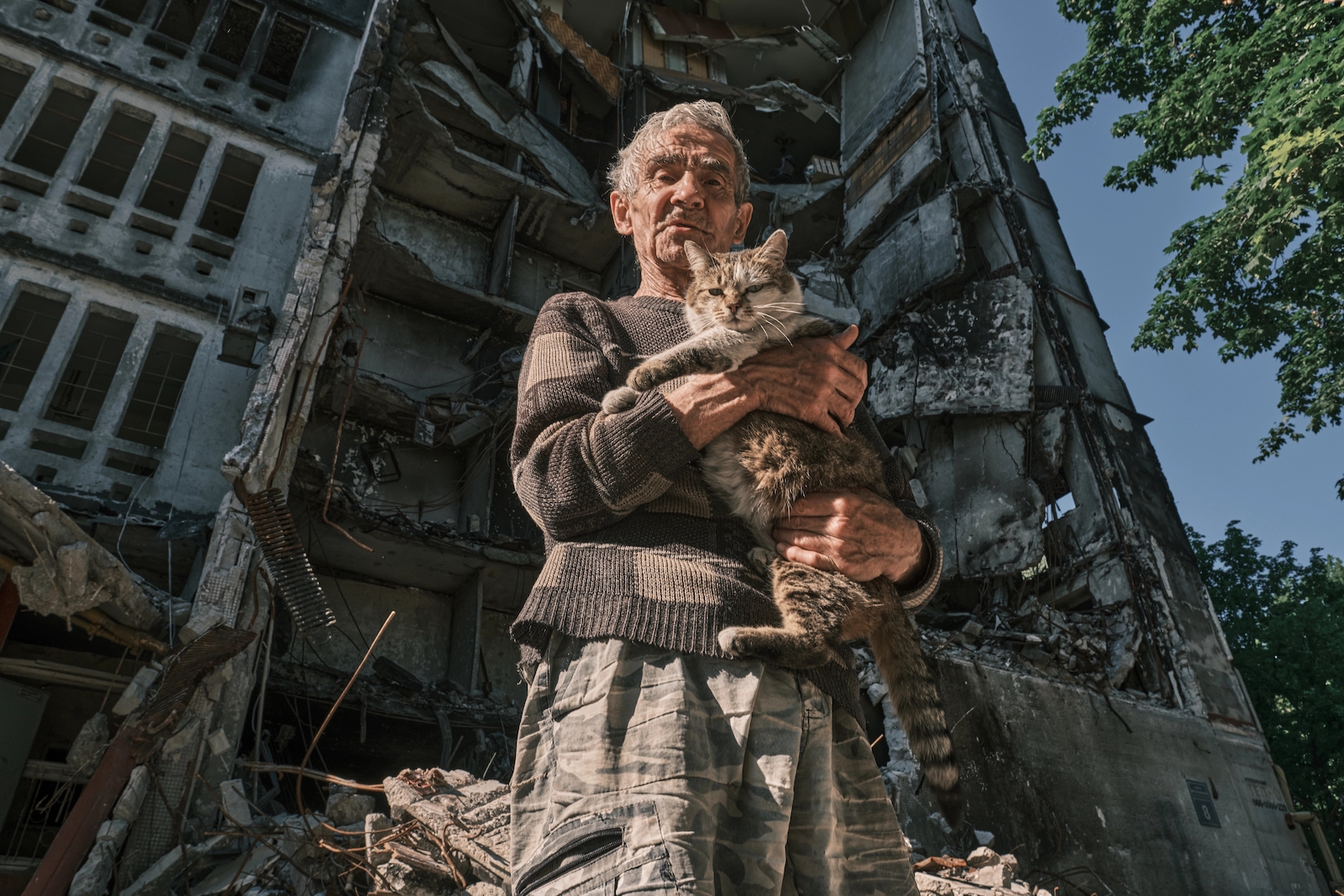
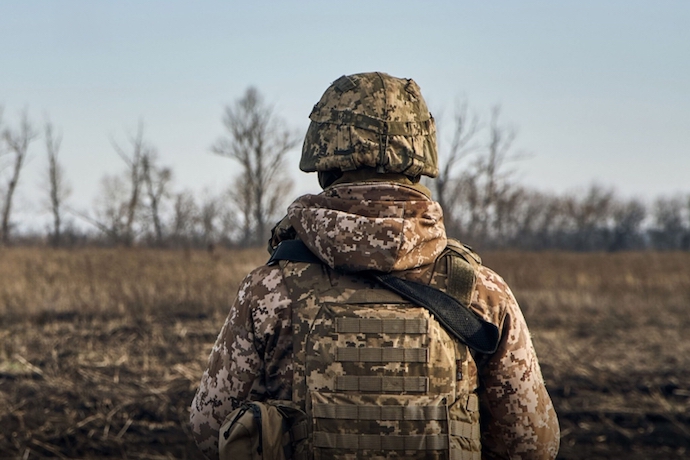
They live under pressure, knowing that if they say something considered disloyal, security services may come to their parents. They study from Russian textbooks that deny Ukraine’s sovereignty. Children who were older at the beginning of the occupation may retain a sense of dual reality, but very young children are vulnerable to indoctrination. In parallel, there is militarization, beginning in kindergarten and extending through multiple areas of society. In occupied territories, some children are sent to camps where they wear military uniforms, live in barracks, march, and receive weapons training. This is not only a human rights problem; it is also a security problem.
Militarization is attractive to children. You feel cool, you feel strong, you think you have a tool to dominate and to make things happen. However, it implants authoritarian thinking in the hearts and minds of children, because they start to believe that freedom and the will of others do not matter. What matters is your place in the hierarchy of violence.
Why is this not only a human rights problem? When these children turn 14, they receive Russian passports. At 18, they are subject to conscription into the Russian army. This means they can be sent to fight and die wherever Russia decides. When people speak about territories as if they are empty spaces and do not try to make life under Russian occupation more secure, these children grow up. They become adults, and the consequences of our passivity will come back to haunt us.
Jacobsen: What about the murder, injury, or torture of those who attempt to tell these stories? Organizations such as the Committee to Protect Journalists and other monitoring groups carefully document the killing of journalists in conflict zones. The figures I have seen suggest that something like 112 journalists have been killed during this period. These are, in many ways, war crimes committed against those whose role is to serve as cultural storytellers and witnesses to what is happening.
Matviichuk: The Institute of Mass Information maintains a list of Ukrainian media workers, journalists, photojournalists, and bloggers who have died in this war. There are cultural figures who have been tortured to death, some killed while serving in the Ukrainian armed forces, others killed by Russian shelling and drone strikes, such as the Ukrainian writer Victoriya Amelina. These lists are publicly available.
There are Ukrainian journalists held in Russian prisons. My specialization is Russian captivity. I have interviewed hundreds of people who survived detention. They described severe beatings, sexual violence, confinement in small boxes, electric shocks, and other forms of torture. Some detainees reported extreme physical abuse. People are dying in Russian prisons. That is why I am disappointed that we have lost the human dimension. Peace talks are a window of opportunity to solve urgent humanitarian problems. Even if peace cannot be achieved immediately, urgent humanitarian issues can be addressed. However, if these issues are not a priority for negotiators, there is little chance for progress.
Jacobsen: A footnote to all of this is that other major conflicts are unfolding at the same time, many of them producing severe humanitarian catastrophes. One example that receives far less attention in Western media is the war in Tigray, Ethiopia, from 2020 to 2022, where even conservative estimates suggest that several hundred thousand people were killed. When peace negotiations are used primarily as delaying tactics, valuable time and resources are lost—resources that could otherwise be directed not only toward urgent humanitarian needs in Ukraine but also toward crises elsewhere. Major powers, even while facing controversy at home, are still capable of exerting constructive influence in other conflicts.
Yet the reality is that international focus is limited. In practice, public attention and political bandwidth tend to concentrate on only one or two wars at any given moment.
Matviichuk: It is not a competition for attention. It is easy to predict that wars will emerge more frequently in different parts of the world. The international environment is unstable. The previous world order has weakened, and tensions exist everywhere. Some leaders may seek to benefit from this global instability.
Humanity has chosen not to solve problems but to postpone them. Problems can be suppressed for a time, but then they erupt with greater force. We see this in protracted conflicts, including in the Middle East, where unresolved tensions have persisted for decades and then escalated dramatically.
Jacobsen: I have interviewed feminist journalists and media owners working in extremely difficult environments, including Afghanistan, where conditions for women remain among the most restrictive in the world. Many of these women are practicing grassroots journalism rather than working within large institutional media organizations. Perhaps we can end on the human dimension of this issue. You are now a prominent voice in this field, but this was not where your career originally began. What first inspired you to become involved in this work?
Matviichuk: When I was a schoolgirl, I had the opportunity to meet Yevhen Sverstiuk, a Ukrainian philosopher, writer, and former Soviet political prisoner. He took an interest in me and introduced me to a circle of former Soviet dissidents. I found myself among people who said what they believed and did what they said. They stood against the Soviet totalitarian system. Many were repressed; some were killed, some imprisoned, some confined in psychiatric institutions. However, they did not give up. Growing up in that environment, I was inspired. I decided to study law and to continue the fight for freedom and human dignity.
Jacobsen: You have often spoken about the importance of long-term thinking and taking responsibility for the consequences of one’s actions. If an Eastern European teenage girl were to come across your story and begin considering a path into this kind of work, what message would you want her to hear?
Matviichuk: My message would be simple: be brave. We are not hostages of circumstances; we are participants in history. Dignity gives us the strength to act even in unbearable conditions. Be brave.
Jacobsen: Thank you very much for the opportunity and your time, Oleksandra.