
Vietnam’s Bamboo Diplomacy Is Becoming Strategic Autonomy
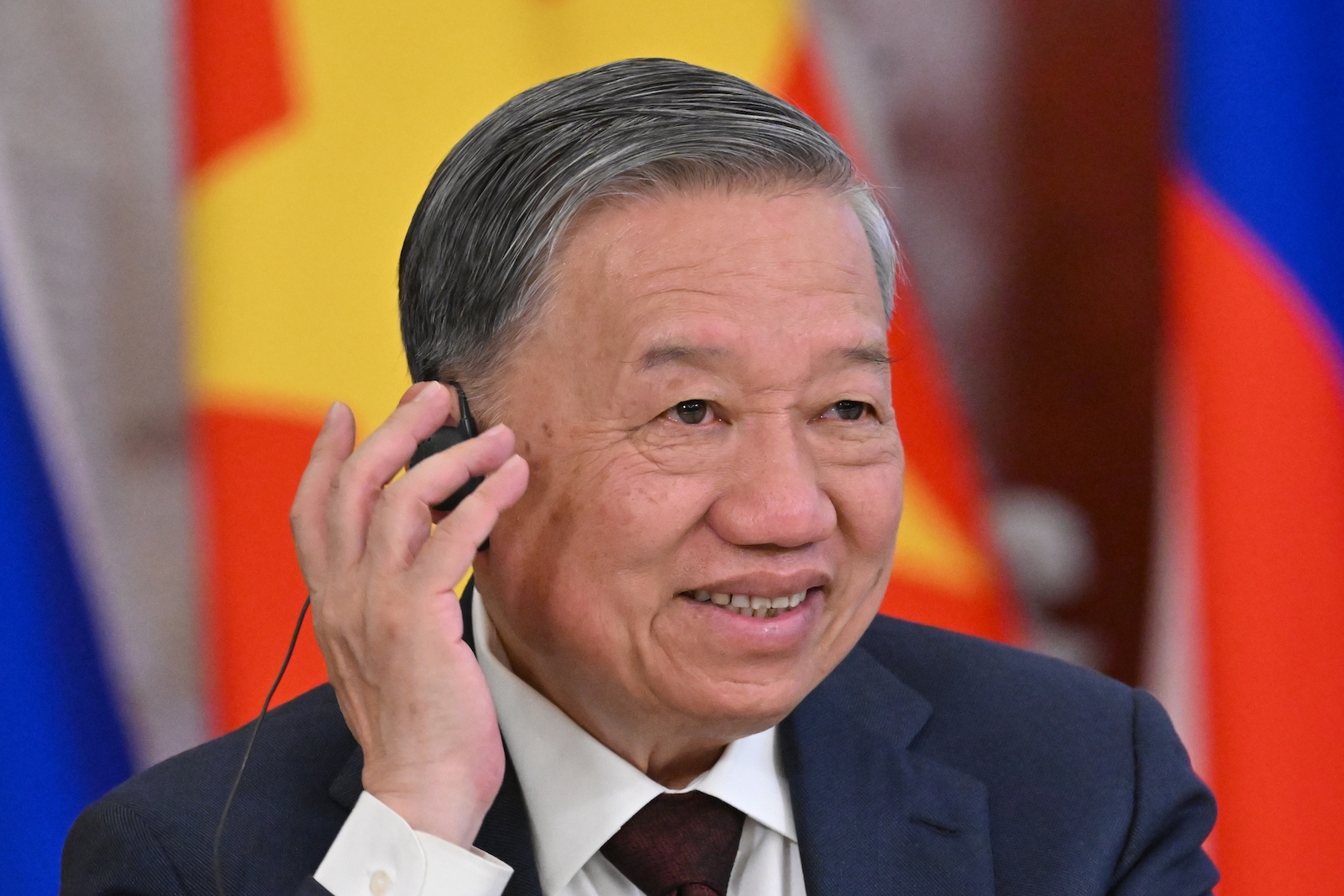
When Vietnam’s top leader, To Lam, steps to the podium in the cavernous hall of the United Nations General Assembly on September 22, his message will carry far beyond its 1,800 seats. Washington and Beijing should listen closely: Vietnam intends to work with both powers but depend on neither.
That message comes at a consequential moment. Strategic competition, protectionism, and unilateralism are straining the multilateral system. U.S.-China rivalry increasingly shapes economic and security decisions across the Indo-Pacific, while wars, climate change, and trade disputes test the institutions created to manage international cooperation.
For Vietnam, whose prosperity depends heavily on international trade and regional stability, this is not an abstract debate about world order. It is a question of national interest—and, increasingly, of how a middle power preserves its agency when larger powers expect allegiance.
For years, Hanoi’s foreign policy has been described as “bamboo diplomacy”: firmly rooted, yet flexible enough to bend with the geopolitical winds. The metaphor still works. But under To Lam, bamboo diplomacy is evolving into something more deliberate: strategic autonomy built through diversified interdependence.
Earlier this year, Lam used his keynote address at the Shangri-La Dialogue in Singapore to underscore Hanoi’s commitment to strategic autonomy as competition among major powers intensifies. Vietnam supports an open regional order centered on ASEAN, the peaceful settlement of disputes, and respect for international law. At the same time, it resists efforts to force Southeast Asian nations into competing blocs.
“The crisis of the international order shows that international law and self-restraint must be reinforced,” Lam said. He called for more inclusive and sustainable economic growth and greater “dialogue, transparency, responsibility, and more substantive mechanisms for cooperation.”
The language reflects Vietnam’s pragmatic foreign policy. Hanoi is seeking room to maneuver among China, the U.S., and other powers without binding itself too closely to any of them. Vietnam is not trying to remain neutral, nor is it attempting to maintain a mathematically precise distance from Washington and Beijing. It is building enough strong, varied relationships to preserve the freedom to make its own strategic choices.
That distinction matters to Washington. The U.S. and Vietnam elevated relations to a Comprehensive Strategic Partnership in 2023 and have since expanded cooperation in semiconductors, technology, supply chains, education, and maritime security. But partnership should not be confused with alliance.
Vietnam’s “Four No’s” defense policy rejects military alliances; siding with one country against another; foreign military bases or the use of Vietnamese territory against another country; and the use or threat of force in international relations. Those principles explain how Hanoi can deepen security cooperation with Washington without joining an anti-China coalition.
China makes that balancing act unavoidable. It is Vietnam’s largest trading partner, a critical source of industrial inputs, and its most consequential neighbor. The Communist parties of the two countries also maintain extensive political and institutional ties.
Yet China presents serious strategic challenges. Competing claims in the South China Sea generate persistent tensions, while the enormous disparity between Chinese and Vietnamese military and economic power is impossible for Hanoi to ignore. Vietnam therefore cannot afford confrontation with China. Nor can it afford excessive dependence on Beijing.
The same logic applies to the U.S. America is a critical market for Vietnamese exports and an increasingly important source of investment, technology, and strategic cooperation. But Hanoi has no desire to become an American ally or an anti-China proxy.
A stronger, more strategically autonomous Vietnam can advance U.S. interests without formally aligning with Washington. It can help diversify global supply chains, expand semiconductor production, strengthen maritime security, and sustain an Indo-Pacific in which international law matters and no single country dominates Southeast Asia. Vietnam may therefore be most useful to the U.S. precisely because it remains strategically autonomous.
That autonomy is inseparable from Hanoi’s commitment to multilateralism. Vietnam describes its foreign policy as independent and self-reliant while emphasizing peace, cooperation, development, and responsible international engagement. The United Nations and other multilateral institutions offer middle powers something particularly valuable: rules and forums that can restrain the arbitrary exercise of power.
The South China Sea shows why. Vietnam cannot compete with China ship for ship or dollar for dollar. International law, particularly the UN Convention on the Law of the Sea, gives Hanoi leverage that national power alone cannot provide.
Vietnam has also sought a larger role on issues ranging from peacekeeping and conflict resolution to sustainable development, poverty reduction, and climate change. Its pledge to achieve net-zero carbon emissions by 2050 reflects an effort to connect domestic development with broader international responsibilities.
But strategic autonomy cannot be secured through diplomacy alone. Vietnam remains deeply embedded in Chinese manufacturing supply chains, while its export economy depends on access to foreign markets. Its ambitions in semiconductors, artificial intelligence, and advanced manufacturing require outside investment, technology, and expertise. Maintaining freedom of action will therefore depend on Vietnam’s ability to strengthen its economy, technological capacity, workforce, and institutions. Strategic autonomy begins at home.
That principle also explains why Vietnam may increasingly serve as a bridge in a more multipolar world. Hanoi maintains close political and economic relations with China while expanding ties with the U.S. It preserves longstanding relations with Russia while building partnerships with Japan, South Korea, India, Australia, France, Canada, and others. These are not contradictory diplomatic tracks. Together, they are the strategy.
Vietnam is diversifying its interdependence. Other Southeast Asian countries face a similar dilemma. They want access to China’s enormous economy without accepting Chinese dominance. They want American investment and security engagement without being pressed into an anti-China bloc. And they need a functioning multilateral system in which smaller states retain agency.
Vietnam’s evolving bamboo diplomacy offers one possible model: not a rejection of great-power relationships, but an effort to prevent any single relationship from becoming overwhelming. It is an approach built less on distance than on options.
When To Lam speaks at the United Nations, he is likely to emphasize familiar Vietnamese themes: sovereignty, peace, development, international law, climate cooperation, and multilateralism. Behind those themes, however, lies a larger message about Vietnam’s place in a changing world.
Vietnam is not looking for a patron, nor is it preparing to choose between Washington and Beijing. It is seeking the strategic space to work with both—and with a widening circle of other partners—while protecting its national interests and pursuing development at home. In an era of renewed great-power rivalry, that may be Vietnam’s most consequential form of independence.