

Vietnam’s Bamboo Diplomacy Goes Global
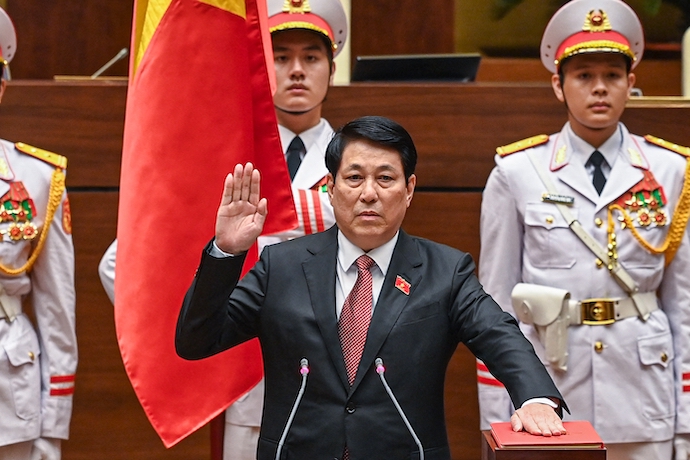
As Vietnam’s President Luong Cuong prepares to address the United Nations General Assembly on September 23, the moment carries weight far beyond ceremony. It arrives just weeks after the country marked its 80th National Day with vibrant, nationwide celebrations—a reminder not only of past struggle but of a remarkable transformation. Vietnam today offers a case study in how small and mid-sized nations can build global influence through steady, principled diplomacy rather than coercion or confrontation.
From the ashes of war to a respected seat at multilateral tables, Vietnam’s trajectory is one of resilience and reinvention. It is also a testament to the rising relevance of soft power in an era when brute-force diplomacy increasingly backfires.
President Cuong’s appearance at the UN is a timely affirmation of Vietnam’s commitment to multilateralism, the rule of law, and practical cooperation. In recent years, Hanoi has sharpened its profile as a responsible international actor, consistently advocating adherence to international law—particularly the UN Convention on the Law of the Sea (UNCLOS)—as the basis for settling disputes.

That stance is not theoretical. Vietnam sits on the front lines of South China Sea tensions, where its calls for legal order and restraint stand in contrast to the assertiveness of some neighbors. Rather than escalate, Hanoi has pursued quiet yet firm diplomacy—building coalitions, strengthening ties with major powers, and stating its positions in international forums without overstepping its bounds.
It is a delicate balancing act, one few states in similar circumstances have managed with such consistency. The approach is also codified at home: Resolution 59-NQ/TW on international integration in the “new context” emphasizes deep, proactive engagement rooted in respect for international law and multilateral institutions as the foundation for peace and development.
Vietnam’s rising profile within ASEAN has further highlighted this diplomatic maturity. In recent years, Hanoi has functioned as a stabilizing force inside the bloc, pressing for greater unity amid external pressure and urging a more proactive ASEAN on shared issues—from climate resilience to digital transformation.
Its 2020 ASEAN chairmanship was particularly well-regarded. Vietnam’s deft management of pandemic-era disruption, coupled with a renewed focus on regional cohesion, reinforced its reputation for inclusive, consensus-building leadership—earning credibility as a bridge-builder both within Southeast Asia and with partners beyond it.
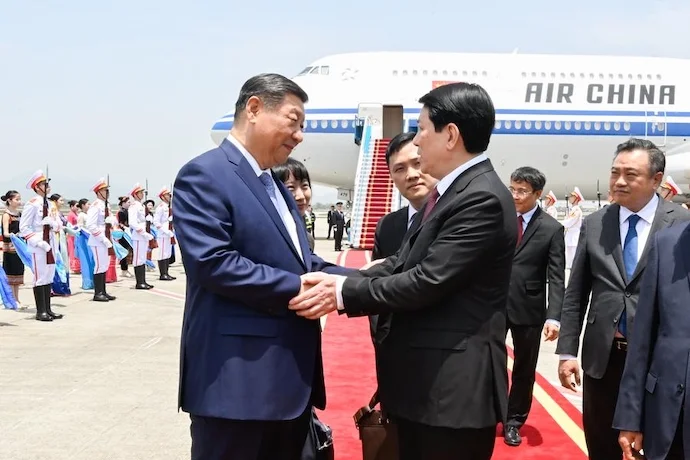
Another pillar of Vietnam’s soft-power strategy is its cultivation of diverse partnerships. Hanoi has maintained close ties with both China and the United States while deepening relations with Europe, India, Japan, South Korea, and Australia. This multidirectional diplomacy allows Vietnam to avoid binary choices in an increasingly polarized environment.
The elevation of relations with the United States to a Comprehensive Strategic Partnership in 2023—a status previously reserved for only a handful of key partners—signaled confidence and flexibility. Just as important, Vietnam has not allowed new alignments to come at the expense of traditional friendships or regional stability. The guiding principle remains clear: be a partner to all, an adversary to none.
Vietnam’s growing influence is no accident; it reflects a strategic vision shaped by hard-earned lessons. Once isolated and impoverished, the country is now among Asia’s most dynamic economies, with strong manufacturing capabilities, a young and educated population, and an increasingly tech-savvy workforce. Domestic transformation has moved in step with diplomatic ambition.
As President Luong Cuong has underscored, Vietnam has shifted from a reactive to a proactive posture—evolving from economic integration toward a more comprehensive, cross-sectoral engagement with the world. The Communist Party’s 13th Congress set an ambitious goal: to make Vietnam a developed, high-income country by 2045, the centennial of the nation’s founding, while maintaining an independent, self-reliant, and diversified foreign policy. That commitment is paired with strategies for sustainable development and climate resilience.
“Bamboo diplomacy”—a phrase popularized in recent years—captures the style: flexible yet resilient, deeply rooted in principle yet adaptive to shifting winds. The metaphor reflects Ho Chi Minh’s vision of diplomacy grounded in unity, humility, and moral clarity.
At a time of fragmentation—from fraying multilateral cooperation to the weaponization of economic dependencies—Vietnam offers a different model. Not power through dominance, but leadership through responsibility, consistency, and mutual respect.
Cuong’s upcoming UN address will likely reiterate familiar themes: respect for sovereignty, adherence to international law, commitment to peace, and the need for collective action on climate change, development, and technology governance. Such language may sound standard, but Vietnam’s record gives it weight. This is a country that has not only preached multilateralism but practiced it—contributing to UN peacekeeping, supporting regional stability, and joining high-standard trade frameworks such as the Comprehensive and Progressive Agreement for Trans-Pacific Partnership (CPTPP) and the Regional Comprehensive Economic Partnership (RCEP), the world’s largest free-trade agreement, covering roughly 30 percent of the global economy and population.
As the global order enters a new phase of uncertainty—shaped by great-power competition, climate crisis, and digital upheaval—the value of principled, moderate voices will only grow. With its blend of pragmatism and principle, tradition and innovation, Vietnam is well-positioned to help shape debates over peace, development, and sovereignty in the years ahead.
Cuong’s address to the UN General Assembly is more than another diplomatic engagement. It marks how far Vietnam has come—and how much further it intends to go. In a world short on trust and long on volatility, Vietnam’s soft-power playbook offers a quietly compelling answer to a hard question: What does responsible leadership look like today?