Mariia Klymyk on Russia’s Treatment of Ukrainian POWs and Civilians
Mariia Klymyk is a Ukrainian journalist, war-crimes documenter, and human rights researcher with the Media Initiative for Human Rights (MIHR). As co-head of MIHR’s Department for the Protection of the Rights of Military Personnel and Their Families, she investigates the fate of Ukrainian prisoners of war and missing persons, documenting testimonies from former detainees and researching detention facilities across occupied Ukrainian territory and the Russian Federation.
Since joining MIHR in 2022, Klymyk has focused on uncovering patterns of abuse within Russia’s detention system. Drawing on testimonies from former prisoners held across multiple facilities, she argues that torture, coercion, deprivation, and ideological indoctrination are not isolated incidents but recurring features of captivity. In this interview with Scott Douglas Jacobsen, Klymyk discusses the treatment of Ukrainian civilians and soldiers in Russian detention, the evidence pointing to systematic abuse, and the legal obligations that arise when states violate the laws of war.
Scott Douglas Jacobsen: Based on the testimonies you’ve collected, what are the most common patterns of mistreatment experienced by Ukrainian prisoners of war and civilians in Russian captivity, and what do these accounts reveal about the broader detention system?
Maria Klymyk: First of all, they are held together, so there is no difference between soldiers and civilians. They are held in the same places of detention, sometimes in the same cells. So they are treated the same. We call the first stage “acceptance.”
It is the first step of being a Russian prisoner of war, of being in Russian captivity. It is a procedure when a person comes to a place of detention, and it does not matter whether the person is a soldier or a civilian, a man or a woman, in good health or wounded.
So it is the same for military personnel and civilians. It is the same treatment. Food, water, and medical care are all handled in the same way. Basically, civilians and prisoners of war are held in the same conditions. The same rules apply to both civilians and military prisoners.
So basically, everything you hear from soldiers, and maybe in some testimonies, civilians go through the same pain, the same torture, and the same conditions. But when we speak about soldiers, they have a greater chance of being returned to Ukraine more quickly than civilians, because Russia refuses to admit that it is holding civilians in captivity.
From Russia’s perspective, some of these civilians are not treated as civilians at all. They are treated as criminals. They are imprisoned because they refused to take Russian passports, or because they worked with the Ukrainian army, or because they were accused of sabotage or something similar. We do not have many exchanges involving civilians. It is very hard to get civilians out of captivity.
For now, maybe this is one of the differences between captivity for military personnel and for civilians: civilians are much harder to get out of those places of detention, and it is hard to find where they are being held. In 2022 and 2023, they were mostly held together with soldiers, and when soldiers returned to Ukraine, they told us that they had seen those civilians. But over the last two years, from 2024 onward, there has been much less information about civilians in those detention facilities.
View this post on Instagram
Jacobsen: Unfortunately, these questions are often difficult to assess. There is a common concern within the expert community about claims involving systematic abuses at the international level. One standard is the convergence of evidence from multiple authoritative third-party sources. If independent organizations, researchers, and investigators reach similar conclusions based on separate lines of inquiry, that can provide a strong evidentiary foundation. A higher standard, of course, is an international legal determination, which is much more difficult to achieve.
One of the most challenging aspects in these cases is establishing intent. Setting aside the legal question for a moment, when it comes to torture and ill-treatment of prisoners of war and civilians, what evidence leads you to conclude that this is part of a systematic policy or practice rather than the actions of individual guards, commanders, or detention facilities acting on their own?
Klymyk: No document from the Russians says, “Torture the Ukrainians.” But we have spoken with many people who were in captivity, and no matter where they were held, all the rules, all the regimes, were the same.
Some of them know Ukrainian history very well, especially what happened in the Soviet Union. Many of them say that when you are in captivity and listening to all those songs, when they make you read books, when you are forced to learn and sing the Russian anthem constantly, those rules and those conditions are repeated in every place.
So, for now, we have people who were held in nine, ten, or twelve places of detention, and all the conditions were the same. They had to learn and sing the Russian anthem and some patriotic Russian songs. They were forced to learn poems, like “Forgive us, dear Russians,” or something similar. There is a refusal of medical care. There is no food, no water.
In most of these places, they do not have the opportunity to go outside for fresh air. In all those places, there are the same conditions for all groups of prisoners of war. Sometimes, for people from Mariupol, the conditions are much worse.
Civilians from places like Berdyansk or the Kherson region are often accused of treason or terrorism or something similar. So they are held in different places, but mostly all those conditions are the same.
If people are held in the occupied territory of Ukraine, they are not tortured as much, not beaten as much, and the food is somewhat better. But the rules are still the same: they do not have the opportunity to call, write letters, or receive letters.
They cannot receive help from outside. Also, visits from volunteers or the Red Cross are not allowed. Basically, sometimes we think the Russians have some manual on how to treat Ukrainians.
For example, people were held in Olenivka and, after some time, transferred to the Russian side, to Taganrog, and then to other regions or places. The only difference is how new the place of detention is. The condition of the cell may differ, but the treatment by the guards, the heads of those places, and the medical staff is the same.
So they have a daily routine. It does not change at all. We see patterns. It is like a list of what can be done to Ukrainians when the opportunity arises.
Some soldiers said they heard from guards that the guards are paid more if they work with prisoners of war. So we know there is something like this. I do not know if it is a law, because, as I said, there is no single document.
There is no directive from a high-level Russian authority, but all prisoners are treated the same. There is no difference. If a person is ill, even if a person has empyema, that person still has to do push-ups or something similar. They live under the same conditions, no matter where they are detained.
Jacobsen: Under international humanitarian law, what obligations do states have toward prisoners who have been tortured or subjected to inhumane treatment, and how do Ukraine’s and Russia’s respective approaches compare in practice?
Klymyk: Because this is a crime against humanity, first of all, the detention of civilians by Russians is against all international norms. Secondly, deaths in captivity, torture, and illegal court proceedings are all violations of the Geneva Conventions.
Ukraine recognizes its obligations in this area. We have many cases opened by Ukrainian prosecutors regarding inhuman treatment, including cases involving Ukrainian officials. Russians are trying to do the same; they also accuse Ukraine of inhuman behaviour and crimes against humanity, but when you look at the evidence, you see emaciated people with severe injuries. They require long rehabilitation. Some people will never fully recover after being in Russian camps. In contrast, we see Russian soldiers returned from Ukrainian captivity with intact health, proper clothing, and visible care.
So there is no comparison. We have evidence. Ukrainian prisoners who are released undergo forensic medical examinations, and these confirm that their injuries were caused by systematic torture, including the use of electric shock.
We see that Ukraine is trying to tell the world that Russia has committed crimes against humanity in its treatment of Ukrainian prisoners of war, and Russia is trying to do the same against Ukraine. But we all see the conditions in which our people return.
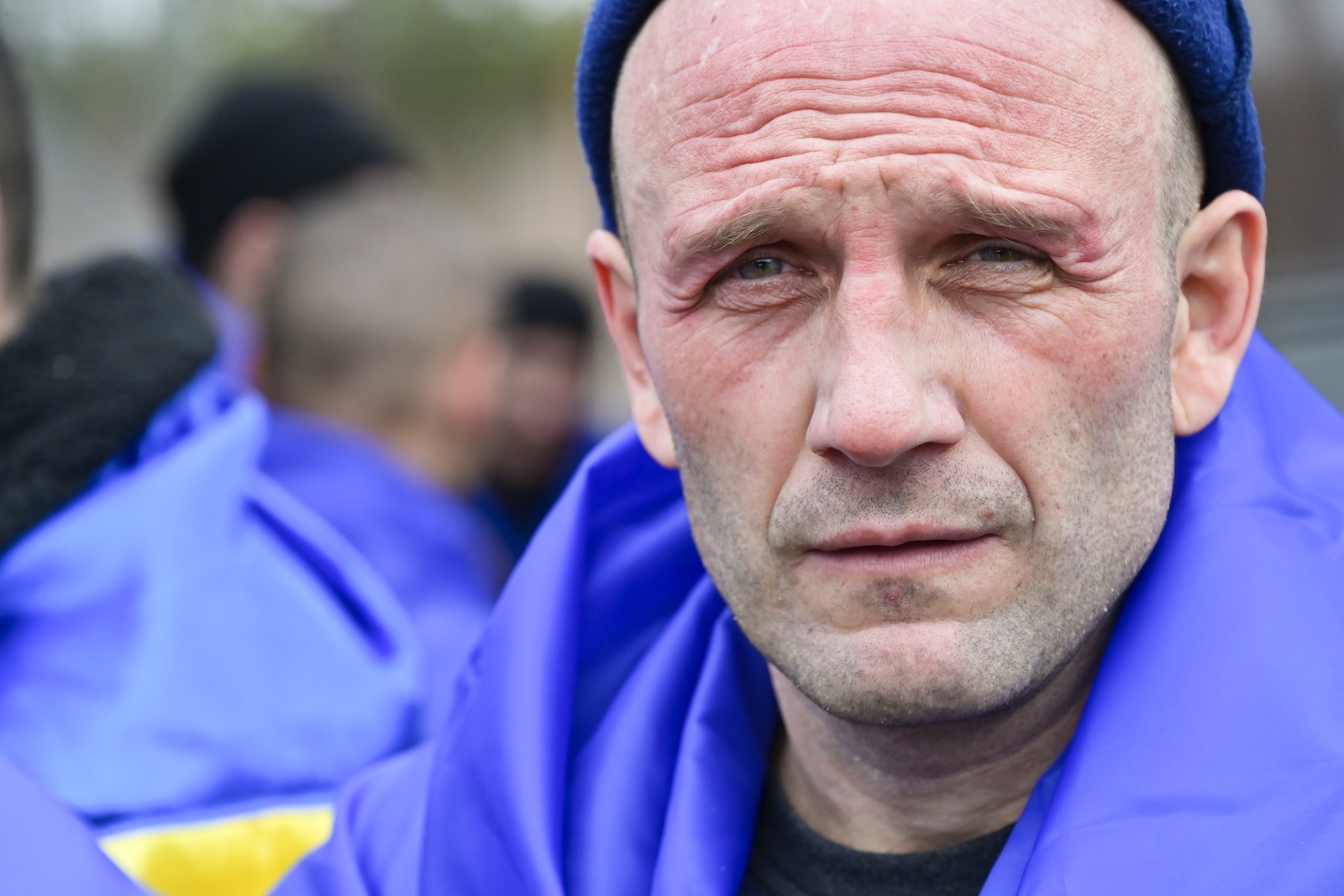
When the Russians return, they look healthy and smile. But our people are like living skeletons. Most of them have broken ribs, broken legs, and are in very bad physical and psychological condition. Ukraine claims that everything happening in Russian detention centers constitutes crimes against humanity.
Jacobsen: Thank you very much for the opportunities and your time, Maria.