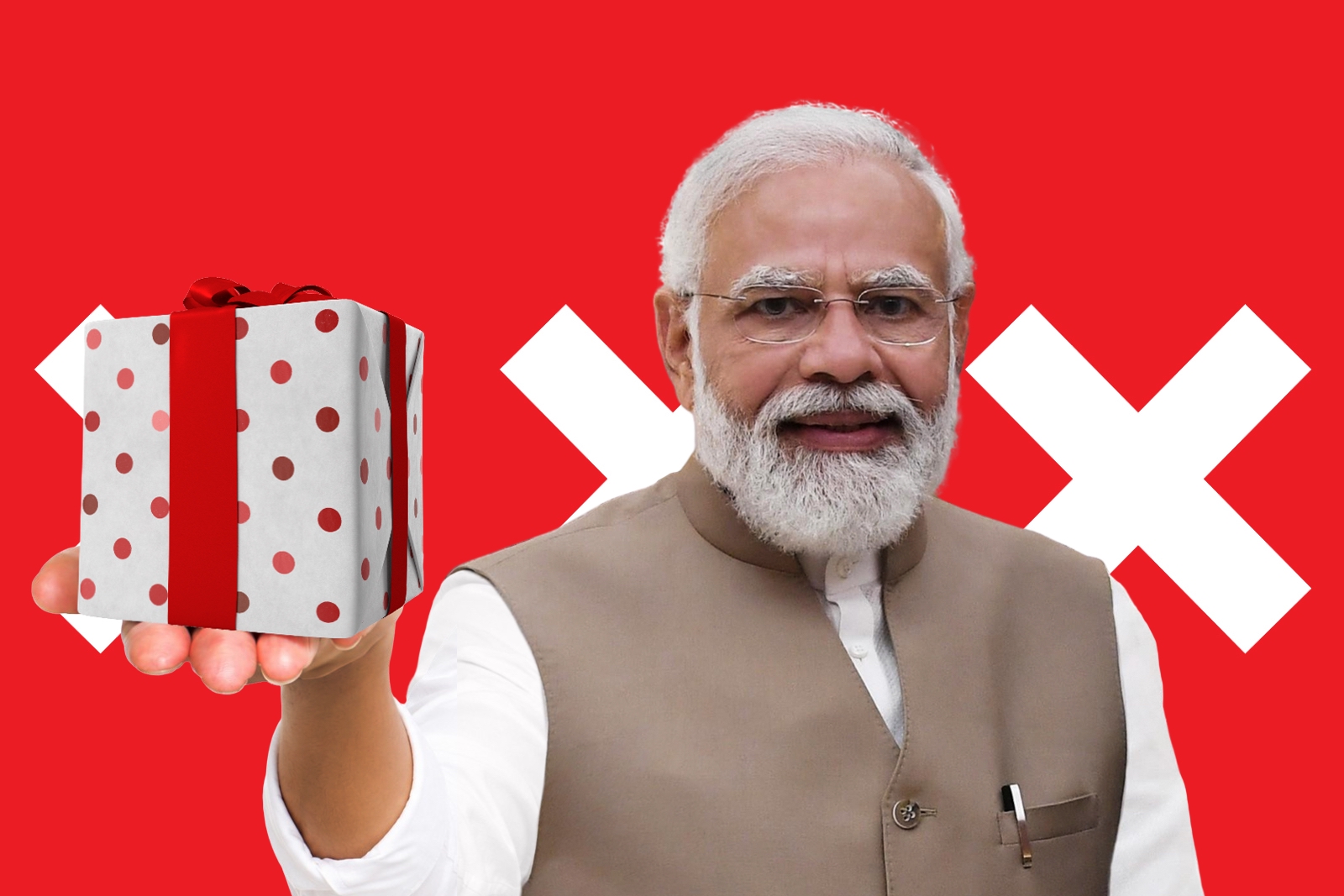

The Dangerous Rise of Freebie Politics in India
The phase-wise elections to the legislative assemblies of Tamil Nadu and West Bengal were held between April and May, with polling conducted across multiple rounds before results were announced on May 4.
Nearly 68 million voters participated in elections for 294 constituencies in West Bengal, where the first phase recorded a remarkable 92.25 percent turnout. Likewise, around 57 million voters cast ballots in Tamil Nadu, with women accounting for more than half of the electorate and overall turnout reaching 85 percent. However, the controversial removal of 9.1 million voters from West Bengal’s electoral rolls raised questions about the credibility of the electoral process. At the same time, the growing use of welfare schemes as campaign tools by political parties emerged as a significant factor shaping electoral politics in India.
It has become a common practice in both national and state elections for political parties to offer financial incentives or welfare schemes to secure voter support. This raises an important question: are these measures genuinely designed to improve social welfare, or have they become instruments of political manipulation? Such freebies include free water and electricity, public transportation, meals, consumer goods, and direct cash transfers.
While political parties routinely present these initiatives as welfare measures, they are often deployed as electoral strategies intended to influence voter preferences. The culture of freebies in Indian politics has expanded to the point where election campaigns are frequently built around such promises, signaling to voters that significant benefits await them if a particular party comes to power.
Last year, the National Democratic Alliance (NDA), led by Indian Prime Minister Narendra Modi’s Bharatiya Janata Party (BJP), offered $105 to more than 7.5 million women in Bihar shortly before state elections. The alliance subsequently secured a landslide victory. Following this trend, political parties in both Tamil Nadu and West Bengal intensified their welfare promises ahead of polling, using public funds in the name of social protection schemes targeted at poorer populations.
Cash transfers, cooking gas cylinders, refrigerators, laptops, and other benefits became central campaign pledges. Critics argue that announcing such schemes during election campaigns amounts to an unethical and potentially unlawful form of vote-buying. For them, these contests increasingly resemble auctions in which subsidies and financial benefits are exchanged for electoral support.
In Tamil Nadu, both the AIADMK and DMK competed aggressively on welfare promises in a state long associated with election-time freebies. The DMK highlighted what it described as the largest direct financial assistance program in the state’s history, crediting $52 to approximately 13 million women under the Kalaignar Magalir Urimai Thittam. The AIADMK responded with a promise of $21 per month for female heads of households, alongside refrigerators and other household appliances.
Women have emerged as one of the most influential electoral constituencies in India. Over the past decade, female voter participation has steadily increased, with turnout in several states surpassing that of men. As a result, women have become a decisive force in shaping election outcomes. Yet despite their growing electoral significance, women remain underrepresented in political leadership and governance. Rather than focusing on long-term empowerment through stable governance, economic opportunity, and sustainable social protection policies, political actors often announce large-scale cash transfer and subsidy programs in the run-up to elections in an effort to attract women voters.
Effective social protection schemes can play an important role in fostering sustainable social development. Across several Indian states, such programs have strengthened women’s economic participation, increased school enrollment, improved healthcare access, and enhanced the wellbeing of vulnerable populations. However, when welfare programs are introduced immediately before or during election campaigns, they often appear less focused on sustainable livelihoods and more oriented toward securing electoral support. In such circumstances, many observers view them as campaign currency or even a form of electoral bribery aimed at marginalized communities and women. These pro-poor policies become part of a broader patronage system in which public finances are used to cultivate political loyalty.
Section 123 of India’s Representation of the People Act prohibits candidates and political actors from offering inducements to voters, even something as small as a cup of tea. Vote-buying is considered a violation of electoral norms because it undermines the principle of a level playing field, weakens democratic integrity, and distorts the purpose of social welfare policies.
Over the past decade, population growth, climate-related pressures, and recurring economic challenges have pushed millions closer to poverty and expanded the country’s vulnerable population. India ranks 130th on the Human Development Index. One in three Indian children is malnourished, and more than 510 million people rely on free food rations. Under such circumstances, political actors may find vote-buying increasingly attractive, while economically disadvantaged voters may be more willing to accept benefits in exchange for political support.
Under constitutional obligations and the framework of the Sustainable Development Goals, Indian states are expected to design social protection programs that improve the social and economic conditions of marginalized communities. Conditional and unconditional cash transfer programs, healthcare assistance, nutrition support, and educational initiatives can strengthen social safety nets, improve public health, increase school enrollment, and create sustainable livelihood opportunities at the grassroots level.
Yet the continuing wave of social assistance announcements and subsidy promises made in the weeks and months leading up to elections held between April and May has reinforced a culture of electoral patronage. The practice threatens electoral integrity, places growing pressure on state finances, and weakens democratic processes. If social protection assistance is not clearly separated from electoral politics, the world’s largest democracy risks creating unstable governance structures and unhealthy welfare systems. It also offers a cautionary lesson for political leaders across South Asia: sustainable pro-poor policies should be designed to promote long-term development and effective governance, not short-term electoral gain.