
Books
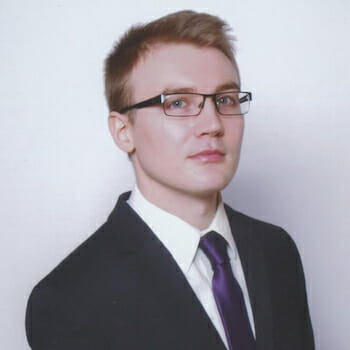
Author Jobert Abueva on Why Lasting Change Begins with Reflection
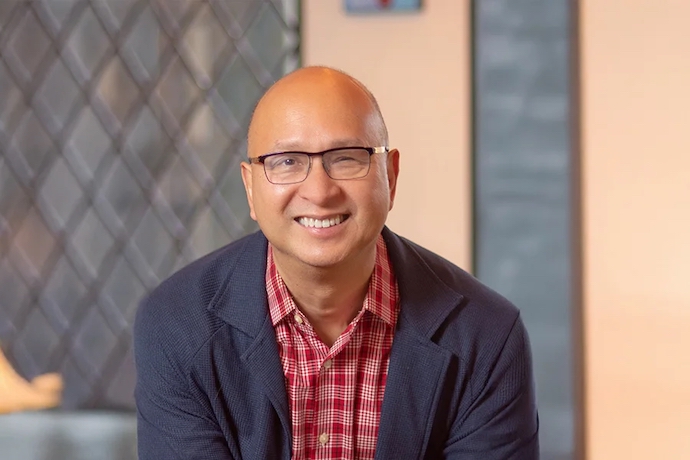
Jobert E. Abueva is a Filipino-born author, global marketing and philanthropy executive, and international speaker whose career has spanned Asia, Europe, and North America. Raised in Nepal, Thailand, and Japan, he graduated from the University of Michigan and Columbia Business School. His memoir, Boy Wander, explores identity, belonging, sexuality, migration, and life across cultures. His forthcoming book, The Janus Plan, offers an alternative to rigid resolutions, emphasizing reflection, compassion, sustainable change, personal renewal, and growth.
In this interview, Scott Douglas Jacobsen speaks with Abueva about the personal crisis that forced him to reconsider conventional notions of success and ultimately inspired The Janus Plan. They discuss why New Year’s resolutions so often fail, how reflection and realistic goal-setting can produce lasting change, and why even the best plans must leave room for recalibration. Drawing on Janus, the Roman god who looks simultaneously backward and forward, Abueva presents personal growth not as a straight path toward a fixed destination, but as an evolving process shaped by experience, self-knowledge, and unexpected possibilities.
Scott Douglas Jacobsen: The Janus Plan begins with your collapse from exhaustion in Hong Kong in 1997, despite the outward appearance of extraordinary professional success. How did that experience change your understanding of success, and how would you describe the person you were before and after that crisis?
Jobert E. Abueva: Before that experience, I was on top of the world, helping launch one of the most iconic haircare brands in North America, Clairol Herbal Essences.
My remit in the 1990s was to transfer the brand’s success in North America to the rest of the world. It began in the EMEA region, Europe, the Middle East, and Africa, more specifically in Central and Eastern Europe. From the summer of 1995 into 1996, I was learning about local cultures and consumers through focus groups, often with real-time translation.
I was learning about women’s haircare habits. I am one man who knows more than any man needs to know about women’s haircare habits. It gave me an entrée into understanding cultures and traditions in Russia, the Czech Republic, Poland, Israel, Turkey, and Hungary. I had to translate those insights into launch plans and advertising.
I carried that model from country to country, to Guangzhou, China, Thailand, and across the Asia-Pacific region. For three and a half years, I felt as though I were on top of the world, working around the clock and travelling nonstop. The downside was that I sacrificed my well-being. I was overeating, drinking too much, and not sleeping enough, while dealing with calls from the U.S. headquarters at all hours of the night.
I arrived in Hong Kong, and on the day of Princess Diana’s funeral, I could not get out of bed. I was completely exhausted. My mind was foggy, and I could not eat the room-service meal sitting beside me. That was when I said to myself, “Something has to change. This is not sustainable.”
I had a flashback. When I was eight or nine years old, my father owned a set of the Encyclopaedia Britannica. I read the entry on Janus, the Roman god associated with beginnings, endings, transitions, doorways, and passages. I was fascinated by the image of his two faces, one looking backward and the other looking forward.
For some reason, during my breakdown in Hong Kong, that image reappeared in my mind. It struck me that I was standing at precisely that kind of threshold. I could see the destructive path I had been creating for myself, and I knew that I had to turn toward the future with a different vision. That was when I began reassessing my lifestyle.
I considered all the data points: my lack of sleep, my difficulty focusing on my job, and the way things were beginning to fall through the cracks. I decided that I needed to establish a new set of goals to repair my life.
That was when I decided to return to the United States to recuperate and rejuvenate. I had to leave my job, determine what I wanted to do, and return to my former self, or at least to a healthier version of myself.
I also decided to pursue the passion for writing that I had always possessed but had suppressed during my corporate career. I took concrete steps, including enrolling in writing classes at The New School and Gotham Writers Workshop.
My big break was an essay I wrote for The New York Times business section. It appeared in the “My Money, My Life” feature. That was how I began writing and publishing professionally. The editors invited me to pitch additional pieces. I wrote about the workplace and management, and I interviewed chief executives for “The Boss,” a column featuring first-person accounts from business leaders.
That set me on a new trajectory. Writing was something I had always wanted to pursue, and I was taking concrete steps to make it happen. That work led to larger assignments, the writing of my boyhood memoir, Boy Wander, and, ultimately, The Janus Plan. This radical sabbatical also enabled me to return to my marketing career with my eyes wide open. I returned with greater creativity, stronger focus, and more balance.
There was the period before the Hong Kong episode, followed by the aftermath, when I conducted a deep reassessment of the good, the bad, and the ugly parts of my life. I translated those findings into realistic goals that I could sustain.
Jacobsen: Whether through New Year’s resolutions, diets, exercise regimens, or efforts to change how we speak to ourselves, many people struggle to make healthier habits last. How can we sustain positive change without eventually slipping back into old patterns?
Abueva: The other part of the story is that I had been a chronic maker and breaker of New Year’s resolutions. Many of my resolutions collapsed by the second, third, or fourth week of the year.
I often mention a data point from Strava, the fitness-tracking platform. After examining more than 800 million recorded activities, Strava identified the second Tuesday of January as the point at which people were most likely to abandon their New Year’s fitness resolutions. It called the date “Quitter’s Day.”
What I had in common with those millions of people was that I made goals that were unrealistic. I decided where I wanted to go without first considering where I was. The missing element was reflection: What is my present reality?
To answer your question, I sustain goals today by investing the time and effort required to understand what the previous year taught me. I consider the highlights, lowlights, and “ugly lights”: the occasions when I fell down and what I must do to get back on my feet. Sometimes I need to return to a stable baseline before moving forward.
I engage in deep reflection and remain brutally honest with myself before setting goals. At the very least, those goals should be SMART: specific, measurable, achievable, relevant, and time-bound.
I also divide larger goals into smaller ones. There is an element of the carrot and the stick. You should reward yourself along the way, but you must also maintain discipline.
It is an iterative approach, unlike the absolute resolution-making that kept me trapped in a vicious cycle for years. I replaced that cycle with a model grounded in reflection. The Janus Plan presents a six-step framework that anyone can revisit year after year.
Jacobsen: A realistic goal for one person may be completely unsustainable for another. How can we develop enough self-awareness to set ambitious but achievable goals rather than plans destined to collapse within weeks?
Abueva: It begins with an intentional pause. The beauty of the January 1 threshold is that we become aware that the calendar is turning over. It gives us an opportunity to dedicate time and space to deep reflection.
I believe in prompts and exercises that help us confront the evidence and our track record. It begins there, although that is easier said than done.
In the book, I have tried to present myself as a friend sitting beside you, someone willing to guide you through the process and encourage you to trust it. One person’s approach is not necessarily right for another. We all have to find an approach that works for us.
What I offer is a framework that helps you identify the best approach for yourself. It is not a matter of saying, “You must do this,” or, “You must do that.” Instead, it asks: What should you think about? Where do you want to devote more of your intellectual capacity? Where do you need to be brutally honest with yourself? You can then connect the dots and determine where you want to go.
In a structured setting, you might compare this with the strategic-planning process used in business. It begins with the key lessons. For me, those include the luminous moments, the losses, and a deeper examination of the causes behind those experiences.
You then ask about the implications. What does this mean for the way forward? That question should come before deciding, “This is what I am going to do.”
There is an intermediate step between saying, “This is how I experienced the past year,” and, “This is what I will do next.” You need time to understand the implications of what happened. That is often where the magic occurs.
Jacobsen: Personal change can also alter our relationships. Some people may encourage us, while others respond with skepticism, sarcasm, or discomfort. How can we navigate those shifting social and professional dynamics while remaining committed to becoming healthier and more authentic?
Abueva: We are bombarded with signals from the outside. There are pressures concerning how we should behave in society and norms within corporate environments, families, and virtually every other context. There are always expectations.
Part of finding your path, and part of how I found mine, is acknowledging the pressures and expectations other people place upon you. Writing them down allows you to confront them directly and say, “I am aware that these expectations have been placed upon me. This is the direction I want to take. I know where I want to end up, and I am going to remain steadfast.”
There are many ways to remain steadfast. You can divide your goals into smaller steps, reward yourself along the way, and work with a trusted accountability partner. Most of us have someone in our lives who can help us remain accountable to our vision of the person we want to become. When we do not, we can seek out such a person.
Much of it returns to deep reflection, intentional pauses, understanding your circumstances, and checking in with yourself along the way. In The Janus Plan, I emphasize revisiting and reigniting. That means reigniting your motivation and recommitting yourself to the vision you created and the goals or targets you put down on paper.
You must also acknowledge that life continues, circumstances change, and situations rarely follow a straight line. Do not be afraid to recalibrate, adjust, or revise your plans. That is part of life. The process is iterative and winding. A North Star can help you continue moving forward.
Jacobsen: After developing The Janus Plan and applying its principles to your own life, what does Janus symbolize for you today?
Abueva: I still see Janus as a companion and a model who reminds me to keep looking backward and forward. When you look only forward, you may see the target, the destination, and the distance that remains. You also need to pause and understand how far you have come. That reflection may help you revise your plans or change your itinerary so the journey is not simply about trudging directly toward a destination.
There may be opportunities to see interesting sights along the way or welcome positive distractions that enrich your life. You can appreciate this through your travels, Scott. You may have a destination in mind, but then you meet a local resident who says, “You should visit this waterfall.” Does that not sometimes make all the difference?
You created enough time and space to meander before reaching your destination. As a result, you had experiences you would not otherwise have encountered. That is part of life: appreciating unexpected diversions, within reason, and remaining open to significant surprises.
Jacobsen: Your approach resembles adaptive planning: maintaining a clear point of orientation while adjusting the route as circumstances change. At the individual level, how can we remain committed to a larger purpose without becoming trapped by goals that no longer fit our lives?
Abueva: You framed that very well, perhaps better than I could. That is exactly it.
There is an endpoint, a destination, or a North Star. The method and direction can shift because everything around us is moving. The Earth is moving, and we are moving with it.
When you remain focused on the desired result, you may eventually arrive there. You may also reach a different, unexpected destination that turns out to be an even better outcome.
That can happen because you remained open to the process, were honest with yourself, and took the time to reflect on how you were moving through life.
Jacobsen: Thank you very much for your time today.
Abueva: Thank you.