Media

BBC Flacks Can’t Spin What Its Hacks Spliced
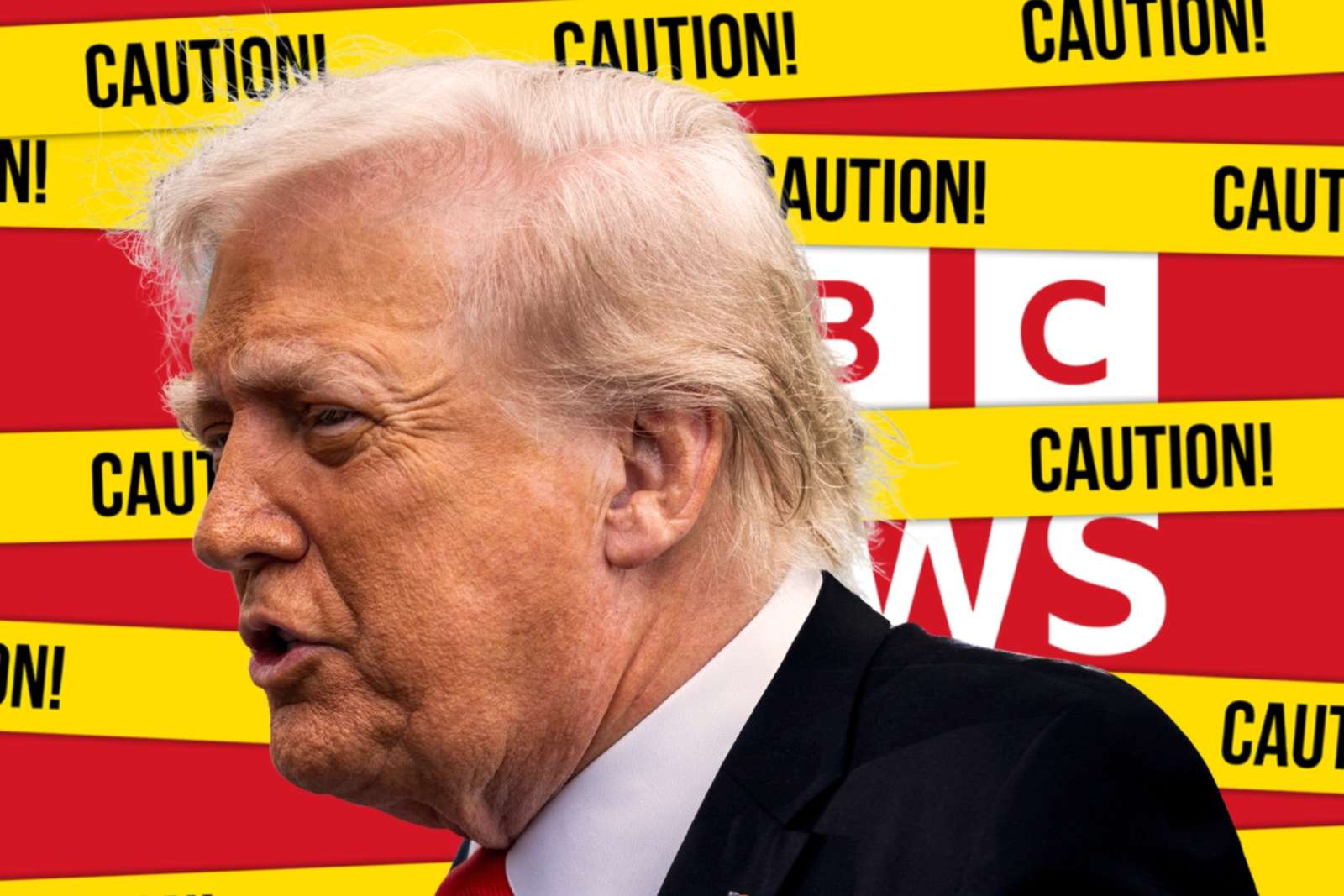
Yet again, the BBC has hit the headlines for all the wrong – and by now drearily familiar – reasons. This time, senior heads have rolled over the malodorous-to-malicious editing of a Donald Trump speech in a documentary from the BBC’s tattered news flagship, Panorama.
Set aside, for a moment, the editorial brain-farts that decided it was clever or conscionable to re-splice some of The Don’s customary cliché-buffets in order to misrepresent what the president actually said. The more revealing story lies in how this episode triggered yet another bungled BBC attempt to manage and mitigate the consequences of a crisis of its own making. And when I say “yet another,” the mind readily boggles at the Beeb’s historic mishandling of PR fiascos centered on Dr. David Kelly (2003), Jimmy Savile (2012), Gary Lineker (2023), and the Gaza documentary voiceover (2025) snafus, to name just a few.
The nub of the issue is this: Who is advising the BBC on how to handle crisis management, and what kind of wisdom is being dispensed, given that the corporation seems doggedly unwilling to learn 1) from the entire history of crisis handling and 2) from its own already creaking catalogue of crisis cock-ups?
From the outside, the BBC looks like an insular institution whose crisis cohort likely features embedded apparatchiks, hierarchy climbers, fence-jumping journos-turned-PRs, and London lawyers – none of them strangers to the lordliness that so often leads crisis responses astray.
First, a recap of how the BBC responded to its self-created Trump documentary crisis. The executive response to the editing wrongdoing was matched, step for step, by crisis wrongdoings. The leadership initially ignored internal flag-wavers, then tried to minimise the concerns raised, and only later issued a stock-to-stale “mistakes were made” admission that failed to quell the narky narrative. The Beeb’s piecemeal crisis management plan – a “let’s see if this small tactic quietens things down” game – merely portrayed it as defensive, opaque, and unwilling to accept culpability for quite unethical editorial lapses. And the stakes here are not trivial: the ever-litigious Trump is threatening to pursue $1.5 billion in damages.
Fundamentally, editorial right-doing should sit at the heart of the BBC’s brand image. So when Director General Tim Davie and CEO of News Deborah Turness were packing their belongings into cardboard boxes, the advisers who had coached them through these ineffective tactical plays were surely huddled around the water cooler or Nespresso machine, quietly relieved they were not also being publicly shamed – or sacked – for what has proven to be very cheap advice.
Once again, it seems the BBC’s issues-management cohort confuses “controlling the coverage” with “remedying the consequences.” If anyone believes that mitigating bad headlines is the core of crisis management, it is hardly surprising that the outcomes are so consistently unsatisfactory.
Which brings us back to the key questions: Who is providing crisis-handling insights to the Beeb, what is the nature of that wisdom, and who ultimately decides to accept and act on that advice?
In all probability, the BBC remains an institutional ivory tower clinging to Establishment worldviews and mores that are simply unfit for today’s media audiences and ecosystems. It is not impossible that BBC chiefs still perceive themselves (arrogantly) and operate (aloofly) as doyens of the fourth estate, even as the rest of us now live amid a digitised fifth estate that has already usurped the old media’s power base. Such a chasm suggests an unproductive, closed, and out-of-touch leadership culture.
Within the Beeb’s leadership, there is doubtlessly a sprawling governance structure – a board of directors, various departmental heads, a risk team, Ofcom overseers, and the Director General himself. When crises emerge, every group feels it must have input, a say, a veto. Yet on the crisis frontline, the voices that need to speak loudest and be listened to most closely are those most affected by the incident in play. Without that as the strategic focus of crisis response, all other agendas and inputs merely distract from the true end goal of any remediation effort.
As for the BBC’s reputation advisers, one can safely assume that some of the “big dogs” at the crisis table are mostly ex-journalists. Many journos falsely believe crisis management equates to media management. But the skills that are valuable in a newsroom – caginess, headline-obsession, quick quips – often create new vulnerabilities in a crisis war room. Intellectual capital is squandered when leaders focus on superficial sound-bitery rather than on fixing substantive issues, which is what ethical crisis management should have squarely at its center.
Which brings us back to the headline, and an offer of free advice to my comrades-in-crisis: you cannot spin your way out of a problem you spliced yourself into. Actions, in the end, speak louder than words. The Beeb appears to be operating with a poorly informed crisis-handling framework, staffed by cosy compatriots who seem to misunderstand the behavioural and ethical imperatives that are critical for effective crisis management.
Indeed, someone could write an entire book documenting the BBC’s history of poorly handled PR disasters – someone who had analysed, researched, pondered, and understood what PR disasters are, what causes them, and what effective and stable handling models and protocols look like. Unless something changes in how the BBC approaches issues and risks, it will only be a matter of time before we witness yet another made-for-TV soap opera of error, delay, denial, damage, and disastrous denouement.
After this latest contretemps (or “contreTrump,” if you like), the BBC surely needs to reconsider how it handles issues and crises, not least its reputation risk. It must drop hesitant, headline-obsessed tactics and embrace practice-informed insights and mitigation models that cut through all the crap about stalling and spin and, instead, focus on fallout mitigation. It could explore predictive crisis modelling and consequence simulations grounded in ethical and moral decision-making. It could ensure its stakeholder engagement efforts would – as we say in Australia – pass the pub test (i.e., that regular Jo’s would accept the response as credible and just).
It is approaching peak irony that the BBC, which once built its brand capital on almost heroic and credible storytelling, now keeps mismanaging crises and, in doing so, casts itself as an increasingly villainous actor. How many times must this happen before the organisation does the hard work of linking a robust risk framework to its crisis mitigation strategies and, critically, to the tone, content, and speed of its stakeholder communications and engagement activities?
If it does not, this washout of a spin cycle will surely start all over again at Broadcasting House.