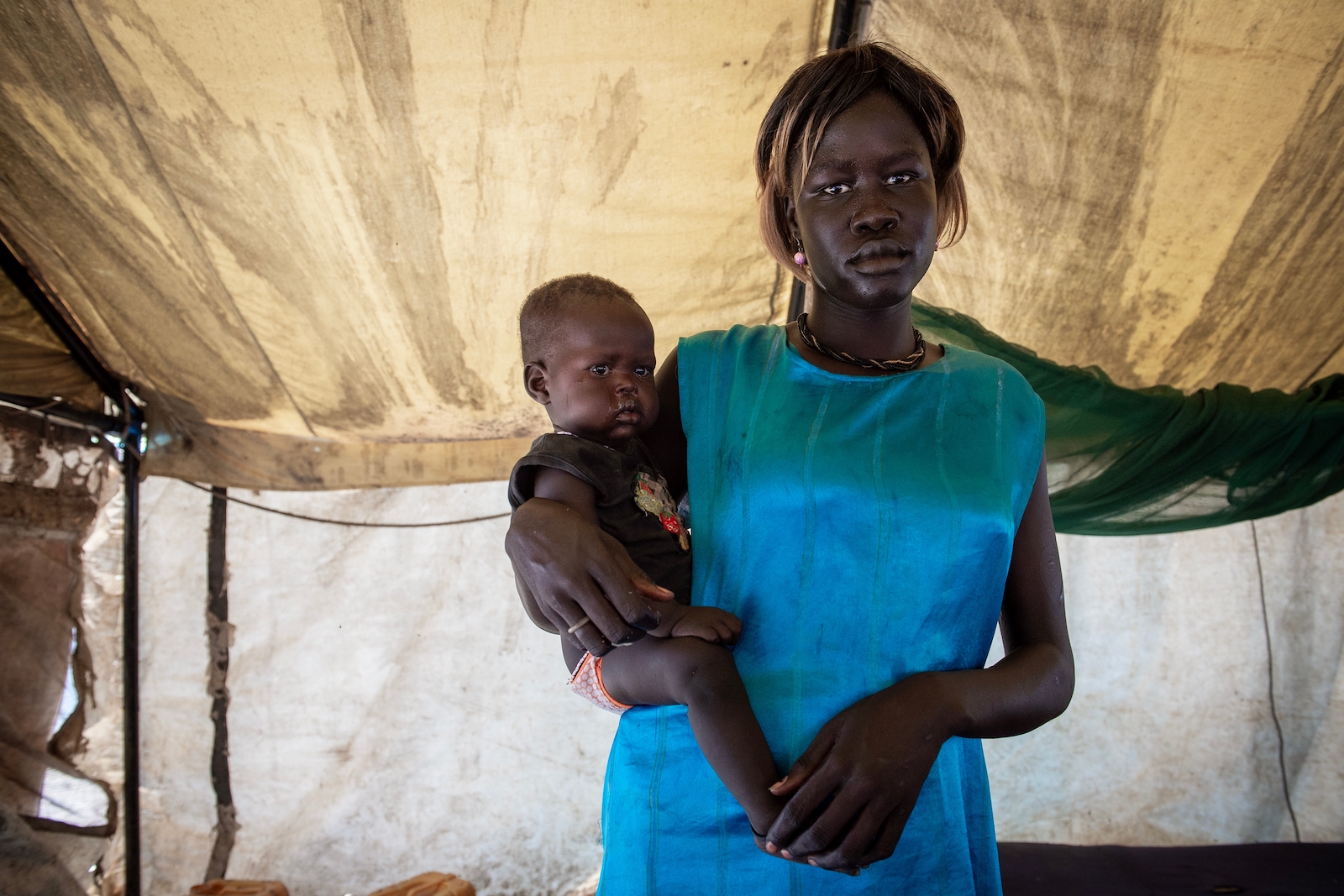

El-Fasher’s Atrocities Jolt the World Awake to Sudan’s War
Rare global attention is, at last, fixed on Sudan’s disastrous conflict. Recent atrocities have prompted renewed calls for the United States and its Arab partners to step up efforts to halt the carnage.
At the forefront of those demands is the International Crisis Group (ICG), the independent conflict-prevention organisation that has spent decades warning about wars before they explode – and documenting their horrors when they do. Its work has rarely felt more urgent. The world is juggling both new and long-running conflicts, and few are as neglected or as devastating as Sudan’s civil war.
The ICG, a widely respected NGO, argues that “Sudan’s ugly civil war, already marked by famine and atrocities,” has now “reached a new low.” On October 26, the paramilitary Rapid Support Forces (RSF) overran el-Fasher, the last remaining stronghold of its rival, the Sudanese army, in the western region of Darfur. What followed, the ICG says, was an apparent mass slaughter by RSF fighters, much of it documented on video.
According to the group, the paramilitary forces trapped civilians inside the city and then proceeded to mow people down, killing some at gunpoint and detaining, torturing, and raping many others. Some estimates put the death toll in the thousands.
The International Criminal Court has now formally signaled that it is moving to preserve and collect evidence for possible future prosecutions. It is a familiar pattern for Sudan: atrocities unfold in real time, and the law arrives later, if at all.
For the ICG, the el-Fasher “bloodletting” is the product of more than two years of international “dereliction” in a war that has been “alternately fed and left to fester by outside actors.” Since the fighting broke out, Sudan’s crisis has slipped in and out of the headlines, overshadowed first by Russia’s invasion of Ukraine and then by the war in Gaza. Washington, the group argues, has failed to give the conflict sustained attention.
That may now be changing. For several months, U.S. officials have devoted more diplomatic energy to Sudan’s peace efforts, and the massacres in el-Fasher could push them further. Reports suggest that President Donald Trump was personally appalled by footage of the violence. On November 12, U.S. Secretary of State Marco Rubio spoke in unusually blunt terms about the war and insisted that external backing for the RSF “needs to stop.”
The ICG, headquartered in Brussels, frames the moment as a test of Washington’s will. Whether the el-Fasher atrocities become a genuinely galvanising turning point, it says, depends on what the United States does next. If the Trump administration follows through on its tougher rhetoric and throws its full weight behind ending the fighting, it could alter the course of the war.
The focal point of U.S. diplomacy, in the ICG’s view, should be the truce proposal advanced by the so-called Quad: Egypt, Saudi Arabia, the United Arab Emirates, and the United States. That plan has been circulating for months, but progress has been elusive. The RSF has formally accepted the proposal, even as it continues its military campaign. The Sudanese army’s embattled leader, General Abdel Fattah al-Burhan, is still “reviewing” it.
“To get to a truce and make it stick,” the ICG argues, the Trump administration will have to do two things at once: persuade Burhan to accept the deal over the objections of his shaky domestic coalition, and press the UAE to pull back from its extensive support for the RSF.
Sudan’s current nightmare began in April 2023, amid a power struggle inside the junta that seized control in 2019 after a popular uprising toppled Omar al-Bashir’s 30-year dictatorship. At the time, the Sudanese army and the RSF – led by General Mohamed Hamdan Dagalo, known as “Hemedti” – ousted Bashir together.
Sudanese protesters then took to the streets to demand a civilian-led transition. The generals initially agreed, but by 2021, they had reversed themselves. The ICG recalls how the military staged a coup, arrested the prime minister, and dissolved the civilian government. As outside pressure on the fractured junta mounted, the uneasy partnership between the army and the RSF deteriorated. Fighting erupted in Khartoum and quickly spread, engulfing much of the country.
The war has also turned Sudan into a regional power arena. Egypt and several other states – including Saudi Arabia, Turkey, Iran, Algeria, and Qatar – back the Sudanese army and, like the United Nations, regard it as the country’s recognised government. Whatever misgivings they may have about Burhan’s reliance on Islamist factions tied to Bashir’s old regime, these concerns are outweighed by the perception that the army remains a state institution and therefore the only plausible claimant to sovereign authority.
The RSF, by contrast, relies heavily on a single major patron: the UAE. The ICG traces the group’s origins to Darfuri Arab militias that Khartoum armed to fight its “dirty wars” against long-running insurgencies in Darfur and Kordofan, largely driven by non-Arab communities. Over time, those militias were consolidated into the RSF, which evolved into both a security apparatus and a commercial empire.
The RSF deployed tens of thousands of fighters to Yemen to fight the Houthis on behalf of the Emiratis and the Saudis, acted as a praetorian guard for Bashir in Khartoum, and took control of lucrative gold mines, especially in Darfur. In the RSF, the UAE appears to see a trusted partner in a strategic region it fears could once again be dominated by Islamist political forces.
Sudan has a long history of atrocities committed by multiple actors. But even against that grim backdrop, the ICG describes the RSF’s conduct in el-Fasher as “jarring.” For roughly 18 months, RSF fighters besieged the city, blocking most food and essential supplies and creating a devastating humanitarian crisis. In the months before the final assault, they constructed an earthen wall around el-Fasher to prevent civilians from fleeing without passing through RSF checkpoints.
The full picture of what happened inside that barrier is still emerging, but press reports and video evidence point to several episodes of mass killing, including in a maternity hospital where RSF fighters appear to have shot hundreds of men, women, and children at close range.
According to the ICG, RSF fighters also appear to have carried out systematic summary executions of men both inside the city and in surrounding areas, where they captured people attempting to escape. Images of the violence – often filmed by the perpetrators themselves – have ricocheted across social media.
The group says the footage and testimonies suggest deliberate targeting of non-Arab communities, particularly the Zaghawa, who have mobilised many fighters to support the army against the RSF. Women and girls have been subjected to widespread sexual violence, with harrowing accounts of gang rape in front of family members. Survivors face almost no access to medical care and widespread hunger. Those who can afford to pay for safe passage appear more likely to be spared.
Meanwhile, RSF units are reportedly holding other residents for ransom. The alleged atrocities have provoked outrage both inside Sudan and abroad, directed not only at the RSF but also at the UAE, which stands accused of arming the insurgents.
“As the reputational costs are tallied,” the Crisis Group notes, “the balance on the battlefield is clearer.” El-Fasher’s fall is a clear victory for the RSF and a major setback for the army. The RSF now controls most of western Sudan, while the army holds central areas around Khartoum and territory east of the Nile. The front line has shifted to Kordofan, southwest of the capital and east of Darfur, where fighting is expected to intensify.
The RSF could, however, use its new freedom of movement to widen the war. It may lay siege to additional towns and cities in Kordofan, as some reports already suggest. It could also strike Omdurman, Khartoum’s sister city across the Nile, ringed by desert and home to key infrastructure, or move north into riverine areas that have so far been largely spared but are home to many army officers and Sudanese elites.
Analysts worry that the conflict could slide into a grinding stalemate that eventually hardens into a de facto partition. Neighbouring states fear that a failed-state scenario in Sudan would export instability across borders for years to come.
The ICG argues that the “RSF’s bloody victory in el-Fasher” has dealt a serious blow to diplomatic efforts that had finally begun to gain momentum. Just days before the city fell, Washington brought together representatives of both warring parties, as well as Egypt, Saudi Arabia, and the UAE, to negotiate a truce.
In those talks, U.S. officials and their Arab counterparts shuttled between the Sudanese delegations in search of common ground. They did not find it. The meetings followed months of difficult U.S.-led negotiations within the Quad that had produced a joint roadmap on September 12: a phased plan starting with a humanitarian truce, then a permanent ceasefire, and, ultimately, a new transitional civilian-led government.
The ICG calls that roadmap an important step, but notes that implementation has yet to begin. U.S.-led shuttle diplomacy has continued despite the shock of el-Fasher, and “success continues to be elusive.”
On November 6, the RSF publicly accepted the U.S. truce proposal, even as it pressed its offensives on the ground. Burhan, however, has refused to commit. His hesitation, the Crisis Group suggests, reflects the cross-cutting pressures on his embattled regime. He faces demands from the U.S., Egypt, and Saudi Arabia to accept the truce, but powerful generals and political allies urge him to reject it.
Burhan chaired a stormy meeting of his government’s security and defence council in Khartoum in an attempt to forge a negotiating position, only to encounter fierce opposition to talks. Some figures within his coalition insist that the RSF must withdraw from all major cities and disarm – effectively surrender – before any ceasefire can be considered. The RSF, the ICG notes, is almost certain to refuse such terms.
Far too much blood has already been spilled in this ruinous war. Yet el-Fasher, for all it represents an indelible stain on the world’s conscience, could also be the jolt that finally pushes powerful capitals to act.
For the ICG, the prescription is clear: now is the moment for the U.S. and key Arab states to double down on diplomacy and move from rhetoric to implementation of their own roadmap. That means working toward a genuine humanitarian truce, a credible ceasefire, and, in time, a civilian-led transitional government if the fighting can be brought to a halt. Sudan, the group warns, is already a stark example of how hard peacemaking has become in a world between geopolitical orders. It does not have to become a case study in total failure.
If key leaders seize the opportunity to push for peace, the war could end. If they do not, the ICG’s final warning is chillingly straightforward: the tragedy of el-Fasher could all too easily be repeated – again and again, far from the cameras now briefly trained on Sudan.