Media
Gary Lineker and the Price of Criticizing Israel
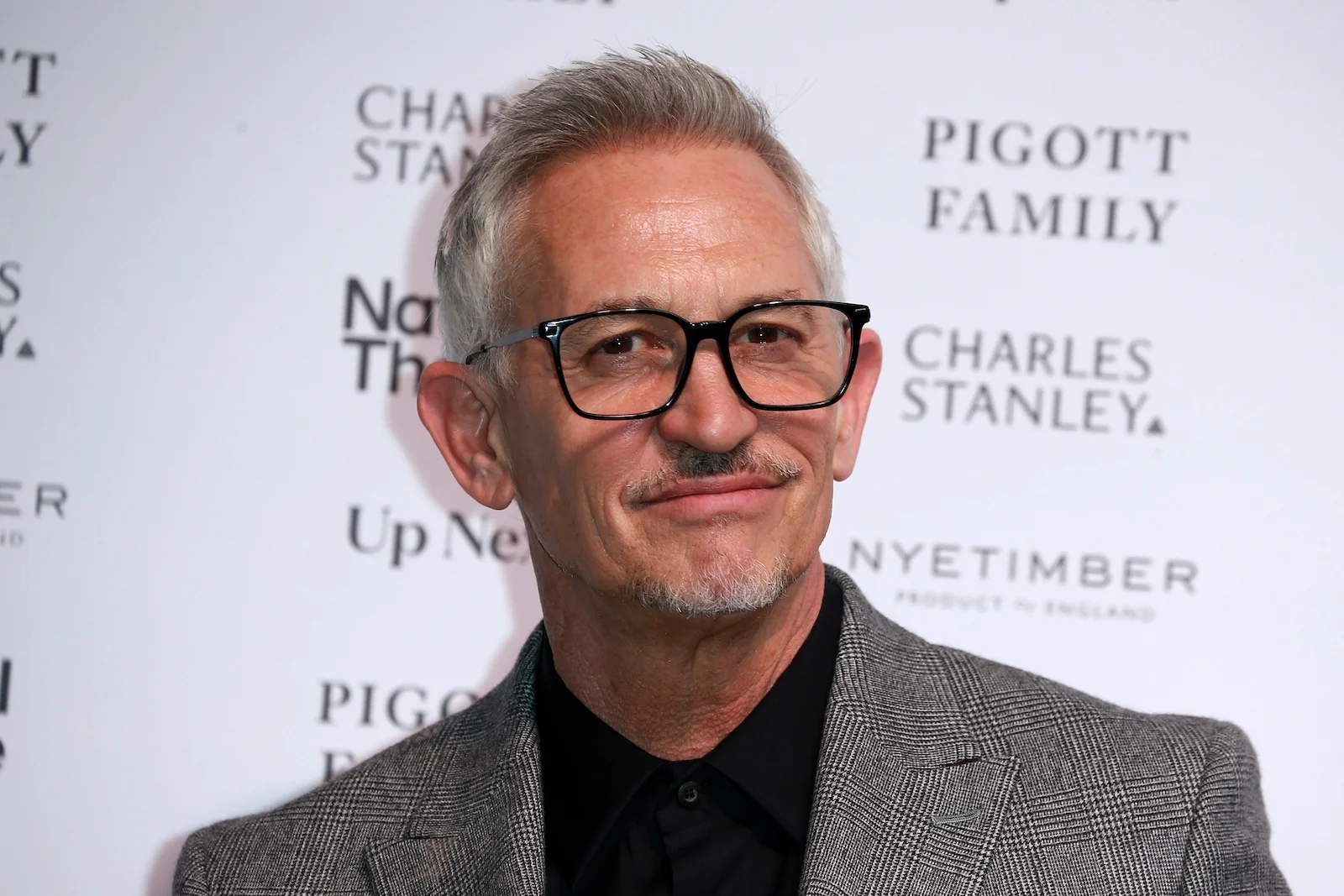
In recent years, the Western world’s professed commitment to free speech has been repeatedly put to the test. These challenges often arise at the intersection of politics, media influence, and the fraught debate over Israel and Palestine. The saga of Gary Lineker, the high-profile BBC presenter and former England football star, is just one of many examples revealing how criticism of Israeli policies—even when grounded in justice or humanitarian concerns—can be met with accusations of “antisemitism,” along with institutional pressure and exclusion from public platforms. This recurring pattern raises urgent questions about the nature of free expression in liberal democracies and exposes a growing list of taboo subjects no longer open to critique.
Lineker drew intense media backlash and lobbying pressure after reposting a video from a pro-Palestinian group critiquing Zionism. Although he quickly deleted the post and issued an apology, the BBC—responding to external criticism and pressure from pro-Israel organizations—removed him from his role before the official end of his contract. His case was neither the first of its kind, nor is it likely to be the last.
In recent years, public figures including former UK Labour leader Jeremy Corbyn, Oscar-winning director Ken Loach, activist Elsa McCuan, and academic and media analyst Marc Lamont Hill have all faced similar consequences for voicing support for Palestinian rights or criticizing Israeli policies. In many of these cases, the statements in question were neither discriminatory nor intended to provoke hate, yet they triggered serious accusations, professional penalties, and social ostracism.
A key tool in this suppression has been the International Holocaust Remembrance Alliance (IHRA) working definition of antisemitism, which has been adopted in many Western countries as a policy benchmark. While created to combat genuine antisemitism, the definition blurs the line between criticism of Israeli state actions and bigotry against Jewish people. Clauses equating comparisons of Israeli policies with Nazism, or denying Israel’s “right to exist,” enable the broad interpretation of almost any strong critique as antisemitic. In today’s politically charged media environment, such ambiguity is not a flaw but a feature—a mechanism to regulate dissenting speech.
View this post on Instagram
While Western democracies continue to uphold free speech as a foundational principle, the reality often betrays this ideal. In universities, newsrooms, legislatures, and across social media, expressing support for Palestinian rights or raising questions about Israeli policy can result in real professional and social consequences. On campuses, professors and students alike have faced suspensions, dismissals, and administrative censure for their advocacy. In the media, journalists who report on Gaza or the West Bank often face charges of bias—or worse, lose their jobs.
This trend turns freedom of speech into something conditional—a privilege extended only to those who remain within the ideological boundaries sanctioned by political elites and well-connected lobbying groups. Those who cross these invisible lines, even when making arguments grounded in human rights or factual evidence, are met with disproportionate repercussions. This creates a chilling effect across sectors, discouraging critical engagement on issues related to Israel and Palestine. What results is a form of self-censorship that flattens the public conversation and marginalizes those pressing for justice and accountability.
Public institutions like the BBC, which are mandated to uphold principles of impartiality, increasingly find themselves caught in an impossible bind. On one hand, they are expected to maintain journalistic standards; on the other, they are under immense pressure from influential lobbies and segments of public opinion. Recent events show that this impartiality is applied unevenly. The BBC has, in multiple cases, pulled documentaries on Palestine or approached well-documented events in Gaza with extreme caution. Meanwhile, even mild criticisms of Israeli policy have triggered swift, punitive responses.
This inconsistency becomes even more glaring in today’s hyperpolarized media environment, where social platforms serve as ideological battlegrounds. Public figures like Lineker operate under relentless scrutiny, where a single post—however benign—can cost them their careers. Yet this sensitivity appears strikingly one-sided. Those who express strong support for Israeli policies, even when using inflammatory or exclusionary language, rarely face comparable backlash. This reveals a troubling imbalance: neutrality is often not neutral at all, but a means of upholding the dominant narrative while silencing dissent.
The case of Gary Lineker and others like it raises a profound question: Is free speech truly a universal right, or is it a privilege enjoyed only by those whose views align with prevailing power structures? If the act of criticizing Zionism or supporting Palestinian rights—absent any hate or discrimination—results in marginalization or professional ruin, how “free” is public discourse in Western societies?
Genuine freedom of speech matters most when it protects dissenting, uncomfortable, and even controversial views. Across many Western societies today, what we increasingly see is a version of “controlled freedom,” in which certain topics are cordoned off by political sensitivities and enforced silence. These taboos, often rooted in geopolitical priorities and institutional power, are maintained not just by governments but by media platforms and cultural gatekeepers. As a result, dissenting voices are either silenced outright or gradually pushed to the margins, while public debate is reshaped to reinforce a narrow set of permissible viewpoints.
Lineker’s story may be framed as a media controversy, but it reflects something far more consequential. It is a litmus test for the West’s self-image as a champion of liberal democracy. When open expression becomes a source of anxiety, when challenging power invites exile, when the fear of speaking freely becomes internalized—can freedom of speech still be called a core value?
True free expression demands room for error, for discomfort, and for principled dissent. This is particularly vital when discussing the Israel-Palestine conflict, where stakes are high and competing historical narratives are deeply entrenched. If Western democracies are serious about defending free speech, they must protect the right to critique all policies and governments—even those with powerful defenders.
Gary Lineker’s removal from the BBC is not an anomaly; it is a symptom. The broader trend—where support for Palestinian rights is met with institutional sanction—should alarm anyone concerned with the future of liberal discourse. If free speech is to remain a universal democratic value, it must be extended to all voices, not just the safe or the sanctioned. Otherwise, what remains is not freedom—but a carefully curated illusion of it.