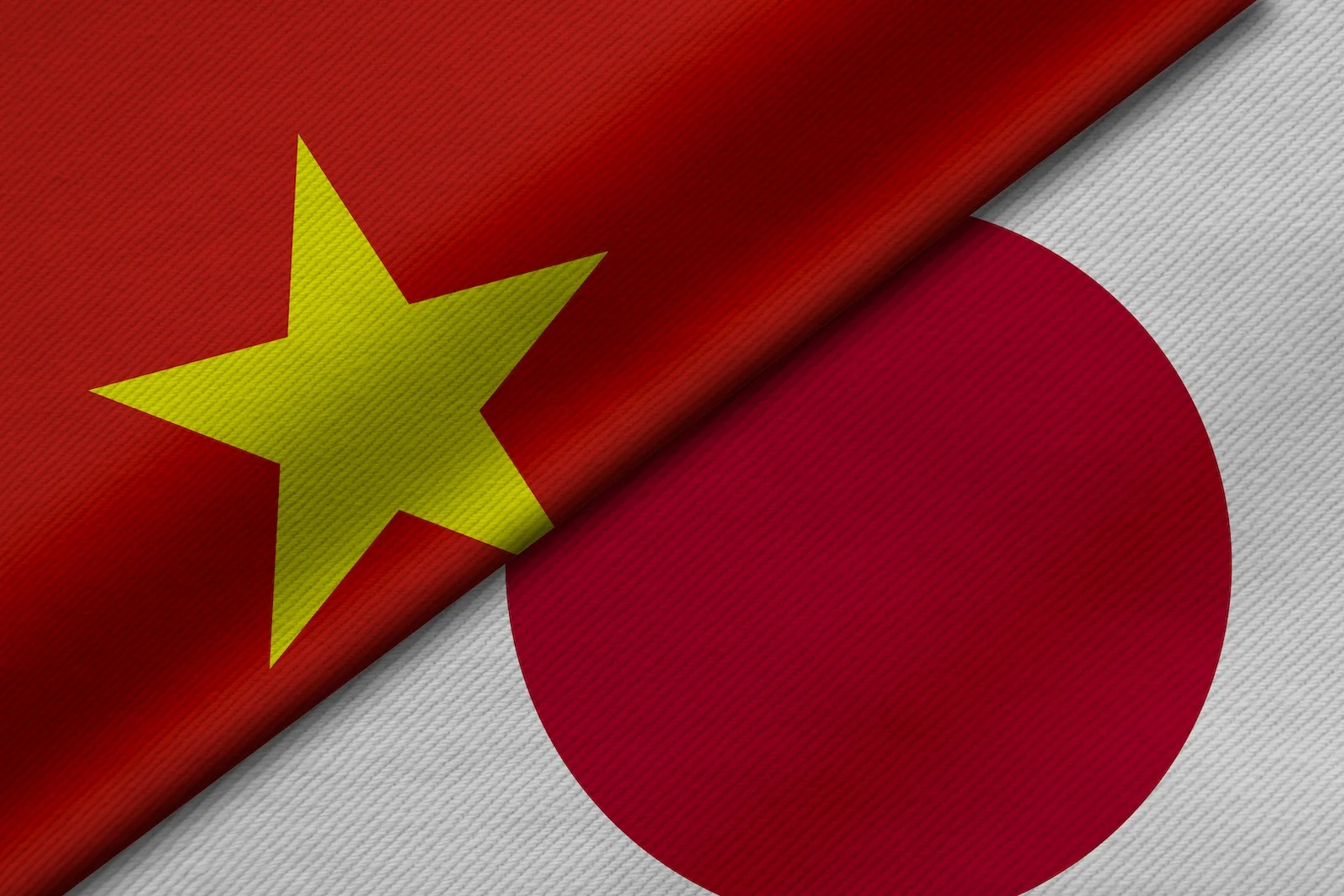


Hormuz is Making Natural Allies of Vietnam and Japan
The energy shock triggered by the war involving Iran since late February has raised a question that extends far beyond the price of oil: in an increasingly fragile international system, what truly constitutes a strategic partnership?
For decades, bilateral relationships have been measured through familiar indicators: trade volumes, investment flows, development assistance, political trust, and people-to-people exchanges. These pillars remain important. Yet their significance becomes most apparent under pressure. A partnership acquires genuine strategic value when it helps both sides reduce vulnerability, absorb shocks, and preserve stability during periods of uncertainty.
This is the lens through which Vietnam–Japan relations should now be viewed.
Japanese Prime Minister Takaichi Sanae’s visit to Vietnam from May 1 to 3 was more than a routine diplomatic engagement. It occurred at a moment when the Middle East energy crisis was exposing one of the central vulnerabilities of Asia’s political economy: even the region’s most dynamic and deeply integrated economies remain dependent on geopolitical chokepoints beyond their control.
The Strait of Hormuz is more than a narrow maritime corridor carrying oil and gas. It has become a symbol of globalization’s fragility. Disruption there reverberates across fuel prices, shipping costs, aviation networks, fertilizer supplies, food markets, industrial production, inflation rates, and investor expectations. Countries thousands of miles from the battlefield can still find themselves drawn into the crisis through tankers, pipelines, insurance markets, logistics chains, and speculative financial pressures.
According to the U.S. Energy Information Administration, approximately 20 million barrels of oil passed through the Strait of Hormuz each day in 2024, accounting for roughly one-fifth of global oil and petroleum-product consumption, more than a quarter of seaborne oil trade, and nearly one-fifth of global LNG trade. Most of these flows are destined for Asia. For both Japan and Vietnam, this is no longer an abstract geopolitical concern. It is a direct economic vulnerability capable of driving up transportation costs, increasing production expenses, creating fuel-price volatility, and complicating macroeconomic management.
Japan’s exposure is particularly revealing. Despite its advanced technology, sophisticated industrial base, and high standards of governance, the country remains heavily dependent on Middle Eastern energy supplies. During the first half of 2025, more than 95 percent of the crude oil processed by Japanese refineries originated in the Middle East. Any disruption near Hormuz therefore has immediate implications for Japan’s energy security, affecting everything from transportation and electricity generation to petrochemical production and industrial competitiveness.
This illustrates one of the defining paradoxes of modern power. The more technologically advanced and industrialized an economy becomes, the more dependent it is on stable flows of energy, raw materials, and information that it does not fully control.
Vietnam confronts a different, though equally consequential, challenge. As one of Asia’s fastest-growing manufacturing, export, and logistics hubs, it cannot afford to regard energy merely as a technical input. Energy sits at the heart of its development strategy, underpinning aviation, maritime transport, processing industries, agriculture, fisheries, and the country’s ambition to move higher up regional value chains. When oil prices fluctuate sharply, the question is not simply whether the government can stabilize prices. What is being tested is the resilience of Vietnam’s broader growth model.
When Vietnam and Japan discuss crude-oil access, strategic stock releases, diversification of inputs for the Nghi Son Refinery, or aviation-fuel security, the conversation extends beyond assistance. The real question is whether a strategic partnership can be translated into practical resilience.
Vietnam should not be viewed merely as the party in need, nor Japan as the benefactor. In an increasingly integrated regional production system, Vietnam’s stability is also a Japanese interest. If Vietnam experiences energy disruptions, rising logistics costs, production slowdowns, or investment uncertainty, Japanese supply chains throughout Asia will feel the consequences. Conversely, if Japan cannot remain a reliable source of capital, technology, and energy cooperation, its regional influence will inevitably diminish.
This is why Vietnam–Japan relations are evolving beyond the traditional donor-recipient framework toward a more mature form of strategic interdependence.
Since establishing diplomatic relations in 1973, the two countries have steadily deepened their cooperation, culminating in the elevation of ties to a Comprehensive Strategic Partnership for Peace and Prosperity in Asia and the World in 2023. Japan remains Vietnam’s largest provider of official development assistance and one of its most important partners in investment, trade, labor cooperation, and educational exchange.
Energy cooperation today is therefore not an improvised response to crisis. It is the logical extension of decades of accumulated trust and institutional engagement.
Yet deeper cooperation also demands sharper strategic judgment. Initiatives such as POWERR Asia and other emerging energy frameworks should not be embraced uncritically. Vietnam must carefully assess whether these mechanisms genuinely reduce dependence or merely reorganize existing dependencies in more sophisticated forms.
The distinction is significant. Cooperation in crude oil, LNG, strategic reserves, biofuels, and critical minerals is undoubtedly valuable. But if Vietnam simply joins frameworks designed elsewhere, it risks becoming an object of stabilization rather than a co-architect of stability. One path integrates Vietnam into networks that help the regional system function more efficiently. The other gives Vietnam bargaining power, policy-design capacity, and a meaningful voice in shaping the rules themselves.
The deeper question for Vietnam is therefore not how much oil, capital, or technology Japan can provide. It is what domestic capabilities Vietnam can build through the partnership.
If energy cooperation is confined to short-term supply security, it will be useful but limited. It becomes strategically transformative only if it enables Vietnam to strengthen strategic reserves, diversify import sources, modernize refining and petrochemical infrastructure, improve fuel-market governance, enhance risk-forecasting capacity, increase energy efficiency, and master technologies essential to the green transition.
Vietnam’s objective should not simply be to survive the next crisis. It should be to become structurally less vulnerable to every crisis that follows.
Japan, meanwhile, must also reconsider its role. For decades, it has been viewed primarily as a provider of development assistance, a source of high-quality investment, and a trusted technology partner. Those roles remain important, but they are no longer sufficient. If Japan intends to sustain its influence in Asia, it must increasingly position itself as a co-builder of regional resilience.
That means doing more than exporting capital, technology, and standards. It requires sharing risks, transferring capabilities, creating space for emerging partners, and recognizing that Asia’s future order cannot be designed exclusively by traditional centers of power.
For outside observers, the significance of Vietnam–Japan relations lies precisely here. This is not merely a bilateral story linking a developed economy and an emerging one. It is part of a broader question confronting the international system: what kind of order can middle and rising powers build in an era of fragmentation?
As U.S.–China competition intensifies, wars disrupt energy markets, protectionism resurfaces, technology becomes increasingly politicized, and climate change threatens the foundations of development, many countries are reluctant to be forced into rigid geopolitical blocs. They require another model—networks of cooperation that are practical enough to solve real-world problems, flexible enough to avoid unnecessary confrontation, and deep enough to generate meaningful capacity.
Vietnam and Japan do not need to become treaty allies to play such a role. But they can become “natural allies” in a broader strategic sense: partners bound by long-term interests, political trust, resilient supply chains, skilled labor, clean technology, sustainable development, and support for a rules-based regional order.
Still, “natural” does not mean inevitable.
No strategic relationship matures on goodwill alone. Vietnam–Japan relations will become truly consequential only if they pass three critical tests.
The first concerns value distribution. Who captures the highest-value segments of cooperation? If Japan retains control over technology, standards, brands, markets, and data while Vietnam primarily contributes land, labor, incentives, and stability, the relationship may be beneficial but not transformative. Vietnam cannot remain satisfied with being a reliable location. A country seeking genuine strategic autonomy must become an indispensable source of capability.
The second test is absorptive capacity. Technology transfer means little if the receiving country lacks strong firms, capable universities, adaptive institutions, coherent policies, and deep pools of human capital. Technology does not flow into a vacuum. It flows into ecosystems capable of retaining, adapting, and commercializing knowledge.
The third test is strategic autonomy. Vietnam needs Japan, but the relationship should not be interpreted as a step toward bloc politics. Japan values Vietnam, but it also remains embedded within a U.S.-led alliance structure and maintains its own security priorities in Northeast Asia. Cooperation between Hanoi and Tokyo must therefore be deep enough to build capacity, flexible enough to avoid bloc formation, and strategic enough to matter without undermining Vietnam’s long-standing commitment to an independent foreign policy.
That is the mature meaning of natural allies: not two countries repeating familiar diplomatic slogans, but two countries helping one another withstand systemic pressure.
The next phase of Vietnam–Japan cooperation should not be judged primarily by trade volumes or investment statistics, important though they remain. Instead, it should be measured by harder questions. Can Vietnam expand its strategic energy reserves? Can it reduce dependence on a narrow set of supply routes? Can it increase localization in strategic industries? Can it train more engineers, managers, and data specialists? Can it help shape emerging technological and environmental standards rather than simply comply with rules written elsewhere?
Japan should confront equally demanding questions. Is Tokyo prepared to share deeper technologies? Will it help partners such as Vietnam move further up the value chain, or merely provide a more stable production base for Japanese industry? Does Japan see Vietnam as a genuine partner in shaping regional order, or simply as an important node in its own de-risking strategy?
Mature partnerships should not shy away from difficult questions. They require them to avoid complacency.
The Middle East energy shock offers a moment of strategic clarity. It demonstrates that security in the twenty-first century is no longer defined solely by military power. It increasingly resides in energy systems, data networks, ports, semiconductors, critical minerals, food security, skilled labor, technology standards, and policy-forecasting capacity.
A strong country is not merely one that responds effectively after a crisis. It is one that has built sufficient resilience to prevent a crisis from derailing its long-term trajectory.
From Hormuz to Nghi Son, from crude oil to LNG, from strategic reserves to the green transition, the Vietnam–Japan story is about far more than energy. It reflects a new understanding of power: the capacity of nations to build resilience before crisis becomes destiny.
In an increasingly uncertain world, that may prove to be the most consequential form of power of all.