
How the Genovese Crime Family Outlasted Its Rivals
Among the criminal organizations that have shaped the American Mafia, few have wielded the influence, accumulated the wealth, or demonstrated the organizational resilience of the Genovese crime family. Widely regarded as one of the most powerful and sophisticated Mafia organizations in the United States, the family has cultivated a reputation for secrecy, discipline, and an ability to exercise influence without attracting the public attention that has helped destroy its rivals. Its greatest strength has often been its capacity to operate beyond the spotlight, maintaining power through carefully constructed hierarchies, strategic alliances, and a willingness to employ violence when its interests are threatened.
Secrecy and omertà, the Mafia’s traditional code of silence, have long been central to the Genovese family’s internal culture. Members are expected to remain in the shadows, avoid unnecessary publicity, and subordinate their personal ambitions to the organization’s survival. Few episodes better illustrate the consequences of violating, or even appearing to violate, these principles than the experience of Joseph Valachi, whose eventual cooperation with federal authorities exposed the inner workings of the American Mafia.
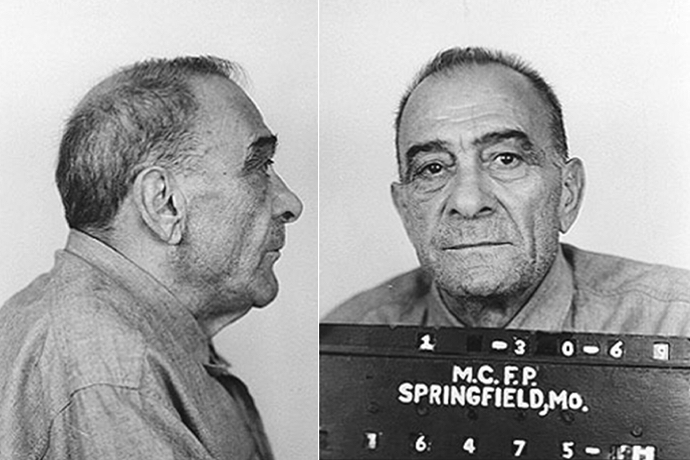
Valachi and crime boss Vito Genovese were imprisoned together following narcotics convictions when Valachi became convinced that he had fallen under suspicion. According to Valachi, Genovese gave him “the kiss of death,” a gesture he interpreted as a warning that his life was in danger. His fear became so overwhelming that he murdered another inmate whom he mistakenly believed had been assigned to kill him. Convinced that the organization intended to eliminate him, Valachi eventually became a government informant. His subsequent testimony provided Americans with an unprecedented account of the Mafia’s internal structure and its methods of enforcing obedience.
For the Genovese organization, loyalty was not simply a matter of personal allegiance. It was an essential mechanism of institutional survival. Informants and defectors threatened not only individual members but also the elaborate networks of relationships and criminal enterprises upon which the family depended. The threat of retaliation served as a powerful deterrent, reinforcing a culture in which silence and obedience were inseparable from membership.
The family’s devotion to secrecy extends far beyond its treatment of informants. Its organizational structure has historically relied on layers of insulation, with crews and individual members possessing limited knowledge of the broader hierarchy. Even experienced associates have sometimes remained uncertain about who exercised ultimate authority. This arrangement has complicated law enforcement investigations while protecting senior leaders from direct exposure to criminal activity.
Vincent Cafaro, a Genovese member who became a government witness, offered particularly revealing testimony about this system. He described an organization that concealed its actual leadership behind individuals who appeared to occupy positions of power. According to Cafaro, Frank Tieri served as a front boss while Philip Lombardo exercised considerable authority behind the scenes. Anthony Salerno, long regarded by investigators as the family’s leading figure, similarly became associated with a leadership arrangement in which Vincent “The Chin” Gigante wielded substantial power.
The distinction had significant consequences. During the Mafia Commission Trial, federal prosecutors secured the conviction of Salerno, whom they identified as a leading Genovese boss. Subsequent testimony complicated the public understanding of the family’s leadership, revealing the extent to which its internal hierarchy had been deliberately obscured.
Gigante himself became notorious for an extraordinary performance intended to frustrate investigators. For years, he wandered the streets of New York City wearing a bathrobe, apparently disoriented and muttering incoherently. His seemingly erratic behavior helped sustain claims of mental illness, complicating efforts to bring him to trial. Behind this carefully cultivated public image, prosecutors maintained, stood one of the most influential figures in American organized crime.
The use of front bosses, concealed leadership arrangements, and compartmentalized criminal operations became defining characteristics of the Genovese organization. By obscuring the identities of its decision-makers, the family reduced the vulnerability of its senior leadership and avoided some of the destructive internal rivalries that plagued competing Mafia organizations. The system did not make the Genoveses immune to prosecution, but it made their leadership considerably more difficult to penetrate.
The foundations of this approach can be traced to the turbulent transformation of American organized crime during the early 1930s. The Castellammarese War of 1930–1931 brought competing Mafia factions into violent conflict, ultimately helping dismantle an older order dominated by traditional Sicilian bosses. From the upheaval emerged a younger generation determined to replace personal rivalries and arbitrary rule with a more systematic structure of criminal governance.
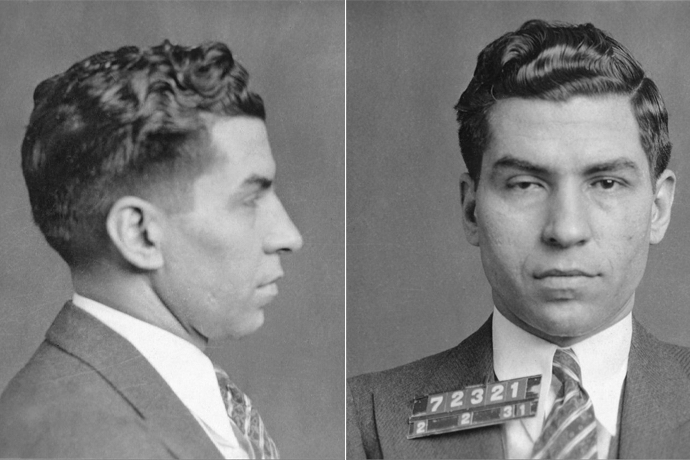
Charles “Lucky” Luciano was central to this transformation. Following the destruction of the old leadership, Luciano helped establish the Commission, a governing body designed to resolve disputes among Mafia families, regulate relationships between criminal organizations, and prevent conflicts from undermining their collective interests. Rather than allowing a single individual to exercise unchecked authority over the American Mafia, the Commission provided a forum in which powerful bosses could negotiate matters affecting the broader criminal underworld.
The Commission also helped coordinate leadership disputes, territorial questions, and decisions involving serious violations of Mafia rules. Its authority rested not on a formal legal system but on the collective influence of the organizations represented within it. For Luciano, the objective was practical: stability was more profitable than perpetual warfare.
Luciano’s ambitions extended beyond New York City. He envisioned a criminal network in which Italian-American Mafia families could establish partnerships with organizations and individuals from other ethnic backgrounds, allowing them to cooperate across geographic and commercial boundaries. The idea of a National Crime Syndicate reflected this broader vision of organized crime as a system of interconnected enterprises rather than a collection of isolated neighborhood gangs.
Although the precise structure and reach of such a national syndicate remain subjects of historical debate, the Commission became an enduring institution within the American Mafia. Its importance was demonstrated by the willingness of powerful regional bosses to seek assistance from New York when disputes threatened their interests.
Carlos Marcello of New Orleans and Santo Trafficante Jr. of Tampa, Florida, for example, maintained extensive criminal networks and occasionally found themselves at odds. Their disagreements drew attention from influential figures in New York, illustrating how conflicts originating far from the city’s five families could become matters of national concern. Such episodes underscored the Commission’s role in managing relationships among powerful criminal organizations.
For the organization that eventually became known as the Genovese family, Luciano’s legacy was especially consequential. He established a model of governance that emphasized organizational continuity, strategic cooperation, and the concentration of influence within institutions rather than solely in the hands of individual bosses.
Following Luciano’s imprisonment and eventual deportation to Italy, leadership of the family passed to Frank Costello, a figure whose temperament differed considerably from that of many of his contemporaries. Known as “the prime minister of the underworld,” Costello cultivated political relationships, pursued strategic alliances, and preferred negotiation to unnecessary confrontation.
His approach reflected a recognition that criminal power depended on more than intimidation. Access to political influence, legitimate businesses, and established networks of cooperation could generate profits while reducing exposure to law enforcement. Costello understood that maintaining relationships with people outside the criminal underworld was often as important as controlling those within it.
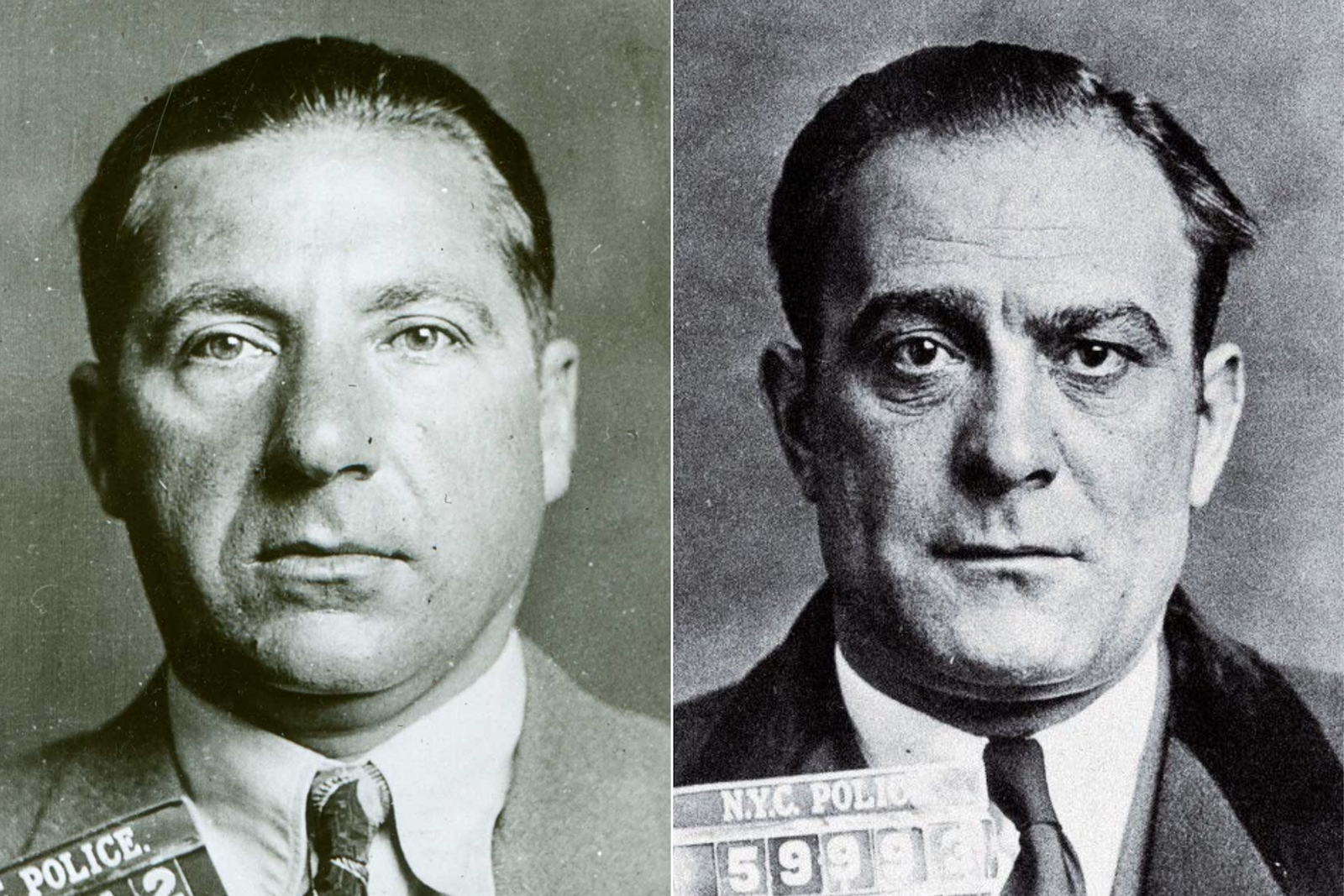
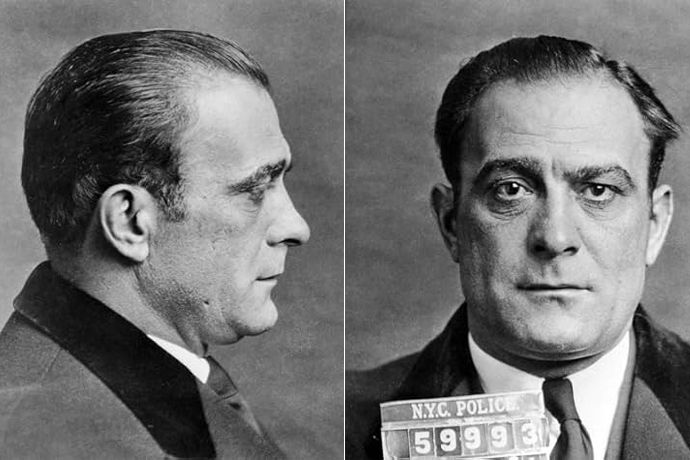
Vito Genovese, Luciano’s former underboss, represented a markedly different philosophy. Whereas Costello preferred diplomacy and accommodation, Genovese was more closely associated with ruthless ambition and the use of violence to consolidate authority. Their rivalry ultimately culminated in an assassination attempt against Costello in 1957.
The gunman was Vincent Gigante, who would later become one of the family’s most powerful leaders. Costello survived the attack and declined to identify his assailant, eventually relinquishing his position. Genovese assumed control, and the organization subsequently became associated with his name.
Together, Luciano, Costello, and Genovese left three distinct legacies that would shape the family’s development. Luciano contributed a vision of national organization and centralized governance. Costello demonstrated the value of diplomacy, political relationships, and strategic partnerships. Genovese reinforced the importance of intimidation and the willingness to employ violence against perceived threats.
The combination helped produce an organization capable of operating through both cooperation and coercion, adjusting its methods to changing circumstances while preserving its broader interests.
Yet Vito Genovese’s own tenure at the top proved unexpectedly brief. In 1959, he was convicted on federal narcotics charges and sentenced to prison. The circumstances surrounding the prosecution subsequently generated considerable speculation, particularly because the alleged involvement of such a powerful Mafia leader in a drug transaction appeared inconsistent with the layers of insulation normally separating senior bosses from lower-level criminal operations.
Various theories emerged suggesting that Genovese had been maneuvered into a vulnerable position by rivals. Some accounts implicated Luciano, while others pointed toward Carlo Gambino, the increasingly influential leader of the Gambino crime family. These allegations have never been conclusively established, and the precise role of Mafia rivalries in Genovese’s downfall remains disputed.
What is clear is that his imprisonment altered the balance of power within the American Mafia. Carlo Gambino emerged as one of the principal beneficiaries of the changing leadership landscape, expanding his influence at a time when competition among the major families remained intense.
Joseph Bonanno, another powerful New York boss, pursued his own ambitions for supremacy. His involvement in a plot against rival Commission leaders contributed to a prolonged struggle within the Bonanno family during the 1960s. The resulting internal conflict weakened his position, and Bonanno ultimately relinquished leadership and settled in Arizona.
Gambino, meanwhile, consolidated his standing and became widely regarded as one of the most influential figures in American organized crime. His reputation as “the boss of bosses” reflected the extraordinary authority attributed to him, even though the Commission’s structure did not formally place all Mafia families under a single supreme leader.
When Gambino died in 1976, his passing marked the end of an era. The attention surrounding his funeral demonstrated the remarkable stature he had achieved within the criminal underworld. His death was sometimes likened to that of a religious patriarch, an indication of the reverence with which other Mafia figures regarded him.
Although Vito Genovese and Carlo Gambino both rose to lead the families that would bear their names in 1957, their subsequent fortunes diverged dramatically. Genovese spent his remaining years in prison, while Gambino continued consolidating influence through alliances, disciplined leadership, and control of lucrative criminal enterprises.
Following Gambino’s death, leadership passed to his cousin and chosen successor, Paul Castellano. Together, their successive administrations established a period during which the Gambino organization was widely considered the dominant force in American organized crime.
Yet the Genovese family remained a formidable competitor. Following Vito Genovese’s imprisonment and death, its leadership evolved through a succession of influential figures, including Philip Lombardo, Frank Tieri, Anthony Salerno, and Vincent Gigante. The precise distribution of authority was frequently difficult to determine, a reflection of the organization’s deliberate cultivation of secrecy.
Unlike rivals whose internal disputes attracted public attention, the Genoveses developed a reputation for preserving organizational cohesion while maintaining profitable criminal enterprises. Their leadership recognized that discretion could be more valuable than notoriety and that sustained influence required careful management of relationships with other Mafia families.
Some accounts suggest that even the powerful Gambino leadership regarded cooperation with the Genoveses as a strategic necessity. Whether motivated by mutual respect or concern over the consequences of open conflict, the relationship reflected the extraordinary influence both organizations exercised within the American Mafia.
Other crime families struggled to achieve comparable stability. The Bonanno, Lucchese, and Colombo organizations experienced periods of internal warfare, leadership disputes, damaging informant testimony, and aggressive law enforcement investigations. These developments weakened their ability to compete consistently with the more powerful Genovese and Gambino organizations.
The Chicago Outfit also exercised substantial influence, particularly in the Midwest and historically in Las Vegas, while regional organizations associated with Stefano Magaddino in Buffalo, Carlos Marcello in New Orleans, and Santo Trafficante Jr. in Tampa maintained important criminal networks. Yet their geographic reach and institutional structures differed from those of New York’s most powerful Mafia families.
The balance between the Genovese and Gambino organizations changed dramatically in 1985.
On December 16 of that year, Paul Castellano and his bodyguard, Thomas Bilotti, were assassinated outside Sparks Steak House in Manhattan. The killings were orchestrated by John Gotti and his associates, who sought to replace Castellano and seize control of the Gambino family.
The assassination violated the Mafia’s established expectation that the murder of a boss required approval from other senior leaders. Its consequences extended far beyond the Gambino organization, threatening the Commission’s authority and exposing the fragility of the system Luciano had helped establish decades earlier.
Gotti’s ascent also introduced a style of leadership that contrasted sharply with the secrecy traditionally favored by the Genoveses. Where Gigante cultivated obscurity, Gotti embraced celebrity. His expensive suits, conspicuous public appearances, and willingness to engage with the news media earned him the nickname “the Dapper Don.”
Public fascination made Gotti a household name, but the attention came at a substantial cost. Federal investigators intensified their efforts to dismantle his organization, while surveillance and recorded conversations exposed sensitive details about its operations and leadership.
Gotti’s reliance on family members and trusted associates further complicated internal relationships. His promotion of relatives and the eventual succession arrangements involving his son and brother created tensions with other Mafia leaders, some of whom questioned their legitimacy and authority.
The most damaging blow came from within. Salvatore “Sammy the Bull” Gravano, Gotti’s underboss, became a government witness and provided testimony that helped secure Gotti’s conviction. His cooperation demonstrated the vulnerability of an organization whose senior leadership had become increasingly exposed to law enforcement.
Meanwhile, the Genovese leadership viewed Castellano’s assassination as a direct challenge to established Mafia governance. Gigante and his allies were implicated in efforts to retaliate against Gotti, reflecting the dangerous tensions produced by his unauthorized seizure of power.
Those conflicts never produced the decisive removal of Gotti by rival Mafia leaders. Instead, federal authorities arrested him in 1990, and he was convicted in 1992 on racketeering and murder-related charges. He remained imprisoned until his death in 2002.
The Gotti era inflicted lasting damage on the Gambino family’s leadership, cohesion, and reputation. Although the organization continued operating, its internal difficulties and the prosecution of prominent members undermined the dominance it had enjoyed during the Gambino-Castellano period.
For the Genovese family, the weakening of its principal rival created an opportunity to expand its relative influence. Its discreet leadership structure, carefully managed alliances, and organizational continuity offered a striking contrast to the turmoil that had engulfed the Gambinos.
The family’s interests were never confined to the United States. Over time, Italian-American organized crime developed relationships with criminal networks in Italy, Canada, and Latin America, including organizations involved in narcotics trafficking and other transnational enterprises.
Groups such as the ’Ndrangheta, Sicilian Cosa Nostra, and Camorra have participated in international criminal markets that also intersect with American Mafia interests. The precise nature and extent of the Genovese family’s relationships with these organizations have varied, and broad claims of direct institutional partnerships require evidence tied to specific investigations.
Nevertheless, the international dimensions of organized crime have long presented opportunities for organizations capable of coordinating illicit commerce across borders. The Genoveses’ emphasis on discretion and trusted intermediaries has historically been compatible with such operations, even as federal investigations have continued targeting their activities.
Indeed, the family’s reputation for secrecy should not be confused with immunity from law enforcement. Federal prosecutors have repeatedly charged Genovese members and associates with racketeering, extortion, illegal gambling, and related offenses. The organization has survived substantial legal pressure, but its continued existence does not mean investigators have been unable to penetrate its operations.
What distinguishes the Genovese family is its demonstrated capacity for adaptation. Its leadership has repeatedly adjusted to changing conditions, absorbed the loss of senior figures, and preserved elements of an organizational structure established generations earlier.
The decline of the Gambino family’s dominance during and after the Gotti years strengthened the Genoveses’ relative position within the American Mafia. Yet the more revealing development was the endurance of principles associated with the family’s earliest leaders.
Luciano’s emphasis on institutional governance provided a framework for managing competing interests. Costello’s preference for diplomacy reinforced the importance of alliances, influence, and access to legitimate institutions. Genovese’s ruthless pursuit of authority established a contrasting tradition of coercion and intimidation.
These approaches were not always compatible, and their application changed considerably across different generations of leadership. Together, however, they contributed to a criminal organization that learned to balance negotiation with force, ambition with discipline, and the pursuit of profit with the preservation of secrecy.
The history of the Genovese crime family is therefore more than a succession of notorious gangsters and violent confrontations. It is also a study in how illicit institutions maintain power, manage internal rivalries, and survive sustained pressure from the state.
Its most consequential leaders understood that notoriety could be dangerous, organizational fragmentation could be fatal, and influence often depended on remaining invisible to those outside the inner circle.
The Genovese family has endured not because it escaped every prosecution or defeated every rival, but because it developed institutions capable of surviving the loss of individual leaders. In an underworld frequently defined by betrayal, ambition, and spectacular violence, that capacity for continuity may be its most enduring source of power.