
How U.S. Influence Backfired in Brazil
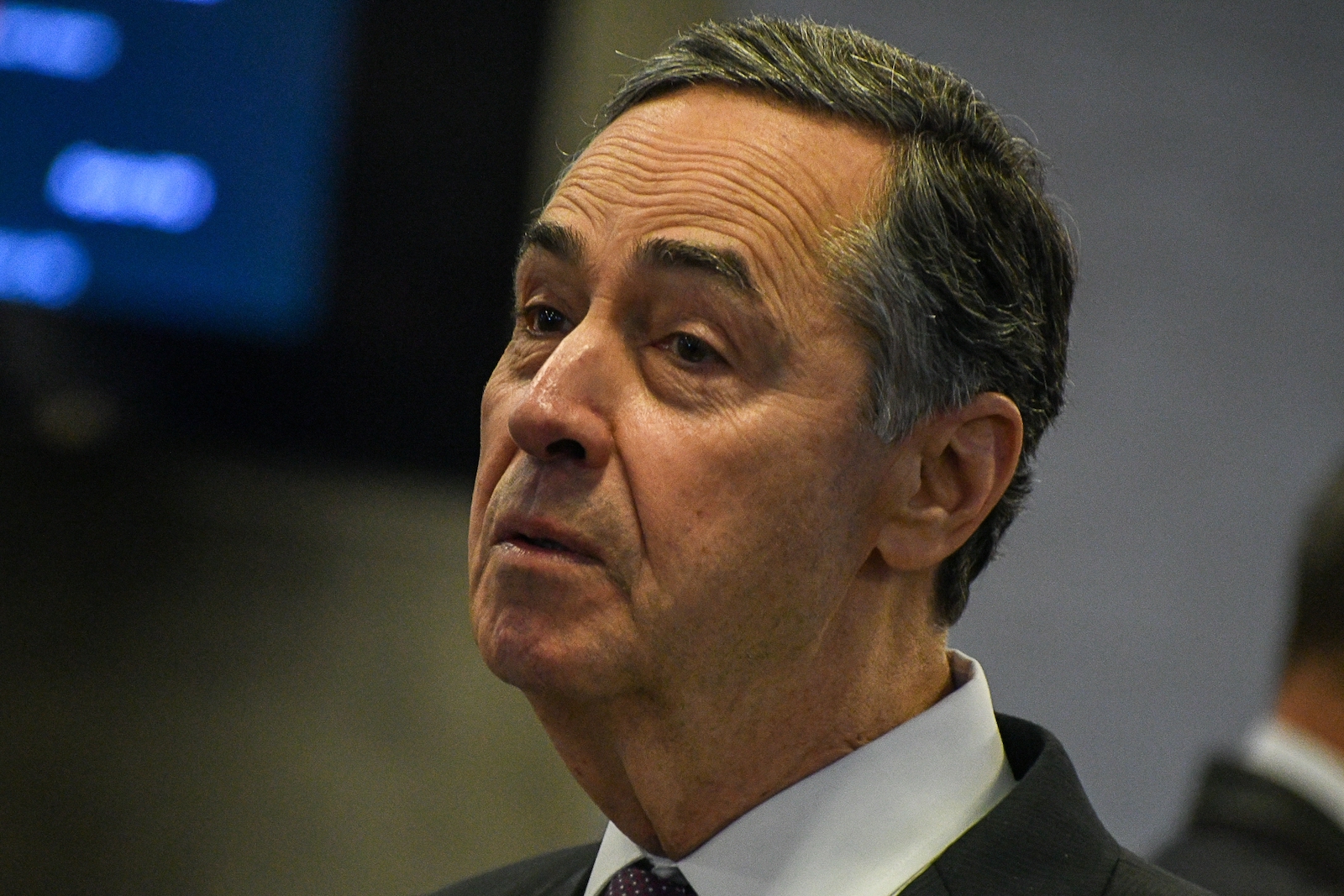
In May 2025, Luís Roberto Barroso, then president of Brazil’s Supreme Federal Court (STF) and former president of the Superior Electoral Court (TSE), made a striking admission during an event in New York. While overseeing Brazil’s 2022 presidential election, he said, he had met at least three times with the U.S. chargé d’affaires in Brasília to request public American statements supporting Brazil’s electoral system.
“I think it had some effect,” Barroso remarked, “because Brazilian military officers do not like to quarrel with the United States, where they receive their training and equipment.”
The comment was notable not merely because of what it revealed about the 2022 election, but because of what it suggested about a much longer history. Far from an isolated episode, Barroso’s admission fits within a broader pattern of American engagement in Brazilian politics, one that has evolved over decades from overt intervention to more subtle forms of influence.
The roots of that history stretch back to 1964, when Washington actively supported the military coup against President João Goulart through Operation Brother Sam and a covert program known as ALRACY-1. Through those efforts, the United States provided financial and logistical support to civilian opposition groups, most notably the Instituto Brasileiro de Ação Democrática (IBAD). The objective was clear: fund propaganda campaigns, strengthen political mobilization efforts, and build media operations capable of weakening the Goulart government.
These civilian networks, operating alongside military pressure, helped create the conditions that culminated in the coup. In the years that followed, elements of this infrastructure became institutionalized under figures such as General Golbery do Couto e Silva. Over time, however, the methods changed. Direct intervention gradually gave way to a more sophisticated model of influence that relied less on military power and more on diplomatic signaling, judicial cooperation, think tanks, and democracy-promotion initiatives.
That evolution was visible during the period leading up to Brazil’s 2022 election.
Between 2021 and 2022, a succession of senior U.S. officials visited Brazil at politically sensitive moments. CIA Director William Burns met with President Jair Bolsonaro and members of his inner circle in July 2021. National Security Advisor Jake Sullivan, Under Secretary of State Victoria Nuland, and Defense Secretary Lloyd Austin also traveled to Brazil or met with senior Brazilian officials as tensions over the election intensified.
These visits were accompanied by increasingly public expressions of confidence in Brazil’s electoral system. After Bolsonaro questioned the reliability of electronic voting machines in July 2022, Acting Chargé d’Affaires Douglas Koneff issued an official statement describing Brazil’s electoral system as one that “serves as a model for other nations” and expressing confidence that the election would faithfully reflect the will of Brazilian voters.
Alongside these official diplomatic efforts operated a broader ecosystem of U.S.-linked organizations engaged in election-related analysis and technical assistance.
Among the most prominent was the Atlantic Council’s Digital Forensic Research Lab (DFRLab), which receives funding from the National Endowment for Democracy (NED), USAID, and the U.S. State Department. Its reports on online disinformation were later cited in Brazilian judicial proceedings, adding to concerns among critics that foreign-supported organizations were influencing domestic political debates.
The NED also financed initiatives focused on monitoring online discourse, combating disinformation, encouraging democratic dialogue, and reducing political polarization. Many of these projects were carried out through Brazilian organizations and in partnership with the International Republican Institute (IRI) and the National Democratic Institute (NDI).
Whether these efforts were neutral democracy-support programs or something more politically consequential remains disputed. What is not disputed is that they became part of a broader controversy over the role of foreign actors in Brazil’s democratic process.
Four years after the election, the consequences remain visible.
Flávio Bolsonaro continues to challenge the legitimacy of the 2022 electoral process, arguing that external diplomatic pressure influenced the political environment surrounding the vote. Debates over the conduct of the TSE and STF remain active, and public confidence in the impartiality of key institutions has yet to fully recover.
For many Bolsonaro supporters, the most visible symbol of that erosion is the legal and political fate of former President Jair Bolsonaro. His removal from immediate electoral competition has reinforced perceptions that Brazil’s institutions no longer operate as neutral arbiters. Whether that perception is justified or not, it has become a powerful force in Brazilian politics.
Those perceptions matter not only for Brazil, but also for the United States.
The extensive American engagement visible during the 2021–2022 period has generated strategic blowback. By appearing to align itself with particular institutions and narratives during an intensely polarized political dispute, Washington reinforced long-standing suspicions of foreign interference in Latin America’s largest democracy.
Efforts intended to strengthen democratic institutions may have simultaneously weakened confidence in their neutrality among large segments of the population. In doing so, they complicated Washington’s ability to maintain stable relationships across Brazil’s political spectrum.
This challenge emerges as China and Russia continue expanding their economic and diplomatic presence throughout Latin America. Against that backdrop, perceptions of American interference carry costs that extend well beyond domestic Brazilian politics.
A country that views Washington as a partisan actor is less likely to regard the United States as a reliable long-term partner. The polarization that followed the 2022 election, combined with the fallout from January 8, 2023, continues to shape Brazilian politics and complicate cooperation on regional security, supply-chain resilience, and critical minerals.
The long-term cost is strategic. Policies perceived as undermining the sovereignty or legitimacy of partner nations can ultimately diminish America’s own influence throughout the hemisphere.
If Washington hopes to reduce future blowback while protecting its long-term interests in Latin America, it should consider several operational changes.
The State Department and National Security Council should establish a formal Election-Period Diplomatic Restraint Protocol. Such a framework would limit high-level visits, public endorsements of electoral institutions, and requests for foreign support from domestic judicial actors during the twelve months surrounding major national elections. Any exceptions should require formal written justification to Congress.
Congress should also require greater transparency and oversight for NED, USAID, IRI, and NDI projects involving elections or disinformation initiatives in Latin America. Each project should undergo a neutrality assessment and interagency review before funding is approved. Programs widely perceived by local actors as partisan should be disqualified from receiving support.
Technical election assistance should be separated from political and judicial engagement. Cybersecurity cooperation, election technology support, and content moderation assistance should be conducted through neutral multilateral institutions or clearly apolitical agencies rather than bilateral diplomatic channels.
Policymakers should create a formal Latin America Sovereignty Impact Review process for democracy-promotion and counter-disinformation initiatives. Before approval, projects should demonstrate that they will not undermine institutional legitimacy in host countries or contribute to anti-American narratives.
Washington should also return to a more pragmatic model of engagement with Brazil. Trade, critical minerals, rare-earth development, supply-chain security, regional stability, and counter-narcotics cooperation should remain priorities regardless of which political coalition holds power in Brasília. Ideological alignment should not be treated as a prerequisite for cooperation.
Such an approach would reduce perceptions of political favoritism, help rebuild credibility, and strengthen America’s competitive position in a region where Chinese and Russian influence continues to grow.
Implementing these reforms would represent a meaningful shift toward strategic restraint. By reducing the perception of interference and demonstrating greater respect for national sovereignty, the United States would not only improve its standing in Brazil but also better protect its long-term interests throughout Latin America.