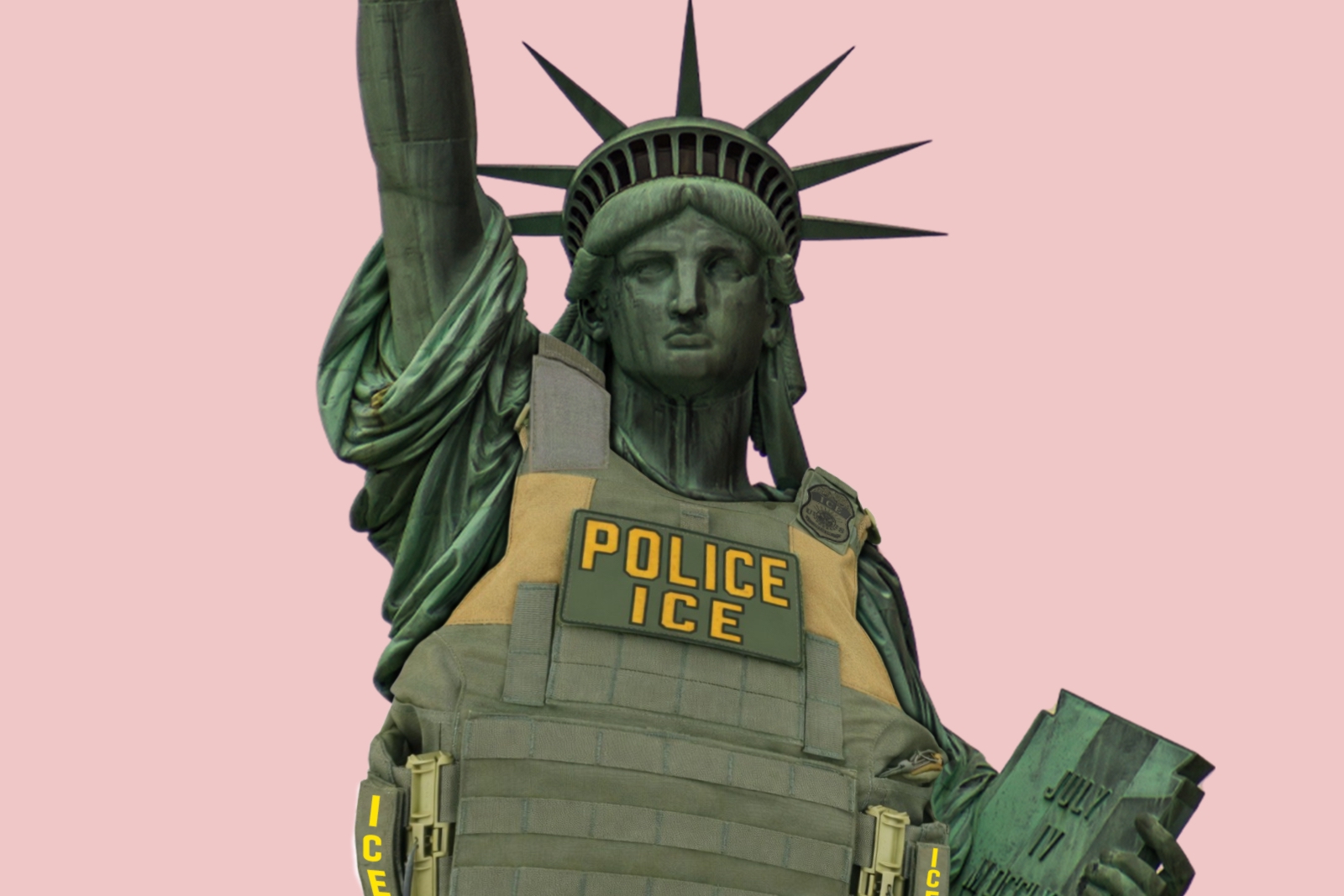

ICE, Due Process, and the Quiet Erosion of Democratic Norms
When federal agents swept through Minneapolis, they did more than arrest parents. They turned classrooms into trauma wards. A second-grader collapsed in panic after his father was taken away, sobbing that he had not prayed hard enough. Teachers describe children bursting into tears during lockdowns, some wetting themselves in fear. This is not unfolding in an authoritarian state. It is happening in the United States, the world’s oldest constitutional democracy, a nation that has long cast itself as a guardian of liberty and the rule of law.
As of early 2026, the administration has detained more than 70,000 people, the majority of whom have no criminal records. Enforcement tactics have escalated in both scale and severity: condoned racial profiling, masked agents conducting warrantless arrests, and open defiance of judicial rulings have come to define recent Immigration and Customs Enforcement operations. At least 39 people have died in ICE custody during this administration, including several already this year. Nearly 3,800 children have been detained. Militarized operations, weakened oversight, and billions in federal funding have enabled excessive force, wrongful detention, and pervasive community fear. The United States must narrow ICE’s enforcement authority in civilian spaces, require judicial warrants for arrests, and shift immigration priorities toward court-supervised civil processes. Without reform, the damage will not be confined to immigrant communities; it will erode the democratic legitimacy that undergirds American governance itself.
The problem is not immigration law in the abstract. It is the manner of its enforcement. When arrests occur without warrants, when agents move through neighborhoods as if they are combat zones, and when oversight bodies are sidelined or ignored, constitutional protections begin to fray for everyone. Due process is not a discretionary benefit extended at the government’s convenience. It is a constitutional guarantee. By failing to impose meaningful accountability, the administration has weakened public trust, diluted the rule of law, and normalized the spectacle of state power deployed against civilians. Limiting ICE’s arrest authority and requiring judicial warrants would not prevent enforcement. It would reduce abuses of power, reinforce constitutional protections for citizens and noncitizens alike, and restore confidence in federal authority.
Restricting ICE’s interior enforcement authority would also reduce the conditions that make abuse more likely. Excessive force frequently arises during warrantless street arrests, unannounced home entries, and rapid neighborhood sweeps where agents exercise broad discretion with minimal oversight. Requiring judicial warrants before detaining individuals in public spaces would insert a neutral arbiter between federal coercion and individual liberty. That intervention is not bureaucratic obstruction; it is the constitutional design. Oversight does not eliminate enforcement. It channels it. By narrowing when and how arrests occur, such reforms would decrease the likelihood of chaotic encounters that escalate into violence or error.
Immigration proceedings are civil, not criminal. Yet current enforcement tactics increasingly resemble criminal operations, often without the equivalent procedural safeguards that accompany criminal charges. Expanding judicial review and limiting expedited removals would ensure that enforcement decisions are subject to independent court supervision. Democracies rely on the separation of powers precisely to prevent excess. When enforcement authority expands unchecked, constitutional safeguards contract. The imbalance does not remain contained within immigration policy; it reshapes expectations about how much discretion the state may wield over any individual.
Public safety ultimately depends on cooperation, not fear. When families are afraid to report crimes, seek medical care, or send their children to school, enforcement strategies undermine the very stability they purport to defend. Children who grow up associating law enforcement with sudden family separation are likely to retreat from civic institutions rather than trust them. Narrowing ICE’s interior authority would signal that federal enforcement is targeted, lawful, and proportionate rather than sweeping and unpredictable. Institutions function best when communities believe they operate within clear legal bounds. Law enforcement is most effective when residents are not coerced into silence.
Critics argue that limiting interior enforcement weakens national security and encourages unlawful immigration. But judicial oversight does not dismantle enforcement capacity; it ensures that enforcement conforms to constitutional procedure. Border security and national defense remain intact under a system that requires warrants and judicial review. Indeed, unchecked discretion carries its own risks. It invites costly litigation, destabilizes local economies, fractures community trust, and corrodes institutional credibility. That erosion of legitimacy poses a deeper long-term threat to national security than the presence of judicial oversight ever could.
The scenes unfolding across the country reveal the human cost of policies that prize arrest statistics and displays of force over lawful adjudication and sustainable reform. In a single morning in Minneapolis, federal authority ceased to be an abstract principle and became a force that shattered a child’s sense of safety. The United States cannot credibly champion democratic norms abroad while allowing due process to weaken at home. Restricting ICE’s interior enforcement authority will not abolish immigration enforcement. It will align policy with constitutional principles and democratic accountability. The measure of a nation’s strength lies not only in how it defends its borders, but in how faithfully it honors the laws and values within them.