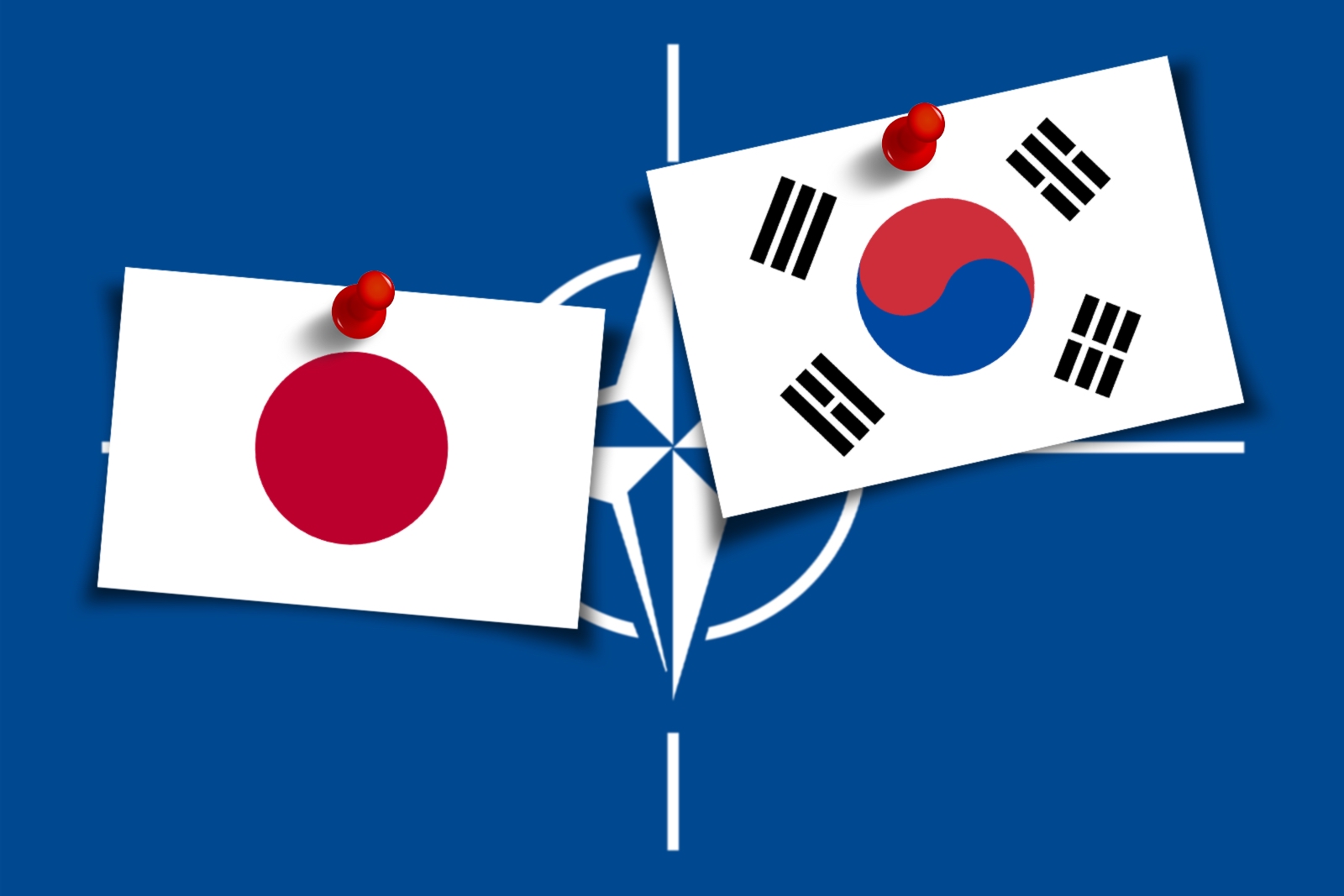

If NATO Goes to War With Russia, East Asia Faces a Test
If Russia were to launch a major military attack against a NATO member state, thereby triggering Article 5—as recently warned by the German foreign minister—the United States would inevitably prioritize Europe as its central operational theater. A conflict of that magnitude would not remain confined to the European continent. It would rapidly reshape the global posture of the U.S. military, strain already limited ammunition stockpiles, and compress strategic decision-making timelines at the highest levels of government.
Under such circumstances, the Indo-Pacific would not become irrelevant, but it would become more exposed. With Washington’s strategic focus fixed on Europe, the burden of maintaining stability in East Asia would fall more heavily on regional allies. Japan and South Korea, long accustomed to operating alongside a dominant U.S. military presence, would likely find themselves assuming roles for which they are rarely explicitly prepared: acting as principal stabilizers in East Asia while the United States concentrates its forces on a war in Europe.
The central question is not whether Tokyo or Seoul would dispatch combat units to fight on European soil. In all likelihood, they would not. The more consequential question is whether Japan and South Korea could absorb regional risks without inviting opportunistic escalation from China or North Korea. A dual contingency in East Asia unfolding simultaneously with a NATO-Russia war would represent a strategic nightmare. The challenge for both countries would therefore lie in maintaining deterrence and regional stability even as the United States redeploys troops and resources toward Europe.
In the event of a NATO-Russia war, Japan’s role would likely be decisive but largely indirect. Rather than serving as a frontline combatant, Japan would function as a rear-area hub and maritime stabilizer across the Western Pacific. The United States’ ability to move air, naval, and logistical assets rapidly toward Europe would depend heavily on the reliability of infrastructure spread across the Japanese archipelago—ports, airfields, logistics depots, and maintenance facilities that quietly underpin the U.S. military presence in the region. Ensuring uninterrupted access to these facilities would become one of Japan’s most consequential strategic contributions.
At the same time, Japan would likely assume a greater share of responsibility for regional maritime security. The Maritime Self-Defense Force could expand patrols across the East China Sea and surrounding waters to compensate for any redistribution of U.S. naval assets toward the Atlantic theater. Monitoring Russian naval movements through northern maritime routes would also gain importance as Moscow seeks to reposition elements of its Pacific Fleet.
Persistent surveillance, missile defense readiness, and a visible maritime presence would signal that deterrence in East Asia remains intact. The objective would not be escalation but denial. By raising the political and military costs of opportunistic aggression, Japan could help discourage China or North Korea from exploiting what might appear to be a moment of U.S. distraction.
Japan’s contribution would extend beyond operational activities and into the industrial sphere. A prolonged war in Europe would quickly deplete U.S. and NATO stockpiles of critical equipment and munitions, placing renewed emphasis on production resilience and maintenance capacity. Japan’s advanced industrial base—deeply integrated into global supply chains—could provide repair services, component manufacturing, and logistical support that indirectly sustain U.S. and allied combat operations.
There is historical precedent for such a role. During the Korean War, Japan served as an essential logistical and industrial support hub for United Nations forces despite not participating directly in combat. A similar dynamic could emerge in a NATO-Russia conflict. Japan’s capacity to operate as an industrial and logistical force multiplier would allow the United States to shift military resources toward Europe without crossing the domestic political or constitutional thresholds associated with direct Japanese involvement in the conflict.
South Korea’s strategic position in such a war would be more precarious. Unlike Japan, which faces a relatively stable security environment, South Korea confronts a neighbor that has repeatedly demonstrated both the willingness and the capability to exploit moments of geopolitical uncertainty. If the United States became heavily engaged in a European war, concerns about the credibility of U.S. extended deterrence on the Korean Peninsula would inevitably intensify. Even if Washington reaffirmed its commitments, perceptions of strategic distraction could fuel anxieties in Seoul about nuclear decoupling—the fear that U.S. security guarantees might weaken under the strain of a major conflict elsewhere.
Preserving deterrence against North Korea would therefore become Seoul’s overriding priority. This would likely translate into heightened readiness across multiple domains. Conventional strike capabilities would remain on alert, missile defense systems would require sustained vigilance, and intelligence, surveillance, and reconnaissance activities focused on North Korea’s military posture would intensify. Together, these measures would serve a clear purpose: demonstrating that the U.S.–South Korea alliance remains operationally credible even if Washington’s primary theater of war shifts to Europe.
In such circumstances, South Korea’s role would remain defensive rather than expeditionary, centered on eliminating any incentives for North Korea to test the cohesion of the alliance. Yet Seoul’s contribution would not be limited to maintaining deterrence on the peninsula. South Korea’s defense industrial base has expanded rapidly over the past decade, transforming the country into one of the world’s most significant arms producers. Its ability to manufacture artillery ammunition, armored vehicles, and air defense systems at scale could provide crucial strategic depth for both the United States and NATO.
South Korea has already demonstrated this capacity through major defense contracts with European states seeking to replenish depleted arsenals. In the context of a NATO-Russia war, such production could help sustain the flow of critical military equipment to the alliance. By reinforcing NATO’s endurance indirectly, South Korea could help reduce the risk of escalation in East Asia while contributing to broader international stability.
Throughout such a scenario, the behavior of China and North Korea would loom over every strategic calculation. Beijing might test the limits of U.S. attention while publicly maintaining a posture of neutrality, probing for opportunities without crossing thresholds that could trigger direct confrontation. Pyongyang, meanwhile, could pursue calibrated provocations designed to exploit uncertainty while avoiding the outbreak of full-scale war.
In this environment, success for Japan and South Korea would not necessarily be measured through dramatic military deployments or highly visible displays of power. Rather, it would be defined by the absence of escalation. Preventing the emergence of a second front in East Asia would itself constitute a major strategic contribution to NATO’s war effort.
This reality underscores the importance of aligning cross-theater planning among allies. The United States no longer has the luxury of treating crises in Europe and the Indo-Pacific as separate strategic problems. The two theaters are increasingly interconnected, and decisions in one inevitably shape risks in the other.
For that reason, the roles of Japan and South Korea in a contingency where the United States prioritizes Europe should be clearly defined and integrated into broader alliance planning. Both countries would function not as secondary actors but as essential stabilizers in the global security architecture. In an era defined by overlapping crises and simultaneous strategic pressures, alliance cohesion will depend less on identical participation and more on carefully calibrated burden sharing. When Europe burns, the most meaningful contribution Japan and South Korea can make is not sending troops westward but maintaining stability in their own region—ensuring that the United States can fight one major war without being pulled into two.