

Indonesia’s Military Makeover Gains Speed
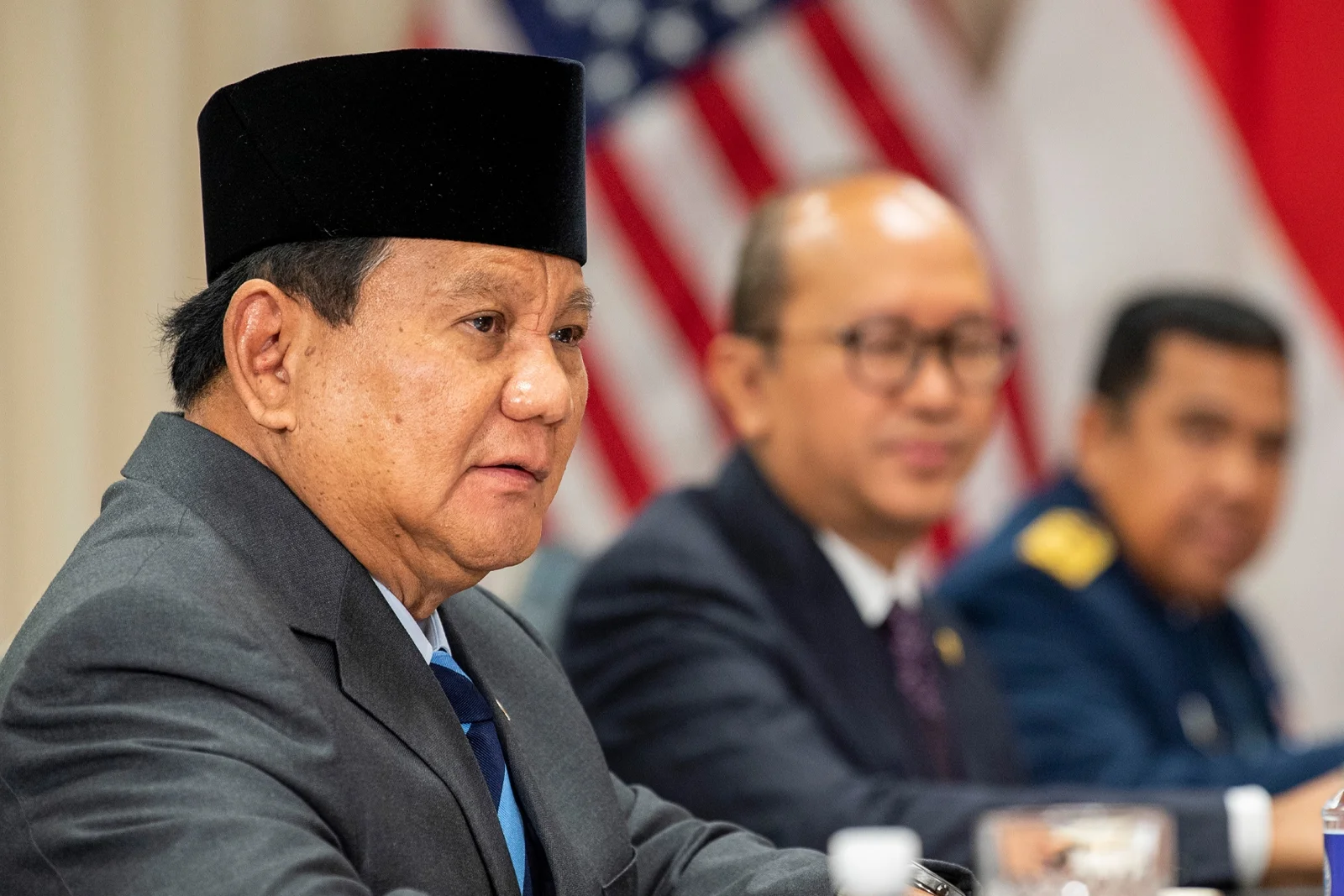
Since President Prabowo Subianto’s inauguration, Indonesia’s military modernisation has moved from aspiration to acceleration. On October 5th, the 80th anniversary parade of the Indonesian National Defence Forces sent 116 aircraft over the capital—a flypast that read less like spectacle than signal: a benign power edging toward a new level of readiness.
For years, the roadmap was the Minimum Essential Force (MEF) 2010–2024 blueprint. Well-designed on paper, it faltered in practice under fiscal ceilings and political drift. Defence outlays stayed below half the global average as a share of GDP; domestic coalition bargaining and quiet international pressures pinched further. By 2024, MEF stood only about 70 percent complete—just enough for minimal operational capacity, not for sustained deterrence.
Prabowo has tried to break that equilibrium. Beginning in 2021, he advanced a defence concept anchored in key islands and strategic archipelagic clusters, with logistics and self-reliance elevated from afterthought to organizing principle. By 2024, his Asta Cita manifesto folded security into a broader developmental project—national self-sufficiency not as a slogan, but as a policy spine.
Modernisation now extends beyond hardware to the institutions that buy, field, and sustain it. At the centre is the National Defence Council (Dewan Pertahanan Nasional, DPN), created by Presidential Regulation No. 202/2024. Chaired by the President and composed of permanent and ad hoc members, the DPN is meant to discipline procurement with a whole-of-state lens—balancing military need against ideology, politics, socio-cultural realities, and economic constraints.
Governance of the supply chain has been similarly overhauled. The former Baranahan agency was split into the Defence Logistics Agency (Baloghan), led by Air Marshall Yusuf Jauhari, and the Defence Maintenance and Repair Agency (Baharwat), led by Brigadier Leo Pola Ardiansa. The message is overdue but clear: acquisition gets you to the starting line; sustainment wins the race. Through-life readiness depends on both.
Money is finally moving to match intent. Defence spending is projected to reach roughly 1.5 percent of GDP by 2026, narrowing the gap with the Asia-Pacific average of 1.6–1.7 percent. With a GDP of about $1.396 trillion, procurement could reach $3.5 billion—around 17 percent of the defence budget—lowering the average weapon-system age (now 35.3 years) and providing the domestic defence-industrial base with a larger captive market and a reason to invest.
Equally significant is a rethink of “diversification.” Historically, Jakarta bought “retail”: small batches from many suppliers, yielding a “mixed bag of tools” that complicated integration and maintenance while diluting leverage for offsets and industrial compensation. Diversification remains a hedge—born of fiscal limits and non-alignment—but the aim has shifted from variety for its own sake to strategic redundancy in service of self-reliance.
Hence, the marquee purchase: 42 Rafale fighter jets from France, the largest single acquisition in national history and a deliberate break with piecemeal tendencies. Jakarta is also courting geopolitically neutral, technically compatible partners—most notably Turkey—to reduce exposure to Western European choke points in naval subsystems.
The results are beginning to show. Of the 677 platforms displayed on Armed Forces Day, 46 percent were newly acquired, among them a PPA-class frigate from Fincantieri; another 10 percent were modernised legacy systems, including the Parchim-class corvette. Off-parade, the KHAN ballistic missile from Roketsan has entered the inventory, nudging the deterrence threshold upward.
Taken together, these moves amount to Indonesia’s most ambitious attempt in decades to match means with ends. Prabowo’s bet blends pragmatism and symbolism: modernisation without surrendering the independence that animates Indonesian statecraft. The question now is not whether the reforms are real—they are—but whether the institutions and budgets can sustain momentum long enough to translate procurement into proficiency. If they do, Indonesia will not simply keep pace with regional militaries; it will gain the latitude to shape the Indo-Pacific balance on its own terms.