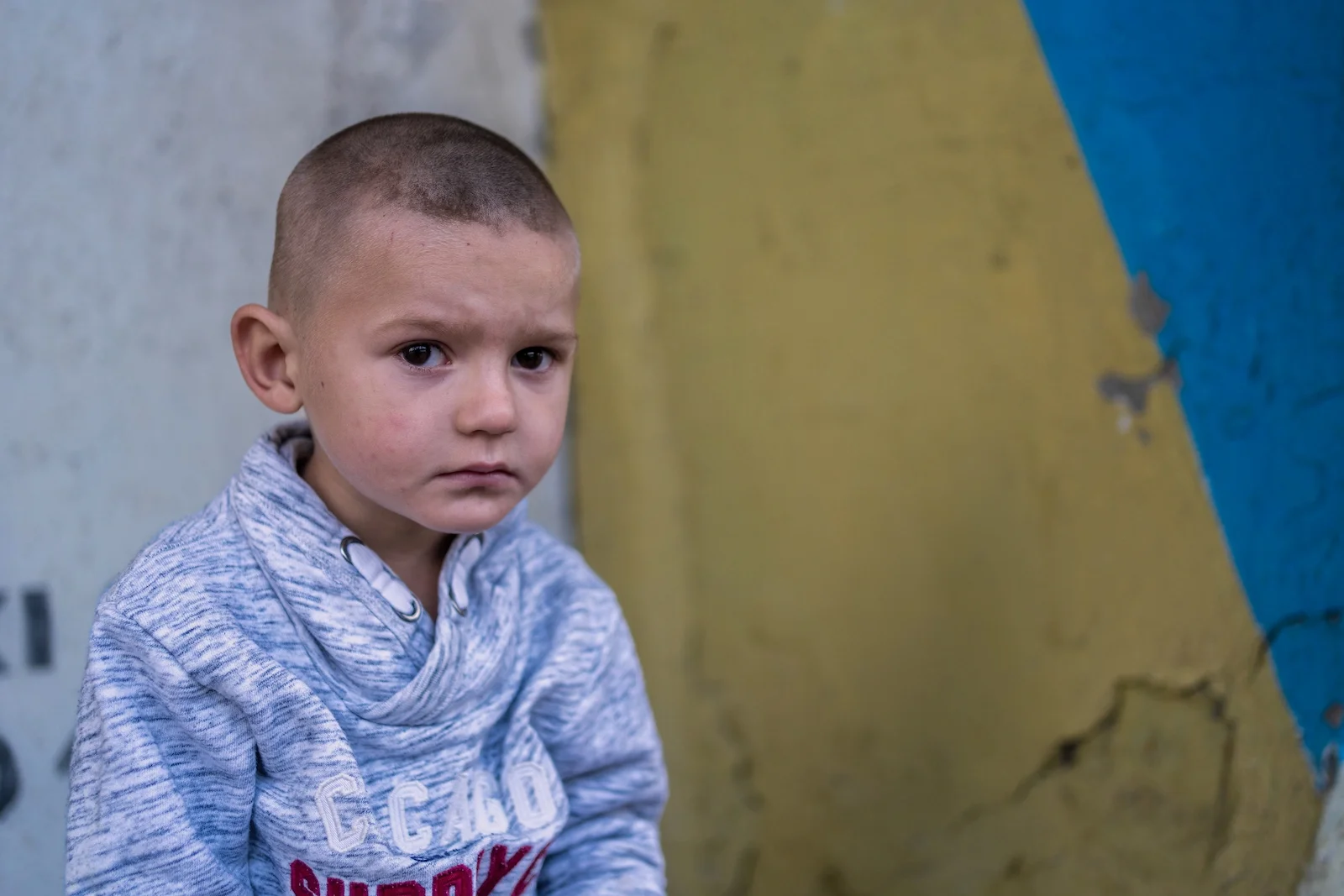

Inside UNICEF’s Lifeline for Ukraine’s Children
Toby Fricker serves as Chief of Advocacy and Communication for UNICEF Ukraine, where he leads media strategy, advocacy, and public information on children’s needs amid the ongoing war. As the principal press contact for the country office, he regularly briefs international media, including at the Palais des Nations in Geneva. Fricker also contributes field reflections for UNICEF channels, documenting the war’s human toll and the resilience of children and families living near the front.
His team’s focus spans a wide range of urgent priorities—winterization efforts, repairs to heating and water systems, maintaining access to education, child protection, cash assistance, and mental health and psychosocial support. A veteran of UNICEF’s global communications network, he previously held senior roles across multiple regions and holds a degree from Staffordshire University.
In this interview, Fricker describes UNICEF’s race to protect children as Ukraine enters its fourth winter of war. The organization is working to keep district heating and water systems running—supporting boiler houses and vodokanals with repairs, efficient equipment, generators, and pre-positioned spares—to avert life-threatening collapses when power grids are struck. It backs schools with grants for urgent repairs and learning continuity, provides cash aid to vulnerable families, and expands psychosocial support through teacher training, social worker hubs, and community-based programs.
Special efforts focus on marginalized children, including those with disabilities, Roma, displaced, and rural families, through child-sensitive budgeting with local governments. Fricker calls for sustained donations and public advocacy to bring abducted and displaced children safely home—and to shield all children as civilians increasingly come under fire.

Scott Douglas Jacobsen: With winter approaching, heating becomes critical. What are the primary needs of Ukrainian children in areas where winters can be harsh?
Toby Fricker: Absolutely. Winter in Ukraine is harsh. This is the fourth winter under the full-scale invasion for children and families across the country. For many in the east, exposure to conflict has lasted far longer. The challenges are immense. Children and families are entering this winter with coping mechanisms already severely strained. The war has caused significant economic disruption—people have lost work, many children have faced interruptions to schooling, and everyday childhood has been upended. Now, with a fourth winter and continuing attacks, strikes can again hit energy and water infrastructure. That has potentially devastating effects on civilians.
UNICEF’s priority is to keep children warm and heating systems running, because system failures in extreme cold become life-threatening. District heating systems—typically city or town networks—serve households, hospitals, schools, and other critical services. We are supporting local boiler houses with more efficient equipment where feasible and ensuring repairs are completed before winter.
Much of this work begins months in advance, even in June, to prepare households and schools. We also provide school grants so administrators can prioritize necessary repairs and upgrades—such as fixing broken windows and purchasing generators, if needed—and cash assistance for vulnerable households in frontline and hard-hit areas. These efforts matter because children are struggling every day. Attacks continue, fear persists, and winter adds another layer of risk to their health and well-being.
Jacobsen: What about hardening repaired systems—using redundancy, modular kits, backup power, and pre-positioned spares? How does multi-stage redundancy or hardening of these systems help during the winter?
Fricker: It really is about strengthening the system. During the summer months, the focus is on working with the vodokanals—the water utility companies—and the municipalities that run these boiler houses. It is about examining the system’s current functioning, assessing its efficiency and effectiveness, and identifying areas where new gas boilers and piping can be installed before winter to ensure the system operates as effectively as possible while minimizing energy usage.
Much of the infrastructure is quite old. It keeps going, but these are aging systems. When piping or networks are damaged, the impact is severe, especially when using outdated equipment. That is why it is crucial to have supplies and equipment in place well before winter, so that if major issues arise or power fails, backup generators can be used immediately to avoid service interruptions.
One of the biggest challenges—now more severe than ever—is ensuring water keeps flowing through the network. In Ukraine’s system, water circulation is critical for heating homes, hospitals, and other facilities. The danger in freezing temperatures, particularly when power is lost, is that water stops flowing, which can cause the heating system to seize. Everything is interlinked. This is a complex task that depends on the incredible efforts of water utility workers, many of whom risk their lives in frontline areas to repair damaged networks or filtration stations. The goal is to ensure they have the necessary equipment, skills, and techniques to perform quick repairs, while also strengthening the system in advance to maximize efficiency.

Jacobsen: What about caregivers and teachers—the support for those who need to mitigate burnout or secondary trauma during peak winter stress? Things like training, supervision, or different forms of respite?
Fricker: One of the key issues of the war in Ukraine is what we call a child protection crisis, which is also a mental health and well-being crisis. As you rightly point out, it is not only about children, though that is critical—it is also about caregivers. Parents have been struggling for four years to ensure their children have the essentials for life, can continue learning, and can still connect with peers. There has been huge isolation, especially for children and young people in frontline areas where schools are closed or operating only partially, sometimes in basements or shelters. That isolation has a significant impact on their well-being.
We are working with teachers, social workers, and parents to raise awareness and build capacity on how to support children going through traumatic experiences. We provide training for teachers to help them identify children who may need specialized services and refer them to counselors. We also operate social worker hubs that unite teachers, social workers, and others for training sessions in cities like Dnipro, thereby building local capacity for community-based social services.
Another major program provides small grants to community-based organizations that employ counselors and social workers. The aim is to ensure accessible, high-quality services within communities, particularly during this period of extreme strain.
A wide range of training and grants is being used to strengthen community-level social services. The impact is twofold: immediate psychological support helps children recover and build coping skills while the war continues, and it also strengthens Ukraine’s long-term social service infrastructure. Ukraine’s focus on both humanitarian response and recovery is remarkable, and these efforts are building a system that will continue serving families and communities for years to come.
View this post on Instagram
Jacobsen: Some children are doubly marked in life—first by the circumstances they are born into, and then by the war. Speaking of children with disabilities, internally displaced persons, Roma, or remote rural families, how can those children be reached in terms of accessibility, transport stipends, and language access?
Fricker: You are right. When war happens anywhere, the most marginalized are always the most affected. What is essential is reaching every child—expanding services to reach the last child, the one least likely to be in school. The question we ask is: how do we reach that child to give them the best opportunity possible to keep learning or return to school? That is mainly about bringing services directly to communities and ensuring that social services in those communities—whether in frontline areas or in western Ukraine where many Roma communities live—are supported. We are working specifically with these communities through local organizations to identify existing gaps and find practical ways to close them, helping children return to school, re-enter systems, and participate in decision-making.
One central area of UNICEF’s work, alongside many partners, is with local governments to strengthen children’s participation in decision-making and promote child-sensitive budgeting. That means helping local authorities allocate resources effectively for children: funding education systems, strengthening social services, and ensuring basic utilities like water and sanitation are in place for households. The goal is to make sure children’s voices help shape these priorities—identifying what is missing in their communities and influencing solutions.
These are vital areas of work. In Ukraine, we are seeing positive steps, including firm commitments to protect education sector budgets despite the war. However, we still need to do more. UNICEF, along with many partners, is working to reach the most marginalized children and bring them back into education and community life. So every child has as fair a chance as possible to continue their childhood and recover from this enormous disruption.
Jacobsen: Where are the most significant winter bottlenecks? Moreover, speaking of partners, which noteworthy organizations should be mentioned for their role in easing those bottlenecks or helping mitigate the main limitations?
Fricker: The biggest concerns for the winter are keeping systems running—ensuring power generation continues, which in turn maintains heating capacity for households and essential facilities. Families must also have access to cash assistance to cover specific winter needs for their children and themselves. UNICEF, along with many partners, is supporting local authorities and the national government in this time of extreme need. There has been immense international support—Canada, among others, has provided generous assistance not only to UNICEF but also directly to the government and partner organizations.
The winter response plan is multi-sectoral, aiming to reach over 1.7 million people as part of a broader United Nations and humanitarian effort. The focus is on the most vulnerable families in frontline regions. The question is always: how can we best support these families and the local systems that sustain them? That includes helping the Vodokanals—the water utility companies—keep operations running, supporting the water technicians risking their lives to repair networks even under fire, and aiding those managing municipal boiler houses. UNICEF works to strengthen these systems in advance, ensuring they have the supplies and equipment needed for rapid repairs. Despite immense challenges, they have managed to keep critical infrastructure running throughout the war.
Jacobsen: How can people support UNICEF Ukraine?
Fricker: UNICEF is doing everything possible to reach every affected child, including those already marginalized before the war. It is vital to restore some sense of normality and childhood even amid ongoing conflict. We have received tremendous support from governments and individuals—especially in Canada and across the world—who have stood behind UNICEF and other partners working for child rights and the protection of the most vulnerable children in Ukraine.
We continue to call on people to contribute not only financially but also by raising their voices. Speaking out for the protection of children in Ukraine—and globally—is essential at a time when so many wars endanger them. The sanctity of children’s lives must always be protected. We urge everyone to advocate for their safety and support the life-saving and recovery work being done in Ukraine. Recovery efforts are ongoing and long-term. Wars like this do not just affect children today—they jeopardize access to services and their overall well-being for years to come.
Jacobsen: Toby, thank you for your time and expertise today. It was a pleasure to meet you.
Fricker: That is great. Thank you, Scott, and thank you for your patience in setting everything up. Take care.
Click here to donate to UNICEF.