Lifestyles of the Rich and Vicious
What do the world’s most notorious strongmen share beyond power? Money—obscene amounts of it, amassed through state capture, cronyism, and violence. Across continents, heads of state and their families sit atop palaces and private jets while the people they rule navigate shortages, censorship, and fear. This is not a celebration of excess; it’s an indictment of the political economies that make it possible.
These reverse Robin Hoods have grown their wealth exponentially as a result of their iron-fisted rule. It’s a perverse game of take from the poor and give to dear leader.
Vladimir Putin ($200 billion)
Wanted by the International Criminal Court and presiding over the Russian Federation, Vladimir Putin is frequently cited as one of the planet’s richest men. The inventory reads like comic-book villainy: a reported network of palaces, aircraft, helicopters, luxury residences, and fleets of cars. One palace alone is said to be worth more than a billion dollars, its scale rivaling European royal estates. In a system where oligarchs orbit the Kremlin, Russia can feel like a cold Club Med for the well-connected—membership fees paid in loyalty as much as money.
The spectacle of wealth is impossible to square with the reality faced by ordinary Russians. During the war in Ukraine, families of dead soldiers have reportedly received token “compensation”—bags of potatoes, towels, even a meat grinder—as a grim consolation for a life lost. It’s hard to imagine a sharper contrast with the leader’s rumored assets.
Globally, Russia’s standing has cratered as the state bombs civilian infrastructure and commits war crimes, only to be met by Ukraine’s stubborn resilience. At home, the regime’s priority remains clear: hoard assets, police dissent, and preserve the court economy around the presidency.
Even Elon Musk has mused that Putin may be “significantly richer” than he is. The irony, of course, is that the president’s most likely future address isn’t another palace on the Black Sea—but a courtroom in The Hague.
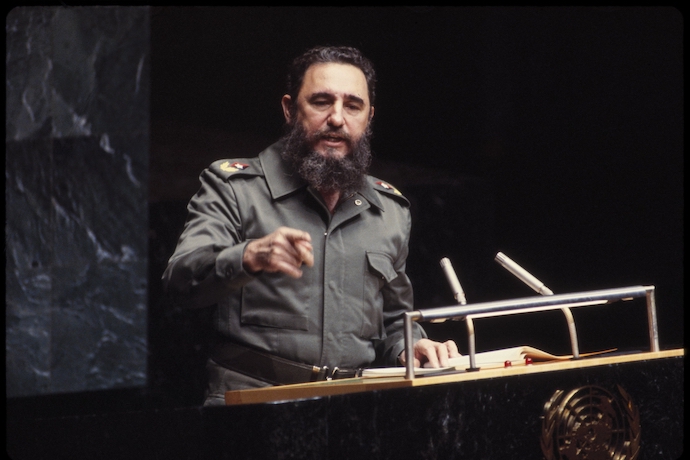
Fidel & Raúl Castro ($1 billion and $100 million)
From their father’s 25,000-acre plantation to revolutionary rule, Fidel and Raúl Castro spent their lives at the pinnacle of Cuba’s hierarchy—first insurgents, then arbiters of the state. By “seizing the means of production,” the Castros also concentrated the fruits of production; estimates place the family’s fortune at hundreds of millions to over a billion dollars.
Fidel’s personal portfolio was the stuff of legend: more than twenty residences and estates, a private marina, a dedicated hospital, even a secret island estate—because, in a nation with some of the world’s most beautiful beaches, the First Revolutionary still required a beach of his own. The inner circle benefited too. A military-run conglomerate controlled resorts and elite clinics that, during Fidel’s reign, ordinary Cubans were largely barred from entering.
The contrast with everyday life has been stark. Wages remain abysmal—often quoted at the equivalent of a few dollars a week—and worker protections are “very repressive.” In 1963 alone, Fidel’s government held some 75,000 political prisoners, with forced labor a recurring punishment. After the mass protests of July 11, 2021, the government jailed more than a thousand people, among them Grammy winner Maykel “Osorbo” Castillo and artist-activist Luis Manuel Otero Alcántara.
The economy’s dual-currency logic made inequality inescapable: “dollar-only” stores brimming with goods priced beyond the reach of most citizens, and luxury hotels that would cost a Cuban several months’ wages for a single stay. The revolution’s rhetoric promised the end of bourgeois privilege; its practice reserved those privileges for the new elite.
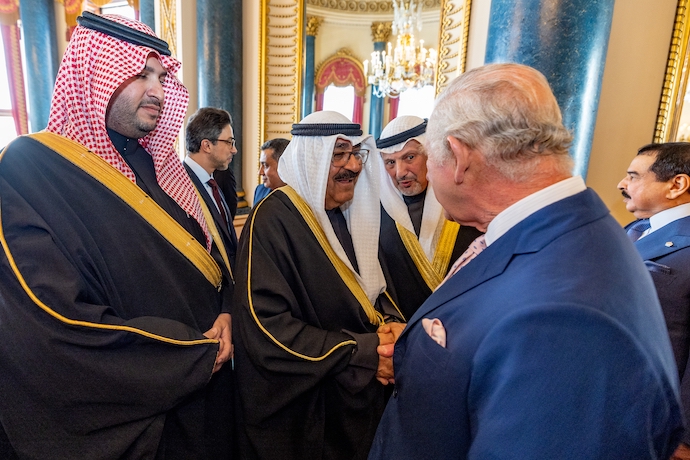
The Saudi Royal Family ($1.4 trillion)
Yes, trillion. The House of Saud—led by King Salman and de facto ruler Crown Prince Mohammed bin Salman—sits atop a fortune that rivals the sovereign wealth of small continents. There are palaces with marble and gold, yes, but the footprint is global: the Public Investment Fund (PIF) buys influence across sports, tech, and entertainment.
The PIF launched LIV Golf and acquired a dominant stake in England’s Newcastle United Football Club. It has brokered high-profile events with the ATP, WTA, Formula One, UFC, and WWE, turning Saudi Arabia into a sports stage with royal boxes. The message is clear: the Kingdom is not just open for business; it owns the venue.
Critics call it what it is—sportswashing. The Kingdom remains one of the most repressive states in the world: speech is criminalized, dissenters are imprisoned or executed, and women’s lives are constrained by guardianship laws and surveillance. Abroad, Saudi intervention in Yemen has deepened famine and civilian suffering. Opulent box seats cannot obscure the carceral logic underpinning the regime.
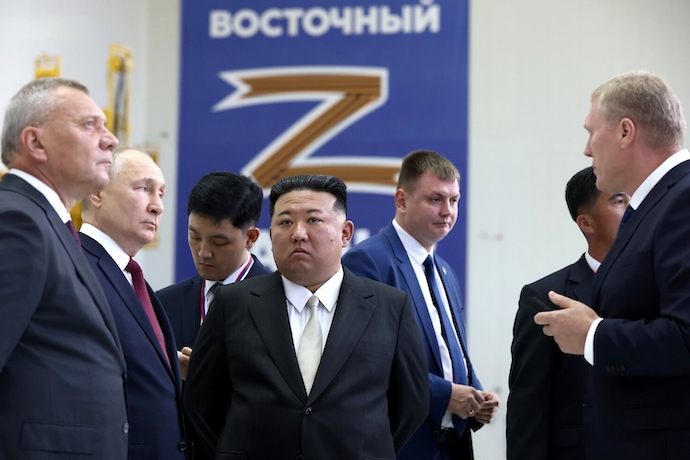
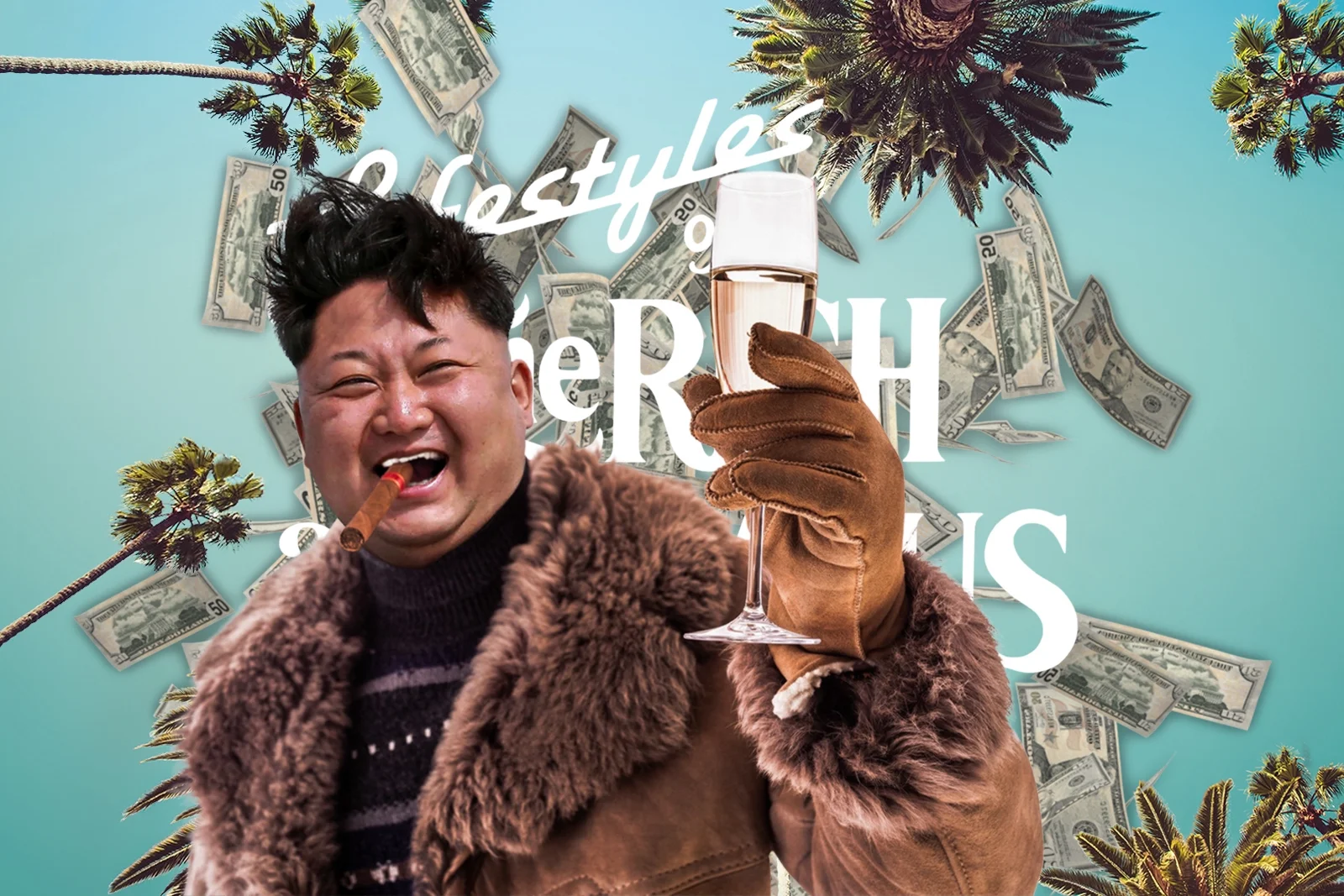
Kim Jong-Un ($5 billion)
Heir to the Kim dynasty, North Korea’s ruler presides over a country where Internet access is a privilege, travel is constrained, and dissent can mean a labor camp—or worse. Kim’s personal apparatus includes roughly twenty palaces, a hundred luxury cars, a private jet, a private island, and a yacht more than a hundred feet long. Imported delicacies and high-end European goods flow in for the leader even as rationing and hunger persist for the public.
The cult is both political and cosmic in nature. State propaganda casts the Kim family as near-divine. Kim Jong-Il was supposedly born on a sacred mountain amid celestial signs; Kim Jong-Un, according to similar mythologies, invented the hamburger and doesn’t need to use the bathroom. Photographing their statues without the full frame is illegal—salvation by proper composition.
The repression is total. Collective punishment—“kin responsibility”—ensnares entire families for the alleged thought crimes of one member. Rules dictate hairstyles and hemlines. Meanwhile, allegations abound that humanitarian food aid is diverted to the military and political elite, while ordinary citizens bear the brunt of scarcity and fear.
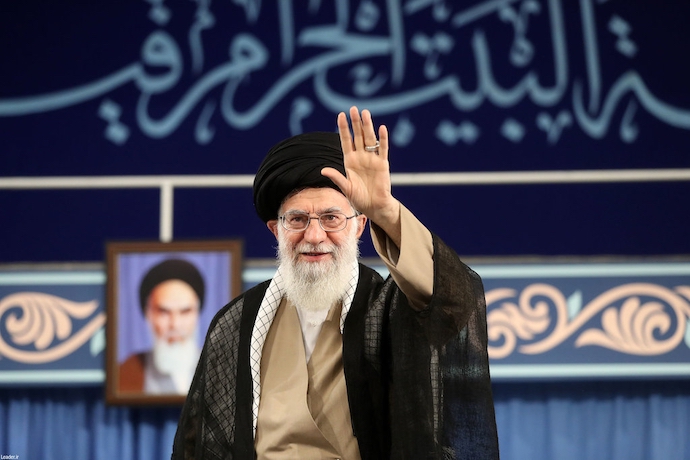
Ali Khamenei ($95 billion)
Iran’s Supreme Leader presides over a financial empire that touches oil, telecommunications, finance, agriculture, real estate, and medical industries. Much of it is routed through foundations and holding companies that are not subject to public audit. A significant tranche of property—often confiscated from ordinary citizens and marginalized groups—has ended up under his direct control.
The image the Ayatollah projects is one of piety and austerity, a modest cleric sustained by the generosity of subordinates. The record points elsewhere: reports of multiple palaces, private aircraft and helicopters, and an automotive fleet to match. Internationally, Iran has leveraged war and influence for profit, acquiring residential, commercial, and agricultural assets in Syria while recruiting local militias to entrench its position.
At home, dissent is met with truncheons, prison terms, and the gallows. Social media platforms are blocked or throttled. Women live under gender apartheid enforced by law and custom; after the 2022 killing of Mahsa Amini by “morality police,” the regime intensified executions, including of women who defy compulsory hijab mandates. Abroad, Tehran backs proxies in conflicts from Syria to Yemen, exporting repression and importing the spoils of war.
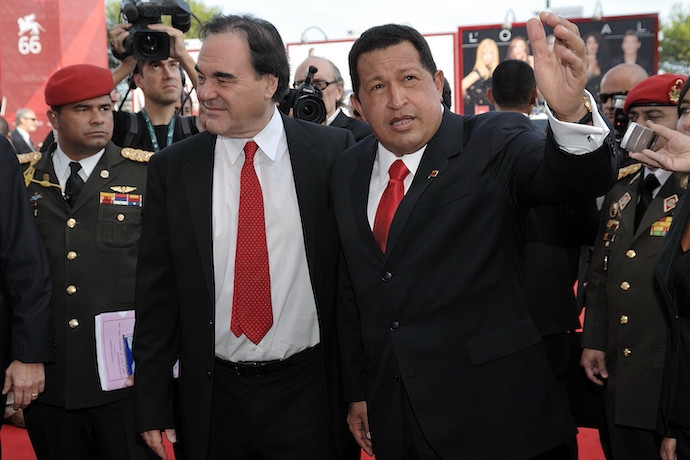
Hugo Chávez ($1 billion)
What’s better than gold? Oil. Chávez swam in it. After nationalizing the sector, his government oversaw roughly a trillion dollars in oil revenue; estimates hold that more than $100 billion leaked to insiders, family members, and loyalists. The fortune became generational: his daughter has been described as one of Venezuela’s wealthiest individuals, with reported assets in the billions. Seventeen estates tell a story that socialism’s enemies never could—a revolution that minted a new moneyed class.
They even coined a term for it: the boliburguesía, the bolivarian bourgeoisie. Private jets. Thoroughbreds. Mansions. International shopping trips. The old oligarchs fell; the new ones wore red.
Chávez understood modern media’s theater. He turned broadcasts into marathon monologues—part game show, part purge—firing oil executives on live TV in a spectacle that married “The Apprentice” to expropriation. A personality cult became policy; loyalty became the chief credential.
The longer-term consequences were catastrophic. Institutions hollowed out, independent media crushed, opposition parties hamstrung. The oil flood masked structural decay—until the price tanked. After Chávez’s death, the economy imploded under his chosen successor. Hyperinflation vaporized savings; food and medicine vanished. UN investigators have accused the Maduro government of crimes against humanity, including extrajudicial executions and torture, after contested elections. Police reportedly comb citizens’ phones for “disloyalty.” Millions fled—nearly a third of the country’s population—seeking safety and work abroad. In Caracas, the Helicoide prison rose as a symbol: a panopticon for a broken republic.
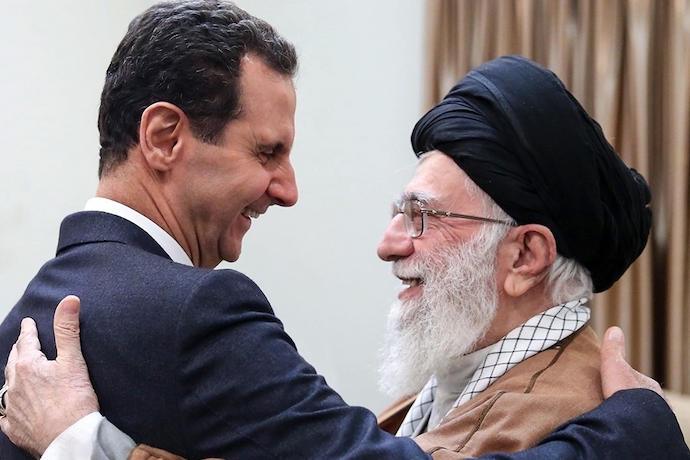
Bashar al-Assad ($2 billion)
The scion of Syria’s ruling dynasty lived like a monarch while his country unraveled. Reports over the years have described family holdings—gold reserves, real estate, telecommunications, banking, and oil—shielded by offshore entities and a cat-and-mouse game with sanctions. Marble by the millions paved palatial floors; presidential garages reportedly housed Ferraris, Lamborghinis, and Aston Martins. The First Lady cultivated an image of glossy modernity while amassing luxury goods.
As the war raged, rare glimpses inside regime compounds exposed the life of excess, insulated from siege and barrel bombs. The price of Assad’s survival was measured in lives: cities pulverized; hospitals bombed; mass incarceration and torture in facilities like Sednaya, a name now synonymous with industrialized cruelty. Disappearances became a grim statistic, families trapped in the purgatory of not knowing.
Most Syrians fell below the poverty line. A generation grew up amid rubble and exile. The regime endured by outsourcing sovereignty—relying on Moscow and Tehran—even as statues fell in liberated towns and Syrians briefly imagined a different dawn. Today, the future remains uncertain, but one truth persists: the people’s resilience has outlasted palaces.
The pattern—luxury as governance
These stories differ in culture and geography, but they share a common thread. First, privatize the state: fuse political office to business empires run through shell companies, sovereign funds, or “charitable” foundations. Second, criminalize dissent: jail, exile, or kill opponents, and monitor the rest. Third, manufacture myth: a leader above law and market alike, sanctified by the media, with history rewritten in real time.
The result is a moral inversion. Public wealth becomes personal wealth; accountability becomes treason; patriotism becomes obedience to a family brand. Meanwhile, the poor are asked to sacrifice—to tighten belts, to “wait for reforms,” to bury sons and daughters—while the powerful import Italian marble.
The antidote is not voyeurism but vigilance: tracing the money; supporting journalists, lawyers, and activists who do the slow, dangerous work of documentation; and insisting that palaces paid for by the public, wherever they stand, be returned to the public good.