Moldova Is Not a Sideshow
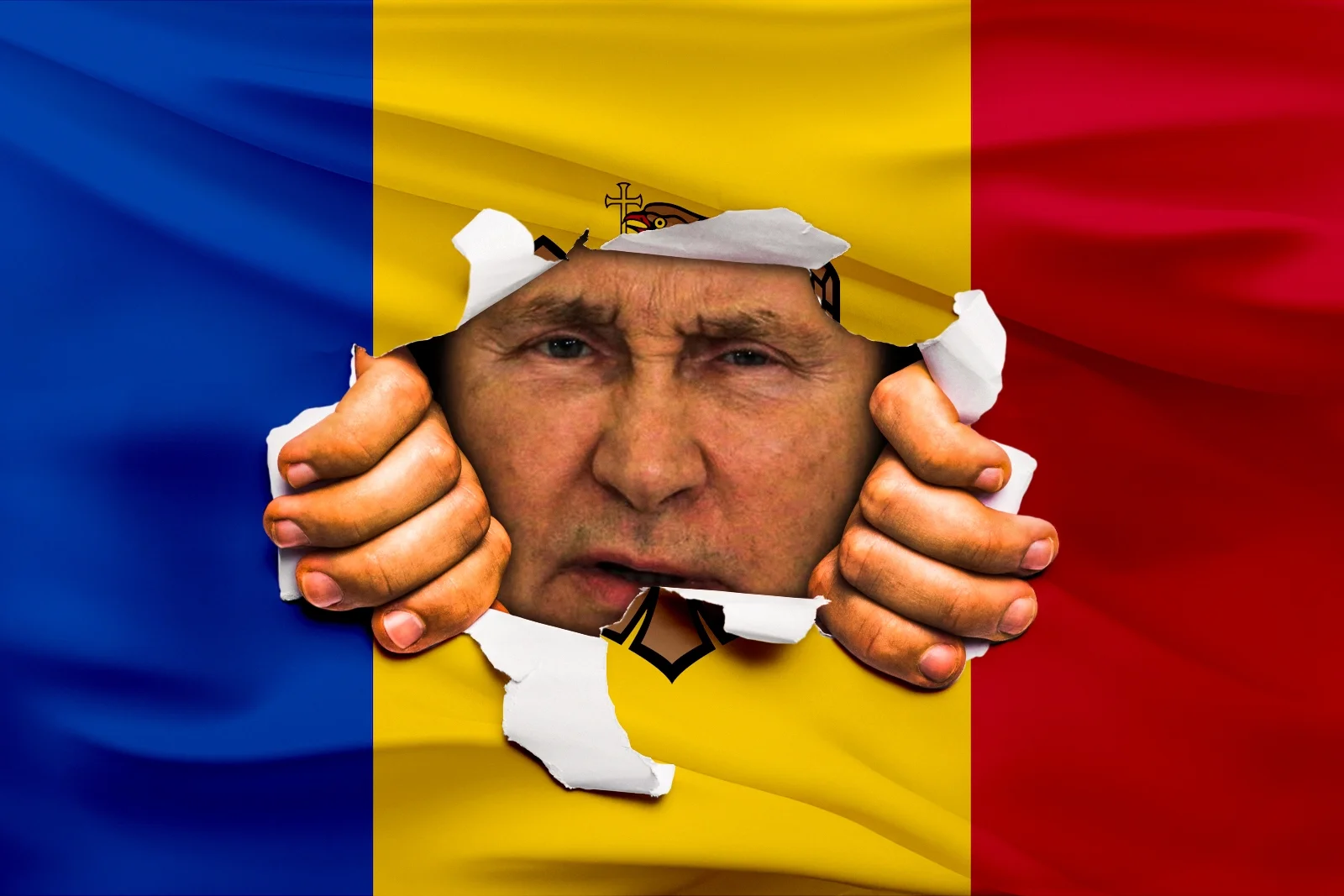
Each morning, Vladimir Putin confronts an awkward fact: nearly four years after launching his full-scale invasion, Ukraine has not been subdued. When grand designs stall, strongmen hunt for smaller prizes. One tempting target sits on the Black Sea’s rim—historic Bessarabia, immortalized in Olivia Manning’s wartime novels and better known today as the Republic of Moldova, a small, poor, and perennially overlooked state in Europe’s southeast.
Moldova, a country of just 2.4 million wedged between Ukraine and Romania, clawed its way out of the Soviet collapse in the early 1990s. For newly independent states, the natural path was association with the European Union, ideally culminating in membership—on one condition. From the largest Western Balkan nation to the smallest, each had to commit to verifiable economic, judicial, and political reforms capable of delivering growth, democracy, and social cohesion.
The Kremlin wants Moldova back in its grip. Moscow is eyeing the regional electoral calendar—including Romania’s parliamentary vote on September 28—and probing for ways to derail Chișinău’s Western course. Moldova receives little sustained attention in the West; it fits Neville Chamberlain’s notorious 1938 description of Czechoslovakia as “a faraway country of which we know little.” That indifference is precisely what Russia counts on.
The past year has been tumultuous. Pro-EU President Maia Sandu secured re-election, and a closely fought referendum passed to entrench EU accession in the constitution. For Sandu’s Party of Action and Solidarity (PAS)—founded in 2016 on a pro-Europe, anti-corruption platform and governing alone since its 2021 landslide—the task now is to persuade voters battered by inflation and uncertainty to stay the course.
The headwinds are real. The economy has slipped into a technical recession. Utility bills jumped 20 to 40 percent as Moldova pivoted away from Russian gas, even though many households receive targeted subsidies. Agriculture is straining under climate shocks. Heavy industry in the breakaway region of Transnistria no longer benefits from free Russian gas. Light-manufacturing exporters in government-controlled territory feel the squeeze from protectionist tariffs abroad. Meanwhile, key reforms have lagged: farm subsidies still hinder the emergence of a diversified, modern agrifood sector; too many state-owned enterprises are inefficient and loss-making; regulatory thickets hinder manufacturing; and a continuing exodus of skilled workers imperils growth in the services and IT sectors.
Russia is not waiting for Moldova’s reform agenda to falter on its own. It is flooding the information space and political arena with money, proxies, and lies. A BBC undercover investigation revealed a paid network offering cash to Moldovans who posted pro-Kremlin propaganda and disinformation aimed at discrediting the pro-European Union leadership ahead of parliamentary elections. Reporters found links to the fugitive oligarch Ilan Șor—sanctioned by the United States for enabling “the Kremlin’s malign influence operations”—now living in Moscow. Moldova’s police chief, Viorel Cernăuțeanu, put it starkly: last year, the focus was on money; this year, it’s disinformation.
The mechanics were depressingly modern. The BBC’s undercover reporter—“Ana”—and dozens of other recruits were ushered into clandestine online seminars with aspirational titles like “How to go from your kitchen to national leader.” The sessions doubled as a vetting pipeline. Recruits were regularly tested and promised roughly 3,000 Moldovan lei a month—about $170—to churn out TikTok and Facebook content in the run-up to the vote, with payments routed through Promsvyazbank, a sanctioned Russian state bank tied to the defense ministry and a shareholder in one of Șor’s companies.
The operators even handed out guidelines on laundering inauthenticity. Use ChatGPT to draft material, they told the group—but not too much. Keep the output “organic.” “Content attracts people if the picture contains some satire… over reality,” one instruction read. Lean on humor and plausible imagery; bury the telltale marks of automation.
Inside the Telegram channels, task lists morphed from apolitical patriotic trivia into overtly political fabrications. Recruits were told to accuse the government—without evidence—of planning to falsify election results; to claim that EU membership would require Moldovans to “change their sexual orientation” to LGBT; and to smear President Sandu with grotesque allegations of facilitating child trafficking. This is not persuasion. It is a textbook deployment of moral panic and conspiracy to delegitimize a democratic choice.
Sunday’s election will test whether Moldovan voters buy what the Kremlin is selling. The choice they face is not abstract geopolitics. It is between an arduous, rules-based path toward Europe—one that demands reform, patience, and protection for vulnerable households—and a shortcut offered by Moscow, which trades in cheap gas, expensive corruption, and the gradual suffocation of sovereignty. Europe, for its part, must decide whether Moldova remains a footnote or becomes a frontline. If Brussels wants a neighborhood free to choose its own future, rhetoric must be paired with resources: stable energy support, expanded market access, and sustained help to tackle corruption and counter disinformation.
None of this guarantees that Moldova’s politics will hold, or that PAS will continue governing alone. But indifference guarantees the opposite. The Kremlin thrives when democracies see places like Moldova as remote and unknowable. They are neither. Moldova’s struggle—like Ukraine’s—turns on a familiar question: who gets to decide Europe’s future, the people who live there or the men who would rule them from afar? Sunday offers an early answer.