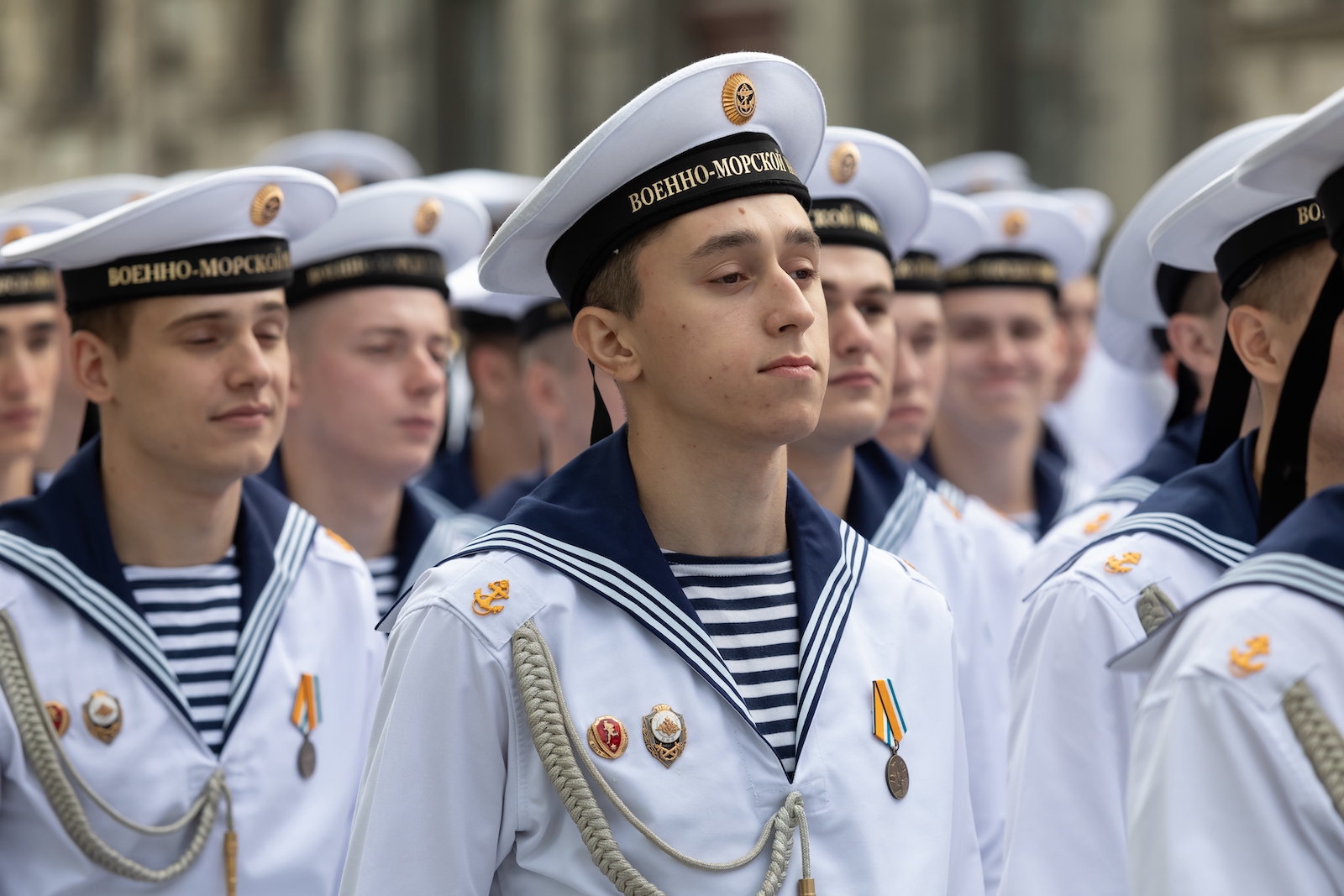

Moscow’s Navy Goes on Vacation—Far from Ukraine
When Russia launched its grandiose naval exercise “July Storm” on July 23, it aimed to send a clear message: strength, reach, readiness. Over 150 warships, thousands of troops, swarms of warplanes, and four major fleets—Pacific, Northern, Baltic, and Caspian—maneuvered in what the Kremlin billed as a testament to its ability to wage multi-front maritime warfare.
But one fleet was conspicuously absent: the Black Sea Fleet.
This wasn’t an oversight. It was a revealing omission—a quiet admission of strategic failure. Long a symbol of Russia’s regional power, the Black Sea Fleet was excluded from what was touted as the country’s most expansive naval drill in years. In leaving it out, Moscow acknowledged a hard truth: Ukraine is winning at sea.
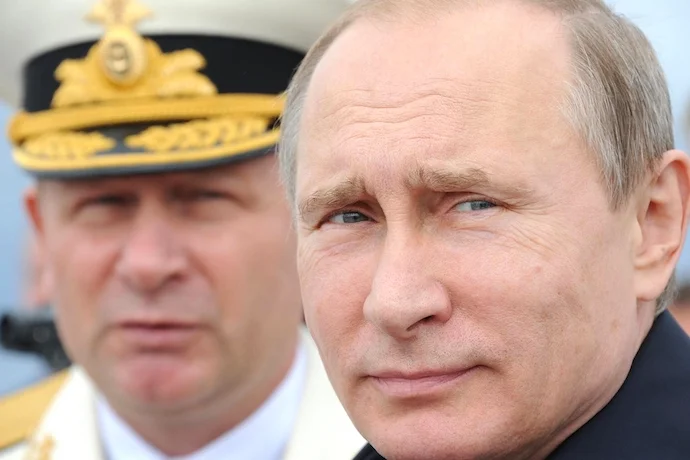
For much of the post-Soviet era, the Black Sea served as a bastion of Russian influence. With the fleet anchored in occupied Crimea, Moscow projected dominance from Sevastopol to the Bosphorus. But since 2022, Ukraine’s nimble and innovative naval strategy has upended that balance. The war at sea has not played out in grand fleet engagements but in a deadly series of asymmetrical strikes.
The turning point came in April 2022, when Ukrainian Neptune missiles sank the Moskva cruiser. The loss wasn’t just symbolic; it was operationally crippling. In the months that followed, Ukraine escalated its maritime campaign with naval drones, shore-based anti-ship missiles, and long-range strikes—precision warfare that turned Russia’s supposed naval superiority into a liability. Submarines, landing ships, patrol boats, and vital logistics vessels were sunk or disabled with unsettling regularity.
Sevastopol, once the jewel of the Black Sea Fleet, has become a danger zone. Ukrainian drones, sabotage teams, and cruise missiles have repeatedly struck the port. Russia was forced to relocate several vessels to Novorossiysk, a port farther from the front lines—but even there, Ukraine’s reach proved formidable, damaging infrastructure and ships hundreds of kilometers from active battle zones.
By mid-2025, the once-proud Black Sea Fleet is no longer viewed as a credible force. Russia, understanding this vulnerability, has begun quietly sidelining it. “July Storm” steered clear of the Black Sea, focusing instead on distant waters—those of the Pacific, Arctic, Baltic, and Caspian—where Moscow could still perform military theater without the looming risk of another humiliating loss. The calculation was simple: Ukraine has made the Black Sea too dangerous for Russia to operate confidently.
Instead, while the Kremlin paraded its forces across safer waters, it fell back on a more familiar and grim playbook—targeting civilians.

During the same week that “July Storm” unfolded, Russia launched missile and drone attacks on Odesa and nearby Ukrainian ports. The targets were not naval assets, but apartment buildings, energy hubs, and grain terminals. These weren’t military strikes—they were acts of vengeance dressed up as strategy. They revealed not strength but a lack of options. Unable to fight Ukraine effectively at sea, Russia struck where it could still cause pain: civilian life.
This contrast—the silence in the Black Sea and the violence on shore—underscores a deeper strategic shift. Where Russia once projected dominance, it now avoids confrontation. Its response? Petty, punitive violence aimed not at Ukraine’s navy but at its people.
Behind the choreography of global naval exercises lies a fading myth. Russia long cultivated the image of a globe-spanning fleet, a navy capable of projecting power far beyond its borders. But the war in Ukraine has shattered that illusion. The Black Sea Fleet—now diminished, dispersed, and hesitant to leave port—no longer fulfills its historical role. While ships fly the flag in the Pacific or Arctic, the fleet that mattered most remains conspicuously absent.
Ukraine, meanwhile, has rewritten the script. With limited resources and strategic ingenuity, it has fashioned a 21st-century navy: decentralized, fast-moving, and digitally superior. Its weapons aren’t lumbering carriers or aging cruisers, but drones, precision missiles, and real-time intelligence. This is naval warfare unbound by old doctrines—and it’s working.
The fact that “July Storm” took place far from Sevastopol is no logistical quirk. It is a strategic confession: Russia avoids the Black Sea not because it is unimportant, but because it can no longer win there.
So it lashes out elsewhere—in apartment complexes, in markets, at grain silos along the Danube. These are not the moves of a confident power. They are acts of frustration.
While Moscow continues to stage grand rituals of military might in distant seas, the reality is this: the strategic tide in the Black Sea has turned. Ukraine, once thought outmatched, now defines the tempo. And Russia, despite centuries of maritime tradition, is ceding the very waters it once claimed as its own.
In 1783, Admiral Thomas Mackenzie, under the reign of Catherine the Great, established Sevastopol as the home of the Black Sea Fleet. For generations, it symbolized Russian naval pride—a city of heroes, a fortress of sea power. Today, it is a relic. Bombed, battered, and strategically sidelined, it no longer plays any meaningful role in Moscow’s maritime future.
The storm may rage in distant waters. But in the sea that matters most, Russia sails in silence.