
Tech
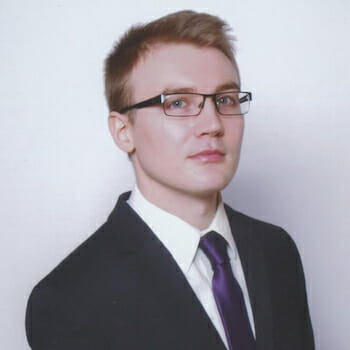
Ryan Grant Little on Ukraine’s Wartime Startup Revolution
Ryan Grant Little did not arrive in Ukraine through the traditional worlds of defence policy or military procurement. A Canadian social entrepreneur best known for co-founding the charitable giving platform CanadaHelps, Little spent years working in impact investing and climate-tech before the war redirected his focus toward Kyiv. Now based in Ukraine, he operates at the intersection of humanitarian logistics, defence technology, and wartime investment, helping connect Ukrainian startups with international capital through the nonprofit Invest in Bravery.
In conversation with Scott Douglas Jacobsen, Little discusses how Ukraine’s defence-tech ecosystem evolved from emergency wartime improvisation into one of the most dynamic startup environments in Europe. He reflects on coaching founders for their first English-language investor pitches, the growing appetite among Western investors for Ukrainian innovation, and the urgent need to build manufacturing capacity inside Ukraine itself rather than exporting talent and intellectual property abroad. The discussion also explores wartime entrepreneurship, accountability in humanitarian aid, and why Ukraine’s technological resilience increasingly matters far beyond its borders.
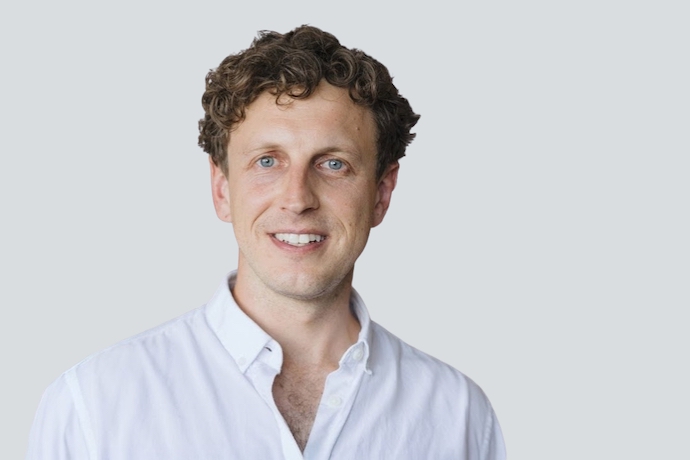 Scott Douglas Jacobsen: When people hear the phrase “dual use,” they often think of conflicts like Israel–Gaza and the long-running debates surrounding technologies that serve both civilian and military purposes. While Ukraine’s situation is distinct, the concept clearly overlaps with defence technology. How did Invest in Bravery begin, and how do you define defence and dual-use technologies within the organization’s broader humanitarian and investment mission?
Ryan Grant Little: It developed organically. I was giving a keynote at the launch of the Tilia Impact Ventures fund in Prague a few years ago. As I often do, I invited anyone working in Ukraine, or interested in doing so, to speak with me afterward.
A man named David Nichols approached me. He had begun organizing gatherings in Kyiv and Prague under the name Invest in Bravery. At that stage, the focus was on general technology, maintaining visibility for Ukraine’s tech sector among European investors after the onset of the full-scale invasion. I was invited to join as a co-founder and accepted. I now serve as chair. It is a nonprofit. My role is voluntary.
The mission has since narrowed. Initially, it covered broad technology; now, it focuses on defence and what I would call resilience technologies, tools that help Ukraine sustain itself under wartime conditions. The core objective remains: connecting Ukrainian defence-tech companies with international investment.
This has been successful. Many prominent Ukrainian defence startups delivered their first pitches, or their first English-language pitches, on our stage. Companies that once sought modest early funding are now raising eight-figure Series A rounds.
Our next event is about a month away. It is a one-day event with approximately 200 in-person participants and around a dozen pitching slots. The primary challenge now is selectivity; there are far more qualified applicants than we can accommodate, both among startups and attendees.
This growth reflects a broader shift. There is increasing recognition that Ukraine contributes significantly to global security and technological innovation. That realization extends from private investors to ministries of defence.
Jacobsen: Some founders are delivering their first investor pitches in English, often under extraordinary wartime circumstances. How do you prepare entrepreneurs for that environment and help them communicate effectively with international investors?
Little: Early on, we did not provide enough structured support. That has changed. For example, we recently hosted a group session led by David Beckett, widely regarded as one of the world’s leading pitch coaches. About 35 participants attended. He is now conducting one-on-one coaching sessions to help founders refine their presentations.
This creates value on multiple levels. Founders develop a critical skill, particularly important for individuals coming from engineering, manufacturing, or even frontline military roles, where pitching is not a natural part of their work.
It also benefits investors. With only five minutes per pitch, clarity and precision are essential. Investors traveling from London to Kyiv need those five minutes to be highly effective. As a result, we are prioritizing preparation and coaching more than ever.
Jacobsen: When a startup delivers a strong presentation, how does Invest in Bravery help bridge the gap between visibility and securing serious investment, including those eight-figure Series A rounds?
Little: Our role is to bring the right people into the same room and facilitate connections. We focus on matchmaking, both during events and through one-on-one introductions.
We do not operate a fund ourselves. We are not a government entity. We act as an independent intermediary. That neutrality is important. It means we have no secondary agenda beyond connecting strong opportunities with the right investors.
Because of that, people trust our recommendations. When we highlight a company, it is based on merit rather than any financial stake.
Jacobsen: You’ve now spent significant time living and working in Ukraine. What ultimately convinced you to relocate permanently rather than continue traveling back and forth?
Little: It will be one year. Before relocating, I was traveling back and forth roughly every six weeks. In 2024, I crossed the border around fourteen times.
Each time I left, I questioned why. There was still more to do. Eventually, on one of those return trips, I decided to plan a permanent move.
My background is in climate technology. I worked as an investment readiness and strategy coach for climate tech startups and as an angel investor. I still do some of that work, but over time, my focus shifted toward supporting Ukraine.
This situation is immediate and consequential. It will shape the rest of our lifetimes. I decided to commit fully.
Jacobsen: CanadaHelps helped centralize charitable giving in Canada through a single digital platform. In Ukraine’s defence-tech and humanitarian ecosystem, is there room for a comparable centralized platform, or has the country already developed alternative structures that fill that role?
Little: I am not aware of a direct equivalent that covers everything. Such a platform could be useful.
That said, there are strong Ukrainian foundations, such as large, well-established charitable organizations, that already function as clearinghouses for funding and support, particularly for military and humanitarian needs.
For military-focused aid, the ecosystem is relatively well covered. However, for a unified platform encompassing all charitable organizations across the country, I am not aware of a comprehensive solution.
Jacobsen: Eastern Europe, including Ukraine, is often viewed externally through the lens of corruption concerns, particularly in sectors involving defence procurement, investment, and aid distribution. Has that perception complicated your work on the ground in any meaningful way?
Little: I have not personally encountered corruption as a barrier in my work. That may reflect the specific networks and contexts in which I operate. With Invest in Bravery, there are no direct financial transactions; we facilitate connections rather than handle capital flows.
With Roxolani, the work is highly hands-on. We procure or receive donated equipment and deliver it directly, often through trusted volunteers or personally. We document deliveries with receipts, photos, and videos.
Because the work remains close to the ground, visibility and accountability can be maintained. I cannot speak for larger organizations, which likely have their own systems, but at the grassroots level, oversight is manageable. In my one year of living here, I have not experienced corruption as an issue.
Jacobsen: Looking ahead, what do you see as the most urgent investment priorities for Ukraine this year, particularly in relation to Invest in Bravery and the country’s broader defence-industrial future?
Little: The key issue is not a lack of international investors interested in Ukrainian defence technology. There is a strong interest, especially when intellectual property is structured or domiciled in the EU or other jurisdictions outside Ukraine.
The gap is in investment directed into Ukraine itself, specifically into the domestic industrial base. What is needed is significant capital for infrastructure, including manufacturing facilities and production capacity for ammunition, missiles, and related systems.
There is a risk that Ukraine’s defence innovations and intellectual property are transferred abroad rather than strengthening the domestic ecosystem. The priority should be attracting Western capital into Ukraine to build a sustainable, long-term industrial base.
Ukraine has the capability. In many cases, systems can be developed and refined more effectively here due to direct, real-time experience. There is a significant opportunity, but it requires overcoming hesitation about investing capital directly inside the country.
Jacobsen: Thank you very much for the opportunity and your time, Ryan.