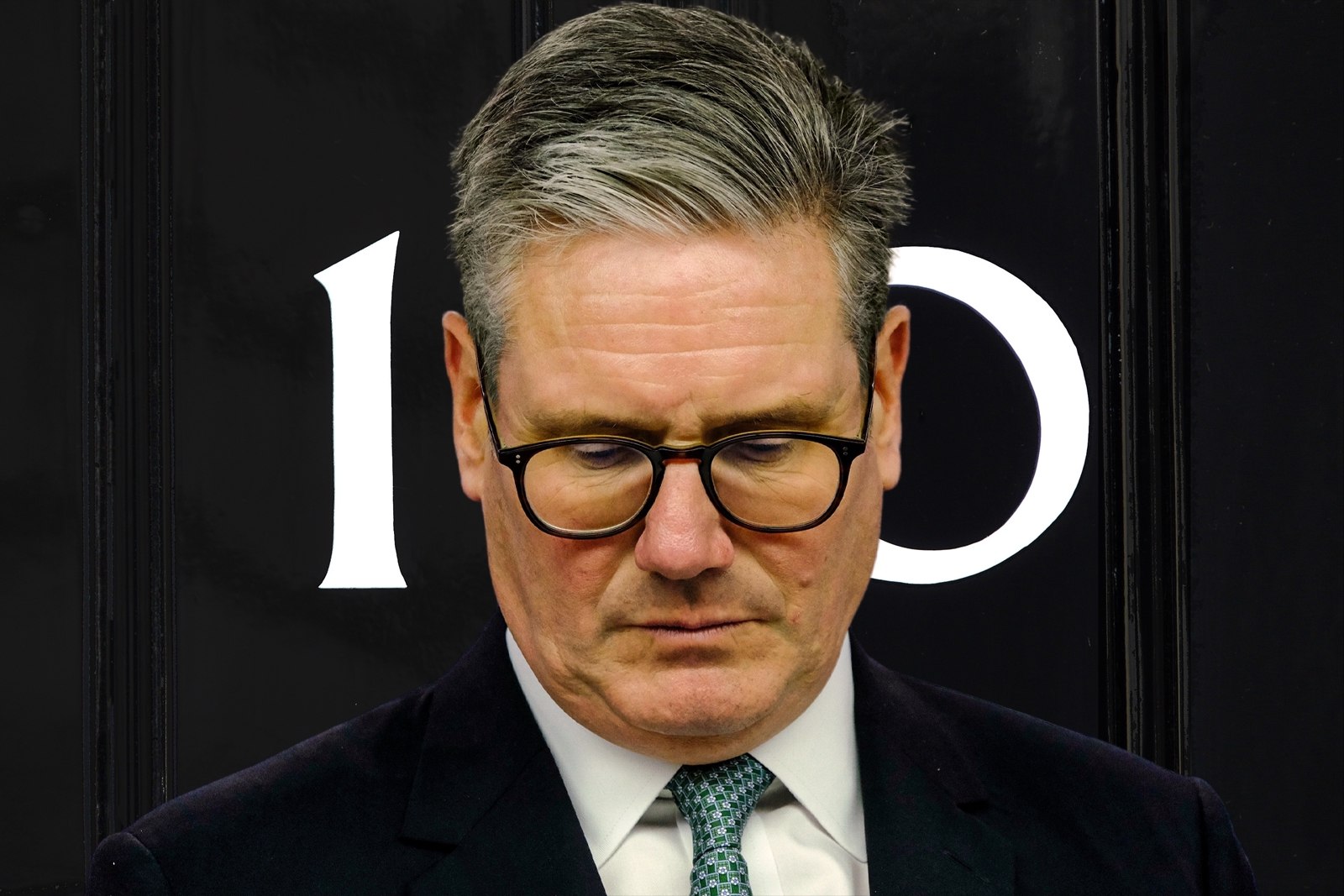

Starmer Begone: Another Dud Leaves Number 10
It is one of the more remarkable falls from grace in recent British politics. Sir Keir Starmer led Labour to what appeared to be a crushing victory over a Conservative Party of diddling, muddling and decrepit fools, promising a period of stable government that, if not exactly exciting, would at least be reliable after years of political lunacy. But it was not to be. Starmer, who announced his resignation as Prime Minister on June 22, proved inept in a number of ways: unable to communicate effectively, prone to embarrassing verbal slips (fudging “hostages” for “sausages”), possessed of questionable judgment (not least in appointing the Epstein-soiled Lord Peter Mandelson as ambassador to Washington), and incapable of constructing that most prized political commodity: a compelling narrative, a sense of unity, however specious. Economic growth was meant to be the agenda. But where, ultimately, did it go?
What the British voter got, instead, was the July 2024 decision to axe winter fuel payments for 10 million pensioners, which was followed by an about turn in May last year. He retained the policy introduced by the Conservatives in 2017 restricting benefits to the first two children of a family, only to be abandoned in last year’s budget. To target the rise of Reform, he took rhetorical pickings from its leader, Nigel Farage, and promised a mandatory digital ID card to be stored on mobile phones as proof of a person’s right to work in the UK. This policy, too, was abandoned.
In foreign affairs, where he was supposedly at greater ease, Starmer proved sickeningly amenable to Israel’s ruthless campaign in Gaza, explicitly approving the withholding of power and water supplies from Palestinian civilians as means of “self-defence.” The real terrorists, it would seem, were to be found at home, incarnated in the direct action group Palestine Action, which the Starmer government banned, placing it in the same league as ISIS or Boko Haram. He also seemed to feign ignorance about the ongoing International Court of Justice genocide case commenced by South Africa towards the end of 2023 against Israel, or the issuing of arrest warrants by the International Criminal Court against Israeli Prime Minister Benjamin Netanyahu and former Israeli Defence Minister Yoav Gallant.
Starmer came to power in the aftermath of Jeremy Corbyn’s defeat to Boris Johnson in 2019, after which he went about purging his party of the radical influence left by his predecessor. Nothing he did suggested he was anything but an establishment creature, whatever his trumpeted credentials as a progressive lawyer respectful of human rights. Where there was an abuse of power, he was likely to be there to be defending it. Oliver Eagleton’s cutting biography, The Starmer Project (2022), is relentless on this: Starmer combined “intervention abroad with repression at home.” As Director of Public Prosecutions, he pursued the hacker Gary McKinnon (Starmer was enraged when then Home Secretary Theresa May halted the extradition to the United States) and the WikiLeaks publisher Julian Assange while sparing, for instance, the police responsible for killing Jean Charles de Menezes at Stockwell tube station and frustrating efforts to charge Home Office officials liable for the death of migrant Jimmy Mubenga.
Other works on Starmer do little to stir feelings of sympathy for this apparently decent figure. Gabriel Pogrund and Patrick Maguire of The Times, for instance, offer the devastating Get In (2025). Starmer, the authors show, became the choice of spear for Morgan McSweeney, the founder of the think tank Labour Together and later Starmer’s Chief of Staff. That particular man of the shadows had a world view characterised by “a certain fanaticism, paranoia and moral certitude.” (The slime of the Mandelson affair was ample enough to make McSweeney fall on his sword.) The purpose of the spear was unambiguous: to target Corbynism on the pretext of combating antisemitism, becoming, effectively, “the great deception.” Paul Holden’s The Fraud (2025) expands on the theme, exposing McSweeney and Labour Together’s use of undeclared donations to the Electoral Commission from hedge fund managers and pro-Israeli figures to discredit Corbyn. Throughout, Starmer’s decency remains well concealed.
The victory of Andy Burnham announced, at least for Starmer, the coming of a slaying spirit. The now former Mayor of Greater Manchester had shown exactly what he thought of his constituency by taking the plunge in the seat of Makerfield, which he won with almost 25,000 votes (55%) to the 15,696 votes for Reform (35% of the share) and 3,111 (7%) votes for the even more rightist Restore. Much is being made of it: Burnham as knight armed against the reactionary forces of Reform and Restore while restoring Labour’s focus. But Burnham is old newspaper wrapping, an echo of the Blair years, one who voted for the Iraq War and against an inquiry into its legality but was sure some two decades later to do some politicking in suggesting regret.
The fall of Starmer is also another reminder about how the political context of popularity and demise has changed. Britain, after Brexit, seems to be in the mood of torching its prime ministers, seeking kindling sooner than a leader can find the necessary bearings. (Seven PMs in a decade is a scorching rate.) That, at least, is the impression the strategists, focus group apparatchiks and party wallahs give us. The social media saturated public are fickle and will turn, sampling the next morsel of misinformation, the next tasty bite of disinformation.
A notable pattern in the aftermath of the by-election was an utter disregard to what might be politely called the factual record. Rumour, gossip, blather and wispy nonsense filtered through the bulletins with wearying force, featuring alleged conversations between Starmer and his wife regarding his future. Starmer loyalists demonstrated their deathless loyalty by telling the press how the man was feeling over a weekend of anguish. The press stable had effectively anointed Burnham in advance of any party vote or decision. Here was an inexorable sense of a position being vacated, its occupant removed, the baton passed on. And not a single British vote was involved in the process. Yet another PM dud. What democracy, and what fine Westminster democracy at that.