
The Arctic Is No Longer a Commons
The crisis did not begin with a shot fired, but with a diplomatic stalemate. On January 6, the White House declared the acquisition of Greenland a “national security priority,” transforming what had long been a speculative idea into a formal policy position. The situation escalated eight days later, when a summit at the White House between Vice President J.D. Vance, Secretary of State Marco Rubio, and the foreign ministers of Denmark and Greenland collapsed without resolution. Washington’s insistence on territorial control was deemed “unacceptable” by Copenhagen, leaving the alliance exposed and divided.
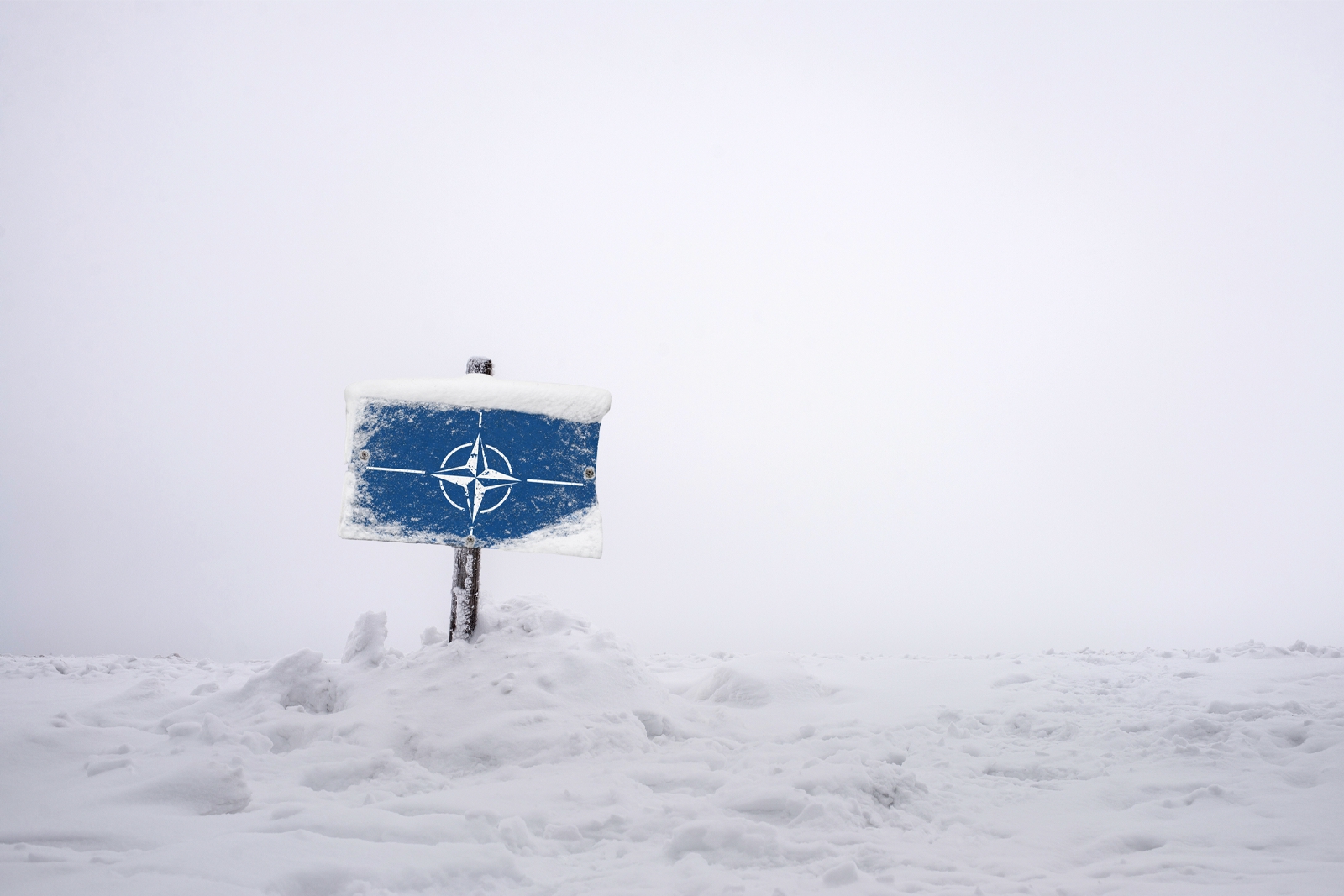
NATO’s response was swift and unusually pointed. On the morning of January 15, European allies launched Operation Arctic Endurance, a Danish-led mobilization intended to reaffirm sovereignty over Greenland and signal that alliance solidarity still had limits. Germany dispatched a reconnaissance team of thirteen personnel, while France deployed fifteen mountain warfare specialists. Two days later, Washington retaliated. On January 17, President Trump announced tariffs on the participating allies, explicitly linking economic punishment to their military posture. For the first time in NATO’s history, alliance forces had mobilized not to deter Russia or China, but to assert resolve against their own principal ally.
At the heart of this rupture lies a geologic reality that is reshaping global strategy. The Arctic has become the engine room of the post-carbon world. As ice retreats, it exposes the minerals required for the clean energy transition, transforming once-remote territory into a strategic prize. Southern Greenland is home to the Tanbreez deposit, estimated to contain 28.2 million tonnes of rare-earth minerals, making it one of the largest known reserves outside China.
What makes Tanbreez especially valuable is not volume alone, but composition. The deposit is rich in dysprosium and terbium, heavy rare earths essential for the permanent magnets used in wind turbines and electric vehicle motors. Nearby, the Amitsoq graphite project has been designated a “Strategic Project” by the European Union as part of its effort to break reliance on Chinese supply chains. Together, these developments reveal a green energy paradox: in order to decarbonize the global economy, major powers are racing to industrialize one of the planet’s most fragile ecosystems.
Washington has signaled its intent to compete aggressively. The U.S. Export-Import Bank has expressed interest in a $120 million loan to support Tanbreez, aligning with a broader $5 billion executive order aimed at fast-tracking national security mining projects. Yet the obstacles to extraction remain formidable. Greenland has fewer than 100 miles of roads, no rail infrastructure, and lacks deep-water ports near most major deposits. Capital alone cannot overcome geography.
While the land remains difficult to traverse, the surrounding ocean is opening at a startling pace. On October 14, 2025, Russia and China signed a comprehensive agreement to jointly develop the Northern Sea Route as the backbone of a so-called Polar Silk Road. What was once an aspirational corridor is now operational. That same month, the Chinese container ship Istanbul Bridge completed a voyage from China to the United Kingdom in just twenty days, cutting transit time by roughly 40 percent compared to the Suez Canal. Encouraged by the success, the operator Sea Legend Line has announced plans to establish regular commercial voyages along the route beginning in 2026.
Even more disruptive is the emergence of the Transpolar Sea Route, which cuts directly across the North Pole. New climate models confirm that the route is already navigable for Polar Class 6 vessels, a threshold crossed nearly a decade earlier than anticipated. By mid-century, sailing times via the transpolar route could fall to as little as thirteen days, fundamentally reshaping global logistics, maritime insurance, and strategic choke points.
As Western governments fixate on minerals, a quieter competition is unfolding over the infrastructure that will govern movement and information in these newly accessible waters. China is extending its Digital Silk Road into the Arctic, planning more than 10,500 kilometers of undersea fiber-optic cables to reduce data latency between Asia and Europe. Control of bandwidth, not just waterways, is becoming a defining feature of Arctic power.
At the same time, a widening “icebreaker gap” has exposed NATO’s operational vulnerability. Russia is constructing the Project 10510 Leader-class nuclear icebreaker Rossiya, designed to smash through ice more than four meters thick and enable year-round navigation along the Northern Sea Route. With nuclear fuel fabricated in late 2025, the vessel is scheduled for launch in February 2028, effectively guaranteeing Russian dominance in high-latitude shipping. In response, the United States, Canada, and Finland signed the Icebreaker Collaboration Effort Pact in November 2025, pooling shipyards and expertise in a belated attempt to catch up. The agreement is an implicit admission that, without heavy icebreaking capacity, NATO’s claims to Arctic sovereignty amount to little more than aspiration.
All of this geopolitical maneuvering is unfolding against a physical environment that is not merely warming, but undergoing a fundamental phase change. The 2025 Arctic Report Card shows that the region is warming nearly four times faster than the global average, with sea surface temperature anomalies in August reaching as much as 7 degrees Celsius above historical norms.
Two emerging phenomena underscore the severity of this transformation. As waters warm, commercially valuable fish stocks are migrating northward, but into regions that still retain seasonal ice cover. The result is a logistical paradox: a warming ocean is increasing demand for the very ice-capable vessels that NATO lacks, complicating access even as ice retreats. At the same time, rivers across the Arctic are turning a vivid orange as thawing permafrost releases iron and other toxic metals, a visual marker of chemical instability spreading through the region’s soil and waterways.
This instability introduces a far more alarming timeline. New modeling suggests that the Greenland Ice Sheet has a critical stability threshold between 1.7 and 2.3 degrees Celsius of warming. Once crossed, the ice sheet enters a state of hysteresis, meaning that even if global temperatures later decline, the collapse becomes irreversible. At that point, the feedback loop between climate change and geopolitics becomes self-sustaining.
Greenland does not merely foreshadow the future. It reveals what is already broken. The irony is unmistakable. The rupture over Greenland occurred just as the Kingdom of Denmark assumed the chairship of the Arctic Council, an institution designed to foster cooperation and prevent precisely this kind of escalation. Instead of anchoring unity, the West is fracturing from within.
As climate-critical resources like dysprosium and graphite grow more valuable, states are prioritizing control over collaboration. Institutions built to manage cooperation are being repurposed to administer decline. Alliances harden into resource blocs. Climate summits begin to resemble extraction auctions. The international order is reorganizing itself around scarcity, not to prevent it, but to dominate it.
This is the Arctic’s true message. The crisis is not approaching. It has already begun, and it is feeding on itself.