Media

What the Media is Helping Us Ignore, at Our Peril
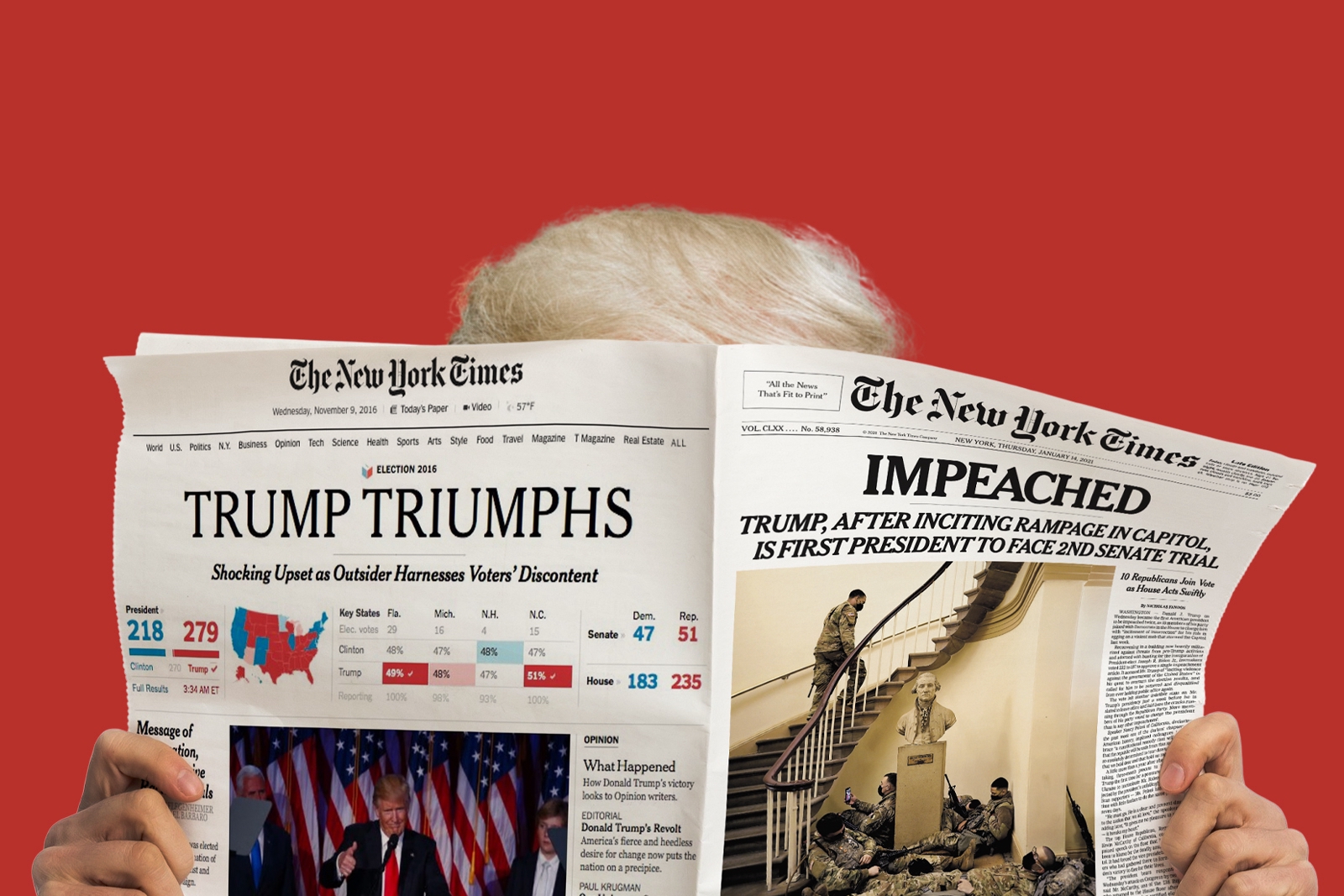
In recent months, the headlines have been dominated by U.S. President Donald Trump’s international ventures. There is the reported overthrow of the Venezuelan government and the seizure of its president. There is his declaration that the United States will soon “take over” Greenland, irrespective of what Greenlanders themselves might prefer. There is renewed interference in Iran, accompanied by threats of bombing, and a tightening blockade of Cuba with devastating humanitarian consequences.
Each of these actions—the removal of a sovereign government, the proposed annexation of foreign territory, the destabilization of another nation, and the economic strangulation of yet another—constitutes, by any conventional reading, a violation of international law.
Yet what is international law to a leader who insists that law is valid only insofar as he defines it? If legality is merely a matter of personal interpretation, filtered through an idiosyncratic moral code, then treaties and norms become optional, even ornamental. They exist until they are inconvenient.
Serious reporting on these matters is not simply desirable; it is essential. But to understand them fully requires looking beyond the rhythms and incentives of corporate media. While our attention is riveted to Trump’s foreign-policy maneuvers, other issues of equal consequence slip quietly from view. That diversion may not be accidental. It is worth pausing to examine what else is being eclipsed.
Consider the case of Luigi Mangione, who remains incarcerated and is accused of killing Brian Thompson, the CEO of UnitedHealthcare, in New York City in early December 2024. In the immediate aftermath of Thompson’s death, several insurance companies publicly pledged to ease their “prior authorization” requirements, a bureaucratic hurdle long criticized for delaying or denying medical care. For a few days, perhaps a week, the spotlight fell squarely on the labyrinthine and often punitive architecture of American health insurance. Then the glare faded.
The media cycle moved on. Substantive reform did not follow.
Meanwhile, federal prosecutors are reportedly seeking the death penalty for Mangione. At the same time, Jonathan Ross, an ICE agent who shot and killed Minnesota resident Renee Goode in an incident captured clearly on video, has been publicly praised by officials. The asymmetry is striking. One man stands accused of murdering a corporate executive and faces the ultimate punishment; another kills a citizen in plain view and is lauded. The law, ostensibly blind, appears to see very clearly when wealth and state power are involved.
Elsewhere, a ceasefire signed on October 10 between Israel and Hamas was meant to halt the bombing of Gaza and allow humanitarian supplies to flow through reopened borders. Yet, according to a February 22 report, at least 614 Palestinians have been killed and another 1,643 injured since the ceasefire’s implementation. Borders remain tightly controlled, and aid enters only in quantities insufficient to meet desperate need.
It is widely acknowledged that the Palestinian side has adhered to its obligations under the agreement. Starvation as a tactic of war is prohibited under international law; so too is collective punishment. Annexation of territory is likewise forbidden. Nonetheless, Israeli Defense Minister Israel Katz has reportedly declared that Israeli forces will remain in Gaza, a position that contravenes both the spirit and the letter of the ceasefire. The gap between law and enforcement grows ever wider.
Then there are the Epstein files, still largely sealed or so heavily redacted as to be nearly useless, despite repeated promises of transparency. Photographs of Jeffrey Epstein with President Trump, former President Bill Clinton, former Trump adviser Steve Bannon, and former Treasury Secretary Larry Summers circulate widely. The public sees the images, hears the pledges, and waits for documentation that never quite arrives in full. In an era that claims to prize openness, opacity persists where it matters most.
During his campaign, Trump pledged that grocery, housing, and gasoline prices would fall under his second administration. “Starting on day one, we will end inflation and make America affordable again,” he said, promising to reduce the cost of “all goods.” Yet a January 13 report from the Economic Policy Institute catalogues “47 ways Trump has made life less affordable in the last year.” The report groups its findings into several broad themes: erosion of workers’ wages and economic security; weakened job creation; diminished labor rights; expanded employer leverage; and the hollowing out of effective governance.
These are not flashy developments. They do not lend themselves to dramatic footage or banner headlines. Inflation is incremental. Labor protections erode quietly. But their cumulative effect shapes daily life far more profoundly than the spectacle of a diplomatic standoff.
The media ecosystem thrives on spectacle. An alleged kidnapping of a foreign leader commands attention in a way that grocery pricing never will. It has been reported that senior figures at the BBC advised journalists not to use the word “kidnapped” in reference to Nicolas Maduro, suggesting instead the term “captured.” The distinction is not semantic trivia. “Kidnapped” implies the sudden seizure of a person not formally charged; “captured” suggests the apprehension of a fugitive sought by authorities. Language frames legitimacy. Readers can decide which term more accurately describes the event, but they should not underestimate the power of word choice in shaping perception.
The Mangione case followed a familiar arc. For a brief period, it was irresistible: a wealthy, educated young man accused of shooting a corporate executive in broad daylight on a Manhattan street. The narrative carried all the elements of high drama. But it also threatened to illuminate something less comfortable—the simmering resentment felt by millions of Americans toward the health insurance industry.
A few days after Thompson’s death, Global News ran a headline asking why the killing had sparked a flood of “anti-elitist” rage. The question practically answers itself. For decades, Americans have navigated a health-care system that often appears designed to maximize profit rather than care. When that anger surfaces, it is labeled volatile, even dangerous. The guardians of the status quo worry less about street protests, which can be managed, than about electoral backlash. Votes are harder to suppress than marches.
It has become a kind of civic reflex to describe the United States as “the brightest beacon for freedom and opportunity in the world,” echoing former President George W. Bush after the attacks of September 11, 2001. But rhetoric cannot substitute for reality. A nation that disregards international law abroad while tolerating deep inequities at home risks something more corrosive than bad press. It risks legitimacy.
None of this is to suggest that foreign policy is unimportant. The destabilization of nations reverberates globally. But spectacle can function as camouflage. While cameras track bombers and diplomats, quieter transformations unfold: the entrenchment of economic precarity, the normalization of opaque governance, the slow redefinition of accountability.
Public officials, whether elected or appointed, are entrusted with advancing the common good. Yet too often, power appears to be exercised in service of private enrichment or ideological entrenchment. There are exceptions, and perhaps emerging leaders will defy the pattern. But vigilance requires skepticism.
The danger is not only that we are misled. It is that we are distracted. When attention is monopolized by dramatic confrontation abroad, citizens may overlook the structural shifts reshaping their lives at home. Democracies do not usually collapse in a single, cinematic moment. They erode, piece by piece, as public focus drifts from the foundations that sustain them.
To keep one’s eye on the ball is not to ignore global crises. It is to recognize that the most consequential changes are sometimes the least theatrical. A nation’s character is revealed not only in the wars it wages or the territories it covets, but in the contracts it honors, the laws it respects, and the citizens it protects.