

When the Left Chooses Oil Over Indigenous Rights
Across the world, left-leaning leaders who speak the language of justice and equality often stumble on the issue that tests their convictions most sharply: the right of Indigenous peoples to control their own lands. It is easy to condemn exploitation in the abstract. It is harder, in practice, to accept that sovereignty means Indigenous nations can set the terms of development—or refuse it altogether—even when the state insists it is acting in the public good.
Brazil’s President Lula da Silva returned to office with a moral mandate: protect the Amazon, rebuild environmental governance, and restore respect for Indigenous rights after years of devastation. Yet his government has recently approved new oil exploration offshore near the Amazon by a state-owned firm and has eased environmental rules that were meant to shield the rainforest. The decision has come despite opposition from Indigenous communities who argue that drilling and the infrastructure that follows would endanger their territories, their waters, and the ecological systems that sustain them.
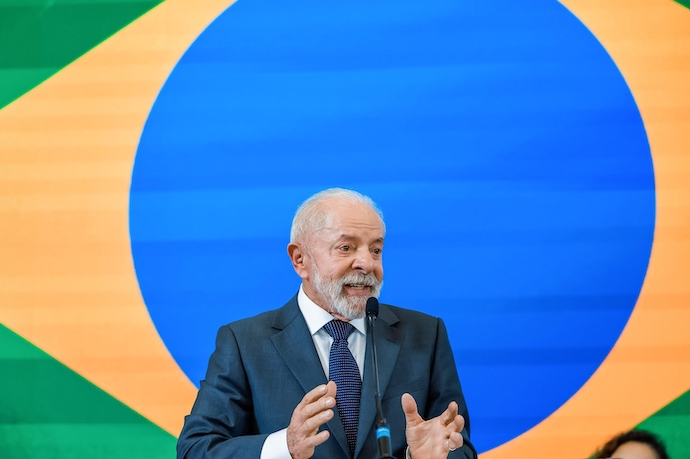
The contradiction is glaring. A government that vowed to defend the Amazon from corporate greed is now willing to gamble with extraction at the forest’s edges. Lula’s allies may argue that Brazil needs revenue for social programs and energy security, and that a “managed” expansion of oil can coexist with climate commitments. But the deeper logic is familiar: the state still claims the right to decide what happens on Indigenous land. The question becomes not whether Indigenous peoples consent, but how their objections will be managed, softened, or outvoted. In this framework, Indigenous rights are acknowledged rhetorically, while the final authority remains lodged in Brasília.
Brazil’s story is not unique. It belongs to a broader pattern in which the left promises liberation but delivers a different kind of control. The vocabulary changes—development, modernization, national planning, even climate transition—yet the hierarchy often remains. Indigenous sovereignty is treated as a noble aspiration, invoked in speeches, then deferred when it collides with a project framed as national destiny.
Leftist movements have often been prominent voices for Indigenous rights. They also have a record of betrayal, and those betrayals frequently arrive clothed in the rhetoric of emancipation.
In the 1980s, Nicaragua’s Sandinista revolution inspired leftists around the world. Yet it turned against the Miskito people on the Caribbean coast. The Sandinista government accused them of disloyalty, displaced communities, and committed violence that left lasting trauma. The lesson is not simply that revolutions can curdle. It is that a state convinced it embodies “the people” can decide that some peoples count less.
The Soviet Union likewise claimed to champion equality, but it treated minority and Indigenous nations brutally. Groups such as the Kalmyks and Karachays were deported and displaced, uprooted from ancestral lands and punished as suspect populations. These histories are not distant footnotes. They are warnings about what happens when any state—no matter its ideology—holds unchecked power over Indigenous peoples and their territory. Promises of liberation can become new forms of domination when sovereignty is treated as a slogan rather than a limit on state power.
The root of these betrayals is structural. In both left and right traditions, Indigenous land is often treated as ultimately belonging to the state. The argument becomes one of management: whether resources should be nationalized for planning or privatized for profit. For Indigenous peoples, the outcome can look strikingly similar if they cannot control binding decisions about land, water, and resources.
Even when leftist governments promise inclusion and consultation, the balance of power often remains unchanged. Indigenous peoples are not treated as political equals but as policy subjects. Their role is to advise, not to decide. Whether the decisive meetings occur in corporate boardrooms or government ministries, authority is typically located elsewhere, and Indigenous consent is reframed as input rather than permission.
When the left calls for nationalization of resources in Indigenous territories, it can reproduce the logic it claims to oppose. The corporation may be replaced, but extraction remains. In one scenario, a multinational insists the land must serve shareholders. In the other, the state insists the land must serve the nation. In both cases, Indigenous nations are told their territory serves a “greater good,” and in both cases their right to refuse is denied. “Public ownership” becomes a polished euphemism for dispossession, because the public being empowered is not the community on the land—it is the state that governs it.
Any movement that claims to pursue justice needs to confront this blind spot. If Indigenous peoples cannot exercise basic authority over their lands, then Indigenous liberation remains rhetorical. Recognition without power is performance; consultation without veto is control with better manners.
Sincerity would begin by treating Indigenous territories as nations in more than name. That means Indigenous governments must have real authority over their lands, waters, and resources, including the authority to say no. It means decisions about development should be made by those who bear the costs, not by distant ministries that collect the benefits. It is up to Indigenous peoples to decide whether they want partnership with the government or with private firms, and whether they want their lands developed at all. Respect, in other words, is not a sentiment. It is a transfer of decision-making power.
When Indigenous peoples insist on sovereignty, they are not rejecting progress; they are redefining it. They are insisting that progress must begin with consent, not control. They offer a framework in which land is not merely a resource but a relationship of responsibility, and in which “prosperity” is not measured only in exports or fiscal receipts.
Imagine a political system in which Indigenous nations have the autonomy to decide whether to develop or preserve, and in which Indigenous governments and the state work together as counterparts rather than as subjects and rulers. That is not romanticism. It is a practical necessity as well as a moral claim. Indigenous peoples have played an outsized role in preserving some of the last intact ecosystems on Earth. Autonomy is not a threat to national well-being; it is one of the strongest defenses against ecological collapse, because it aligns authority with stewardship and long-term survival.
Progressives often pledge to improve the lives of future generations. Yet paternalism reappears under the guise of welfare, planning, or climate policy. The language is gentler, but the posture is the same: the state decides, and Indigenous peoples are expected to comply.
The true measure of the left’s sincerity is not how much wealth it redistributes, but how much power it is willing to relinquish. Can it accept Indigenous nations as equals, as governments with the authority to say no, rather than as symbols to be celebrated and managed? Can it treat refusal not as a problem to solve, but as a legitimate exercise of self-government?
Until then, “people’s power” will continue to exclude the very peoples who have inhabited the land the longest, and “public ownership” will remain a polished version of the old dispossession. Indigenous rights are not a niche concern. They are a test of how political movements understand freedom itself. Colonial structures persist as long as governments, however progressive, claim the authority to decide what to do with Indigenous land. The left can talk about liberation, but until it learns to listen—and to let go—its promises will keep collapsing into rule.