Culture

A Journey Through Azerbaijan’s Cultural Heartland
In his book Azerbaijan Since Independence, Svante E. Cornell writes that if the country had to be defined by a single word, it would be “crossroads.” Tadeusz Świętochowski, one of the foremost historians of Azerbaijan, made a similar observation: “Azerbaijan is both European and Asian at the same time. Azerbaijan’s importance is much greater than its small [territorial] size.”
That description captures the country’s character. The homeland of Heydar Aliyev occupies an important place in the preservation of Islamic culture and architecture. It is a cradle of civilizations and home to landmarks such as the Gulustan Mausoleum, Noah’s Mausoleum, and the Momine Khatun Mausoleum.
The “Land of Fire” is also a place where visitors encounter distinctive urban development, an interplay of Western and Eastern architecture, dramatic natural beauty, and generous hospitality. Its appeal can be found in its oldest cities and carpet museums, as well as in the traditional wines of Kurdamir and the creamy goat cheese of Jalilabad.
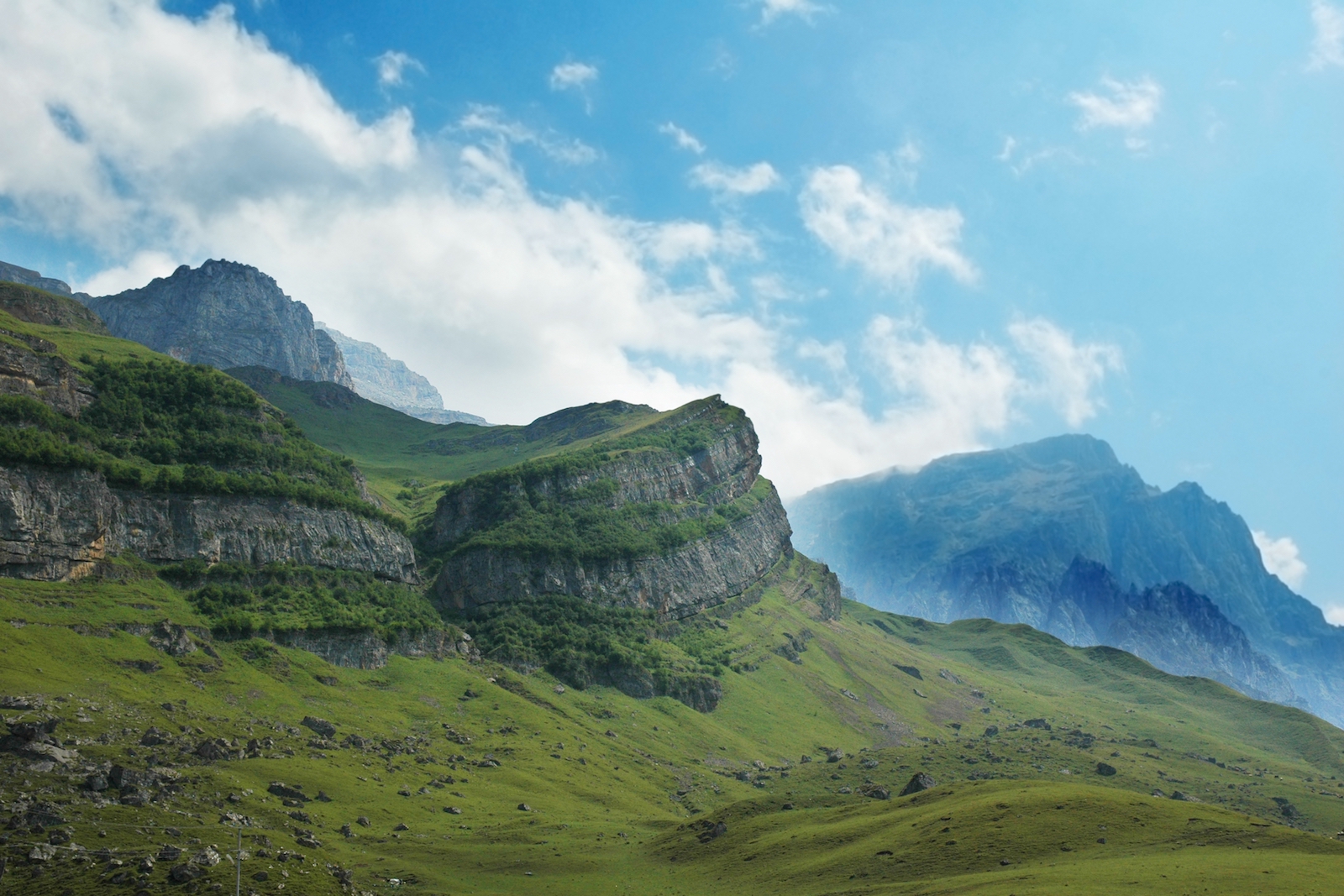
Sitting before the statue of Mirza Alakbar Sabir in Baku, the courageous 19th-century Azerbaijani poet whose wit and wisdom reflected both the patriotic aspirations and hardships of his people, it is difficult not to think about the landmarks, cities, and districts that embody Azerbaijan’s deeply rooted multiculturalism and architectural heritage. Across the country, the mountainous landscapes of the Caucasus, rich cultural traditions, and Islamic monuments distinguish places such as Kurdamir, Ganja, Lankaran, Lerik, Gazakh, Jalilabad, and Salyan.
Historic Ganja, Azerbaijan’s second-largest city, might also be described as one of Eurasia’s capitals of poetry. It was the birthplace of Nizami Ganjavi, whose work has come to symbolize Azerbaijani multiculturalism and religious tolerance; Mahsati Ganjavi, one of the region’s most important medieval lyrical poets; Hasan Mashadi Huseyn oghlu Aghayev, deputy speaker of the parliament of the Azerbaijan Democratic Republic; and Nigar Khudadat qizi Rafibeyli, the distinguished Azerbaijani writer who once chaired the country’s Writers’ Union. Ganja is also an important commercial and financial center, one whose institutions connect western Azerbaijan with the wider region.
The 15th-century Persian geographer Ahmed Razi wrote of Ganja: “I have not seen a place such as Ganja anywhere else in the world. It always has a fresh look and an attractive musky scent. Its water is rosewater, and its land is equal to saffron.” The arrival of Islam and its influence on architecture, visual art, and literature helped make Ganja a singular city. Here, the legacies of the Sasanian world, the eastern Mediterranean, and Islamic civilization converged to shape a distinctive cultural landscape.
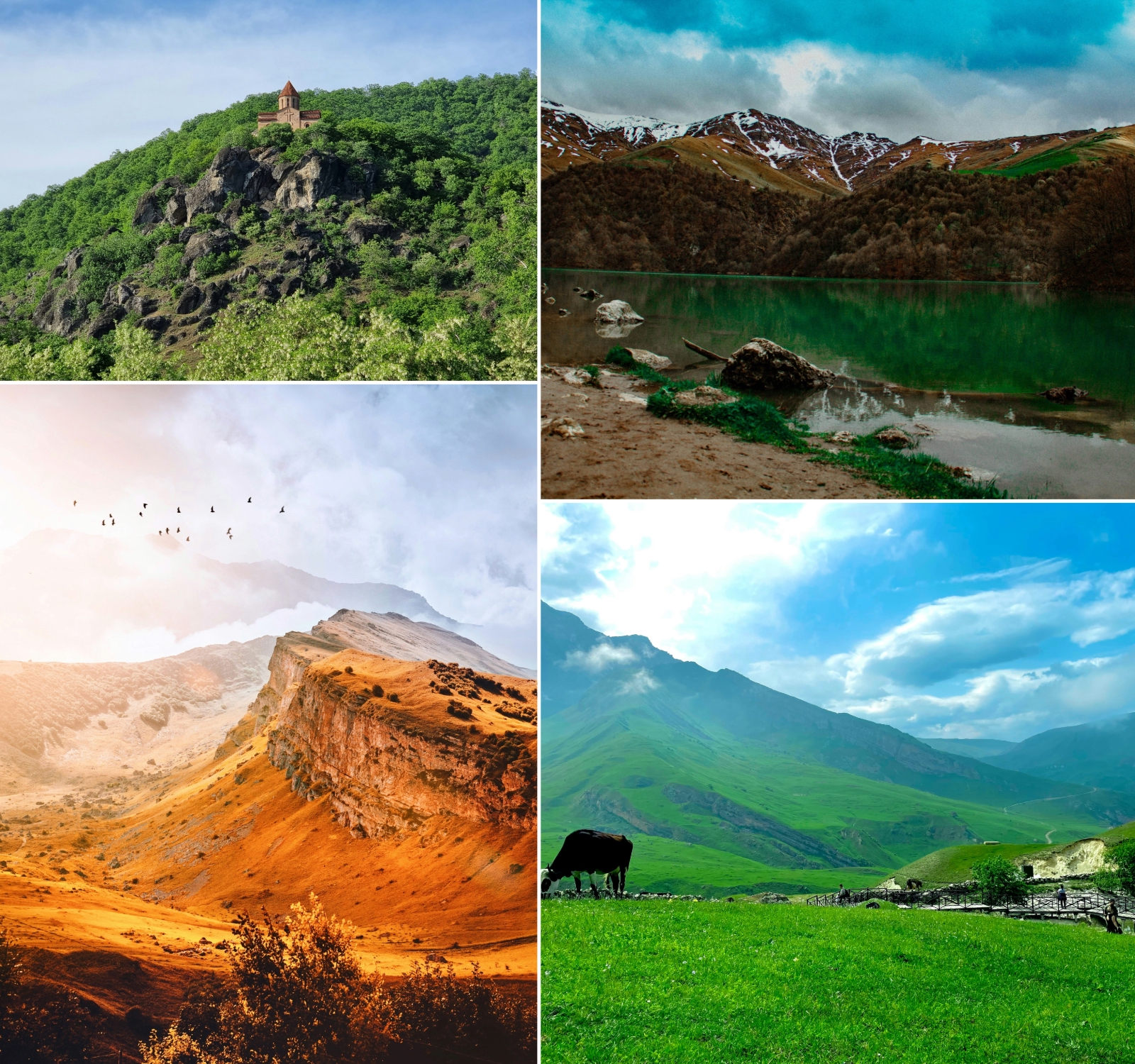
That history remains visible in the Juma Mosque, Ganja’s great gates, the Ganja Regional Scientific Center, and the city’s other religious and civic monuments. Nearby, the striking beauty of Lake Goygol offers a natural counterpart to the city’s architecture. Together, these surroundings seem almost ready-made for an Isabel Allende story devoted to Azerbaijani culture and women. Allende, an outspoken advocate for women, has long intertwined mythology and realism while paying tribute to their endurance and sacrifices.
What makes Ganja memorable, however, is not any single monument. It is the way poetry, faith, and public life overlap. The city’s literary inheritance is not confined to museums or commemorative plaques; it remains part of how Ganja presents itself to visitors and how residents understand their place in Azerbaijani history. Ancient brickwork and newer civic buildings occupy the same streets, producing the architectural conversation between past and present that recurs across the country.
Visitors can stay at the Ganja Hotel, one of the city’s oldest establishments. Its range of rooms and suites offers a comfortable base from which to explore the city, while its restaurant serves both European and Azerbaijani cuisine. The hotel’s central location makes it particularly convenient for travelers hoping to experience Ganja’s historic core.
Northwest of Baku lies Kurdamir District, established in 1930 and known for its broad steppes. Wolves, foxes, jackals, pheasants, ducks, and geese inhabit its varied landscape. The name “Kurdamir” is commonly associated with the Kura River and the Azerbaijani word for iron, “damir.” Once part of the historical region of Shirvan, Kurdamir is roughly 189 kilometers from the capital and remains deeply connected to Azerbaijan’s rural traditions.
Kurdamir’s fertile soil and open country make it an appealing destination for adventurous travelers. Summers are hot and dry, characteristic of the steppe climate, and the district extends along the left bank of the Kura River. Its vineyards are especially renowned. British travelers have recorded favorable impressions of the region, and its best-known grape variety is Shirvanshahi. Kurdamir is equally respected for its centuries-old carpet-weaving tradition. The celebrated Shilyan carpet takes its name from the village where it is woven. Local restaurants reinforce the district’s reputation for hospitality; the Garabag restaurant, about five kilometers west of the city center, is known for traditional Azerbaijani dishes.
Beyond the banks of the Kura, the landscape opens toward Naftalan, internationally known for therapeutic treatments using its distinctive oil. Such treatments have been offered there since the 1920s, and a substantial body of research has examined the oil’s possible medical applications. The city has built an entire identity around this unusual natural resource.
Archaeological accounts describe Naftalan as a commercial center by the 11th century. Marco Polo is said to have encountered its oil, which was carried by caravans across Eurasia and acquired a reputation from the Near East to China and India. In the early 20th century, a German company began exporting it to Europe. Research into Naftalan oil has continued at institutions including Azerbaijan Medical University. Today, hotels, treatment centers, and resorts have expanded as the government of President Ilham Aliyev promotes tourism in the region.
Gazakh offers another window into Azerbaijan’s cultural memory. Visitors encounter a city strongly associated with traditional song and folklore; it has even been celebrated as a capital of Azerbaijani folklore. Local histories trace Gazakh’s origins to the eighth century and the military commander Marwan ibn Muhammad. Citing medieval documents, the scholar G. Voroshityasel described Gazakh as an ancient town whose history stretched back more than a millennium. By the late 15th century, the Gazakh Sultanate had emerged within the political world of the Safavid dynasty.
The district is also famous for its carpets. Gazakh designs are admired for their bold geometry and color, and examples can be found in royal and museum collections across Europe. Related carpet patterns appear in paintings by Renaissance artists including Pinturicchio, Carlo Crivelli, and Domenico di Bartolo, as well as in works attributed to the Dutch master Jan van Eyck. Gazakh carpets are held by institutions including the Hermitage Museum, the Metropolitan Museum of Art in New York, and museums of decorative art in Berlin and Budapest.
Farther south, the landscape becomes brighter and more colorful. The steppes of Salyan District contain a number of natural attractions, most notably Shirvan National Park, an important habitat for goitered gazelles and other rare mammals. The route continues through Bilasuvar, known for the ancient fortress of Shahriyar, and onward to Jalilabad, famous for its cheeses, grapes, and wines.
Masally District is rich in freshwater and mineral springs. The well-known Istisu resort—its name means “hot water”—draws visitors to the district’s thermal waters. Not far away lies Lankaran, often called Azerbaijan’s “fruit capital.” Its subtropical climate allows farmers to grow tangerines, persimmons, guavas, lemons, and other warm-weather crops. Lankaran is also known for tea plantations whose leaves produce some of the country’s most distinctive flavors.
The journey south is also a culinary one. Kurdamir’s wine and Jalilabad’s cheeses give way to Masally’s spring waters and Lankaran’s tea, citrus fruits, and local dishes. These products are more than pleasant diversions for travelers. They reflect sharp changes in soil, elevation, rainfall, and climate across a relatively compact country. Azerbaijan’s geography can shift quickly, and its food changes with it.
The lands around Lankaran once formed part of ancient Atropatene. For travelers seeking a glimpse of a far older world, the district’s surviving Hyrcanian forests are extraordinary: their ecological origins reach back millions of years. Natural attractions near Lankaran include Yanar Bulag, or “burning spring,” along with Lake Vilash. Ironwood trees, chestnut-leaved oaks, Caucasian hornbeams, alders, figs, boxwoods, and ferns help sustain an ecosystem containing more than a thousand plant species.
Only about 40 kilometers from Lankaran is Lerik, widely known in Azerbaijan as the land of centenarians. Local tradition attributes the longevity of some residents to the distinctive climate and conditions of the Caucasian highlands. The district even has a Museum of Longevity devoted to residents who lived beyond 100. Its best-known figure is the shepherd Shirali Muslumov, who, according to local accounts, lived to the remarkable age of 168—a claim that has become part of Lerik’s identity, even if it remains impossible to verify conclusively.
Each of these districts speaks in its own visual and cultural language. Together, their landscapes, customs, and architectural monuments reveal the breadth of Azerbaijan’s heritage. Travelers encounter not only natural beauty but also echoes of the literary world of Nizami Ganjavi, Hafez, and Saadi. Their verses gave powerful expression to the cultural exchange that has long shaped the region. From the Autonomous Republic of Nakhchivan to the Absheron Peninsula, Azerbaijan’s Islamic traditions and multicultural inheritance remain vivid, layered, and unmistakably alive.