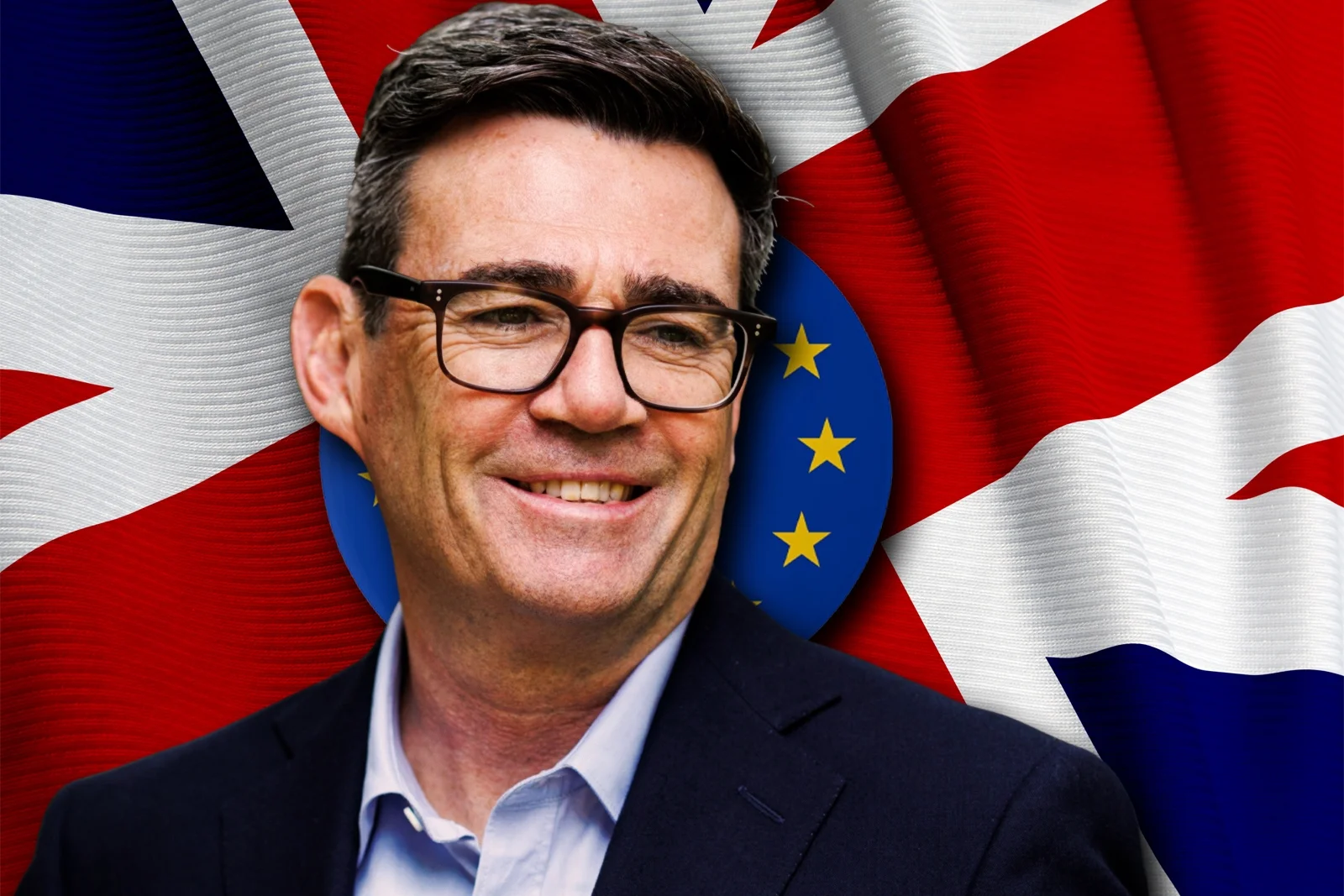

Europe Can No Longer Afford the Politics of Brexit
Since Britain’s departure from the European Union, the global geopolitical landscape has undergone a profound transformation. The world has become more polarized, turbulent, and unpredictable, while the rules-based international order has come under growing strain. Against this backdrop, the logic of Brexit looks increasingly detached from Europe’s strategic realities.
It is difficult to imagine that, under today’s circumstances, any major political force in Britain would seriously contemplate holding a referendum on leaving the EU. The fundamental problem with Brexit was that it asked voters whether Britain should leave, without offering a convincing answer to the more consequential question of where the country should go.
Brexit was an extraordinary political experiment. Britain voluntarily withdrew from a decision-making center that had provided its members with preferential economic arrangements, collective influence, and mechanisms for long-term development. It was a consequential departure from an institution that Britain itself had helped shape.
During nearly five decades of membership, the UK made substantial contributions to European integration. British European Commissioner Arthur Cockfield played a crucial role in developing the single market. Britain supported the EU’s enlargement into Central and Eastern Europe, helped shape competition policy and international trade, and influenced the administrative culture of European institutions.
Yet Britain was also a persistent champion of exemptions, opt-outs, and vetoes. Its relationship with European integration was frequently defined by an uneasy combination of influence and resistance. The Brexit referendum ultimately exposed those contradictions, while relatively low participation among younger voters meant that a generation with a particularly strong stake in Britain’s European future was underrepresented.
The negotiations that followed produced two major agreements: the Withdrawal Agreement and the Trade and Cooperation Agreement (TCA). Each rested on a different legal foundation and followed a separate negotiating process. Neither, however, established a comprehensive framework for financial services or foreign and security policy cooperation.
The EU demonstrated remarkable unity throughout the Brexit negotiations, and the much-feared domino effect of other member states following Britain’s example never materialized. But that unity did not resolve the strategic problem created by Britain’s departure.
Russia’s full-scale invasion of Ukraine in 2022 exposed the limitations of this arrangement. Britain immediately emerged as a leading supporter of Ukraine, demonstrating that its commitment to European security had not diminished simply because it had left the EU.
The absence of a comprehensive EU–UK foreign and security policy agreement, rejected by the British government during the original negotiations, became an increasingly conspicuous gap in the relationship.
The failure to reach an agreement on British participation in the EU’s Security Action for Europe (SAFE) defense financing instrument was another missed opportunity. Nevertheless, there are signs that London is becoming more receptive to deeper cooperation with Brussels.
Ambitions on both sides are growing. Britain has played an important role in the coalitions of the willing supporting Ukraine, while the EU and UK share an interest in defending and rebuilding a rules-based international order. Their values, security concerns, and strategic objectives remain closely aligned.
The first EU–UK reset summit, held on May 19, 2025, established a foundation for renewed cooperation. Its common understanding addressed trade, energy, climate, migration, people-to-people exchanges, and the possibility of closer defense cooperation.
The second summit, scheduled for November 20 in Brussels, offers an opportunity to turn those ambitions into practical commitments. It should focus on strengthening defense capabilities, reinforcing foreign policy cooperation, and adapting the relationship to profound changes in the international environment.
Yet it remains surprising how difficult it has been to escape the political habits established during the Brexit negotiations. Red lines, selective engagement, and competing interpretations of sovereignty continue to complicate progress. The failure of the SAFE negotiations illustrates the costs of allowing these disagreements to overshadow broader strategic interests.
The Brussels agenda is ambitious. Beyond security and defense, the two sides are pursuing arrangements for youth mobility, although participation limits, visa conditions, and tuition fees remain politically sensitive. Negotiations also concern reducing sanitary and phytosanitary trade barriers, linking emissions trading systems, and strengthening energy cooperation, including closer integration of electricity markets.
Connecting the EU and British emissions trading systems would also have implications for carbon pricing and the EU’s Carbon Border Adjustment Mechanism, which affects trade in carbon-intensive products.
British participation in Erasmus+, potentially beginning in January 2027, represents another opportunity to rebuild connections between younger generations on both sides of the Channel.
London will also be looking toward the review of the Trade and Cooperation Agreement. From the EU’s perspective, however, that review does not constitute a mandate to reopen the fundamental Brexit settlement. Brussels has little appetite for revisiting Britain’s departure from the single market and customs union.
That distinction matters. The objective should not be to relitigate Brexit, but to establish a more stable, predictable, and productive partnership that serves Europe’s economic and security interests.
There is reason for cautious optimism. Political dialogue has resumed, a credible agenda exists, and the security and defense partnership has established a framework for closer cooperation. Both sides increasingly recognize the advantages of a more pragmatic relationship.
But the November 20 summit will test whether that recognition can translate into meaningful action.
Another declaration of good intentions will not be enough. Europe faces a dangerous and demanding international environment, and the costs of political hesitation are growing. Cooperation must move beyond diplomatic language toward workable arrangements and measurable commitments.
For the EU, the strategic imperative is clear: relations with Britain must become more stable, predictable, and useful to Europe’s collective security and economic prosperity. For Britain, closer engagement offers an opportunity to exercise influence and advance its interests without reopening the fundamental question of EU membership.
Much can be accomplished without reopening the entire Brexit debate. The Brussels summit should therefore be more than a technical review of existing arrangements. It should become a genuine political turning point, capable of translating renewed goodwill into lasting cooperation.
That will require legal instruments, realistic implementation mechanisms, binding timetables, clear financial conditions, and credible monitoring of commitments. Political declarations have their place, but they cannot substitute for functioning agreements.
Ultimately, the interests of the EU and Britain are too closely intertwined to remain hostage to the arguments of the past. The international environment has changed dramatically since the Brexit referendum. Both sides must now demonstrate that their relationship can change with it.
Europe needs Britain, and Britain needs Europe. Neither can afford to let the politics of Brexit stand in the way of that reality.