
America’s Future is Oil, Not Soy
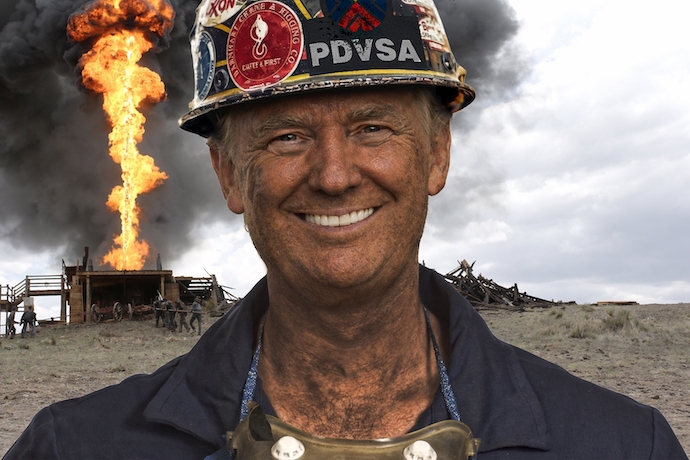
As America’s oil industry gears up to plunder Venezuela’s vast reserves with President Trump’s blessing, it is becoming increasingly clear that the era of government panic over the so-called “climate crisis” is over. The posture of the leader of the free world today is one of ruthless pragmatism. A narco-state run by a dictator? We’ll arrest him. The world’s largest oil reserves? We’ll take them.
Against that backdrop, much of the world remains stuck in another era—one defined by a centrist consensus around “climate action.” It is a politics reluctant to invest in fossil fuels even amid soaring energy prices, and one that responds feebly to Nicolás Maduro’s arrest by “monitoring the situation closely” and “calling for international law to be respected.” Outside the United States, many governments still seem to believe they can muddle through a politics of managed decline, offsetting bad policy with a heavy dose of virtue-signaling.
Voters, however, are increasingly seeing through it. Trump’s candor stands in sharp contrast to leaders who believe they can still pull the wool over the public’s eyes. Case in point: COP30, the latest global gathering devoted to environmental discussion. Held in Brazil in November 2025, it featured the usual procession of private jets arriving to host panels and press conferences about saving the planet—before departing again, carbon footprints intact.
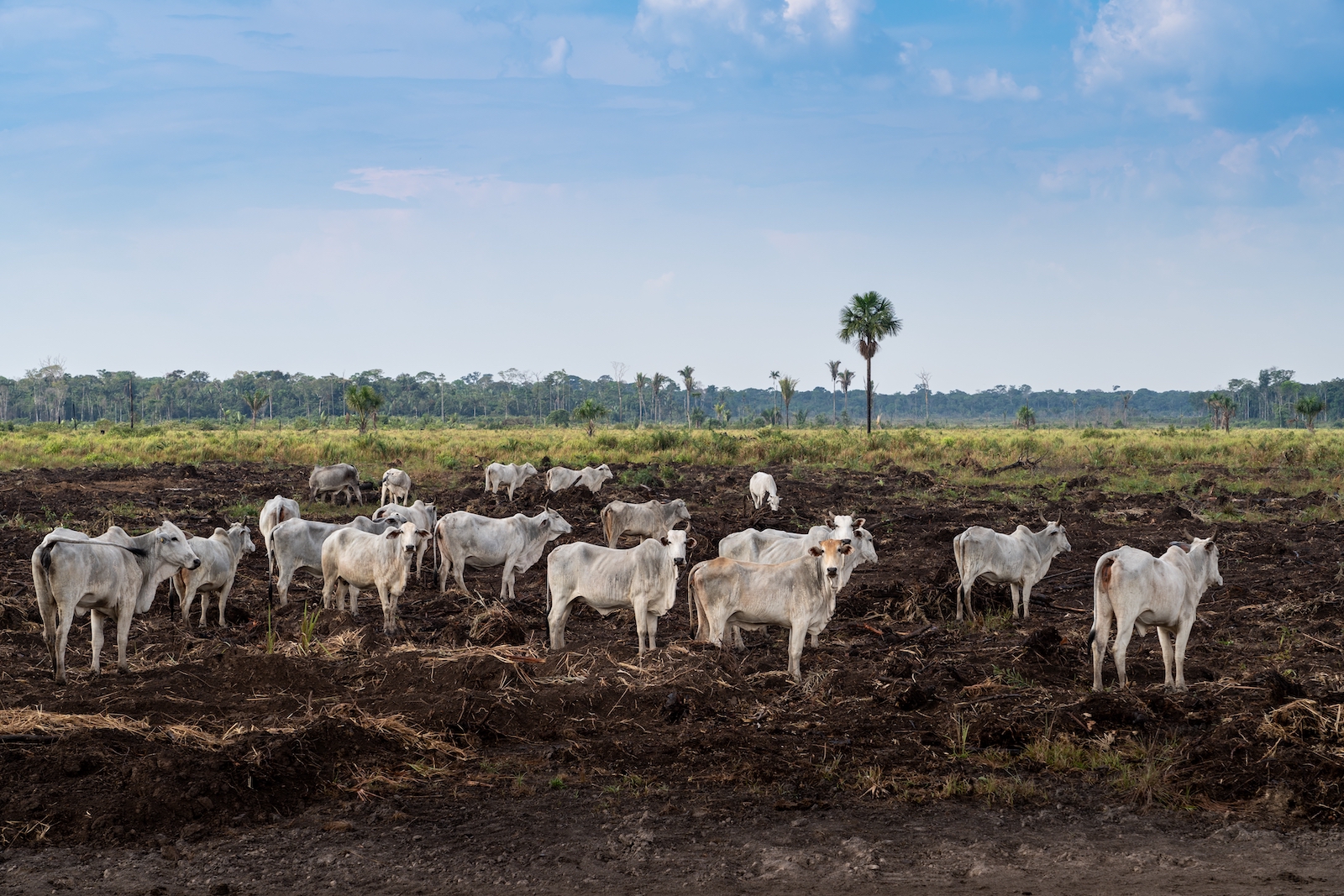
Look beneath the surface, and COP30 revealed itself as a festival of inaction, even in the face of genuine environmental threats. Remarkably, the host nation chose this moment to abandon the Amazon Soy Moratorium, a landmark 2006 agreement designed to halt the sale of soybeans grown on deforested rainforest land.
For a group of world leaders ostensibly united around stopping deforestation, the move was a glaring contradiction. The Amazon Soy Moratorium had been the most successful private-sector conservation initiative in the world, setting a global standard for other industries to follow. Brazil instead placed short-term, opaque commercial interests ahead of its stated environmental commitments—and the Amazon will shrink accordingly.
Soy is among the least environmentally friendly commodities imaginable, and Brazil is its largest exporter, accounting for roughly 40 percent of global supply. In January 2026, Brazil’s antitrust regulator, CADE, suspended the moratorium entirely, opening the door to widespread rainforest destruction in the name of soybean production. Soy cultivation already accounts for at least half a million hectares of land loss each year in Brazil alone.
The moratorium’s success had been extraordinary. Estimates suggest it preserves an area of rainforest roughly the size of Portugal annually. Yet Brazil—the same country that hypocritically carved a 13-kilometer, four-lane highway through the Amazon simply to host COP30—chose to scrap the agreement and hope no one noticed.
Soy is a leading driver of deforestation. It is inefficient compared with similar crops, requiring vast tracts of cleared land to produce relatively modest yields. It consumes enormous amounts of water and fertilizer and inflicts cascading damage on ecosystems, from soil erosion to biodiversity loss. On paper, soy production embodies everything Brazil’s left-wing government and the COP30 crowd claim to oppose. In practice, the gulf between rhetoric and reality continues to widen.
If Brazil is producing all this soy, the obvious question follows: Who is buying it? The answer is China. Nearly 73 percent of Brazilian soybean exports are destined for Chinese markets, with Turkey and Iran also ranking among the top five buyers. This is another hallmark of the dishonest, hand-wringing eco-politics embraced by Brazil and its allies. Time and again, their policy choices bind Western economies more tightly to China—whether through dependence on Chinese solar panels or by ceding control of critical nuclear-energy infrastructure. One way or another, China’s tentacles sink deeper into the global economy.
COP30’s stated objectives included “preserving forests and biodiversity” and advancing “climate justice.” As recently as 2023, Brazil’s President Lula da Silva declared, “Our goal is to achieve zero deforestation in the Amazon.” By now, such hypocrisy has become routine. Climate change is real. What is equally real is that today’s political leadership does not take it seriously. They say one thing and do another, and Brazil’s COP30 spectacle stands as the clearest illustration.
The era in which politicians could endlessly invoke the “climate crisis” while quietly pursuing self-interested policies is drawing to a close. Brazil’s leaders, like many others, would do better to follow President Trump’s example and speak plainly. Hosting an international climate summit while authorizing the destruction of the Amazon to grow soybeans is the opposite of candor. It is time to ditch the soy—and the hypocrisy that comes with it.