
Do Not Resume Nuclear Weapons Testing
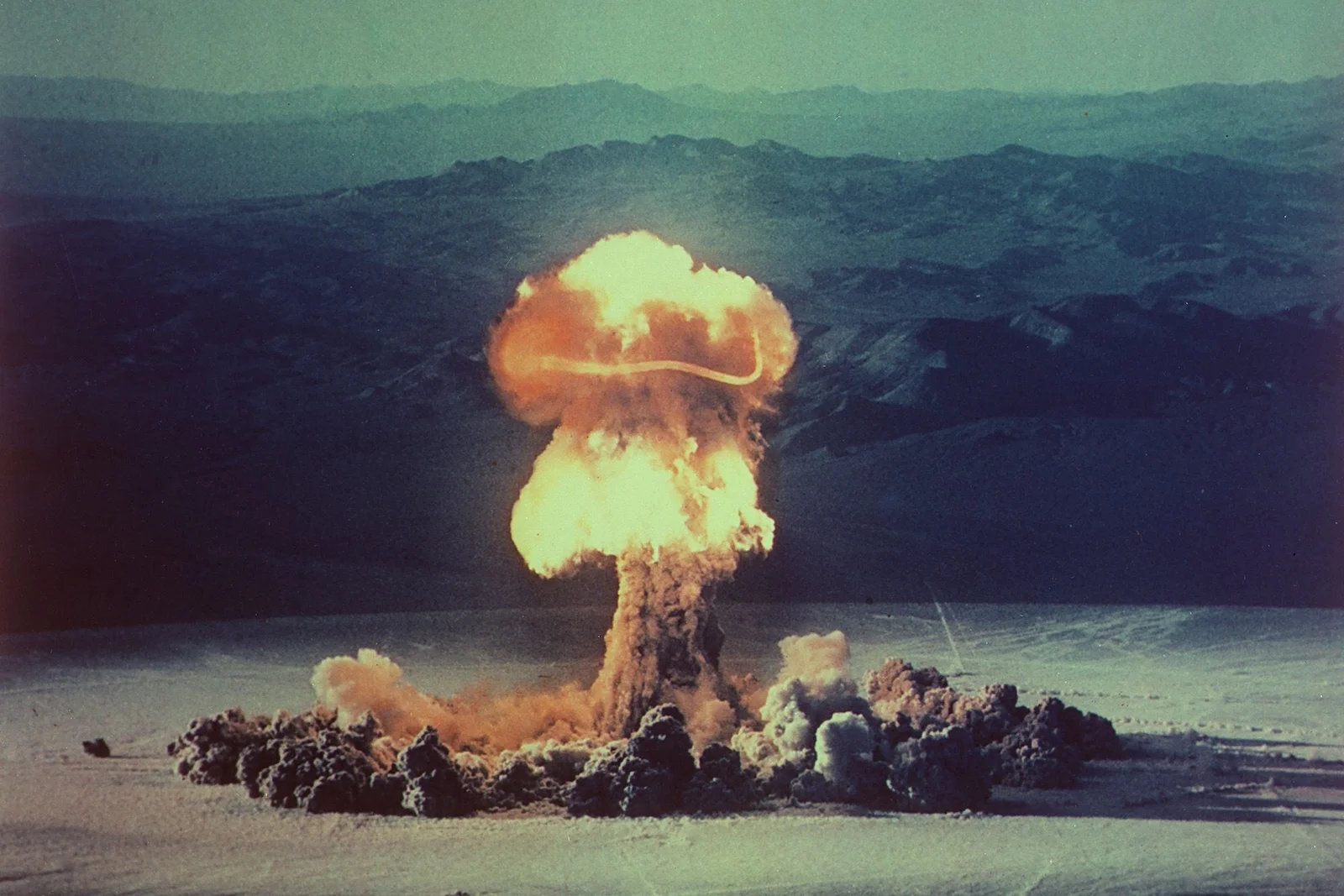
Since 1992, the Nevada desert has been silent. No mushroom clouds rising over the horizon. No seismic shockwaves rippling through the ground. No nuclear detonations marking another chapter in the atomic age. For more than three decades, that silence has stood as a quiet symbol of restraint. But the stillness may soon end. In October 2025, President Trump announced that the United States would resume explosive testing of nuclear weapons.
That would be a profound mistake.
Resuming nuclear testing would weaken international arms control, damage global nonproliferation efforts, and deliver little or no meaningful technical benefit to U.S. national security. Instead, it would accelerate a renewed arms race while eroding the fragile norms that have restrained nuclear powers for a generation. Strategic stability is already under strain. Preserving it remains firmly in America’s interest.
For more than thirty years, the United States has maintained a voluntary moratorium on explosive nuclear testing. During that period, the maintenance and evaluation of the U.S. nuclear arsenal have been entrusted to the National Nuclear Security Administration (NNSA). Through its sophisticated scientific infrastructure, the NNSA ensures confidence in the safety, security, and reliability of the U.S. nuclear stockpile without detonating nuclear weapons.
This approach is not an improvisation. It is the product of decades of technological innovation. The Stockpile Stewardship program relies on advanced simulations, subcritical experiments, and high-precision diagnostics that allow scientists to study the behavior of nuclear weapons without triggering a full nuclear explosion. The result is a system that preserves a credible deterrent while avoiding the destabilizing consequences of renewed testing.
The moratorium is also reinforced by a broader web of legal and normative commitments. The Limited Test Ban Treaty, signed in 1963, prohibited nuclear tests in the atmosphere, underwater, and in outer space. More than three decades later, the Comprehensive Nuclear-Test-Ban Treaty (CTBT) sought to ban all explosive nuclear tests worldwide. Although the United States signed the treaty in 1996 but never ratified it, successive administrations of both parties have nonetheless respected the testing moratorium.
Together, these commitments helped shape a powerful global expectation: that nuclear weapons would not again be detonated during peacetime.
Breaking that expectation would carry significant risks.
The first danger lies in the already fragile state of global arms control. Roughly 12,321 nuclear warheads remain in existence worldwide, and an overwhelming 86 percent of them are held by the United States and Russia. For decades, bilateral treaties between Washington and Moscow helped restrain the growth of these arsenals. But the last remaining agreement, New START, expired on February 5. With no replacement treaty in place, the architecture of nuclear arms control now stands on uncertain ground. A return to explosive testing by the United States would further erode that architecture and invite reciprocal responses from other nuclear powers.
Second, renewed testing would cut directly against the spirit of the Nuclear Nonproliferation Treaty (NPT). Article VI commits nuclear-weapon states to pursue negotiations in good faith toward eventual disarmament. Resuming nuclear explosions sends the opposite signal. It suggests modernization without moderation. For non-nuclear-weapon states that rely on the credibility of nuclear powers’ commitments, renewed testing would appear deeply hypocritical. That perception weakens the legitimacy of the NPT and risks encouraging additional states to consider their own nuclear deterrents.
Third, the technical case for testing is remarkably thin. The Stockpile Stewardship program already provides the scientific tools needed to ensure the safety and reliability of U.S. nuclear warheads. Through advanced computing, laboratory experiments, and subcritical testing, scientists can analyze weapons performance without conducting a full nuclear explosion. In that sense, resuming testing would not be driven by technical necessity but by political choice.
Supporters of renewed testing often frame the issue in terms of deterrence. In an era defined by renewed rivalry with Russia and China, they argue, explosive tests would demonstrate American resolve and reinforce the credibility of the U.S. nuclear arsenal. Yet deterrence has never depended solely on visible displays of power. It rests equally on predictability, restraint, and stability. A new round of testing would almost certainly provoke other nuclear states to respond in kind, opening the door to a renewed cycle of competition.
For more than thirty years, the silence of the Nevada desert has carried meaning. It has served as a reminder that even in a nuclear world, restraint is possible. Ending that silence would not simply produce another test explosion. It would reverberate across the international system, signaling that one of the most important norms of the post–Cold War era is no longer worth preserving.
The United States faces a choice. Not between strength and weakness, but between stability and instability. Between preserving the fragile architecture of nuclear restraint or accelerating its collapse. Maintaining the moratorium on explosive nuclear testing reinforces global norms, strengthens nonproliferation efforts, and reduces the risk of nuclear escalation.
The desert has remained silent for more than three decades. It should stay that way.