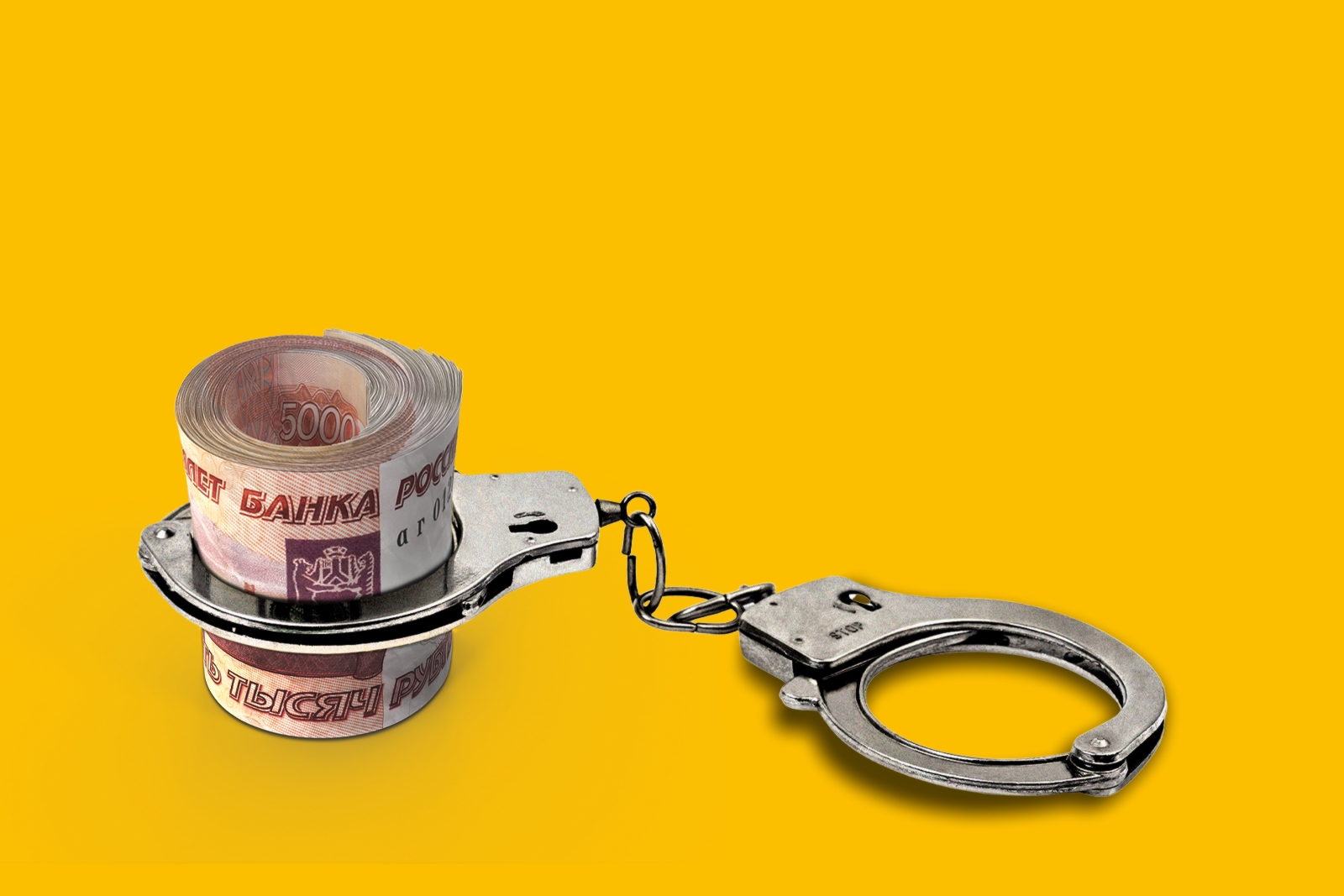

Europe Wants Russia’s Money. Belgium Isn’t So Sure.
Belgium and the European Union make for unlikely adversaries. Yet, for the moment at least, they appear to be edging toward a collision—one centered not on migration or rule-of-law disputes but on a Brussels-based financial plumbing system that almost no one outside the markets had heard of until Russia’s full-scale invasion of Ukraine.
The immediate focus of the row is Euroclear, the securities depository headquartered in the Belgian capital. Once a largely invisible backbone of global finance, Euroclear has become the world’s largest holder of frozen Russian central bank reserves and is now at the heart of a debate about whether Europe dares turn those assets into a weapon of economic justice.
Euroclear’s core business is dry but indispensable: it holds and settles transactions in bonds, equities, and other securities for banks and governments across the world. Since the EU’s sanctions regime took hold, it has also ended up with a vast stock of immobilized Russian state money. Across the European Union, some €180 billion in Russian frozen assets is scattered through the system; a large share sits on Euroclear’s books.
EU leaders have agreed, in principle, to use this windfall to help cover Ukraine’s “financial needs” over the next two years. The idea is straightforward enough: the extraordinary profits generated by these frozen assets—rather than the principal itself—would be used to fund Ukraine’s defense and reconstruction.
Brussels’ flagship proposal is to deploy about €140 billion as a zero-interest “reparations loan” to Kyiv, giving Ukraine access to urgently needed resources now while formal claims on Russia are pursued over the longer term. The appeal is obvious. Ukraine’s fiscal hole is widening just as uncertainty grows about the continuity of American support under President Donald Trump’s characteristically unpredictable foreign policy stance.
On the ground, Ukrainians have little time for abstract arguments about legal doctrine or the sanctity of reserves. Families across the country are bracing for an even harsher winter, as Russian President Vladimir Putin again targets power grids and heating networks in the hope of grinding down resistance. In some regions, temperatures can sink to -20°C. Against that backdrop, the spectacle of European capitals quarreling over what to do with Russian assets feels, in Kyiv, like a luxury of distance.
Inside the EU, however, the plan is anything but settled. A number of member states remain wary, and among the most cautious is Belgium. It is not alone: Spain has also raised concerns about issuing a reparations loan backed by its own frozen Russian assets, while the European Central Bank fears that crossing certain legal red lines could undermine the global credibility of the euro.
The EU’s so-called big three in the G7—Germany, France, and Italy—have pushed Washington and Tokyo to use their own Russian assets to support Ukraine. The White House, in turn, has pressed Brussels to set the pace by using the EU’s far larger stockpile of Russian central bank reserves. The United States has yet to say whether it will mirror any European move with the roughly $7 billion in Russian state assets held on its own territory.
Whatever the Americans decide, the crucial fact remains: most of Russia’s frozen sovereign wealth sits in Europe, not in the United States. That reality makes the EU the natural test case—and, in the eyes of many in Brussels, the easiest target for retaliation.
A decision on using Russian assets held at Euroclear has now been pushed back until December, after Belgium raised formal objections. Brussels, the national capital, is said to be deeply nervous about having to shoulder the consequences if Moscow were to mount a legal challenge against the clearing house. Belgian officials warn that the litigation risks are not theoretical. In a worst-case scenario, they argue, a wave of lawsuits could cascade into a broader financial crisis.
Prime Minister Bart De Wever has demanded concrete guarantees before signing off on the scheme, noting that this is “uncharted territory.” “Can this plan be legal? That is a very good question. There are no clear answers,” he has said. “We will in any case be buried in litigation. That seems like a certainty.”
The hope in Brussels is that EU leaders will iron out remaining differences at a summit in December. Until then, lobbying has intensified. European politicians contacted for this article have urged holdout governments to treat the use of Russian assets as a priority and to frame the debate less as a question of narrow national risk and more as a test of European solidarity.
David McAllister, the chair of the European Parliament’s influential Foreign Affairs Committee, argues that the discussion over frozen Russian assets turns on a delicate balance between political determination, legal soundness, and financial stability. “What matters now is maintaining unity and credibility within the European Union,” he says.
The German MEP notes that as long as outright confiscation of Russian state property remains legally out of reach, “all legitimate proceeds and innovative mechanisms should be directed toward Ukraine’s recovery and resilience.” In his view, “Europe must demonstrate that accountability and solidarity can go hand in hand.”
Some voices go further. Denis MacShane, a former Labour minister for Europe under Tony Blair, contends that “Belgium, under its Flemish nationalist prime minister, should stop being Putin’s little helper and work constructively with the Commission and European leaders to send frozen Russian money in Euroclear to Kyiv.” Larger member states, he argues, would ensure Belgium is indemnified. “With the privilege of hosting Euroclear,” he adds, “come responsibilities to defend European democracy against Russian aggression.”
Edward McMillan-Scott, a former British MEP and one of the longest-serving vice presidents of the European Parliament, has been a frequent—and often critical—visitor to Russia in his capacity as the legislature’s point person on democracy and human rights. He has called on all NATO member states to release frozen Russian funds for Ukraine.
McMillan-Scott, who was one of nine British politicians placed on Vladimir Putin’s visa blacklist in 2009, a distinction he once described as a “badge of honour,” does not mince words. “Putin is a thug and a danger to mankind,” he says. “Every NATO member must sign up to sending critical aid funds to Ukraine as a priority.”
Danuta Hübner, a senior center-right Polish politician and former EU commissioner, stresses that European efforts to find a “legally healthy and resilient way” to use immobilized Russian money have been underway for more than two years. “So I would say that it is indeed time to support the recent idea of the ‘debt-claim,’” she argues. Under that approach, Ukraine would ultimately transfer its debt claim against Russia to the EU, and the Union would take over the assets.
Whatever the final model, Hübner insists that no single member state should be left carrying the entire legal and financial risk. “We need European solidarity to cover any risks that might emerge,” she says. The real danger, in her view, is that the number of member states ready to block the initiative could grow. And she is clear that any funds released should be used primarily to rebuild the colossal damage wrought by Russian aggression, not simply folded into short-term military spending.
Her larger concern is strategic: the potential damage to the euro’s international standing. In an era of “global storms,” she argues, the single currency should be looking to reinforce its global role, not expose itself to accusations that it is a political weapon rather than a reliable store of value.
Elsewhere in the Parliament, Lithuanian MEP Petras Auštrevičius, the Renew Europe group’s spokesperson on Ukraine, underlines the existential stakes. While Russia continues to demand Ukrainian capitulation as a precondition for any negotiations, he says, “we must do everything we can to ensure that President Zelensky’s peace plan is not dismissed and that the ‘rule of the strong’ is not imposed again.”
His Belgian colleague Hilde Vautmans (Open VLD), a coordinator on the Foreign Affairs Committee, defends the EU proposal as the “most responsible” way forward. Using frozen Russian assets as collateral for a joint European loan, she argues, “allows us to help Ukraine in a sustainable way, while preserving financial stability across our Union.”
Another MEP, the French lawmaker Nathalie Loiseau, a coordinator for the Security and Defence Committee, emphasizes that preparing seriously for peace in Ukraine “means making Russia pay now for the war it started by using its assets to advance Ukraine the reparations to which it is entitled.” With or without President Donald Trump, she says, “it means showing that Europe knows how to act and take its responsibilities.”
Marie-Agnes Strack-Zimmermann, a German MEP who chairs the Parliament’s Security and Defence Committee, is blunter still. Instead of “flattering a war criminal,” she argues, Europe must “finally use the frozen Russian assets to support Ukraine and its freedom.”
For now, though, the harsh reality remains unchanged. The Russian frozen assets that Brussels wants to unlock for Ukraine are still sitting in Euroclear’s ledgers and in central banks across the EU—powerful on paper, politically radioactive in practice, and, at least for the moment, just out of reach.