
Phased Payment of U.S. Arrears Will Strengthen UN Reform
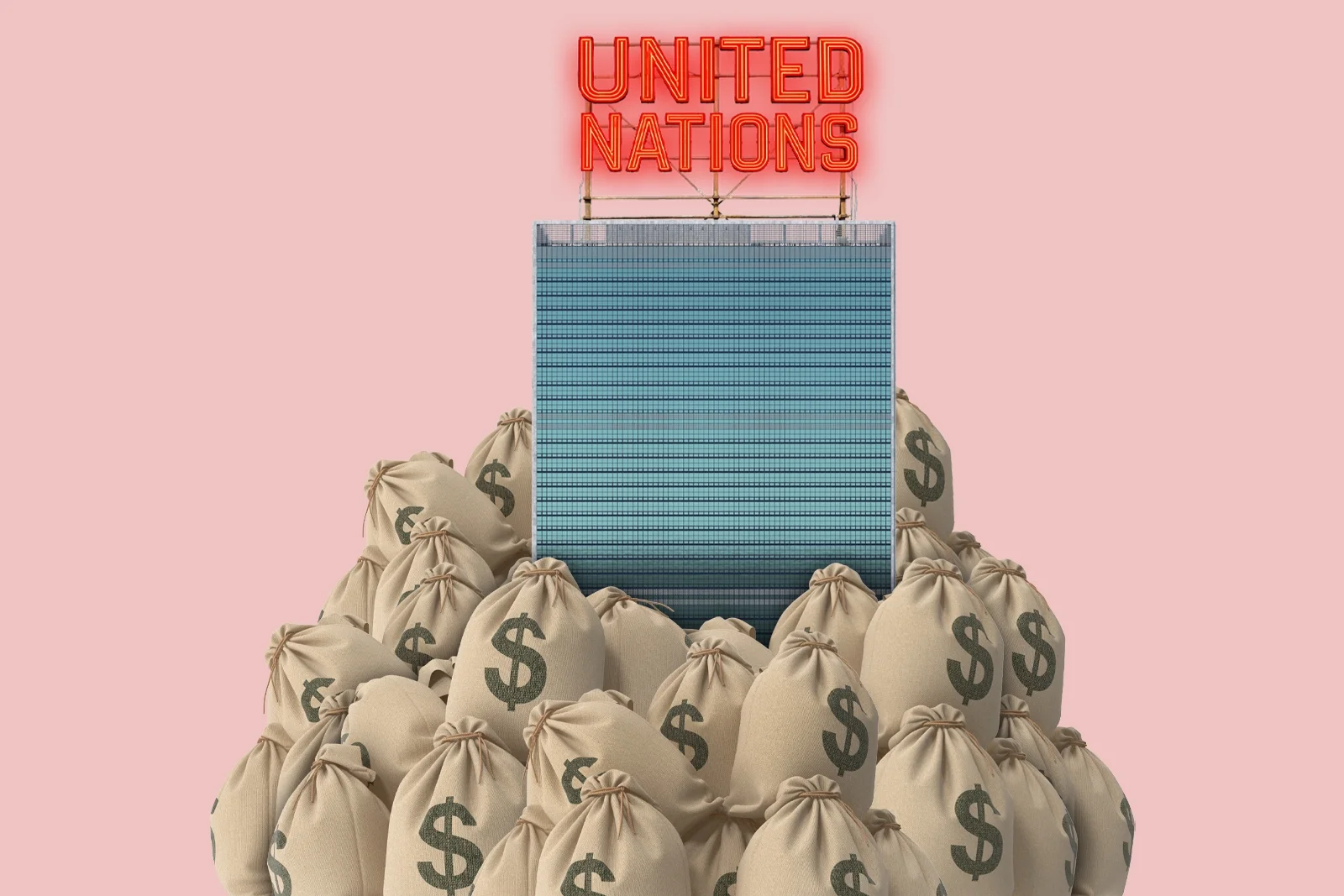
The United Nations has long functioned as the world’s central forum for managing crises, a place where competing powers negotiate uneasy compromises in moments of global strain. Yet today, the institution itself is under mounting pressure. The United States has withheld roughly $1.5 billion in assessed contributions, citing concerns about bureaucratic inefficiency and a reform agenda that has too often drifted away from American priorities. Without sustained U.S. backing, the UN’s legitimacy risks erosion, and its ability to function as a credible global actor could be seriously diminished.
Washington’s current “back to basics” posture, while understandable, sits uneasily alongside the reform trajectory unfolding within the UN system. A more effective approach would not be outright disengagement, but rather a calibrated strategy that ties the phased payment of arrears to measurable reform benchmarks, particularly those outlined in the Secretary-General’s UN80 Initiative. That initiative seeks to streamline operations, impose greater fiscal discipline, and better align resources with the demands of an increasingly volatile world. It includes efforts to improve operational efficiency across agencies and to reassess longstanding peacekeeping missions whose mandates have outlived their effectiveness or failed to prevent recurring conflict.
By linking financial contributions to demonstrable reform, the United States would retain leverage while actively shaping the institution’s future. Such a strategy would restore a measure of American credibility within the UN system and enhance the organization’s capacity to respond to contemporary crises. A phased payment structure would reinforce reform efforts already underway while ensuring that U.S. taxpayer dollars are spent with greater accountability. At the same time, proposals to narrow the UN’s focus exclusively to peacekeeping and security, while withdrawing support from agencies engaged in human rights, refugee assistance, and humanitarian relief, risk diminishing U.S. influence rather than strengthening it. Continued engagement in these areas, paired with clear conditions for institutional improvement, offers a more durable path forward.
Those conditions should be concrete and measurable. They might include the development of a unified crisis response framework that spans UN agencies, a reduction in administrative duplication, and the establishment of clear performance metrics for humanitarian operations. For instance, U.S. funding for refugee and relief programs could be contingent on transparent reporting of administrative overhead, faster deployment timelines for aid, and verifiable reductions in gaps during major emergencies. Addressing concerns about fragmented financial structures will also be essential. The UN Office for the Coordination of Humanitarian Affairs should assume a stronger coordinating role, directing resources toward the agencies best positioned to deliver results. Such an approach would preserve the UN’s humanitarian mission while ensuring that it operates with greater efficiency and coherence.
Reform in the realm of peace and security will require similarly rigorous benchmarks. Clear timelines and enforceable targets would increase pressure on the UN to demonstrate tangible progress. One possible framework would see the United States release 25 percent of its arrears over a three-year period, contingent on the publication of an independent external audit of UN agencies and peacekeeping operations, as well as the implementation of zero-based budgeting in at least three major peace and security bodies. Conditioning payments in this way would strengthen accountability while incentivizing meaningful institutional change.
Subsequent phases of payment could be tied to further reforms. An additional 25 percent of arrears, for example, might be released following comprehensive performance evaluations of troop-contributing countries and a demonstrated improvement in operational effectiveness on the ground. Such a structure would reward progress while encouraging sustained reform across the peacekeeping architecture. In this sense, arrears are not merely a liability but a strategic asset, one that can be leveraged to advance U.S. priorities and improve the performance of the UN system as a whole.
Maintaining credibility with allies will be critical throughout this process. If the United States leads with a transparent and structured approach to phased funding, it can encourage other member states to follow suit, reinforcing a broader culture of accountability within the organization. Multilateral buy-in would amplify the impact of reform efforts and help ensure that they are not perceived as narrowly driven by U.S. interests alone.
Critics of this approach raise legitimate concerns. Conditioning payments, they argue, risks appearing coercive, invites congressional resistance, and could further politicize an already fragile reform process. Yet these risks can be mitigated. By anchoring funding decisions in transparent, collectively agreed benchmarks, the United States can frame its actions as a commitment to accountability rather than an exercise in pressure. Congressional involvement, far from being an obstacle, can enhance legitimacy by ensuring that reforms align with domestic priorities such as fiscal discipline and institutional transparency. And while reform is inherently political, the alternative—disengagement—carries far greater consequences.
A retreat from the United Nations would leave a weakened institution struggling to navigate a world defined by conflict, instability, and humanitarian crises. Reengagement, by contrast, offers a path to transform financial obligations into strategic leverage and bureaucratic inefficiencies into disciplined governance. A commitment to phased payments tied to measurable progress under the UN80 framework would not only restore the organization’s focus on peace and security but also stabilize its finances and strengthen its institutional integrity. In choosing reform over withdrawal, the United States can help ensure that the United Nations remains both effective and accountable in an increasingly uncertain world.