Foreign Money, Ethnic Violence, and a Nation in Ruins
Nasir Hassan is a veteran Sudanese human rights advocate who has lived in Switzerland since 1993. As president of For Sudan, an NGO focused on humanitarian aid, Hassan speaks candidly about the devastating war engulfing Sudan between the Sudanese Armed Forces (SAF) and the paramilitary Rapid Support Forces (RSF)—a group widely accused of atrocities, particularly in Darfur.
In this wide-ranging conversation, Hassan outlines the RSF’s ethnic violence, foreign support from the United Arab Emirates, logistical coordination via Chad, and the catastrophic toll: over eight million Sudanese displaced. Urging immediate Western engagement, Hassan calls for a shift in international aid and policy to bypass sanctions and deliver direct support to those suffering on the ground.
Scott Douglas Jacobsen: Nasir, thank you for joining me. You’re a longtime human rights defender from Sudan living in Geneva. Can you share more about your background—your work in Switzerland and your experience in Sudan?
Nasir Hassan: I have lived in Switzerland since 1993. I am the president of For Sudan. Our organization focuses primarily on humanitarian aid. Right now, Sudan is experiencing a devastating civil war. This war is destroying the country. Many people have been killed or displaced.
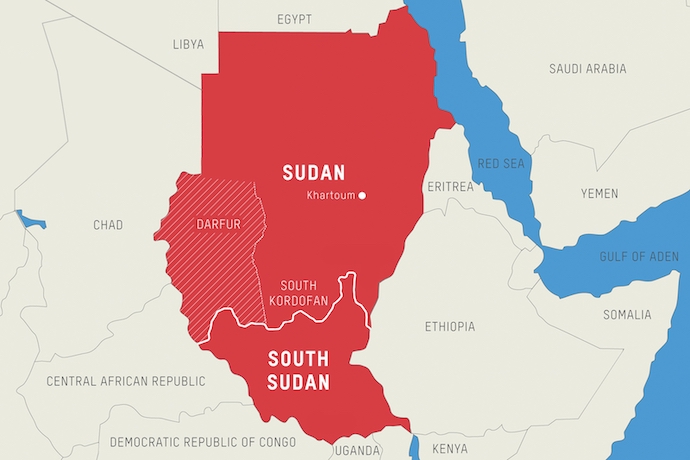
The RSF was originally a government-backed militia known as the Janjaweed during the Darfur conflict. It was later formalized into a paramilitary force under the Sudanese government. However, in April 2023, tensions between the SAF and RSF escalated into full-scale war, with both sides vying for control of the country. The RSF has been accused of committing widespread atrocities against civilians, particularly in the Darfur region, including ethnically targeted violence against non-Arab communities. I firmly affirm that the legitimate authority to defend and protect Sudan lies with the internationally recognized government and the national military institutions, led by the President and the Security Council, under the leadership of General Abdel Fattah al-Burhan, Chairman of the Sovereignty Council.
At the same time, I categorically reject the notion that the Rapid Support Forces (RSF) represent a legitimate national army. The RSF is an ethnically driven militia that serves agendas unrepresentative of the Sudanese people and operates in the interest of foreign actors—most notably the United Arab Emirates, which has supported the group through funding and arms. Their actions have deeply fractured Sudan’s unity and gravely threatened the safety and sovereignty of its people.
The responsibility for national defense must remain in the hands of national institutions that represent and protect all Sudanese—regardless of ethnicity, region, or background—not forces driven by sectarian loyalties or acting as proxies for external powers.

Jacobsen: When we talk about this war, are the divisions you’re referring to primarily ethnic, religious, or some combination of both?
Hassan: It is primarily ethnic. The RSF has been accused of committing atrocities along ethnic lines, particularly targeting non-Arab groups. They have carried out mass killings, sexual violence, and displacement of civilians in towns and villages. If this were purely a conventional military conflict, we might not be standing here today. However, this war has targeted civilians. Armed fighters have entered homes and killed people based on ethnicity or perceived affiliations. Anyone can be accused—whether they are Islamist, part of the former regime, or have no political ties at all.
Ordinary people, with no involvement, are caught in the violence. Initially, we had no involvement in politics. We focused on humanitarian work. However, after witnessing the scale of suffering, we felt compelled to act and understand the underlying causes. We tried to mediate and open a dialogue. In doing so, we discovered that external actors may also be influencing the situation. There have been credible reports that the United Arab Emirates (UAE) has provided support—either material or political—to the RSF.
The UAE has commercial interests in Sudan, including agriculture, mining, and port access. These relationships complicate the situation further. Sudanese authorities have welcomed foreign investment, but the involvement of foreign powers in this internal conflict is deeply concerning. It appears that outside actors are capitalizing on Sudan’s instability.
We did not expect neighbouring countries—our so-called brothers—to play a role in fueling violence or benefiting from our suffering. Now, we stand with our people, with our institutions—not out of loyalty to any regime, but because we believe it is the only way to protect the population. General Burhan and the SAF have not been accused of the same level of ethnically targeted violence as the RSF. Even among the RSF’s ethnic communities, not all individuals support the violence.
However, the RSF’s actions have included indiscriminate attacks. If you enter certain areas now, you risk being targeted solely for your appearance or identity. That is unacceptable. The war has also had a profound impact on education.
Educated people within the RSF’s ranks have sometimes used their positions to justify or intensify the conflict through racist ideology and the pursuit of power. They want to consolidate control, displace others, and dominate the state.
But if you see them now, they have started to fight each other as well. Even the tribes that were aligned with them are now accusing one another of collaboration. They are accusing each other of betrayal. They have turned on themselves. It has become a truly bloody conflict. I have never seen anything like this. I attempted to translate parts of some videos, but I could not continue—it was too challenging. So brutal. You cannot imagine. It is unimaginable that a human being could do such things. Maybe a machine, yes. However, can a human being cut or kill a person like that?
Jacobsen: You’ve described an immense humanitarian disaster. For Western audiences unfamiliar with the scale of the conflict, can you give us a sense—how many people have been killed or displaced, both inside and outside Sudan?
Hassan: Right now, over 8 million people have been displaced. Eight million. The total population is around 50 million. That is one of the countries. People have either fled the country or left their homes and communities.
Jacobsen: For context, that’s nearly one-eighth of the population of Canada. Let’s turn to the international dimension. You’ve mentioned the UAE’s involvement. What do you believe are the most critical facts that the international public should understand?
Hassan: They support these groups with money and weapons. Also, some neighbouring countries support certain military elements. Because someone from the country, someone who truly feels Sudanese, would not commit atrocities against his people like this. However, the individuals I have seen—many of whom come from the same tribe that stretches from northwest Sudan to Mali. This entire region shares similar customs.
They dress alike and think alike. Moreover, many of them show extreme brutality, especially towards Black Africans. People like my brother, Abdel Jabbar, and his family—when they are seen, they are treated as if they are insects. Just kill him. He has not done anything. Just find him and kill him. Shockingly, they did not even know that people with such hatred lived among us in Sudan.
Jacobsen: What you’re describing—this kind of brutality and dehumanization—echoes patterns we’ve seen in history. In the West, parallels are often drawn with the Nazis tried at Nuremberg, where many lacked any discernible empathy. Do you think the same kind of moral corrosion is at work in Sudan?
Hassan: The core issue here is that the Emirates has misled the leaders at the top. If the Emirates stopped their financial, weapons, and logistical support for this war, the conflict would end within a month—not because everyone would be defeated, but because the fighters would question why they are continuing.
Without external support, especially for these unofficial paramilitary forces committing brutal acts, the war would resolve on its own. There are also people from this tribe who are in Sudan. You can imagine—even in Canada, you would never expect one tribe or group to control all others while everyone else is expected to remain silent. That is not acceptable.
Jacobsen: You mentioned tribal dominance—one ethnic group attempting to impose control across regions. For a North American audience, especially in a country like Canada with its own history of colonialism, how would you explain the lived consequences of that kind of power imbalance?
Hassan: But how do you solve these problems? You solve them through power-sharing, by engaging in dialogue, and by investing in development—especially in regions that have been neglected. Development reduces conflict.
These groups causing problems come primarily from desert regions. Sudan is a vast country. Developing the entire territory, including the desert and areas near the Nile, is challenging. Combine that with limited resources, underdeveloped education systems, and ongoing external interference, and the situation becomes even more complex.
Jacobsen: Beyond the UAE, are there any other foreign governments or regional actors—directly or indirectly—playing a role in fueling the conflict?
Hassan: They have also manipulated Chad. Chad is our neighbour, and we have always believed its people are kind—and many are. However, Chad has also been influenced by financial considerations.
A lot of the logistics for this war—transporting weapons, moving people—have come through Chad into Sudan. Other neighbours, such as Egypt in the north, have stayed out of it. To the east is Ethiopia. They have not intervened either, although historically, our countries have not always had the best relations. Still, as people, Ethiopians have supported us.
When they faced conflict in their own country, they fled to Sudan as refugees. We welcomed them—we had no problem with that. We still have no issue with refugees, but we do take issue with armed groups entering our land to dominate us.
Some of our people are just farmers—straightforward people. They cannot read or write. Some do not even speak Arabic well. However, these invading forces accuse them of being part of the regime.
Jacobsen: It’s a haunting detail: fighters accusing ordinary farmers of being regime loyalists, even when many are illiterate and uninvolved in politics. At the end of the day, most people are just trying to survive. Would you agree?
Hassan: And this is what happened. If they were targeting specific political figures or entities, we could understand that even if they were misusing those targets.
Jacobsen: So if the RSF’s targets were actual regime figures or former political elites, as brutal as that still might be, at least the violence would have some twisted rationale. But that’s not what’s happening, is it?
Hassan: Yes.
Jacobsen: Apart from the Sudanese government and yourself, who else is actively advocating for human rights and peace in this conflict? Are there credible voices or organizations still operating on the ground?
Hassan: Yes. The government is genuinely trying its best. We can see it. Wherever people can escape from these armed groups, they flee to areas controlled by the government military. Not because they believe the military is powerful but because they feel safer there. Otherwise, they would not survive—even if they had done nothing wrong.
They could be killed on the street. It all depends on which soldier is standing in front of them. Some of these fighters even enter people’s home and strip the floors—taking the tiles, the mosaic flooring. It is beautiful. They remove it to bring it back to their areas. The mattresses, the things you sleep on—bed sheets.
They take those, too. It is such a ridiculous obsession. They take refrigerators, fans, and air conditioning units. Their thinking is on an entirely different level. It is not that we oppose them just for the sake of opposition. We oppose them because of what they are doing—because it is inhuman.
Jacobsen: Finally, what else should people in North America know—especially those reading this interview—about what’s urgently needed in Sudan, and what kind of international action might actually make a difference?
Hassan: Peace requires that weapons be removed from the hands of those causing harm. The RSF are the only armed group acting like this in Sudan. If you go to my family’s home—any of the areas—they only have kitchen knives in their houses. Maybe a stick, in case of a disagreement between neighbours. But not weapons. Not weapons meant for killing people or destroying buildings, airports, or banks.
To achieve peace, we need support from the people. Many Sudanese living in the West are trying to help their relatives, attempting to relocate them out of dangerous areas. However, now, when these militias catch people, they demand payment. If they know you have family abroad, they say, “Pay us.” You “have to” pay—sometimes 10,000 francs, or $10,000. If you do not, they will shoot the person.
We need help. We need food. People have no shelter. Moreover, there are also problems with sanctions. For example, I, along with others, attempted to create an organization called Insane Organization—a humanitarian group similar to a charity. However, we were unable to open a bank account here in Switzerland because Sudan is subject to sanctions. However, we are not the government. We want to help the people.
When we asked how we could do that, they told us to work through a Swiss organization. However, we cannot go through them because we do not have formal offices. We send money directly into people’s hands so they can buy food. Sometimes, they create community food centres where they cook all day. Neighbours from all over come to take food and return to their homes.
We support that. In areas where fighting is ongoing, we cover the costs of transporting people out—utilizing cars, drivers, and fuel.
We need the West to take this seriously. There is a history behind this—like what is happening to Palestinians now. It is the same. There is no justification. Anyone who fights, if they have any feelings at all, will recognize that this is wrong. No one should even have to tell him. If you are human, you should know—should I do this much harm to another human being? There is no need.
Thank you.
Jacobsen: Thank you for your time.