
Ukraine’s Race to Outfly and Outsmart the Shahed Drone
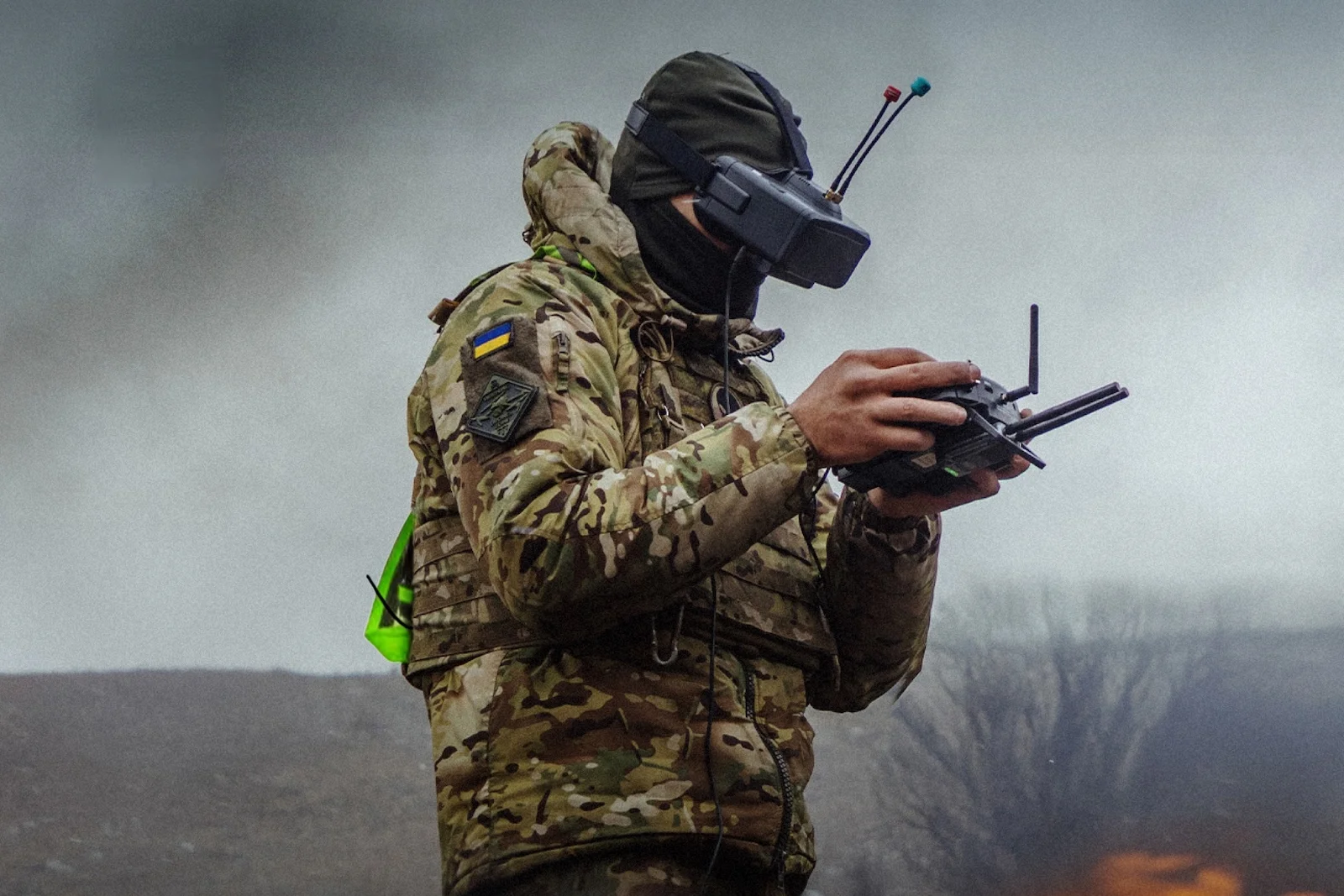
Oleksandr Korzh is a Ukrainian defense technology instructor, drone pilot, and trainer with the volunteer organization Dignitas Ukraine. Drawing on frontline experience from the Russian-Ukrainian war, he specializes in the operational integration of unmanned systems, drone interception, and the rapid adaptation of battlefield technologies.
Korzh has trained military personnel in FPV drones, interceptor systems, and electronic warfare, while also helping bridge the gap between frontline units and developers to accelerate innovation cycles. He has participated in international defense-technology workshops and hackathons, sharing practical combat lessons with engineers and military professionals across Europe. His work offers a window into Ukraine’s wartime transformation in drone warfare and modern military training.
In this interview, Scott Douglas Jacobsen speaks with Oleksandr Korzh about the accelerating evolution of drone warfare in the Russian-Ukrainian war. Korzh details how Iranian-designed Shahed drones have adapted their tactics, shifting between high- and low-altitude flight to evade Ukrainian defenses. He also examines the growing role of interceptor drones, radar networks, and mobile air-defense teams, along with emerging capabilities such as mesh-network coordination, dynamic targeting, and new engine variants. The conversation points toward a near future defined by increasingly autonomous interception systems.
Scott Douglas Jacobsen: Unmanned aerial vehicles have evolved rapidly over the course of the war. How are Shahed drones currently being deployed, and how are interceptor drones used against them? And more broadly, how much more diverse and technically sophisticated are today’s Shahed variants compared to earlier iterations?
Oleksandr Korzh: We have seen an evolution in Shahed’s tactics and equipment over almost 4 years. The first Shahed drones entered Ukrainian airspace in September 2022, before the large-scale electricity blackouts that followed Russian strikes on energy infrastructure in October 2022. Early Shahed drones typically flew along relatively simple routes at altitudes of roughly 300 meters to 1 or 2 kilometres, and they were often vulnerable to destruction by mobile air-defence groups using machine guns, anti-aircraft guns, and other short-range weapons.
Ukraine deployed mobile air-defence teams that moved along roads and stopped when a threat was detected. They used thermal-imaging devices, acoustic detection equipment, and heavy machine guns to track and destroy incoming drones. When Russian forces realized that Ukraine could handle the number of Shahed drones they were sending, they increasingly began operating them at higher altitudes.
Altitudes of three kilometres or higher posed new challenges for Ukrainian air defence, as standard machine guns and many short-range weapons could not effectively reach them. Even the German-supplied Gepard anti-aircraft system, which is highly effective against low-flying targets, has practical engagement limits that can make very high-altitude targets difficult to reach. This shift helped drive the development and wider use of interceptor drones.
Ukraine began producing and deploying interceptor drones in increasing numbers and developing tactics for their use. In some operational periods, interceptor drones have been credited with destroying a large share of incoming Shahed drones, particularly during intensified drone attacks in 2025.
In response, Russian forces modified their Shahed drones. Some versions began incorporating additional navigation systems and countermeasures, including components designed to complicate interception. Reports and battlefield observations suggest that newer variants can maneuver more actively when threatened, making interception more difficult.
This evolution has created ongoing challenges for Ukraine’s counter-drone efforts, requiring continuous adaptation in interceptor drone technology, air-defence coordination, and detection systems.
The second technical improvement they made was to stop using a single Shahed for a single target. Instead, they began using one Shahed with multiple possible targets that can be changed during the flight. Now they know how to operate the Shahed during the mission.
They also use a linked system of Shahed groups that communicate via mesh links and mesh modems. Even if we hit one of these Shaheds, the others rebuild the network and transfer information. They transfer information not only from one Shahed to another, but also from the camera of one Shahed to the equipment of another. That second one transfers the information to a third, and so on.
When there is a network of Shaheds in the sky, the operator in Moscow, or in the Kursk or Bryansk region, sits in the command unit and sees in real time what the first, second, and other Shaheds see using their cameras. They can change the track, change the target, and even hit a moving target.
These changes appeared in the autumn of 2025, and they develop these tactics every week. We know what to do about it, but we still need more crews and more radar teams to build this wide anti-Shahed wall with multilayer radar lines, with three, five, or seven radars in a row. One of the missions of our Dignitas Fund is to build this anti-Shahed wall.
Technically, what they introduced last month is that they made some Shaheds explode on the ground when our fire services approach a fallen Shahed. It may explode on the ground even without a target. If we hit it, it may fall to the ground without exploding, and then it may explode if someone approaches. It is made to terrorize our civilians, our emergency services, medical services, police, and others. That is their tactic.
Finally, the most dramatic change in their tactics is that they started flying at very low altitudes.
Jacobsen: For readers less familiar with these systems, how do you define high, low, and very low altitude in operational terms? What do those distinctions look like in meters?
Korzh: High altitude, or very high altitude, is three kilometres above the ground and higher, up to four kilometres. Low altitude is about 200 meters above the ground. A very low altitude is about 100 meters above the ground or lower.
Jacobsen: What happens to these drones when they attempt to operate at very high altitudes—say, above four kilometers? How do engine performance and flight stability change for both Shaheds and Ukrainian interceptors under those conditions?
Korzh: They cannot fly too high because the air pressure is much lower at that altitude. The engine they use does not have enough power to push against the thinner air. The same thing happens with our interceptor drones. We may fly to five kilometres, but we face a situation where we cannot handle the operation well. Our drone may start vibrating heavily and even fall.
In winter, the situation is better, but in summer, when temperatures are high and pressure is lower, we encounter more difficulties. Yes, the air is thin at those altitudes, and the Shaheds face the same thin air that our interceptors do.
The turbojet engines that some Shahed variants began using this winter help avoid this problem, and they can fly at very high altitudes. Turbojet Shaheds are very expensive, and we do not see them in large numbers. For example, there may be 20 Shaheds in a group, and one of them could be the “Terminator.”
Jacobsen: Which type of Shahed drone currently presents the greatest challenge for interception?
Korzh: The one that flies at very low altitude.
Jacobsen: When you refer to low-altitude flight, does that typically involve terrain masking—such as flying through forests or valleys—or is the difficulty simply a function of flying low in general?
Korzh: Low altitude in general. The problem is that the Shahed is a very fast drone, and our interceptors are too.
Jacobsen: What kind of speeds are we talking about in practical terms? How fast do Shahed drones travel, and how does that compare to interceptor drones attempting to pursue them?
Korzh: Shaheds travel at about 50-65 meters per second, and we need to be faster. That is why in two minutes we may be about 10 kilometres from our launch position while chasing a Shahed. At that distance, when flying at low altitude, we lose both the control and video signals. That is why very low-altitude missions are less effective than those at regular altitudes.
Jacobsen: Looking ahead, what will define the next generation of interceptor drones? Will improvements in signal strength be enough, or is the future more about autonomy and onboard intelligence?
Korzh: No. We cannot simply make the signal stronger because every area has its own terrain, and even a small hill can become a major obstacle to drone operation.
The third generation of drones will provide autonomous analysis of radar data and more precise machine vision to detect enemy drones at greater distances, even through clouds and fog, using equipment similar to that used in air-to-air or ground-to-air missiles. The goal is to become more autonomous and to conduct these interception missions using AI onboard the drone.
These changes will likely be introduced during 2026 or the first half of 2027. I am sure that we will have thousands of fully autonomous interceptors within a year. That would be a very good outcome.
Jacobsen: Thank you very much for the opportunity and your time, Oleksandr.