
‘Geo’ is in Vogue
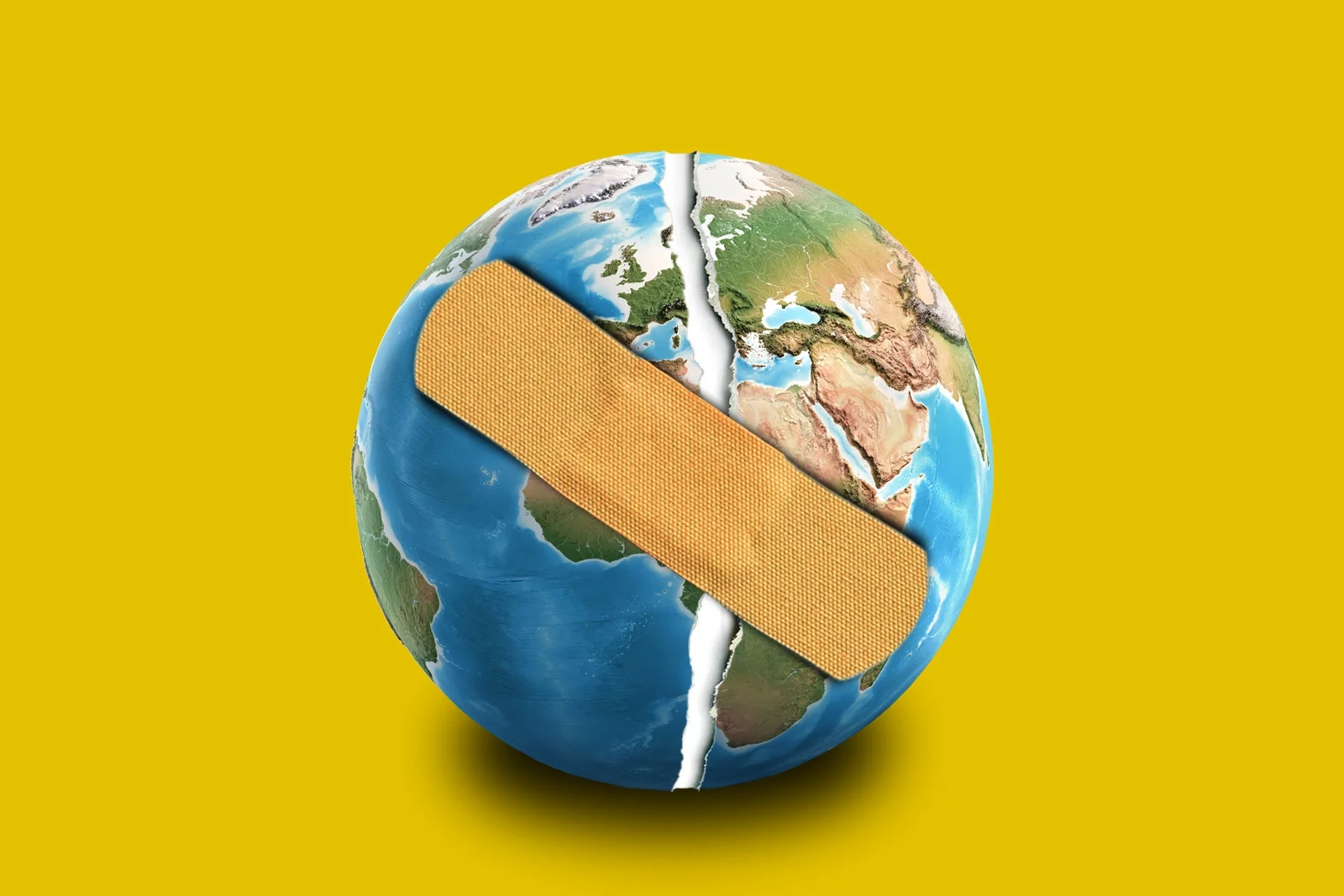
Current affairs discourse is awash in “geo.” Geopolitics, geoeconomics, geofinance, geotechnology – analysts, reporters, and politicians reach for the prefix as if by instinct. It now seems to precede every frontier issue shaping the international arena today. But what, exactly, does this spike in “geo” really signify?
Part of the answer lies in the slipperiness of “geopolitics” itself. The term has always straddled two meanings: one grounded in geographic determinism and another, more contemporary usage that treats it as shorthand for great-power rivalry. Today’s revival of “geo” channels is both an intellectual pendulum swing away from the optimism of globalization and back toward geography, power, and competition. What unsettles is the possibility that this isn’t just a vocabulary shift toward fragmentation, but a relapse into a pervasive zero-sum logic we haven’t seen since the 1930s.
Geopolitics, perhaps unsurprisingly, is delimited by the overlap between geography and politics. Terrain, chokepoints, and spatial access conditioned the ambitions and limits of states. Classical strategists such as Alfred Mahan and Halford Mackinder built grand theories atop that premise. For Mahan, sea power decisively shaped military and economic dominance. He spotlighted strategic waterways like the straits of Hormuz and Malacca, the Panama and Suez Canals, as the arteries of global order.
Mackinder, writing in 1904, argued that the era of discovery had ended, creating a “closed political system” in which contests over resources and territory would intensify. He reimagined the globe as a chessboard of concentric zones of power whose balance turned on the “pivot area” – his Heartland. His famous maxim asserted: “Who rules East Europe commands the Heartland; who rules the Heartland commands the World-Island; who rules the World-Island commands the world.”

These models profoundly shaped statecraft across the 20th century. But their popularity with nationalists and imperialists exposed the disturbing potential of geographic determinism. In interwar Germany, geopolitik was co-opted to justify Nazi expansionism. Shrouded in the rhetoric of inevitable conflict and imperative demand for Lebensraum, geography became weaponised as destiny, with social Darwinism providing a pseudo-scientific pretext for aggression.
After 1945, “geopolitics” bore that stain. Many recoiled from the word even as geography stubbornly retained explanatory weight. The Cold War vocabulary – containment, domino theory, the “Iron Curtain” – carried obvious geopolitical rationale.
By the 1970s, Henry Kissinger helped recast the term, describing geopolitics as an “approach that pays attention to the requirements of equilibrium.” In this usage, geopolitics became a proxy for great-power rivalry. Useful, yes, but elastic to the point of illusiveness: Was it about the physical environment, or about systemic rivalry between Washington and Moscow? By century’s end, the label was often stretched to mean little more than “international competition.” Today, its use oscillates somewhere between Mackinder’s geo-determinism at one pole and Kissinger’s balance-of-power pragmatism at the other.
With the Soviet collapse in 1991, some proclaimed not only the “end of history” but the end of geopolitics itself. That conflation – between the temporary calm of the 1990s and a permanent ideological victory for liberal democracy over Soviet communism – was a category error. It arrived at the high tide of globalisation, when frictionless trade, integrated markets, and digital connectivity seemed to dissolve borders and flatten terrain. In 2005, the journalist Thomas Friedman famously declared “the world is flat,” capturing the era’s breezy faith that geography was now obsolete.
Two decades on, the world looks anything but flat. Geography, in the classical sense, has forcefully reasserted itself. Ukraine – long a throughway for invasion – is, for Moscow, both a buffer and Black Sea access point. Beijing throws its weight around the South and East China Seas because those waters are conduits for power projection, maritime commerce, fisheries, and energy. Meanwhile, Trump is fixated with Greenland and Panama – one prized for its Arctic location and mineral deposits, the other for its canal linking the Pacific and Atlantic. Clearly, the globalisation era only temporarily sidelined the inalienable realities of geography.
But the story isn’t only about terrain. The proliferation of other “geos” reflects a Kissingerian sensibility – competition across domains that are political more than physical. Geoeconomics, in Robert Blackwill and Jennifer Harris’s formulation, is “the use of economic instruments to promote and defend national interests.” Tariffs, sanctions, export controls, currency moves, and commodity leverage have become the repertoire of a new mercantilism. Think of Trump’s tariff volleys, Putin’s strategic use of energy endowments, or Xi’s dominance in rare-earth processing – each a geoeconomic gambit shaping the system.
Likewise, geotechnology is increasingly invoked to capture the dynamics of technological decoupling and the political risks surrounding 5G/6G, semiconductors, and AI. Here, “geo” signifies the rivalries these technologies intensify – less about land and location, it means the struggle between dependence and competition. In short, the “geo” resurgence is not only a reminder that the world isn’t flat. Geography and terrain still matter. It also narrates an intellectual pendulum shift, from cooperation to contestation, from globalisation to fragmentation.
The resonance with the interwar years is hard to miss. Then, as now, societies faced polarisation, economic malaise, pervasive zero-sum mentality, while marginalised groups – commonly immigrants – were scapegoated by hard-right nationalists. As political theorist Lea Ypi has argued, crises of representation, economic distribution, and international solidarity intersect against a backdrop of deglobalisation to produce a combustible moment – one that chimes with the 1930s.
It would be facile, though, to assert an equivalence. As Graeme Thompson points out, the shocks of the 2020s – pandemic, war, inflation, energy crisis – are potent. Still, they are a far cry from WW1, the Great Depression, or the ascents of fascism and communism that drove deglobalization in the twenties and thirties. The integration of modern markets and supply chains is unmatched by history; they can be rerouted, hedged, and subsidised, but not easily severed. And while 20th-century geopolitical struggles were saturated with ideology – capitalism versus communism, democracy versus autocracy – the contemporary ideological pitch is lower, the blocs more fluid.
Still, complacency is unwarranted. As Trump undermines the very institutions designed to ensure history wouldn’t repeat itself – the UN, NATO, and ICC are essentially toothless without U.S. support – the likelihood of alarmingly rising tensions increases. Another lesson from history is the “Thucydides Trap”: transitions from a unipolar liberal order to a multipolar, mercantilist geopolitical system is, as current headlines often remind us, rarely peaceful.
So what does the rise of “geo” actually tell us? In the broad, Kissingerian sense, it marks a turn from globalisation’s presumed inevitabilities to renewed great-power competition. In the classical sense, it refines analysis, reminding us that topography, chokepoints, and location still shape national rivalries. Consider the semiconductor saga: the chips cast as the engine of a fourth industrial revolution are designed in California, fabricated in a single Taiwanese complex perched in one of the world’s tensest flashpoints, and contested by Washington and Beijing. Nothing about that looks flat.
The cautionary tale is historical. “Geo” can illuminate; it can also intoxicate. Used cynically, it slips back into its interwar abuses, dressing hostile nationalism in the language of strategic destiny. The task is to recover geopolitics’ analytic clarity without succumbing to its overly-determinist temptations – to survey the map in full relief while resisting the weaponised fatalism that once accompanied it.