
How Iran Became the Left’s Blind Spot
“Iranians do not want regime change. The United States has destroyed six countries in the region, and Iran is at the end of that list.”
Those remarks were made by Roger Waters, one of the founding members of Pink Floyd, during an interview with Piers Morgan. The comments immediately provoked criticism from opponents of the Islamic Republic of Iran, many of whom accused Waters of misunderstanding both the nature of the Iranian regime and the aspirations of its opponents.
Facing widespread backlash, Waters later clarified his position, arguing that his opposition to foreign intervention in Iran should not be interpreted as support for the country’s ruling religious establishment. Yet the controversy surrounding his remarks highlighted a broader question that has become increasingly difficult to ignore.
Why have so many prominent voices on the left remained largely silent about Iran’s protest movements while speaking passionately about other international causes?
Greta Thunberg, the Swedish activist who has become one of the most visible supporters of the Palestinian cause and who recently traveled toward Gaza by sea wearing a keffiyeh as a symbol of solidarity, has said little publicly about the recent protests in Iran. Similar criticisms have been directed at a number of prominent left-wing intellectuals and activists in Europe and North America, including Tariq Ali, Naomi Klein, Alain Badiou, Richard Falk, and others.
The pattern extends beyond silence. Judith Butler, the American philosopher and feminist theorist, has previously expressed support for Hezbollah in Lebanon and Hamas in Palestine, describing them as progressive social movements that form part of a broader anti-imperialist struggle. Such remarks have long generated controversy among critics who argue that these organizations promote social and religious doctrines fundamentally at odds with many of the progressive values embraced by Western leftists.
The contradiction is particularly striking to Butler’s critics. They point out that if Butler, as a lesbian feminist, were living under Hamas rule in Gaza or within areas controlled by Hezbollah and openly expressed her sexual orientation, she would face severe social and legal consequences under interpretations of Islamic law embraced by those movements.
Butler’s comments regarding Israel and Palestine have generated further debate. In 2003, she argued that Hamas attacks should be understood within the context of what she described as decades of violence and dispossession. More recently, during a public event in Paris on March 3, 2024, she characterized the October 7 attacks as an uprising and a form of armed resistance rather than an act of terrorism.
Taken together, these examples raise an uncomfortable question. Why do many left-leaning activists, intellectuals, and academics in Western countries devote considerable attention to Palestinian rights and criticism of Israel while appearing far less concerned with the Iranian people, their protest movements, and the state’s violent repression of demonstrators?
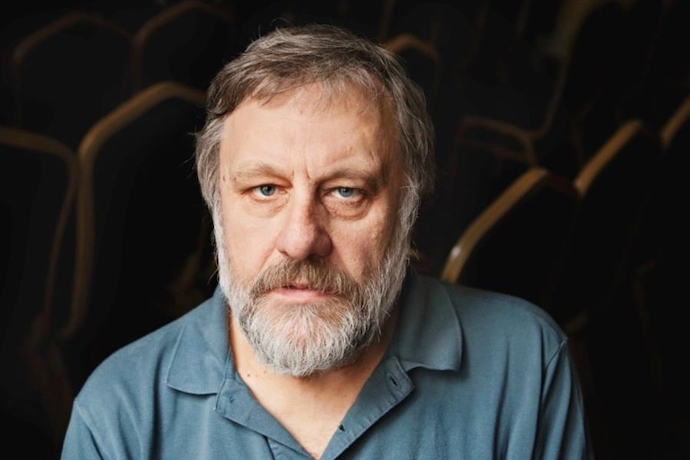
One possible explanation can be found in the work of the Slovenian philosopher and cultural critic Slavoj Žižek.
From Žižek’s perspective, political action derives its significance from its relationship to systemic transformation. Movements that do not seek to challenge capitalism itself or radically restructure society risk becoming little more than extensions of the existing order. He has repeatedly criticized liberal democracy and parliamentary politics as incapable of delivering meaningful change, while expressing interest in more radical forms of political transformation.
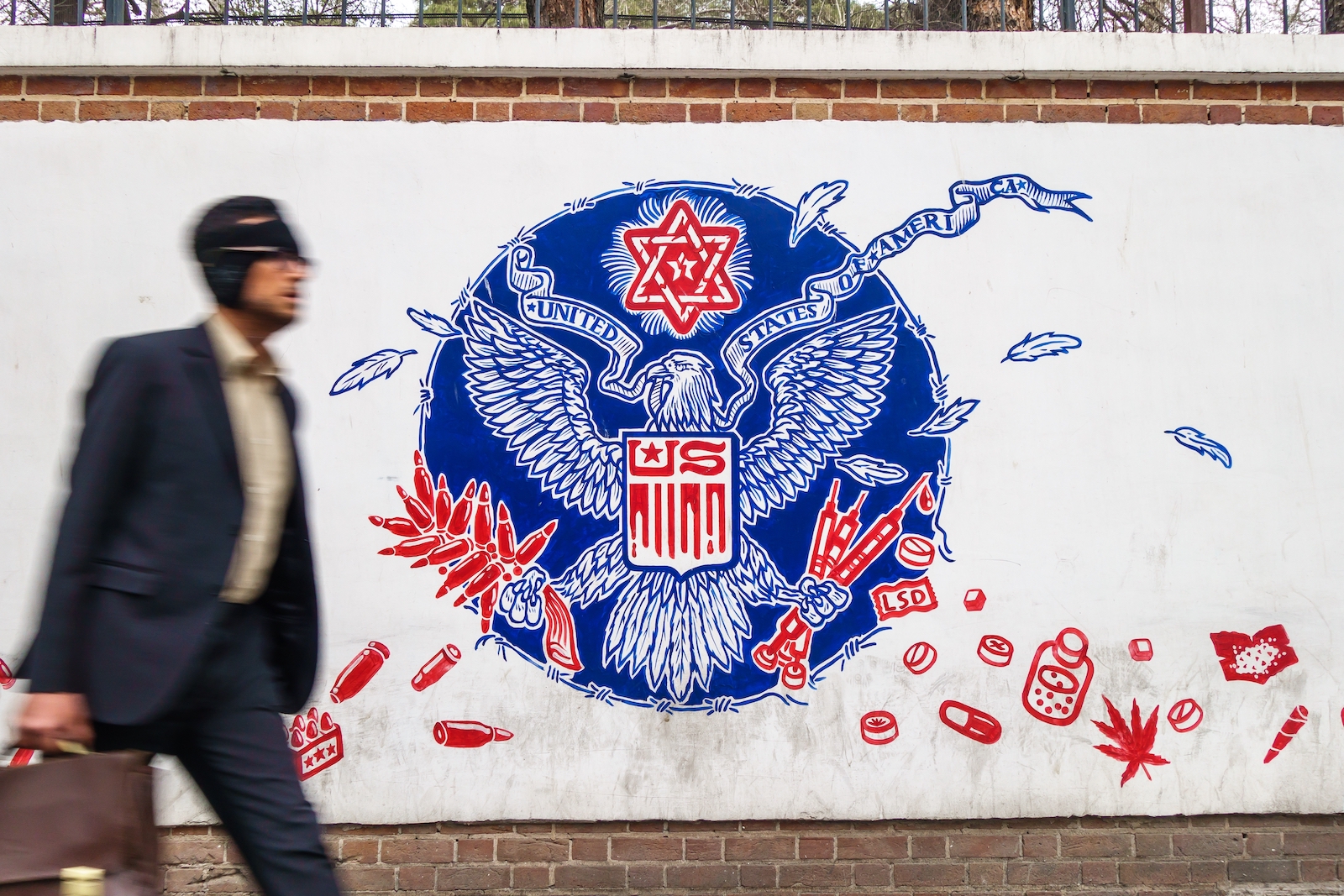
Viewed through this lens, the recent protest movement in Iran presents a challenge for many on the left. The movement was largely centred on secularism, personal freedom, modernity, and national self-determination. It was not a socialist movement. Nor was it explicitly anti-American or anti-Israeli. Many protesters expressed support for closer relations with Western countries, normalization with Israel and the United States, and greater integration into the existing international system rather than opposition to it.
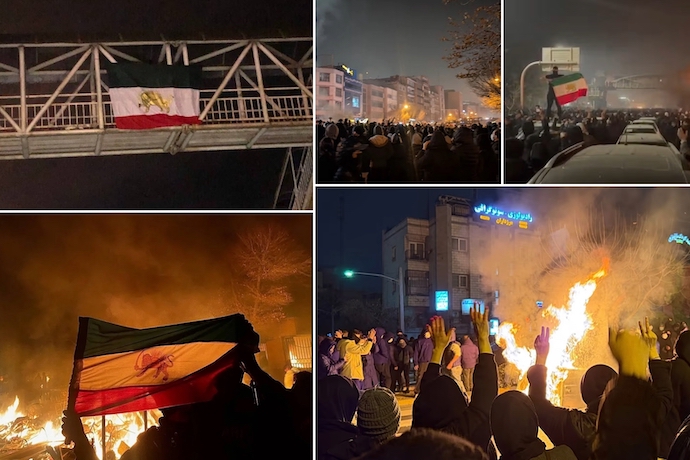
 The protests themselves began on December 28, 2025, and quickly spread across numerous Iranian cities. Demonstrators voiced frustration not only with economic conditions but also with political repression, social restrictions, and the broader direction of the Islamic Republic. For several weeks, the movement appeared to be gathering momentum and attracting growing public participation. However, the outbreak of war and the national security environment that followed disrupted the protests, shifting both domestic attention and international media coverage toward the conflict. As a result, a movement that had posed one of the most significant challenges to the Iranian government in recent years was largely pushed from the headlines before its long-term political implications could become clear.
For many ideological leftists, such aspirations lack the revolutionary character that traditionally attracts political enthusiasm. Rather than seeking to overthrow the international order, many Iranian protesters sought inclusion within it. Rather than rejecting liberal democracy, they demanded rights and freedoms associated with it.
The philosophical foundation of Žižek’s worldview rests on a skepticism toward the political judgment of ordinary people. Implicit within much of his work is the notion that the masses often do not know what they truly need and that transformative political change frequently requires leadership willing to act beyond conventional democratic constraints.
This helps explain his fascination with revolutionary figures such as Mao Zedong, Joseph Stalin, and Pol Pot. Mao’s campaigns, including the Great Leap Forward and the Cultural Revolution, resulted in mass famine, political violence, and tens of millions of deaths. Pol Pot’s Khmer Rouge regime devastated Cambodia, killing between one and three million people through executions, starvation, and forced labour. Stalin’s Great Purge and broader system of repression led to the deaths and imprisonment of millions.
Yet Žižek’s interest in these figures has never primarily been moral. Rather, he views them as examples of what he calls revolutionary moments—historical ruptures in which established social and political systems are violently overturned.
From this perspective, the enormous human cost of these revolutions becomes secondary to their transformative potential. Mao’s Cultural Revolution, for example, has at times been treated by Žižek less as a historical catastrophe than as a symbolic space for imagining alternatives to existing political arrangements.
At the same time, Žižek frequently argues that capitalism cannot be fundamentally transformed through gradual reform. Instead, he speaks of the necessity of a more radical confrontation with the system, although he often remains vague about what should emerge after such a confrontation takes place.
His worldview is holistic and frequently provocative. He has compared female genital mutilation to cosmetic surgery, criticizing liberals for condemning one practice while accepting the other. Whether one agrees with the comparison or not, the example illustrates his tendency to challenge accepted moral distinctions and conventional liberal frameworks.
A similar dynamic can be observed in debates surrounding the hijab. For many years, large segments of the Western left have treated the headscarf worn by Muslim women as a matter of personal choice and viewed criticism of the practice through the lens of Islamophobia.
Critics argue that such an interpretation often ignores the realities faced by many girls raised in conservative religious environments. In some families and communities, children are expected from an early age to observe religious dress codes, memorize religious texts, and conform to social expectations that leave little room for genuine choice. Resistance can result in punishment, coercion, or even violence.
The “Woman, Life, Freedom” movement that erupted in Iran in September 2022 challenged many of these assumptions. For some observers on the Western left, the scale and intensity of Iranian women’s opposition to compulsory veiling came as a surprise because it complicated long-standing narratives about agency, culture, and religious identity.
Žižek’s conception of revolutionary subjectivity further illuminates this divide. In his writings, revolutionary figures are often defined by their willingness to remain loyal to their own convictions regardless of prevailing moral expectations or social norms.
One of his more controversial examples involves Keyser Söze, the legendary criminal figure from the film The Usual Suspects. Žižek has praised the character’s willingness to sacrifice everything, including his own family, in pursuit of a larger objective. For Žižek, such acts demonstrate a radical commitment that transcends conventional morality. Critics, however, see something quite different: a celebration of violence detached from ethical responsibility.
Seen from this perspective, some critics argue that the revolutionary self-image of the Iranian regime shares certain affinities with aspects of Žižek’s political imagination. The Islamic Republic defines itself through opposition to Israel, the United States, and the broader Western order. It presents itself as a revolutionary project pursuing its own ideological mission rather than conforming to universal liberal values.
The comparison becomes even more striking when placed alongside the ideas of Sayyid Qutb, one of the most influential Islamist thinkers of the twentieth century. Qutb divided the world into Dar al-Islam and Dar al-Harb, portraying global politics as a struggle between competing moral and ideological camps.
In his 1948 book Islam and Social Justice, Qutb described Islam as possessing strong social and economic principles that in some respects resembled socialism. Later, in Milestones, he argued that Western democracy had become spiritually empty and incapable of offering meaningful guidance to humanity.
Qutb’s influence on former Supreme Leader Ayatollah Ali Khamenei is well documented. Khamenei translated Qutb’s Fi Zilal al-Qur’an into Persian in 1969, helping introduce his ideas to Iranian audiences before the Islamic Revolution.
Despite their profound differences, Qutb and Žižek share a hostility toward liberal democratic capitalism and a belief that the existing order lacks legitimacy. Qutb described modern society as living under a state of jahiliyyah, while Žižek critiques what he sees as the ideological domination of global capitalism. Both envision the possibility of a dramatic rupture with the existing order.
From this perspective, the sympathy that some segments of the Western left have shown toward Hezbollah, Hamas, and other anti-American movements becomes easier to understand. Whatever their differences, these groups define themselves through resistance to an international order in which the West occupies a central position.
That intellectual affinity may also help explain why many voices on the left have struggled to engage with Iran’s protest movement. The protesters sought freedom, dignity, and inclusion within the existing international system. They were not demanding a new revolution. They were demanding an end to one.