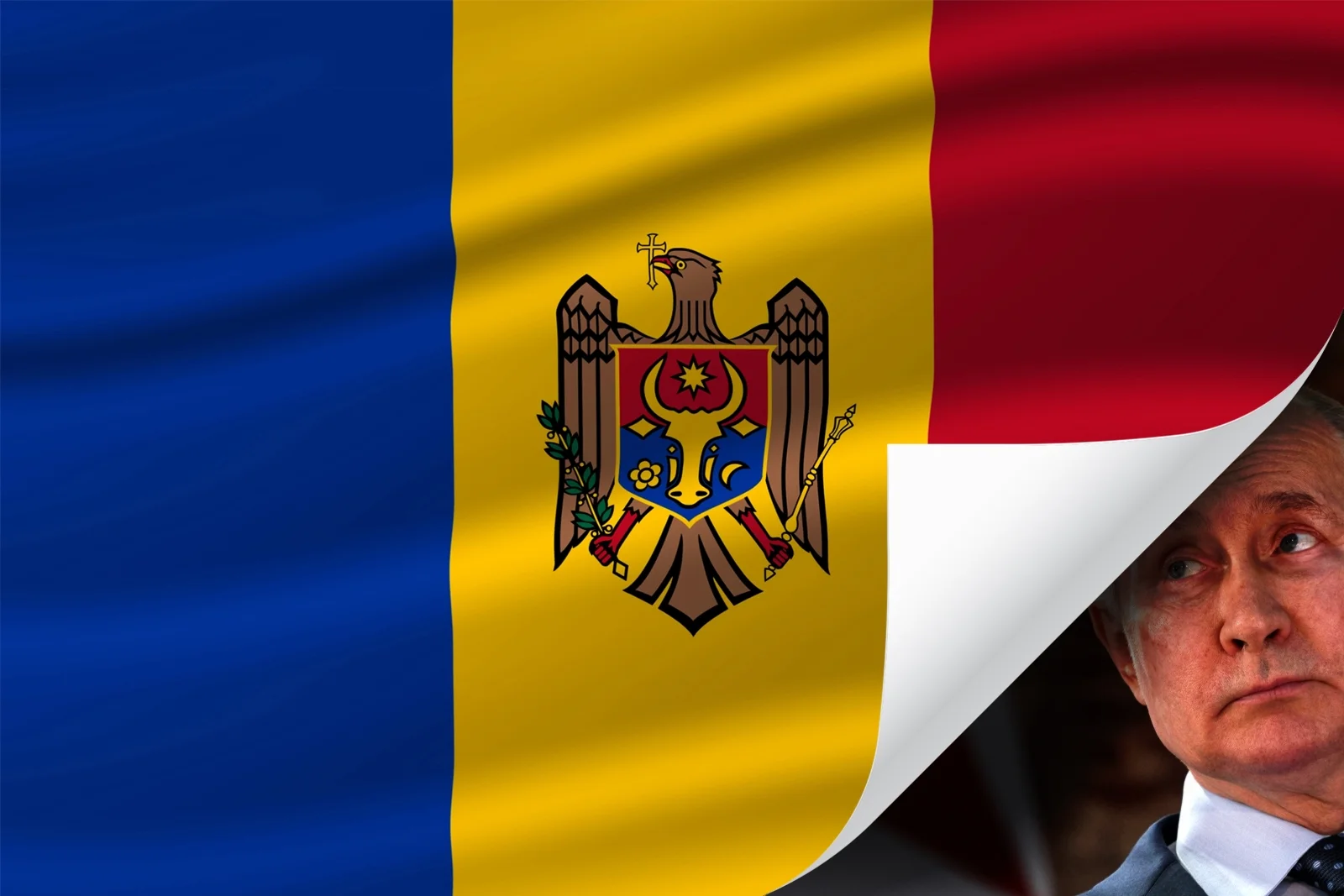

How a Small State Learns to Absorb Shock
Over the past decade, few concepts have dominated European security debates as thoroughly as “resilience.” Since Russia’s annexation of Crimea in 2014, the term has become a fixture in policy speeches, strategy documents, and donor programs alike. Its proliferation reflects a genuine shift in how security threats are understood—no longer confined to conventional military aggression but extending across political, economic, informational, and cyber domains. Yet this very ubiquity has diluted its meaning. Too often, resilience risks becoming a catch-all slogan rather than a concrete framework for action.
For small and exposed states such as Moldova, however, resilience is not an abstract fashion or rhetorical flourish. It is the difference between continuity and collapse. In a geopolitical environment characterized by hybrid pressures, institutional fragility, and regional war, resilience underpins societal cohesion, democratic governance, and national stability. Clarifying what resilience actually entails—and how it can be operationalised with external support, including from NATO—is therefore not a theoretical exercise but a strategic necessity.
The concept of resilience has travelled a long intellectual distance. Its earliest usage described the capacity of elastic materials to absorb strain and return to form. In psychology, it came to signify the ability to endure adversity and recover without permanent damage. In contemporary security discourse, resilience has expanded further, evolving into a governing principle that bridges civilian preparedness, institutional strength, and societal trust.
This evolution is visible in national strategies across Europe. Bulgaria’s Resilient Bulgaria 2020 framework, for instance, defines resilience as the ability to anticipate, withstand, adapt to, and recover from attacks and disruptions—particularly those targeting cyber-enabled systems. International institutions have adopted similarly expansive definitions. Under the Hyogo Framework for Action, the United Nations described resilience as a society’s capacity to adapt to hazards while maintaining acceptable levels of function and structure. Its successor, the Sendai Framework, sharpened this focus by embedding resilience directly into governance, budgeting, and development planning, emphasizing disaster risk reduction as a core state responsibility.
Within the European Union, resilience is increasingly framed as the capacity of states and societies to sustain reform under pressure—to absorb internal and external shocks while preserving democratic legitimacy and economic development. From this perspective, a resilient state is not merely secure; it is institutionally credible, socially cohesive, and politically trusted.
Applied to Moldova, resilience emerges as a multidimensional challenge. It depends on inclusive governance, respect for the rule of law, and the ability to counter terrorism, organised crime, and corruption. It also requires addressing humanitarian needs, infrastructure deficits, health and education gaps, and uneven development conditions, without which societal resilience cannot take root. At its core, resilience involves the capacity to resist, absorb, and recover from disruption while maintaining essential state functions. Achieving this requires a whole-of-society approach that integrates government action, civil society engagement, and private-sector cooperation.
This logic aligns closely with NATO’s own understanding of resilience. Within the alliance, resilience is not a peripheral concept but a foundational obligation enshrined in Article 3 of the North Atlantic Treaty, which commits members to maintaining the capacity to resist armed attack. While Moldova is not a NATO member, the alliance’s resilience benchmarks provide a valuable reference point for partners seeking to strengthen civilian preparedness without compromising political neutrality.
NATO operationalises resilience through baseline requirements designed to ensure continuity during crises. These include continuity of government, secure energy supplies, resilient transport and communications networks, effective management of mass population movements, robust healthcare systems, and reliable civil-military coordination mechanisms. For Moldova, each of these pillars is acutely relevant. Limited resources, proximity to regional instability, and ongoing governance reforms magnify the costs of disruption and underscore the importance of preparedness.
Resilience also extends beyond military contingencies to encompass hybrid threats, including cyberattacks, disinformation campaigns, political interference, and the weaponisation of energy. Moldova faces exposure on all these fronts. Such threats rarely seek outright collapse; instead, they exploit existing divisions, institutional weaknesses, and infrastructural gaps. As a result, resilience is as much about social cohesion and public trust as it is about physical assets or technical capacity.
Moldova’s constitutional neutrality, while politically significant, does not shield the country from economic coercion, cyber operations, or information warfare. Strengthening civilian institutions and national preparedness is therefore essential to preserving stability without undermining neutrality. Resilience, in this sense, becomes a defensive strategy—one rooted in governance rather than militarisation.
Geography compounds these challenges. Moldova’s position between Ukraine and Romania places it on the fault line of Europe’s most volatile security environment. Since Russia’s invasion of Ukraine, the country has confronted spill-over effects ranging from cyber threats to acute energy insecurity. Perhaps most visibly, Moldova has hosted more than 100,000 refugees, imposing a heavy strain on its limited administrative and financial resources. The war transformed Moldova into both a transit corridor and a temporary haven, exposing structural vulnerabilities while also testing societal solidarity.
Navigating this moment requires a shift from emergency response to long-term integration. Without sustained investment in institutional capacity, refugee management risks becoming a source of political instability rather than a driver of humanitarian resilience.
The unresolved status of Transnistria further complicates Moldova’s security environment. Since declaring independence in 1992—without international recognition—the region has remained mired in a frozen conflict sustained by a Russian military presence, a diplomatic stalemate, and economic ties to Moscow. This unresolved dispute continues to constrain Moldova’s European aspirations and heightens the importance of institutional durability. A resilient Moldovan state must be capable of absorbing geopolitical strain without paralysis, protecting sovereignty through governance rather than force.
Energy insecurity represents another structural vulnerability. Decades of dependence on Gazprom left Moldova exposed to political leverage, a risk made explicit during the 2021–22 energy crisis when Russia curtailed supplies. The resulting economic pressure accelerated efforts to diversify energy sources through interconnections with Romania and integration into the EU energy market. Long-term resilience, however, will require sustained infrastructure modernisation and strategic reserves—investments that directly affect public confidence in state institutions.
Cybersecurity remains a critical weak point. Moldova has faced sustained attempts at political interference, including efforts to influence elections and referenda. While progress has been made through the establishment of national cyber response structures and improved interagency coordination, capacity constraints persist. Building cyber resilience will require trained personnel, robust technical defences, reliable incident-reporting systems, and public awareness. This is an area where NATO expertise offers particular value.
Institutional fragility compounds these risks. Weak administrative capacity, corruption, and politicisation undermine public trust and limit crisis response. While Moldova’s EU candidacy has catalysed reform efforts, sustaining momentum will depend on political will and credible external support. Social cohesion, community preparedness, and transparent governance are not auxiliary goals; they are prerequisites for resilience.
Here, NATO’s decades of experience in emergency planning and civil preparedness present a meaningful opportunity for partnership. Joint simulations, early-warning systems, and crisis-response frameworks could help Moldova overcome coordination gaps and ensure continuity of governance during shocks. Cyber cooperation—through training, simulated attacks, and collaboration with NATO Centres of Excellence—could further strengthen national capacity.
Strategic communication is equally vital. Disinformation thrives where trust is weak. NATO support in strategic communications could help Moldova counter manipulative narratives, strengthen crisis messaging, and build public resilience against foreign interference. Non-lethal assistance—focused on professionalisation, institutional reform, and logistics—would align with Moldova’s neutrality while reinforcing governance standards.
Energy resilience represents another avenue for cooperation. NATO’s growing focus on energy security recognises its centrality to national stability. Technical assistance in risk analysis, infrastructure protection, and cyber defence could help shield Moldova’s energy networks from exploitation. Similarly, integrating Moldova into NATO’s efforts to protect critical infrastructure—including undersea cables—would reduce exposure to sabotage and enhance long-term economic security.
Finally, NATO’s regional networks offer Moldova pathways to enhanced cooperation on border security, migration management, and disaster response. Education and training initiatives, particularly for young professionals and civil servants, would contribute to institutional resilience over time.
For Moldova, resilience is not a rhetorical ambition but a strategic imperative. Energy dependence, hybrid threats, institutional weakness, and proximity to war leave little margin for error. NATO’s role need not challenge Moldova’s neutrality to be meaningful. By strengthening civilian preparedness, governance capacity, and societal trust, the alliance can help Moldova withstand pressure, preserve democratic continuity, and secure its future in an increasingly unstable region.