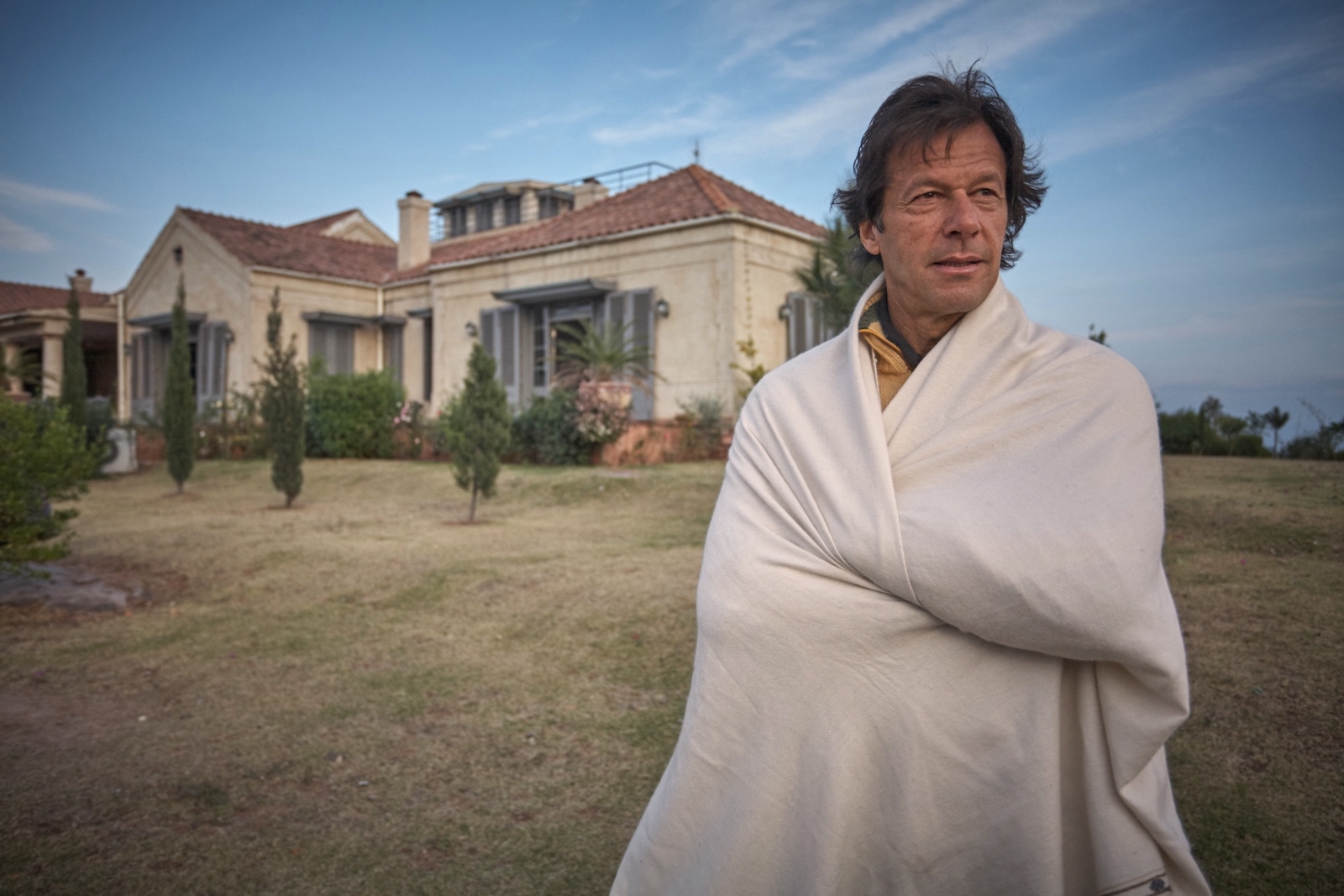
Imran Khan’s Fight for a Lost Republic
Pakistan’s political crisis is more than domestic drama; it reverberates across South Asia and beyond. When militaries, courts, and elites hollow out democratic processes in the name of “stability,” the result is paralysis, unrest, and uncertainty. The recent Saudi–Pakistan mutual defense pact underscores the military’s centrality to national politics—projecting influence abroad even as democratic practice at home stalls.
Debt is suffocating, growth is stagnant, and a restless youth bulge demands opportunity and accountability. Yet no recovery plan is credible until Pakistan confronts one question: what to do about Imran Khan, the jailed former prime minister who remains the country’s most popular political figure.
Khan is not just another ousted leader. His populist message transformed Pakistan Tehreek-e-Insaf (PTI) into one of the broadest-based political forces in the country’s history, cutting across provinces, ethnic groups, and demographics. Critics call him erratic, but even they concede a hard truth: sidelining a leader with mass appeal corrodes legitimacy, deepens polarization, and weakens the institutions Pakistan needs for reform.
History offers warnings. In Thailand, repeated coups and bans on Thaksin Shinawatra locked politics into paralysis. In Bangladesh, the rivalry between Sheikh Hasina and Khaleda Zia left governance hostage to vendettas. Exclusion entrenched instability rather than resolving it. Pakistan’s own record repeats the pattern: the forced exits of Zulfiqar Ali Bhutto and Nawaz Sharif politicized the military and courts, eroding public faith in elections. Today, Khan’s sidelining risks replaying that script.
At the center is Pakistan’s military, the ultimate arbiter of political life. Khan rose with the tacit blessing of one set of generals and was discarded by their successors. This “hybrid system”—in which generals elevate or undermine leaders—reduces democracy to spectacle. Governments answer more to Rawalpindi than to voters and collapse when civilian leaders outgrow their utility.
The Saudi–Pakistani defense pact highlights this imbalance. As democratic institutions stagnate, the military strengthens external alliances, casting itself as the indispensable guarantor of national security. For the generals, such agreements bring prestige, aid, and recognition, but they do nothing to resolve Pakistan’s legitimacy crisis. Instead, they entrench military dominance, marginalize civilian leaders, and heighten the risk of regional instability—with ripple effects on migration, trade, and counterterrorism efforts.
Meanwhile, the costs of delay mount. The government struggles to meet IMF conditions, stabilize the currency, and reassure investors. Court interventions, media restrictions, and forced defections reinforce the perception that politics is a theater, not a democracy. Even sound economic policies fail without trust—and trust vanishes when outcomes appear dictated by cantonments and courtrooms rather than by voters.
Pakistan faces three paths. Reconciliation would allow Khan and PTI to compete freely, restoring legitimacy, but it is blocked: Khan insists on dealing directly with the generals, while they demand he engage a civilian government he views as corrupt. Exclusion may buy temporary calm but entrenches hostility, as the military props up a weak façade Khan refuses to recognize. Managed compromise is stuck: generals demand an apology for the May 9 riots, which Khan dismisses as a false-flag operation. The result is paralysis—and the establishment resists the only real exit: reconciliation.
The stakes are high. A youthful population presses against a brittle economy. Another lost decade of bailouts, repression, and political crisis would erode not just stability but the social fabric—with wider regional consequences. Ultimately, this is not about Khan alone; it is about whether legitimacy flows from the ballot box or from the barracks.
Khan’s critics raise valid concerns. But popular legitimacy cannot be annulled by judicial decree or engineered away by military fiat. History shows that suppressing mass political figures rarely eliminates their influence; it intensifies polarization.
Pakistan now faces a stark choice: embrace pluralism and reconciliation, or continue a path that corrodes institutions and alienates citizens. Until legitimacy returns to democratic processes, reform and stability will remain provisional.
For regional partners and international observers, the lesson is clear: so long as the military decides who may compete, Pakistan will remain in crisis. Only when power flows from citizens—protected by law rather than managed by generals—can the country move forward and the region stay secure.