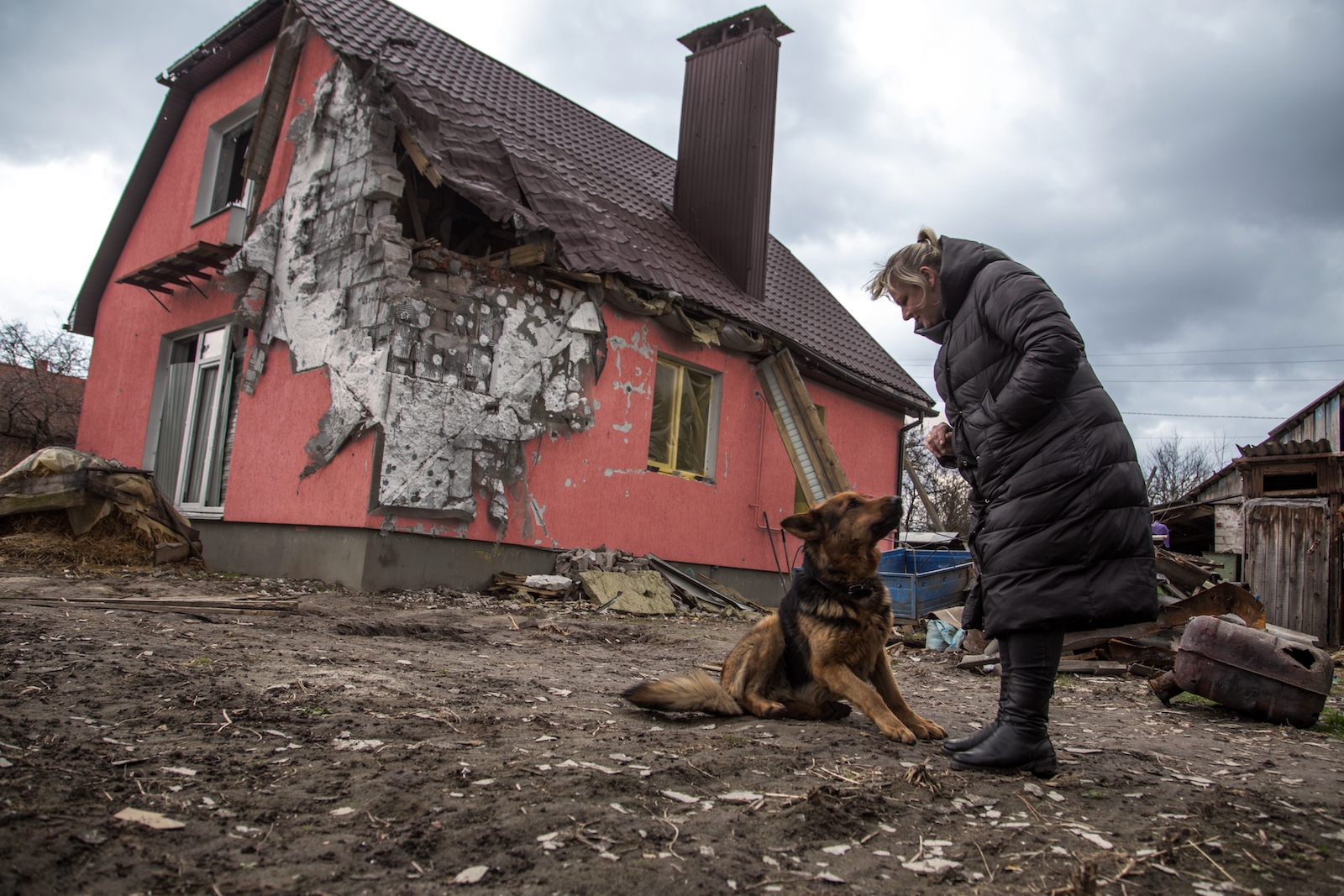

Inside UNOPS’ Effort to Rebuild Ukraine
Mykhailo Turianytsia serves as a Communications Officer with UNOPS in Ukraine, where he helps spotlight the organization’s recovery and resilience projects aimed at restoring essential services and improving living conditions amid war.
UNOPS’ priorities range from repairing schools and equipping underground shelters to strengthening health systems through new medical equipment and infrastructure upgrades. The agency also supports municipal heating networks with critical energy equipment and advances humanitarian mine action through training and capacity-building. These programs seek to uphold decent living standards in communities across Ukraine—safeguarding access to education, healthcare, and warmth; ensuring safe movement; and enabling the reclamation of productive agricultural land.
Turianytsia’s work bridges the technical and the public. He collaborates with media and partners across Europe and Central Asia to clarify procurement, delivery, and impact, helping translate the complex language of engineering into public understanding and donor accountability.
He points to the World Bank-administered Ukraine Relief, Recovery, Reconstruction and Reform Trust Fund (URTF) as a core driver of UNOPS’ RePOWER initiative—providing critical heating equipment and power-grid repairs that keep Kharkiv’s clinics, homes, and schools functioning through brutal winters. That effort is now expanding by $116 million to reach six additional cities. Through RELINC, UNOPS has delivered 18 modular bridges to sustain vital road logistics amid ongoing threats to Black Sea shipping.
Projects funded by the European Union and Japan are repairing schools and constructing underground shelters—15 already completed in Kharkiv, with more underway. Meanwhile, humanitarian mine-action programs are scaling up via a $15 million Netherlands-funded effort and VR-based risk-education partnerships with the State Emergency Service. Across every project, UNOPS emphasizes sustainable, SDG-aligned, non-duplicative, end-to-end delivery.

Scott Douglas Jacobsen: As temperatures drop, Kharkiv faces another winter of strained utilities. What impact have UNOPS’ heating deliveries had on stabilizing clinics, households, and schools across the city?
Mykhailo Turianytsia: Your question relates to a project we have been implementing with funding from the Ukraine Relief, Recovery, Reconstruction, and Reform Trust Fund (URTF), administered by the World Bank.
This project, called RePOWER, delivered critical heating equipment in its first stage to Kharkiv to help repair damaged sections of the district heating grid and replace heat generation capacity lost due to Russian attacks.
The impact is straightforward. Clinics, households, and schools will be heated and remain heated as winter approaches. In a country like Ukraine, where winters last several months, district heating is a regular utility service, much like electricity or water supply. In Kharkiv, the coldest month, January, averages around −7 °C (19 °F), with typical daily highs near −2 °C (28 °F) and lows near −7 °C (19 °F). During extreme cold spells, temperatures can drop even lower, making unheated buildings unsafe.
The international assistance ecosystem works to ensure people stay warm over winter. For example, OCHA-managed funding has supported firewood distributions for vulnerable households in rural areas, while projects like RePOWER focus on urban systems such as Kharkiv’s district heating network.
Kharkiv is Ukraine’s second-largest city, so this is a significant undertaking. As of early November, the RePOWER effort has been expanded with an additional 116 million US dollars to strengthen heating resilience not only in Kharkiv but also in six other cities—Chernihiv, Kremenchuk, Kryvyi Rih, Mykolaiv, Slavuta, and Sumy—under World Bank support implemented with UNOPS. Public updates describe implementation timelines extending into 2026–2027, reflecting multi-year delivery.
Jacobsen: Which regions did the modular bridge projects prioritize, especially in reconnecting communities and restoring children’s access to schools?
Turianytsia: This question relates to another URTF-supported project, RELINC—Repairing Essential Logistics Infrastructure and Network Connectivity. UNOPS delivered 18 modular bridge systems, which were handed over to Ukraine’s Agency for Restoration for nationwide deployment based on need and urgency. These modular systems can be installed much faster than traditional bridge construction methods.
Most of these bridges are being used to support key overland logistics routes—an understandable priority given ongoing threats to Black Sea shipping and repeated strikes on port infrastructure, which have increased reliance on rail and road cargo.
For both imports and exports, many domestic shipments also rely on roads. Bridges are focal points where a road crosses a river or forms a critical intersection. When a bridge goes down, it can have serious consequences.
At the local level, communities might find themselves in situations where people have to risk their lives to get to work, school, or the local market. On a national scale, transport routes become longer and less efficient—what once took eight hours to ship might now take twelve. While the impact is local, it also has significant nationwide implications.

Jacobsen: How do you define the scopes?
Turianytsia: This is a good question. UNOPS—the United Nations Office for Project Services—is all about implementing projects. In a project, there are usually two sides. One is the donor —the source of funding. This can be a foreign government, a multilateral organization, or a development bank. They have resources they wish to direct to assist a country such as Ukraine.
On the other side, there are national partners. These can be central government ministries, regional administrations, or local communities. They may have an urgent need to address quickly or a long-term development goal. As a UN entity, we act as the link between these two sides.
We stay in touch with national partners to understand their needs and priorities, and with the donor community to know what resources are available. Our role is to match resources with needs.
Now, this brings us directly to your question—how do we set scopes? It is always a negotiation. In Ukraine, we are fortunate to work with a capable government that, even amid war, remains effective at defining its priorities, goals, and objectives. For everything from emissions reduction to energy modernization to heating services, some national-level frameworks and strategies guide local communities.
We coordinate with those communities. They usually have a good sense of what they need and are in constant dialogue with other actors—it is an entire ecosystem. Some larger communities conduct formal needs assessments, examining factors such as population density, vulnerability, and the condition of existing infrastructure.
Through several rounds of dialogue, the original list of needs is refined into a well-defined project—complete with scope, timeline, and implementation activities.
Many factors come into play, including timing. We have to balance the urgency of the need with the time required to complete all our procedures before a project can begin. We also strictly avoid duplication—one of our taboo words. We do not want to implement something that UNICEF, UNDP, or another agency is already handling.
Through these rounds of collaboration, we arrive at focused projects that we are confident will produce tangible, positive impacts.
Jacobsen: What safety features are you providing for Kharkiv’s students and teachers?
Turianytsia: We currently have several projects underway in Kharkiv. One of them, called School Repairs in Ukraine, is funded by the European Union. As the name suggests, we are repairing schools and building underground shelters so that children can continue attending classes even during aerial threat alerts.
In the city of Kharkiv, significant progress has already been made—we have worked on 15 schools so far.
If you include the broader region, there are another 17 sites. As we speak, four more schools are being repaired and equipped with shelters. There are also repairs underway on their above-ground structures. Under another project, funded by the Government of Japan, we are also constructing three underground shelters at three schools.
The peculiarity here is that local authorities identified these schools as so-called hub schools, meaning they will receive children from other schools that are unable to operate. We have already provided the city with three additional school buses to ensure children are safely transported to these new learning locations.
That is the situation for Kharkiv, but I hope you do not mind if I also mention another city—the southern city of Mykolaiv. There, we are working on four schools in Mykolaiv and the surrounding region, equipping them with shelters as well.
One of our flagship projects is in downtown Mykolaiv, where we are restoring a school that is also a cultural heritage site, originally built in the 1860s. It was damaged by a missile strike in 2022. We are helping to restore it to its original design while also constructing a shelter beneath it so that children can return to school and study safely.

Jacobsen: How are new equipment and training programs paired with child-focused risk education to prevent casualties around schools and playgrounds?
Turianytsia: This question touches on an area we have not yet discussed—mine action. It is a significant priority for Ukraine and for UNOPS in Ukraine. You have probably seen the statistics: officially, about 25 percent of all Ukrainian land is considered potentially hazardous.
In simple terms, that means some form of military activity or shelling took place on that land, leaving it possibly contaminated with unexploded ordnance or landmines. These areas are recorded in a national system managed by the Government of Ukraine, and they are physically marked in the field with warning signs indicating danger—signs that say, in effect, “minefield, do not approach.” Such land cannot be productively used; it is effectively off-limits.
To return that land to safe, productive use, several steps must take place. First, a survey must be conducted to confirm whether hazardous objects are present. If the land is deemed safe, it can be released for use. Where threats are found, certified mine action operators must enter and clear the area through humanitarian demining.
This process is highly time-consuming and resource-intensive, as personnel must go over the land—literally square meter by square meter—using metal detectors. When an explosive object is found, it is safely removed and destroyed elsewhere.
There is an additional complication that is important for context: a large portion of the hazardous land currently lies under Russian occupation or near active combat zones. That means it cannot yet be surveyed or cleared.
So, in practical terms, there are three main ways the international community can support Ukraine in this effort. First, by funding surveys and clearance operations directly. Second, by providing equipment and training to existing mine action operators to expand their capacity in the long term. Moreover, third, by increasing public awareness—educating communities about the risks so that people do not put themselves in harm’s way.
In your question, you mentioned reducing casualties around schools and playgrounds. Fortunately, Ukraine does not have schools or playgrounds operating within contaminated areas. The government and local authorities have been diligent in cordoning off those sites. Therefore, when we talk about risk education, we are referring more to awareness campaigns—teaching children and families what to do if they encounter suspicious objects, and reinforcing safe behaviour in areas that could be at risk.
Risk education focuses on teaching people—especially those in rural communities—how to recognize warning signs of hazardous areas they must avoid. For example, they learn what visual indicators suggest the presence of mines or unexploded ordnance. Moreover, if someone accidentally enters an unsafe area or encounters a dangerous object, such as a mine or an unexploded shell, they are taught what to do: how to backtrack safely, how to contact the proper authorities, and, most importantly, never to touch or approach it.
When we talk about how expanding operator capacity and risk education intersect, I can give you a concrete example. We are currently implementing a 15-million-US-dollar project funded by the Government of the Netherlands. Under this initiative, we are procuring equipment for a Ukrainian government mine-action operator. This support enables them to establish a new team—or, as they call it, a battalion—of over 400 mine-action specialists who now have both the equipment and training to conduct humanitarian demining.
Our assessments also indicated a need for on-the-job mentoring, as many of these personnel are new to mine action work. Therefore, we have paired them with experienced professionals who accompany them in the field and guide their day-to-day activities. Ukraine is new to large-scale humanitarian demining, so this hands-on mentorship is essential as they build experience.
At the same time, under a separate project funded by the European Union, we are supporting another government agency—the State Emergency Service of Ukraine—by providing cutting-edge virtual-reality (VR) technology and training. Using this immersive equipment, their specialists can visit Ukrainian schools to teach children about the dangers posed by explosive remnants of war. The logic here is sustainability: rather than UNOPS conducting the school sessions directly, we empower a national entity to continue this work for many years.
The State Emergency Service already has the capacity to fund and maintain these positions in the long term. What they needed was the initial investment—VR equipment, training, and program design—to establish the initiative and get it moving. Overall, our primary goal is twofold: first, to ensure that mine-action operators have the tools, training, and knowledge to safely clear land; and second, to make sure the public is sufficiently informed and cautious so that people do not endanger themselves or their children.

Jacobsen: When it comes to rebuilding, how do you determine which facilities to restore first—especially those vital to children, like hospitals and schools?
Turianytsia: UNOPS remains in constant dialogue and coordination with central government ministries and local communities. As a UN entity, our overarching framework for all projects is guided by the Sustainable Development Goals. Remarkably, we have spoken this long without mentioning them yet.
Typically, the process begins with discussions with local communities, who identify their most urgent needs. We then prioritize facilities with the most significant cross-cutting impact—that is, those that enable multiple other services or social functions. For example, this logic led us to support the district heating grid in Kharkiv, since reliable heat supply underpins healthcare, education, and general well-being.
Educational facilities are a clear priority because they affect not only children’s access to learning but also teachers’ livelihoods and parents’ economic stability, enabling them to return to full-time employment. Beyond that, reopening schools has significant mental health benefits. It allows children to socialize with their peers again—something many Ukrainian students have been deprived of since the onset of the COVID-19 pandemic in 2020.
That is how we approach prioritization. If we are speaking specifically about children, they are not UNOPS’s sole focus—that would primarily fall under UNICEF, and I understand you have already talked with Toby about that. However, as a UN entity, we naturally view children as a key constituency, since investing in their education, health, and safety is ultimately an investment in Ukraine’s future. A generation properly educated, cared for, and protected will be able to advance the Sustainable Development Goals that guide our collective mission.
Jacobsen: Which UNOPS procurement safeguards are most relevant during wartime?
Turianytsia: I am glad you brought that up. Procurement is one of our core service lines. Globally, UNOPS procured goods and services worth 1.7 billion USD last year. We even administer the United Nations Global Marketplace (UNGM)—a unified procurement platform used by 32 UN entities. Procurement is truly our area of expertise, including in emergency and conflict-affected settings.
When operating in a country at war, such as Ukraine, there are two main imperatives. The first is urgency—many needs must be met immediately. We saw this during Russia’s full-scale invasion in 2022, and again in 2023 after the destruction of the Kakhovka Dam. On a local scale, every aerial strike or attack generates new, pressing requirements. Urgency compels us to act fast, to deliver as soon as possible.
However, there is always a second imperative: integrity. As a UN entity, we are bound by strict internal policies and by donor requirements to ensure transparency, competition, and value for money. Whenever we purchase from the commercial market, those three principles must be upheld to the extent that is practical and reasonable under the circumstances.
In practice, even amid wartime conditions, the overwhelming majority of our procurement in Ukraine follows open, public procedures. We post tenders on the UNGM platform that we manage ourselves. Open tendering is essential not only for transparency—any member of the public can see our awarded contracts and suppliers—but also for achieving value for money. When the entire business community can compete, we are far more likely to obtain the best quality at the most reasonable cost.
These safeguards—transparency, open competition, due diligence on all suppliers—are deeply ingrained in how we operate. They ensure that even in emergency contexts, our work remains accountable, efficient, and aligned with international standards.
We conduct due diligence to ensure that all suppliers meet ethical and professional standards. They must not appear on any sanctions or block lists. UNOPS maintains a zero-tolerance policy for fraud, corruption, or unethical behaviour. In that sense, our operations are designed to run cleanly and transparently.
One more point related to your question: at UNOPS, we recognize that procurement itself—our interaction with the commercial market—is also a means to create positive social impact, beyond the specific project being delivered. In Ukraine, for instance, we regularly integrate sustainability criteria into our procurement processes. If a business demonstrates a genuine, practical commitment to gender equality, occupational health and safety, or environmental sustainability, that supplier is given preference over those that do not. Through these mechanisms, our procurement work indirectly advances the Sustainable Development Goals.
Jacobsen: Outside of procurement, what about the next step, the distribution process?
Turianytsia: That is an excellent clarification. When we say “procurement,” we mean end-to-end delivery. UNOPS ensures that the goods and services we procure actually reach their final recipients. For example, if we purchase a generator, it does not stop at a warehouse. Delivery to the beneficiary site, installation, and operational readiness are all part of the same service package. Our scope is comprehensive and clearly defined, ensuring full accountability from purchase to handover.
Jacobsen: How do these programs align with the UN Convention on the Rights of the Child?
Turianytsia: The answer is simple: as a UN entity, everything we do must align with the UN Convention on the Rights of the Child. Nothing we implement can directly or indirectly harm children. By default, children are among the key beneficiaries of our work, and their rights are consistently advanced through our projects.
To summarize, our three principal service lines in Ukraine are: procurement of goods and services, infrastructure repair and construction, and mine action. Each of these areas—whether through safer environments, restored education and health facilities, or improved community infrastructure—supports the well-being and rights of children.
Mine action creates secure spaces for communities to live and learn. Infrastructure projects, such as housing and heating restoration, ensure comfort and access to essential services. Procurement ensures that these needs are met efficiently and transparently. Collectively, these efforts help Ukrainian communities not only recover but thrive, creating a supportive environment for children to grow.
Even if not every project explicitly mentions children, a closer look shows that their welfare is central to our work—either directly or indirectly.
Jacobsen: Thank you, Mykhailo. It was great to meet you. I appreciate your time and expertise.
Turianytsia: Excellent. Thank you, Scott.