
The High Cost of Europe’s New Gas Strategy
Governments say new gas plants are needed to keep the lights on. Critics warn they could lock Europe into the same fossil-fuel dependence it has spent years trying to escape.
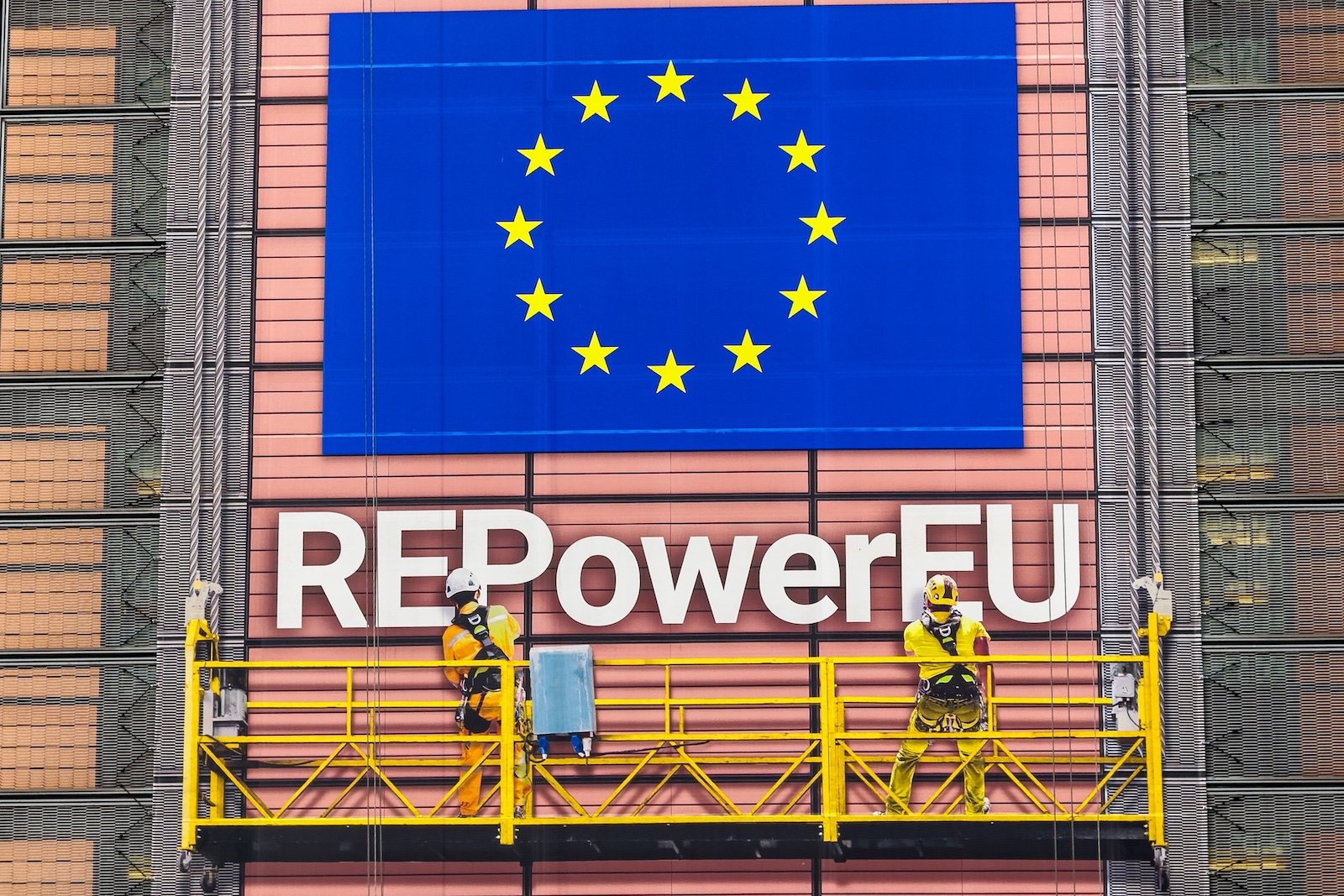
Europe’s energy crisis was supposed to mark a turning point. After Russia’s invasion of Ukraine, the European Union launched REPowerEU, a strategy aimed at reducing dependence on Russian fossil fuels, accelerating the deployment of renewables, and making the continent less vulnerable to imported energy shocks. The EU has made genuine progress. According to the European Commission, the share of Russian gas in EU imports fell from 45 percent in 2022 to 12 percent in 2025 under the bloc’s Russian energy phase-out strategy.
Yet Europe has not escaped fossil-fuel dependence. It has merely changed its shape. The continent now relies more heavily on liquefied natural gas, alternative pipeline suppliers, and international energy markets that remain vulnerable to geopolitical disruption. The EU imported more than 140 billion cubic metres of LNG in 2025, with the United States supplying almost 58 percent of those imports, according to the Council of the European Union. Eurostat data also show that EU natural gas imports rose by 8.4 percent in 2025, with Germany among the countries recording the sharpest increases.
Now, as governments seek to guarantee electricity supplies during the transition away from coal and nuclear power, Europe is preparing another major wager on gas. A June briefing by the campaign group Beyond Fossil Fuels says nearly 60 GW of new gas-fired power plants are planned across the EU. If built and operated at the same average capacity factor as the bloc’s gas fleet in 2024, the group estimates they would consume around 28 bcm of gas annually, equivalent to 9 percent of the EU’s 2025 gas imports or the annual consumption of 46.4 million average EU households.
The figures come from an advocacy organisation and should be viewed in that context. Even so, the underlying question is difficult to ignore: is Europe building gas plants to protect itself from future energy crises, or laying the groundwork for the next one?
Germany’s security dilemma
Germany sits at the centre of that debate. Having shut down its last nuclear reactors in 2023 and committed to phasing out coal, Europe’s largest economy needs reliable backup for a power system increasingly dominated by wind and solar. The challenge is not ordinary fluctuations over an hour or two. It is the risk of prolonged winter periods with little wind and limited sunshine, a phenomenon known in Germany as Dunkelflaute.
In January, Berlin reached an agreement in principle with the European Commission on its power plant strategy. The plan calls for tenders covering 12 GW of new power generation capacity in 2026. Of that, 10 GW is reserved for facilities capable of generating electricity over extended periods, while a further 2 GW will be technology-neutral, according to the German government’s Energiewende newsletter. Reuters reported that the plants are expected to be operational by 2031 and designed to switch to hydrogen by 2045, although final state-aid approval is still pending.
The rationale is understandable. Electricity systems require firm, dependable capacity. Batteries can help balance short-term fluctuations, but they do not yet solve every multi-day reliability challenge. Grid expansion remains slow. Demand flexibility is still underdeveloped. And as coal-fired generation is retired, governments are under growing pressure to ensure households and industry are not exposed to supply shortages.
That is the case for new gas—not as a replacement for renewables, but as the insurance policy behind them.
The danger is that insurance can become dependency. New gas plants require fuel, long-term contracts, and often public subsidies. Capacity mechanisms designed to keep backup generation available can end up directing taxpayer money toward fossil-fuel infrastructure even if those plants operate only occasionally. In a separate June analysis, Beyond Fossil Fuels estimated that five European governments have awarded nearly €14 billion in capacity market contracts to fossil-fuel companies since 2025.
“This is Europe’s great gas giveaway,” said Juliet Phillips, energy campaigner at Beyond Fossil Fuels. “The same companies that fuelled the energy crisis and profited from the subsequent price spikes are now being handed money raised from energy bills to lock in decades more gas dependency. They are quite literally being paid to pollute.”
That criticism is reinforced by developments beyond Europe. ACER, the EU’s energy regulator, says its latest gas monitoring work examines, among other issues, the effects of conflict in the Middle East and the potential closure of the Strait of Hormuz on European gas markets. The implication is straightforward. Even if Europe no longer depends primarily on Russian pipeline gas, it remains exposed to global LNG markets, shipping chokepoints, international competition for cargoes, and geopolitical shocks. Germany’s far-right AfD is already calling for a return to cheap Russian gas.
The alternatives are no longer marginal
The argument against new gas infrastructure has also evolved. A decade ago, critics often appeared to be asking governments to accept a less reliable electricity system. Today, the case increasingly rests on batteries, demand flexibility, stronger grids, and digitalisation.
Ember’s European Electricity Review 2026 argues that expanding battery storage, strengthening electricity grids, and scaling demand flexibility can unlock higher shares of wind and solar while improving both energy security and price stability.
In a Reuters interview in 2024, Ember senior analyst Beatrice Petrovich said: “More battery storage can help Germany take advantage of abundant home-grown solar to replace expensive fossil fuels.” She added: “We haven’t seen the same ambitious strategies from the EU that are in place for renewables…for battery storage and other clean flexibility solutions.”
This does not mean batteries can replace every gas plant tomorrow. They are best suited to short-duration balancing—storing solar power during the day and releasing it during evening peaks, or smoothing hourly fluctuations in wind and solar generation. Yet much of the flexibility modern electricity systems require is precisely this kind of short-term response.
Demand flexibility could prove just as important. Electric vehicles, heat pumps, industrial demand response, and dynamic electricity tariffs can reduce peak demand or shift consumption to periods when renewable generation is abundant. The European Commission argues that smart grids and smart meters are essential for integrating more renewables, giving consumers better information, and allowing them to adjust electricity use in response to changing prices throughout the day.
Germany, however, remains behind on this front. The Commission says around 60 percent of European households had an electricity smart meter by the end of 2024, with penetration exceeding 80 percent in 15 EU countries. Germany’s rollout has been considerably slower. Clean Energy Wire reported in February that hundreds of German energy companies were facing fines for failing to meet mandatory smart-meter installation quotas, with 85 percent of metering point operators falling short of legal requirements. The Bundesnetzagentur says all electricity suppliers in Germany have been required to offer at least one dynamic electricity tariff since January 1, 2025, but such tariffs have limited value if households cannot readily make use of them.
This is where the gas debate becomes less about ideology than sequencing. If governments can rapidly build demand flexibility, energy storage, electricity grids, and the digital infrastructure that supports them, the need for gas-fired backup declines. If they cannot, gas remains the default answer to every concern about reliability.
Hydrogen-ready, or gas-dependent?
Supporters of new gas plants frequently emphasise that the facilities will be hydrogen-ready. In theory, that means they can operate initially on natural gas before eventually switching to low-carbon hydrogen.
Hydrogen may well prove indispensable for sectors such as steel, chemicals, fertilisers, and shipping. Using it extensively for electricity generation, however, could be expensive, inefficient, and dependent on infrastructure that does not yet exist at commercial scale. There is also the risk that hydrogen-ready becomes little more than a political label—one that justifies building fossil-gas plants today on the promise of a cleaner fuel tomorrow.
Carbon capture raises similar concerns. The Institute for Energy Economics and Financial Analysis argues that decarbonising gas-fired power plants with carbon capture and storage is a “high-risk strategy” for the EU because of the technology’s cost, infrastructure requirements, and the absence of a proven commercial track record for gas power equipped with CCS at scale.
None of this proves that Europe requires no additional gas capacity. Some new plants may well be necessary to maintain supply security during the energy transition. But it does suggest that gas should be treated as a last-resort reliability tool rather than the foundation of Europe’s future electricity system.
The risks are both economic and geopolitical. Europe’s post-2022 energy shock damaged industrial competitiveness, fuelled inflation, and forced governments to spend billions shielding consumers from soaring prices. If another generation of gas infrastructure deepens dependence on imported fuel, volatile LNG markets, and geopolitical chokepoints, Europe could recreate the very vulnerabilities it has spent years trying to escape.
The better test, therefore, is not whether a gas plant can be described as hydrogen-ready, but whether it genuinely reduces Europe’s long-term exposure to fossil-fuel shocks. If it does not, it may offer short-term reassurance while undermining long-term resilience.
Europe’s energy transition has moved beyond the question of whether renewables can generate affordable electricity. They can. The more difficult challenge is whether governments can build the grids, storage capacity, digital systems, and market rules needed to depend on them with confidence.
Until they do, gas will continue to be presented as the safe option. But safety is not the same as resilience. In an era defined by geopolitical instability, volatile fuel markets, and accelerating climate pressures, Europe cannot afford to mistake one for the other.