
The Missile Gap Europe Doesn’t Want to Admit
Operation “Epic Fury,” the ongoing U.S. and Israeli campaign against Iran, has crystallized a shift that has been underway for years but is now impossible to ignore: deep precision strikes—DPS—are no longer adjunct capabilities in modern warfare. They are becoming central. Cruise missiles launched from naval platforms, ballistic salvos arcing across regions, long-range air strikes, and coordinated waves of drones are being deployed at a tempo and scale rarely seen outside full-scale war. The cumulative effect is not just operational but strategic, offering a preview of the kind of conflicts Europe must now prepare for.
These developments do not stand alone. They echo patterns visible in the war in Ukraine and in the periodic escalations across South Asia, where high-tempo exchanges and the proliferation of long-range strike systems are reshaping the hierarchy of military power. One telling signal has been the reported drawdown of U.S. Tomahawk cruise missile stocks in the Iranian theater. That detail, almost technical at first glance, carries wider implications. It suggests that even the most advanced militaries are discovering that the consumption rates of modern munitions far exceed prewar expectations. For European policymakers, the message is increasingly stark: investment in deep strike capabilities is no longer discretionary. It is structural.
At the heart of Epic Fury lies a familiar but intensifying dynamic—the contest between offensive strike systems and defensive interception layers. This “sword versus shield” relationship, deeply embedded in Clausewitzian thinking, has always defined warfare. What is changing is the economics underpinning it.
Reports from the Middle East have highlighted mounting concern over the pace at which U.S. missile inventories are being depleted. According to the Financial Times, American forces have burned through “years” worth of munitions in a matter of months. That revelation has not gone unnoticed among allies. A senior Taiwanese defense official warned that such depletion could erode deterrence in the Indo-Pacific, raising doubts about the ability of U.S. forces to sustain operations in the event of a crisis. In Ukraine, too, both Russian and Ukrainian forces have demonstrated how quickly precision munitions can be expended when conflicts settle into high-intensity rhythms.
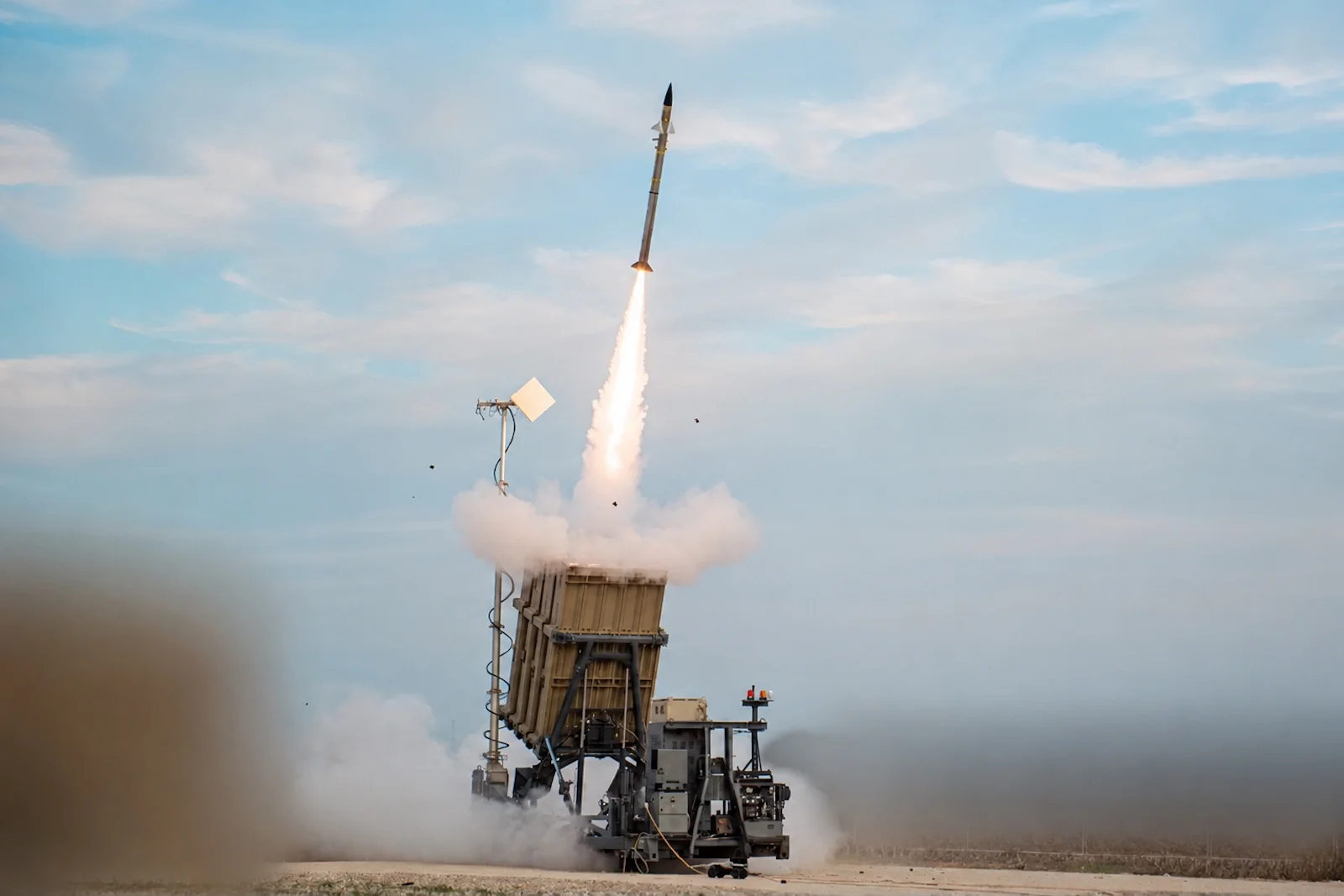
Defensive systems tell a similar story. Platforms such as Patriot batteries and Aegis-equipped ships have shown impressive interception rates against ballistic threats. Yet their success masks a deeper vulnerability. Each interceptor missile can cost several million dollars, while many incoming threats—particularly drones and loitering munitions—are produced at a fraction of that price. A recent study by the Center for Strategic and International Studies estimated that the first 100 hours of Epic Fury cost roughly $3.7 billion, or nearly $900 million per day. In the Middle East, U.S. forces have deployed Terminal High Altitude Area Defense (THAAD) systems, with individual interceptors priced at around €13 million.
When combined with standard missile inventories—SM-2s, SM-3s, and others—the model begins to look economically strained.
By contrast, Iran has leaned heavily on one-way attack drones such as the Shahed series, which can be produced for as little as $20,000 to $50,000 per unit. The asymmetry is striking. Defending against large-scale missile and drone barrages while maintaining offensive operations becomes a costly endeavor, especially when adversaries employ saturation tactics designed to overwhelm defenses and exhaust stockpiles.
Europe has not been blind to this imbalance. Initiatives such as the European Sky Shield Initiative (ESSI), launched in 2022 and now encompassing more than 20 countries, aim to pool procurement and create layered air defense networks. Systems like IRIS-T SLM and Patriot batteries form the backbone of this effort. Complementary measures—including anti-drone “walls” along NATO’s eastern flank and integrated air and missile defense (IAMD) systems developed by firms such as Thales—suggest that progress is being made, albeit unevenly.
Budgetary decisions reflect a growing sense of urgency. Germany’s €100 billion special defense fund, announced in 2022, allocated a substantial portion to air and missile defense, though much of that funding is expected to be committed by 2027. At the European Union level, joint procurement mechanisms and the European Defence Fund are increasingly oriented toward layered defense architectures. The direction of travel is clear, even if the pace remains contested.
And yet, Epic Fury underscores a structural limitation that cannot be wished away: defense is inherently reactive. At scale, it is also prohibitively expensive. Even the most advanced systems cannot guarantee perfect interception rates. Iranian ballistic missiles—some of them increasingly sophisticated—have been engaged repeatedly by systems such as Arrow 3 and David’s Sling. While a majority are intercepted, a fraction inevitably penetrates. That residual impact, often limited in purely physical terms, can nonetheless produce outsized strategic and psychological effects. It reinforces a sobering conclusion: victory in such an environment will not belong to the side that intercepts everything, but to the one that can continue to strike, absorb losses, and endure.
This reality shifts attention back to the offensive dimension of DPS, particularly two categories that have defined recent conflicts. The first is saturation. Low-cost drones and loitering munitions, deployed in large numbers, are designed to overwhelm defenses, deplete interceptor stocks, and create openings for more sophisticated systems. Their effectiveness lies less in individual lethality than in cumulative pressure. European programs are beginning to reflect this logic. Initiatives such as MBDA’s One Way Effector (OWE), developed within emerging European frameworks, aim to produce precisely these kinds of scalable, attritable systems.
The second category is penetration and destructive power. These are high-end systems designed to breach layered defenses and deliver decisive effects against hardened or high-value targets. Within Europe’s arsenal, examples include the SCALP-EG, with a range of approximately 500 kilometers and combat experience in both Ukraine and South Asia. Germany’s Taurus KEPD 350 offers comparable capabilities, though it has yet to be tested in a similarly intense operational environment. At sea, the Naval Cruise Missile (NCM), deployed on French submarines and frigates, extends reach beyond 1,000 kilometers, offering a glimpse of what sustained long-range strike might look like.
The challenge, however, is not technological but quantitative. European stockpiles of these systems remain limited. Transfers of SCALP missiles to Ukraine have already reduced available inventories, while export commitments—including to countries such as India—continue to compete with domestic requirements. In a scenario resembling Epic Fury, current European reserves would likely prove insufficient for prolonged operations. More critically, Europe lacks a widely deployed, long-range land-attack capability equivalent to the Tomahawk. Efforts to close this gap are underway but remain incomplete. MBDA’s Land Cruise Missile (LCM), derived from the combat-proven NCM, represents a promising step toward a sovereign European solution, combining extended range with advanced penetration capabilities. Its integration into European force structures, however, is still uncertain.
The broader framework for such capabilities has also struggled to coalesce. The European Long-Range Strike Approach (ELSA), envisioned as a coordinating mechanism, has yet to deliver tangible outcomes. Recent developments, including a letter of intent signed in February, have tended to prioritize saturation munitions over long-range penetrating systems—a choice that reflects immediate concerns but may leave deeper vulnerabilities unaddressed.
Iran’s role in this evolving landscape offers a revealing case study. With its navy degraded, its air force aging, and its integrated air defense systems showing clear weaknesses, Iran has increasingly relied on its ability to conduct deep strikes. These capabilities do not confer dominance. They do, however, ensure relevance. Even when interception rates are high, the persistence of long-range strike options complicates an adversary’s planning, imposes costs, and introduces uncertainty into strategic calculations.
That, ultimately, may be the most important lesson of Epic Fury. Deep strike capabilities are not merely tools of destruction; they are instruments of endurance. They allow states to sustain pressure, shape decision-making, and remain credible even under adverse conditions. For Europe, the implication is unavoidable. A defense posture built solely on interception is incomplete. It must be paired with the capacity to project force at range, in meaningful volume, and over sustained periods.
Such a shift is not purely technical. It is political. It requires choices about investment, industrial capacity, and strategic autonomy—choices that can no longer be deferred.