The New American Experiment in Venezuela
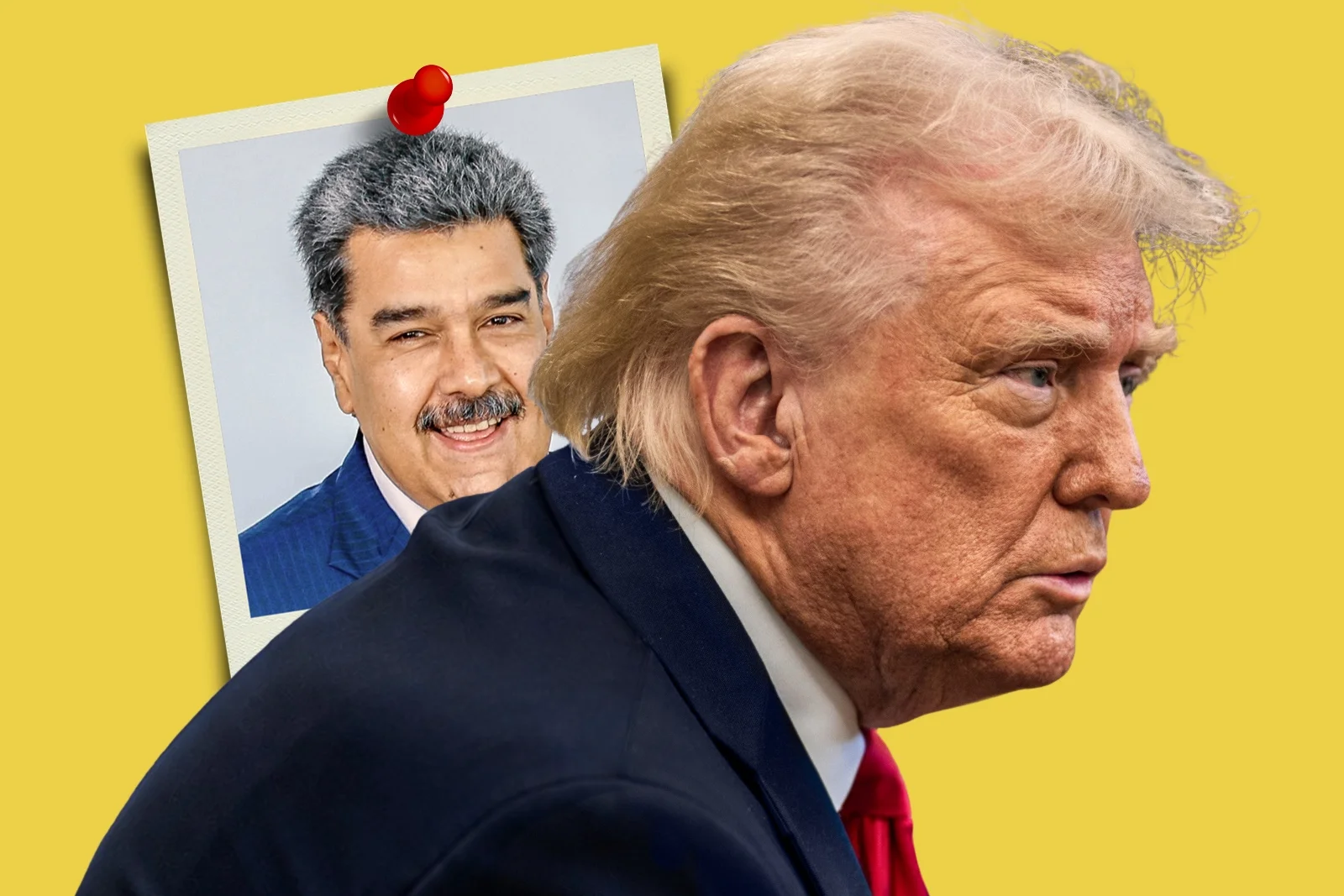
On January 3, following 35 previous attacks on boats in the Caribbean and Pacific that resulted in the extrajudicial execution of 115 people, the White House ordered the bombing of Venezuela, killing roughly 80 people and kidnapping President Nicolás Maduro and his wife, despite the fact that Venezuela had neither threatened the U.S. government nor attacked American citizens.
It was the forcible removal of a president, but not regime change in the conventional sense, because Vice President Delcy Rodríguez became interim president. The result was leadership decapitation paired with authoritarian continuity—something highly unusual in modern hemispheric politics.
My central argument is that, after January 3, a novel geopolitical experiment was set in motion. Venezuela may now be becoming the workshop for a neo-protectorate imposed from abroad. To understand the novelty of this moment, several questions deserve attention.
First and foremost, U.S. military intervention in the Americas has historically been concentrated in North America, Central America, and the Caribbean: Mexico through war and territorial annexation; Central America through interventions, invasions, and proxy operations; and the Caribbean through occupations, assaults, and covert action. The United States had never invaded a South American country. Venezuela is now the leading case. What happened suggests that Washington has crossed a geopolitical threshold in the Western Hemisphere.
Second, the last U.S. invasion in the Americas prior to Venezuela was Panama in December 1989. The legal and political backlash generated by that operation produced a United Nations Security Council resolution drafted by Algeria, Colombia, Ethiopia, Malaysia, Nepal, Senegal, and Yugoslavia. The resolution won broad support, though it was ultimately vetoed by the United States, the United Kingdom, and France. Even so, the George H.W. Bush administration faced substantial criticism at the United Nations and especially across Latin America.
By contrast, after the far larger military action in Venezuela—an operation that clearly exceeded any law-enforcement rationale—the issue was debated at the Security Council, yet no resolution was even introduced. Neither Russia nor China, separately or together, pushed for one, while Latin America appeared divided, hesitant, and politically paralyzed. In 1989, Washington paid at least a modest diplomatic price. In 2026, it paid virtually none.
Third, it remains unclear whether some tacit quid pro quo exists between Washington and Moscow regarding the futures of Venezuela and Ukraine. Yet if spheres of influence are returning as an organizing principle of great-power politics, then the implications deserve close attention.
Fourth, from an operational standpoint, the military deployment reveals lessons the United States appears to have absorbed from earlier interventions.
Approximately 27,000 U.S. troops participated directly in the invasion of Panama, with between 300 and 500 Panamanians killed. A comparable land invasion of Venezuela was always unlikely, both because of U.S. domestic politics and because of the shadow cast by America’s military failures after September 11. The overriding objective appears to have been avoiding the start of another “forever war,” something the MAGA base around Donald Trump rejects emphatically.
The 2003 invasion of Iraq established a provisional authority led by the American administrator Paul Bremer, whose government immediately launched de-Baathification and dissolved the Iraqi army, producing institutional collapse and widespread chaos. The United States—from Obama to Trump—has long despised the Chavistas within Venezuela’s government and armed forces, but reproducing the Iraqi model would have been politically and strategically disastrous. Rather than install what many Venezuelans would have viewed as a highly controversial puppet authority—the pro-war Nobel Peace Prize winner María Corina Machado—it proved less destabilizing to elevate Delcy Rodríguez to the presidency while avoiding a direct rupture with the military establishment.
The collapse of Muammar Qaddafi’s authoritarian regime in Libya in 2011 offered another cautionary example. The aftermath produced an absolute power vacuum: no functioning institutions, no state monopoly on force, and a deeply fragmented opposition. The result was years of unrest, violence, and political disintegration. But Libya’s instability unfolded far from the United States, spilling instead toward Europe.
Venezuela presents an entirely different scenario. It is a strategically important country located in the immediate vicinity of the United States. Washington appears to have prioritized stability and control—longstanding obsessions within the American intelligence community—over satisfying hawkish factions in both Washington and Caracas. Nevertheless, the situation remains fragile, fluid, and potentially volatile.
Almost immediately after the events of January 3, it became evident that the Trump administration intended to impose a distinctive form of neo-protectorate over Venezuela through remote management, particularly regarding oil revenues, all under the implicit threat of renewed military strikes should Caracas fail to comply with Washington’s demands. A singular model of externally imposed protectorate now appears to be taking shape, one with deeply unpredictable consequences.
This form of subordination does not require a formal treaty or a permanent military occupation. It depends instead on asymmetry and coercion. Specific agreements concerning strategic resources are expected from the weaker state, while the threat of force remains permanently in the background. Protection is exercised through remote control, with outside influence extending deeply into domestic affairs.
Security concerns are naturally part of this asymmetric relationship, particularly the fear that hostile powers could gain influence within the dominant state’s perceived defensive perimeter. Yet material interests remain central: the extraction of revenue for the dominant power, for its governing elite, and perhaps even for the U.S. president himself.
In that sense, the neo-protectorate by imposition may become a broader formula employed by one or several great powers seeking to preserve geopolitical primacy at any cost during an era of turbulence, overlapping crises, and rising post-legality. If so, the neo-protectorate may emerge as a distinctly modern expression of domination, injustice, and enforced dependency.
Venezuela, then, increasingly resembles a showcase for Trump-era neo-protectoral ambitions.