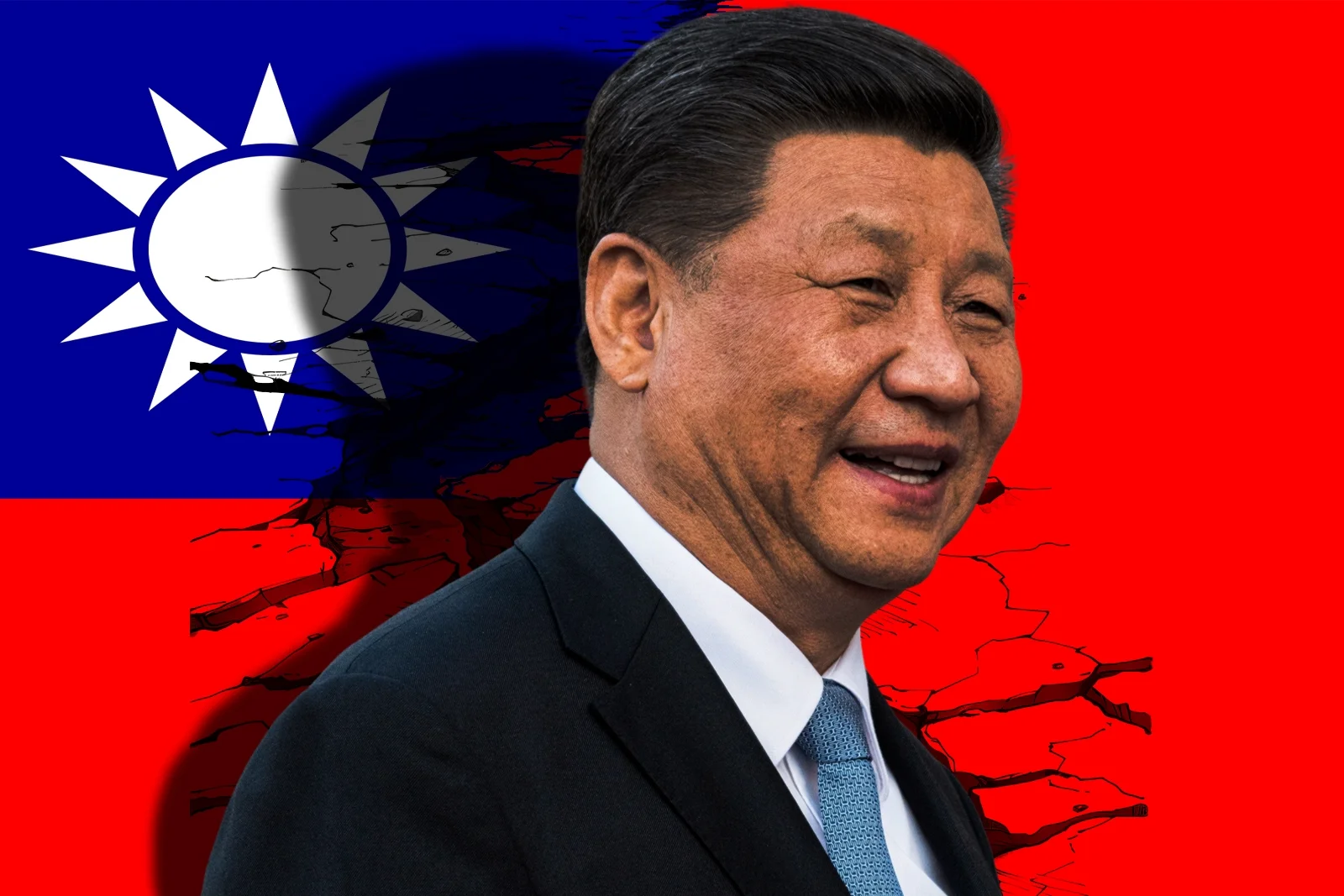



The Surrender Lobby: How ‘Peace’ Became a Weapon of War
Faced with escalating threats from authoritarian powers, how should democratic societies respond? Across the globe, two starkly different reactions have emerged. Ukraine has mobilized its national spirit, resisting Russian aggression with grit and resolve—galvanizing support from fellow democracies. Yet in other quarters, a more dangerous reflex has taken hold: the embrace of pacifism cloaked as pragmatism, and an unsettling deference to authoritarian narratives.
Taiwan exemplifies this tension. For decades, the island has lived in the shadow of Beijing’s ambitions, enshrined in China’s constitution and legal codes as an eventual conquest. And while most Taiwanese grasp the urgency of self-defense, a chorus of voices—ranging from TikTok influencers to prominent academics—has begun to echo Beijing’s language, framing resistance as provocation and urging “peace” above all else.
Among these voices is Lung Ying-tai, a widely read writer and former culture minister under the Kuomintang (KMT) administration of Ma Ying-jeou. In a 2022 New York Times op-ed, Lung accused her fellow citizens of being “blindly anti-China,” and blamed debates over defense for deepening Taiwan’s internal rifts. She urged voters to support the KMT’s more conciliatory approach and abandon efforts to “confront” Beijing—a curious euphemism for basic self-preservation.
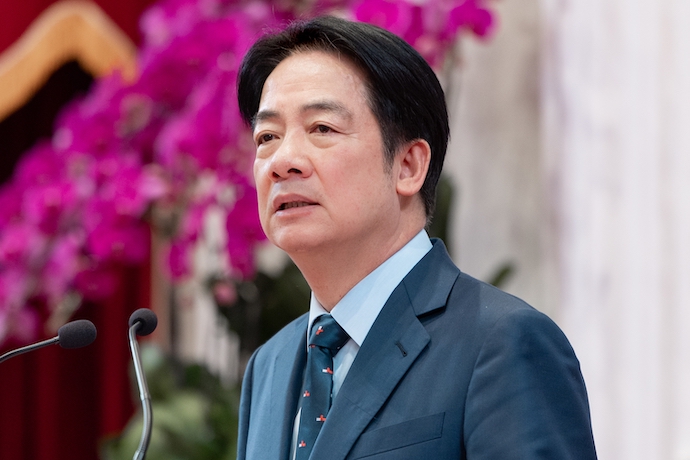
In her more recent writing, Lung claims that Taiwan’s youth are resigned to surrender, advocating disarmament and reconciliation with China. But such defeatist narratives ignore historical precedent—and worse, risk inviting the very aggression they claim to avert.
The truth is that Taiwan is not sleepwalking toward capitulation. Surveys and studies consistently show that public resolve runs deeper than outside observers often assume. The Economist, for example, reported that over 70 percent of Taiwanese between 16 and 29 would take up arms in defense of their country—a figure surpassing that of Sweden, France, Germany, the United States, and the Netherlands. Only India scores higher. A March poll by the Institute for National Defense and Security Research (INDSR) revealed that fewer than 10 percent of respondents support cutting defense spending, while over half favor increasing it.
Yet voices like Lung’s lean heavily on dubious sources. Her recent piece cites an unscientific online poll from Dcard, a social media platform, whose unrepresentative sampling paints a misleading picture of national sentiment. The notion that Taiwanese youth are eager to capitulate isn’t just exaggerated—it’s fiction.
What the data actually shows is a growing polarization, accelerated by Russia’s invasion of Ukraine. Some who were previously hesitant about defense have grown more opposed—but those who favored resistance have become more committed. Overall, the percentage of citizens willing to defend Taiwan remains steady, hovering around 65 to 70 percent.
This willingness is not abstract. From 2020 to 2024, the Chinese People’s Liberation Army (PLA) ramped up its incursions into Taiwan’s Air Defense Identification Zone (ADIZ), from 380 incidents a year to over 5,100. Submarine cables that connect Taiwan to the world have been sabotaged by Chinese-linked vessels. These so-called “gray zone” tactics—deliberately ambiguous, often deniable—are not acts of peace. They are slow-motion acts of war.
This is why Taiwan has doubled its military spending under President Tsai Ing-wen and her successor Lai Ching-te. Defense now consumes 3 percent of GDP. And yet, the opposition KMT and their anti-war allies continue to argue that bolstering Taiwan’s defenses will only provoke Beijing. It’s the same logic used by appeasers throughout history: don’t resist, and maybe the bully won’t strike.
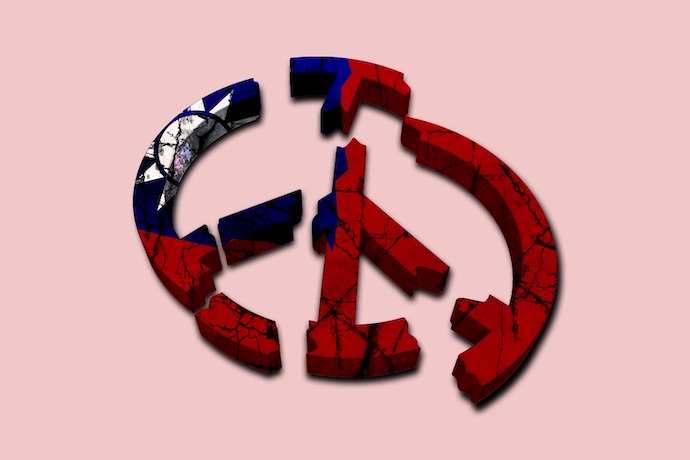
But ordinary Taiwanese aren’t buying it. Since 2020, civil society has increasingly embraced grassroots defense training. The idea of war has shifted from distant fear to daily consideration. Young professionals, retirees, and students alike are preparing not because they want war—but because they recognize the stakes of not being ready.
Still, these efforts have drawn fierce criticism. Anti-defense advocates accuse the government of manufacturing fear to advance a political agenda. Their playbook mirrors that of the Kremlin, which paints Ukraine’s defenders as warmongers while rationalizing Putin’s invasion as a reaction to NATO “encroachment.” It’s a familiar propaganda formula: frame the resister as the aggressor, and redefine surrender as moral clarity.
But democracies cannot afford such illusions. History is unambiguous: dictators are not placated by weakness—they are emboldened by it. Taiwan’s experience under the KMT from 2008 to 2016 offers a cautionary tale. During that period, the government promoted the so-called “1992 Consensus,” a murky agreement interpreted by Beijing as Taiwan’s tacit acceptance of eventual unification under the “One Country, Two Systems” model.
Yet even during that era of supposed reconciliation, China never paused its efforts to assert jurisdiction over Taiwan. Instead, it passed new laws to formalize its claims and ramped up coercive tactics—including economic blackmail and the instrumentalization of tourism and education.
The evidence is clear: no number of diplomatic euphemisms or cultural exchanges will deter the Chinese Communist Party from pursuing its goals. Appeasement, no matter how earnestly pursued, is not a strategy—it’s a delusion.
This is why Taiwan’s internal information war matters so much. The island’s ability to resist authoritarian encroachment is not just a regional issue—it’s a global one. The United States has identified the CCP as its primary strategic threat, a view that has remained consistent across administrations. Indo-Pacific strategies from Europe to Australia recognize Taiwan as central to regional stability.
To that end, efforts to undermine Taiwan’s defense readiness—from within or without—must be seen for what they are: attacks on democracy itself. When so-called peace advocates criticize Taiwan’s preparations for war, they are in effect discrediting the right to self-defense. The signal to authoritarian regimes is unmistakable: resistance is futile, and the path of least resistance lies in conquest.
Yet there is reason for hope. Defeatist rhetoric may be loud, but it is not unchallenged. In 2024, more than a thousand Taiwanese writers, led by National Book Award winner Yang Shuangzi, signed a joint statement opposing surrender. Their message: we will not yield. From novelists to poets to essayists, Taiwan’s literary community has emerged as a potent force in defense of national dignity and sovereignty.
This cultural defiance reflects a deeper truth: Taiwan’s identity is not up for negotiation. It is not an abstraction to be bartered in the halls of diplomacy or sacrificed for temporary calm. It is lived every day—by citizens who prepare, resist, and refuse to be silenced.
For democracies everywhere, Taiwan’s struggle is a warning—and a call to arms. The battle against authoritarianism is not always fought on battlefields. Sometimes, it unfolds in op-eds, online discourse, and the everyday choices of citizens. In that war, surrender begins with silence. And Taiwan, at least for now, is refusing to be quiet.