
Trump’s Retreat From NATO Gives Carney an Opening
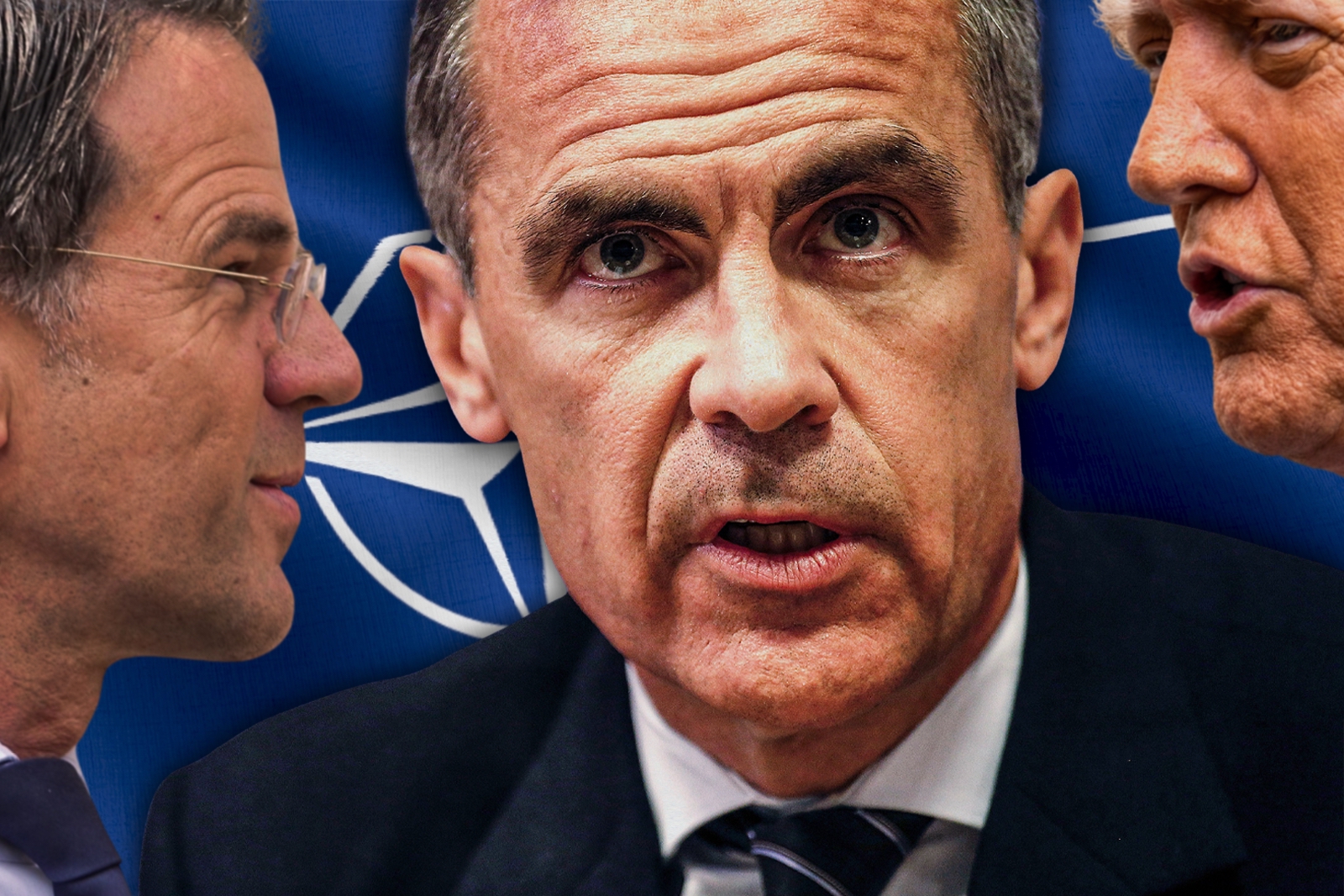
Canadian Prime Minister Mark Carney has earned considerable political goodwill across Europe, first through his speech at Davos and then by joining several European Union military and economic initiatives. European capitals, both within NATO and the EU, are searching for a modern equivalent of German Chancellor Konrad Adenauer, whose political leadership helped transform Robert Schuman’s vision of a united Europe into reality during the 1950s. Carney, the former governor of the central banks of both Canada and the United Kingdom and now the leader of Canada’s majority government, has advanced an influential argument for the strategic leverage of middle powers.
During the Cold War, countries such as Canada and Australia exercised influence beyond their military weight through peacekeeping, international development, and ideological engagement with the developing world. Today’s middle powers are Germany, France, and the United Kingdom—states with considerable capabilities but relatively little experience coordinating their security and foreign policies during peacetime.
The Trump administration’s push toward a NATO 3.0, in which the alliance is led primarily by its European members, presents a golden opportunity for Canadian leadership. Ottawa, alongside Europe, confronts a leadership vacuum as Washington seeks to decouple from the security architecture and institutional internationalism it built during the Cold War. Political shifts within the United States, driven by anxieties over immigration, demographic change, and the need to reverse deindustrialization, have encouraged a more hemispheric conception of national defense while reinforcing strategic ties with Israel.
At the same time, the rise of China, India, and new manufacturing powers across the developing world, coupled with Russia’s relative decline, has reduced the historic likelihood that Europe alone will become the epicenter of a global war. Although the United States still accounts for roughly a quarter of global nominal GDP, the limits of American military power in an increasingly multipolar world became apparent in the strategic failure of its war against Iran.
America’s gradual disengagement has left much of Europe grappling with a persistent political dilemma. Governments must reconcile public demands for stronger economic performance with rising security expenditures while confronting deindustrialization and politically contentious immigration issues. U.S. ground and air forces stationed in Europe are increasingly being reduced to a tripwire force tied to America’s nuclear deterrent. Although Washington remains committed to that deterrent, its credibility is likely to erode over the coming decade.
Europe and NATO, while collectively comparable to the United States in population, economic output, and uniformed personnel—particularly when Turkey is included—continue to suffer from a classic collective action problem. Alliance members disagree not only about the severity of the threats they face but also about their relative urgency, with those perceptions shaped heavily by geography and historical memory.
For Norway, disputes over Svalbard remain a concern. Finland and the Baltic states face a far more immediate Russian challenge to their territorial sovereignty. Greece must balance its longstanding rivalry with Turkey. Spain, France, Italy, and the United Kingdom remain focused on safeguarding freedom of navigation, the foundation of their commercial prosperity, even as their naval fleets continue to shrink. Denmark must contend with renewed American interest in Greenland, while Turkey confronts the instability spreading across its southern frontier. These diverse strategic priorities complicate efforts to rationalize NATO’s limited resources and coordinate alliance policy, even as European governments pursue competing national approaches to European Union trade policy.
Political scientist and Nobel laureate Mancur Olson described collective action problems as resting on three principal challenges. The first is the calculation problem: coordinating divergent national interests to reach a stable policy equilibrium. European capitals have struggled to convene the sustained political summits necessary to negotiate voluntary compromises, instead relying on American pressure to increase defense spending. Yet the country best positioned to solve this coordination problem need not be NATO’s largest military power.
The assumption that alliances inevitably weaken once internal disagreements outweigh external threats—or that NATO must decline alongside Russia’s diminished strength—is mistaken. Alliances among liberal democracies rest not only on shared security interests but also on shared political values that shape their foreign policies. Protecting freedom of navigation, which enables the commerce that sustains prosperous middle classes and reinforces democratic stability, is therefore not merely a temporary strategic objective but an enduring alliance interest. Democracies will continue to live alongside neighbors that are less liberal, less stable, and often more prone to conflict, ensuring that the need for collective security will persist.
The second challenge is free-riding, which in turn gives rise to the third: how to sanction or discourage those who benefit from an alliance without contributing proportionately to it. Within NATO, this has traditionally been managed through side payments and political incentives designed to prevent alliance fragmentation. For decades, the United States—and later Germany, through its economic strength—filled that role.
Canada, however, possesses its own strategic advantages. Its abundance of natural resources and energy gives Ottawa the opportunity to offer preferential access in exchange for greater policy coordination and alliance cohesion. As NATO’s only other founding member outside Europe, burdened by relatively few historical grievances and now embarking on a significant expansion of its defense budget, Canada is well placed to assume the role of chief mediator within an emerging coalition of middle powers.
Middle powers, however, cannot rely solely on diplomacy. They must also possess the military strength necessary to deter instability along the maritime trade routes on which the global economy depends. Canada’s benchmark should resemble that of Britain in the mid-1980s: a military capable of contributing meaningfully to multinational naval task forces while independently protecting Canadian shipping through strategic chokepoints such as the Strait of Hormuz, the Bab-al-Mandeb, and the Strait of Malacca, without depending on the U.S. Navy. Achieving that objective requires Canada to abandon its longstanding habit of free-riding on American security guarantees and instead embrace a coordinated, assertive defense policy rooted in the protection of emerging democracies.
A proposed security investment of $650 billion falls within Ottawa’s long-term fiscal capacity and represents the sine qua non of genuine middle-power status. Without such an investment, the label risks becoming little more than a slogan. The strategy would require close coordination with Europe and significantly deeper cooperation with European defense industries. Canada should extend procurement and production partnerships to firms such as Saab, Rheinmetall, MBDA, BAE Systems, Airbus, Leonardo, Fincantieri, Damen, Thales, Dassault, and KNDS, enabling advanced weapons systems to be manufactured both in Canada and across Europe.
That procurement program could include Saab Gripen fighters and GlobalEye airborne early warning platforms, Eurofighter Typhoons, Airbus aerial refueling and maritime patrol aircraft, autonomous drone wingmen, Leonardo M-346 Master trainers, Cavour-class aircraft carriers, Trieste-class amphibious assault ships, Leopard tanks, CV90 infantry fighting vehicles, HX3 military trucks, U212CD submarines, and even French Suffren-class nuclear-powered submarines. The scale of the proposal is undeniably ambitious, but so too are the strategic demands confronting Canada and its allies.
A $650 billion investment would increase Canada’s debt by more than 21 percent of GDP, making it one of the largest public investments in the country’s history. Yet this proposal differs from conventional government borrowing because it is structured around the lifespan of the capabilities being acquired. Canada has already committed to spending 3.5 percent of GDP directly on defense. Financing the investment over a 35-year period would require roughly one percentage point of that agreed defense expenditure to service the debt annually, closely matching the operational life cycle of most major military platforms.
Such an approach allows Canada to acquire the capabilities it needs immediately and expand its forces into those capabilities over time, rather than delaying procurement across decades. It recalls the urgency with which C.D. Howe mobilized Canadian industry during the Second World War. Imagine if HMCS Haida, ordered in April 1940 as Nazi Germany invaded Norway and Denmark, had not entered service until 1950. That, unfortunately, resembles the pace of contemporary defense procurement. Our proposal offers a practical alternative, delivering industrial capacity and military readiness when both are needed most rather than years after strategic circumstances have changed.
Europe’s struggle with deindustrialization also creates an opportunity for a deeper Canada-Europe partnership. Canada can complement Europe’s technological expertise with abundant supplies of iron ore, natural gas, aluminum, and critical minerals while offering attractive opportunities for long-term investment in resource development. Canada’s Building Canada Act, together with Europe’s SAFE program—which Canada has now joined—and the continent’s expanding defense industrial base, provide the foundations for a mutually reinforcing manufacturing strategy. Such cooperation would strengthen production capacity on both sides of the Atlantic while helping stem the persistent brain drain to the United States.
This is the essence of Mark Carney’s vision of middle-power leadership: countries working collectively to generate the diplomatic and economic leverage needed to shape international affairs rather than simply accepting the tendency of great powers, in the words of Thucydides, “to do what they can.”