
Deal of the Century, Part II: Trump’s Attempt to End the Gaza War
Nearly two years into the Gaza war that began after Hamas-led militants crossed into Israel on October 7, 2023 — killing roughly 1,200 people and taking around 250 hostages, according to Israeli authorities — Washington is pushing what it claims could be an endgame. Over the past year, Israel has intensified military pressure on Hamas with airstrikes and ground operations across the Gaza Strip, while sharply restricting the flow of aid. Humanitarian agencies now say those restrictions have pushed parts of Gaza into outright famine.
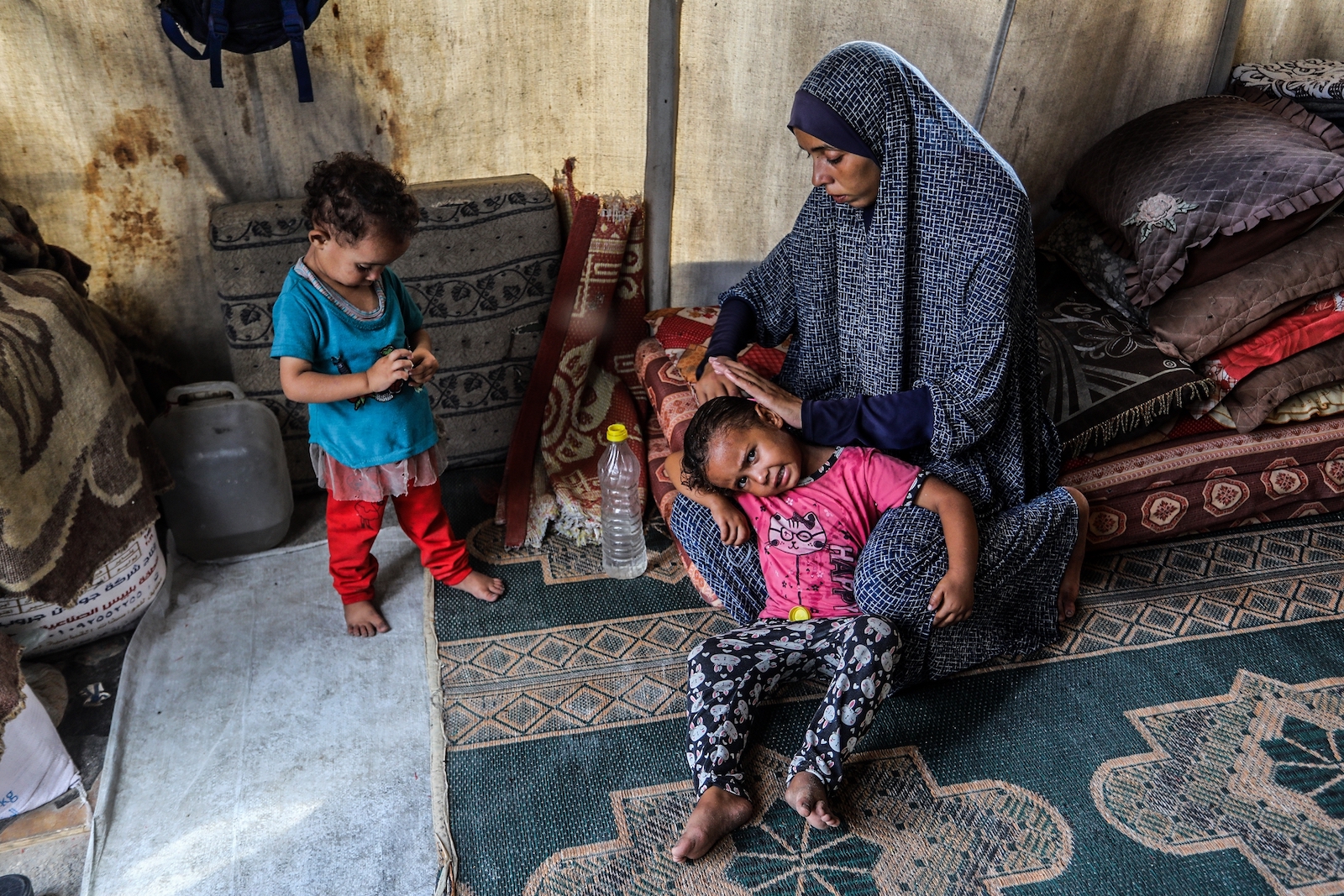
The physical damage is astonishing. UN agencies and humanitarian groups openly describe Gaza as effectively uninhabitable. Most of the enclave’s housing stock is damaged or destroyed, and the basic systems that make a place livable — water, sanitation, electricity, hospitals — have been shattered. As of now, Gaza’s Health Ministry, whose casualty data is widely treated by the UN and independent monitors as the baseline estimate, reports that around 70,000 Palestinians have been killed and nearly 170,000 wounded since October 7, 2023. Aid groups believe the true toll is even higher, given bodies still unrecovered in collapsed buildings and deaths from disease and starvation.
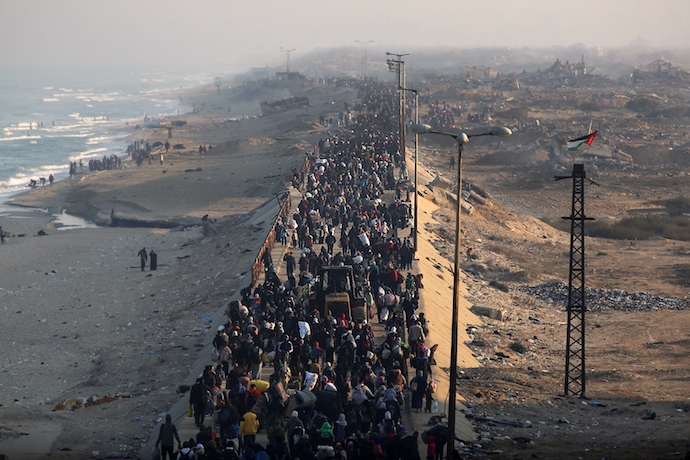
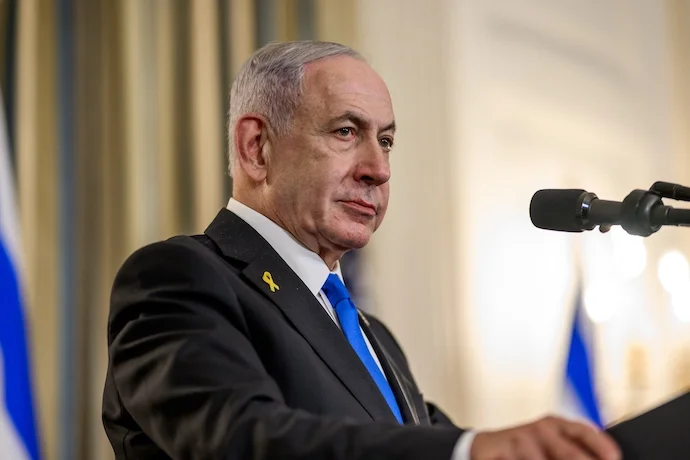
Israeli Prime Minister Benjamin Netanyahu has maintained that Israel’s objective is not permanent occupation but the destruction of Hamas’s military and governing capacity. He has repeatedly framed the mission as an effort to “free Gaza,” not to sit on it indefinitely. That has been his consistent public line through 2024 and 2025: Israel seeks to dismantle Hamas as both an armed force and a ruling authority, not to reestablish open-ended military rule. Israeli forces, however, remain deeply embedded across the Strip.
Israel’s conduct has drawn escalating global condemnation. Critics point to the scale of civilian death; repeated strikes on areas designated for aid distribution; and the severe limits on food, fuel, and medical supplies. Humanitarian agencies and UN officials argue that these restrictions have produced famine conditions, not as an accident of war but as a foreseeable result of policy.
On September 16, the UN’s Independent International Commission of Inquiry on the Occupied Palestinian Territory told the UN Human Rights Council that Israel’s campaign in Gaza constitutes genocide. The Commission argued that Israeli actions meet four of the five acts defined under the Genocide Convention: large-scale killing; causing serious bodily and mental harm; deliberately inflicting conditions of life calculated to bring about the physical destruction of Palestinians in Gaza in whole or in part; and imposing measures intended to prevent births. The Commission also cited statements from senior Israeli officials as evidence of intent.
Israel rejects the allegation outright, insisting that its operations target Hamas, not Palestinians as a people, and that it is acting in self-defense to prevent future massacres like October 7.
Western governments have begun to split in public. Some close U.S. allies, including Canada and France, have moved toward recognizing a Palestinian state and sharpened their criticism of Israel’s tactics. At the same time, the United States remains Israel’s primary security and diplomatic backer. But the U.S.-Israel relationship is no longer the uncomplicated partnership it was at the outset of the war. President Donald Trump and Prime Minister Netanyahu have openly clashed over Israeli strikes, especially operations that moved ahead without prior White House approval and continued bombardment of areas Washington had urged Israel to treat as humanitarian corridors.
What has emerged in this environment is a U.S.-brokered, roughly twenty-point framework that the White House is treating as the only plausible off-ramp. President Trump has cast himself as the guarantor of the deal, and the proposal has drawn active involvement from key regional governments — Egypt, Qatar, Jordan — along with broader diplomatic engagement from powers including France and China. The White House’s pitch is not subtle: accept this structure or risk escalation.
The core elements are straightforward on paper and brutally complicated in practice.
First, a phased ceasefire. The guns would go quiet in stages once both sides sign on, rather than through a single dramatic declaration. Second, a large-scale exchange: Hamas would release all remaining Israeli hostages — including the return of bodies — in a tightly defined window, and Israel would release large numbers of Palestinian prisoners. Negotiations in Cairo have included ratios such as 48 Israeli hostages for roughly 1,700 Palestinian prisoners in the initial tranche. Third, a staged Israeli withdrawal from most of Gaza behind agreed lines. This is not framed as an immediate full pullout of every Israeli unit. The map is still in dispute. Netanyahu has said he expects all hostages to return “in the coming days,” but Israel has not accepted a final version of the withdrawal plan, and airstrikes have continued even during partial pauses.
Fourth, the dismantling of Hamas’s armed structure and its removal as Gaza’s governing authority. Israel is insisting on disarmament and “demilitarization,” effectively the end of Hamas as a fighting force and as a government. Hamas, for its part, has begun signaling that it is prepared to step back from direct day-to-day administration, but it has not agreed to full disarmament or to erase itself from Palestinian politics.
Fifth, governance. The plan envisions Gaza being turned over to what negotiators describe as an “independent technocratic authority of Palestinians,” positioned as apolitical and backed by regional Arab governments, with direct U.S. oversight. President Trump has positioned himself — and by extension the United States — as the deal’s ultimate guarantor. But unlike early outside speculation that imagined some sort of U.S.-chaired “Board of Peace” literally running Gaza, the current language is more arm’s length: an internationally backed interim civilian administration and joint security/aid mechanism, with Arab states on board and Washington sitting above it as enforcer.
Longer term, civilian governance would be transferred to Palestinian institutions outside Hamas. In practice, that means some technocratic Palestinian body backed by the Palestinian Authority in the West Bank and vetted by Egypt, Qatar, Jordan, and the U.S. Israel’s demand is explicit: Hamas cannot be in charge in Gaza anymore. Hamas’s position is more conditional: it will consider stepping aside for an “independent technocratic authority,” but it is not pledging to surrender its weapons or abandon its claim to represent armed resistance.
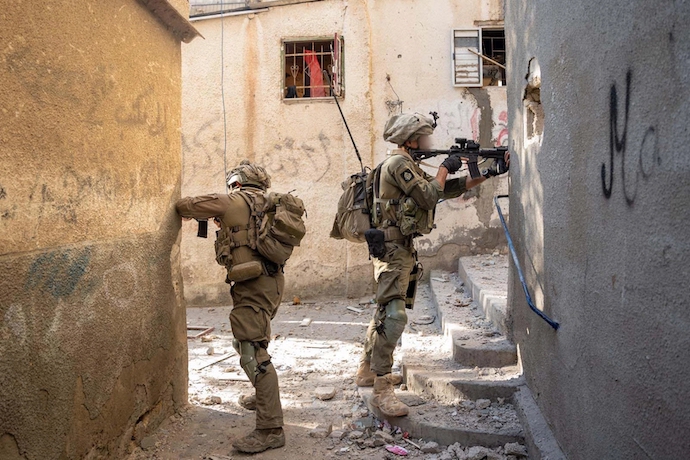
One of the most sensitive questions in these talks is amnesty. U.S. envoys have floated variations of a guarantee that lower-level Hamas members who accept coexistence and lay down arms could avoid mass arrest or assassination campaigns. Israel has not publicly embraced anything that sounds like blanket amnesty. Netanyahu’s government continues to promise that Hamas fighters and commanders will be hunted, and to insist on the Strip’s “demilitarization.”
Hamas, which has ruled Gaza since 2007 and has always blended governance, social services, and armed resistance, is now presenting itself as pragmatic. It has publicly said it is prepared to exchange all remaining hostages — including remains — and is willing to see day-to-day administration in Gaza handed to an independent technocratic authority of Palestinians. Negotiators in Cairo and Washington read this as a conditional yes to the U.S. framework. But Hamas has drawn lines: it insists on guarantees of Palestinian rights, reconstruction access, and an end to Israeli raids, and it has not agreed to surrender its arsenal or abandon its political role.
Israel’s position is just as fraught. Netanyahu recently said he hoped all hostages could return “in the coming days,” a claim clearly aimed at projecting confidence. But Israel still has not formally accepted the full package, which matters. Because Israel has not signed a binding ceasefire deal, Israeli air and ground operations have continued inside Gaza even as the White House pushes for an immediate halt.
The geography of withdrawal is also unresolved. Some versions of the plan speak of Israeli forces pulling back behind defined lines and out of most of Gaza, in stages, rather than vanishing all at once. But this is where the euphemisms fall apart.
Netanyahu has said Israel will “remain in the depth of the Gaza Strip” to guarantee its own security. That language points to some form of continuing Israeli footprint — buffer corridors, patrol zones, hardened control of crossings — and not necessarily a full exit from places like Rafah. Palestinian negotiators, predictably, object. This is one of the central fights in Cairo.
Meanwhile, Israeli settlement expansion in the occupied West Bank — including new settler outposts in areas like central Hebron — continues to draw international criticism that Israel is entrenching an illegal occupation at the very moment it is claiming to “free Gaza.” Before October 2023, Israel and Saudi Arabia were edging toward a normalization deal that would have reconfigured the region. That track is no longer dead, exactly, but it is no longer gliding forward on inevitability. The Gaza war detonated the politics around normalization and forced Arab states to recalibrate in public.
The conflict has also widened the confrontation between Israel and Iran and Iran’s network of allied militias. Hamas is one node in that network, and Tehran continues to frame Gaza as part of its broader confrontation with Israel and the United States. That is one reason Egypt, Jordan, and Qatar have stepped forward as mediators: they are furious about the humanitarian catastrophe and terrified of a regional spillover war, but also determined to shape whatever comes next so it does not detonate their own streets.
For the United States, this is the test of Donald Trump’s foreign policy doctrine in his second term. It is not isolationism. It is something more personal and more transactional. Trump has styled himself as the indispensable broker — the one figure who can deliver a ceasefire, free hostages, and install a post-Hamas governing structure in Gaza without committing the U.S. to an endless military occupation. The United States is simultaneously Israel’s main patron and the principal architect of the proposal on the table in Cairo, and Trump has not hesitated to apply public pressure on Netanyahu to move.
Where this leaves the war is precarious but undeniably different from even a few months ago. For the first time since October 2023, Israel, Hamas, and the United States are all orbiting the same rough design: a phased ceasefire; a mass hostage–prisoner exchange; a staged Israeli withdrawal from most of Gaza; and a handover of day-to-day governance to a non-Hamas Palestinian authority backed by Arab states and guaranteed by Washington. Those negotiations are happening in Cairo, with Egypt, Qatar, and Jordan acting as brokers.
But the hardest problems are still exactly the hardest problems. Hamas does not want to surrender its weapons or disappear politically. Israel does not want to fully pull out of Gaza or give up on-the-ground control. Gaza itself is physically wrecked, with more than 67,000 Palestinians dead and most civilian infrastructure in ruins.
Call it what it is: this is the closest the war has come to an endgame. It is not peace.