Media

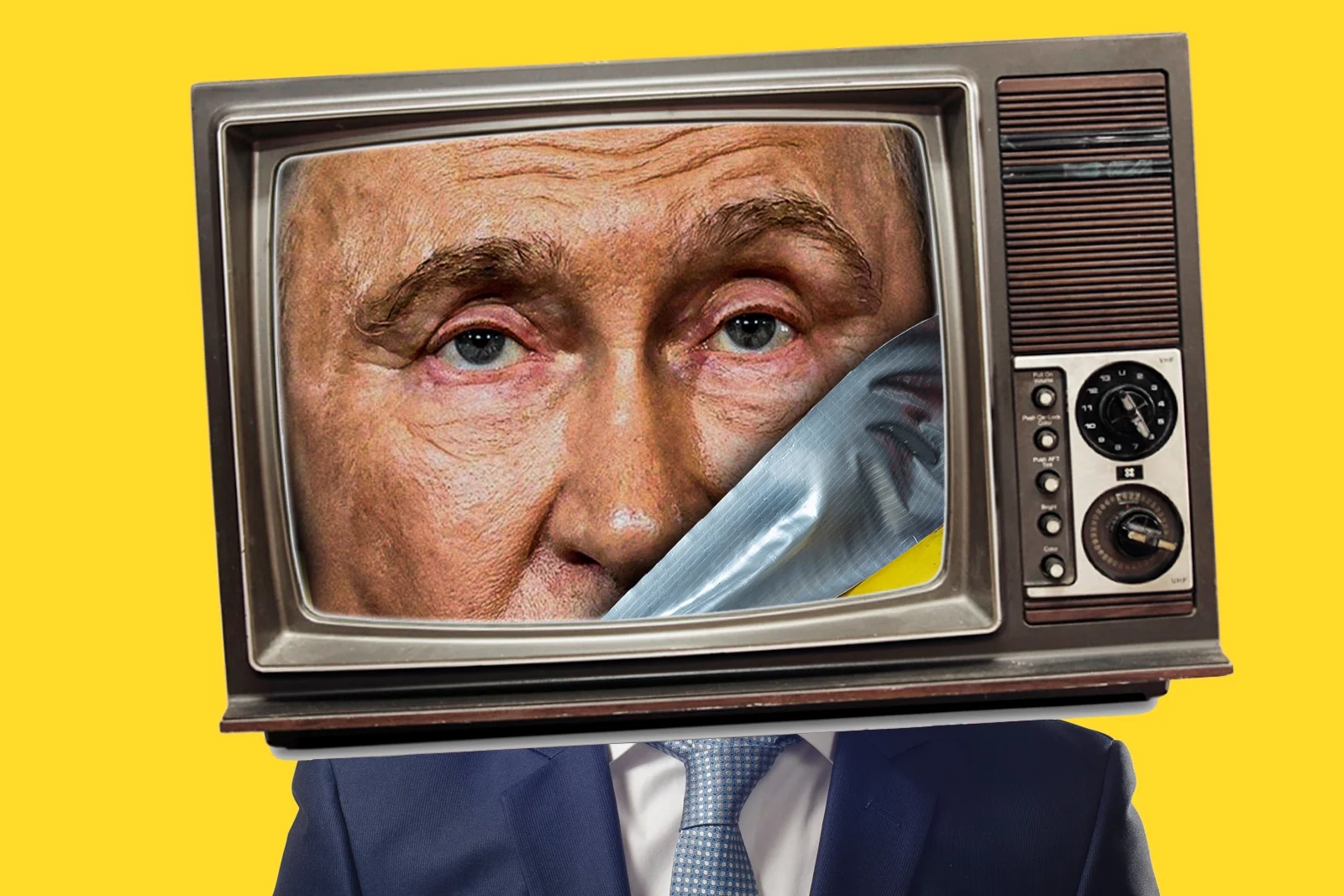
Putin’s Image Problem in Romania
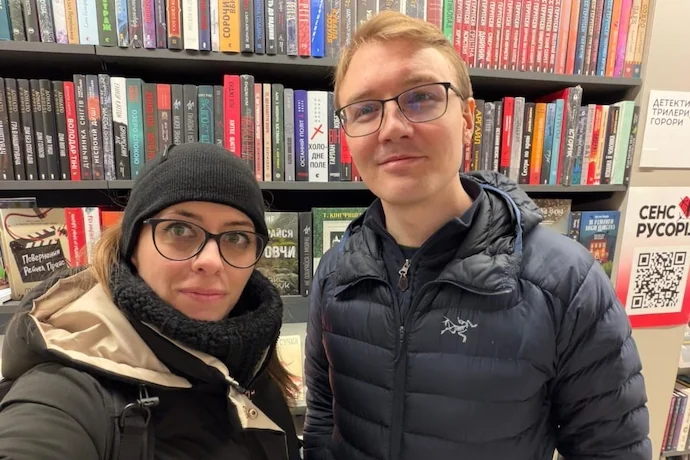
Bianca Bulgaru is a Romanian journalist and Kyiv-based correspondent for Beta News, a Romanian outlet launched in 2025. Reporting from Ukraine, she produces editorials and photo-reportage that chronicle air raids, energy strikes, and the daily logistics of civilian endurance—work that blends frontline observation with a strategic, analytical lens shaped by her background in corporate management. Her coverage also traces the contours of information warfare, examining how disinformation, identity politics, and language debates shape public opinion across the region.
At its core, Bulgaru’s reporting seeks to translate the realities of war for Romanian audiences, with a sustained focus on both the human cost of the conflict and the competing narratives that attempt to explain it.
In this interview, Scott Douglas Jacobsen speaks with Bianca Bulgaru about how Romanian public opinion reflects attitudes toward resisting Russian aggression and perceptions of Vladimir Putin. Bulgaru argues that historical memory—particularly of Russian and Soviet incursions—continues to inform contemporary anxieties across Romania’s political spectrum, now refracted through concerns about cyber operations and influence campaigns. The conversation maps a divided media ecosystem, where professional outlets emphasize verification while fringe platforms and social media reward emotionally charged narratives.
Bulgaru links these vulnerabilities to gaps in media literacy and critical thinking, before unpacking recurring Kremlin themes—most notably the framing of “traditional values” against a supposedly decadent West, often amplified through LGBTQ+ panic and referendum-era rhetoric. Recent polling from INSCOP, she notes, indicates that Putin commands minimal trust among Romanian respondents.
 Scott Douglas Jacobsen: How do Romanian opinion polls and credible public surveys reflect attitudes toward countering Russian aggression against Ukraine, as well as perceptions of Vladimir Putin and the Kremlin? Russia has invaded Romania multiple times—how does that legacy factor into current public sentiment?
Bianca Bulgaru: That historical memory shapes how many Romanians understand present events. For example, the formation of the Republic of Moldova is tied to territorial changes that followed Russian and Soviet control. After the dissolution of the USSR, Moldova declared independence, but its history remains deeply intertwined with Romania.
Today, while there is no conventional military invasion of Romania, there is concern about cyber warfare and digital influence campaigns. Many observers see ongoing efforts in the information space as part of a broader strategy of pressure and destabilization.
Jacobsen: How would you assess the current Romanian media landscape in this context, particularly its ability to counter disinformation and maintain public trust?
Credible Romanian media outlets generally support fact-based reporting and efforts to counter Russian propaganda. They attempt to provide verified information and maintain journalistic standards. However, there are also television channels that many media professionals consider unreliable, yet a portion of the population regards them as credible. Some of these outlets amplify pro-Russian narratives and anti-Ukrainian rhetoric.
The regulatory body responsible for oversight has issued fines in certain cases, but those outlets continue operating. This creates a national security concern because misinformation spreads widely.
For audiences who prioritize emotional narratives over verified facts, propaganda can be more persuasive than logical analysis. Serious media in Romania align with fact-checking and responsible reporting, but emotional messaging often travels faster and reaches deeper into certain segments of society.
Bulgaru: As you mentioned earlier, the rate of functional illiteracy in Canada is around 1 in 6. However, in Romania, around 40 percent of the population is considered illiterate. That creates vulnerability. People with limited literacy and limited critical thinking training are more likely to respond to emotional triggers than to analyze information through a logical filter.
Jacobsen: Critical thinking is often cultivated early in life and can be difficult to develop later if neglected. When it is absent, emotionally charged narratives tend to gain traction more easily—a dynamic visible not only in Romania but in other contexts, such as debates over public health in the United States. In light of that, what recurring themes do you observe in Russian narratives and their transmission into Romanian discourse?
There is a famous quotation attributed to Hypatia of Alexandria, who lived in late antiquity. She argued: “Fables should be taught as fables, myths as myths, and miracles as poetic fancies. To teach superstitions as truths is a most terrible thing. The child’s mind accepts and believes them, and only through great pain and perhaps tragedy can he be, in after years, relieved of them. In fact, men will fight for a superstition quite as quickly as for a living truth — often more so, since a superstition is so intangible you cannot get at it to refute it, but truth is a point of view, and so is changeable.”
She also argued, “All formal dogmatic religions are fallacious and must never be accepted by self-respecting persons as final.”
A mob in Alexandria killed Hypatia herself, an event often cited as a symbol of the clash between dogmatism and intellectual inquiry. Whether every detail of the traditional account is precise or not, the episode has become a cautionary tale about hostility toward independent thought.
When a society does not nurture critical thinking, it becomes easier for emotionally charged narratives to dominate. That dynamic is not unique to Romania. We have seen similar struggles elsewhere, including debates around vaccines and public health policy in the United States. When ideology overrides evidence, the consequences can become visible in public outcomes.
In that context, regarding Russian narratives, what recurring themes do you observe?
Bulgaru: The messaging operates on two levels. Internally, Russian narratives often portray Russia as morally superior—defending “traditional values” against what they describe as a decadent or morally declining West. Externally, that same framing is exported to audiences in countries like Romania.
The narrative suggests that Western Europe has lost its religious and moral foundations, particularly Christian ones.
Jacobsen: Russian discourse at times invokes “Gayropa” to depict Europe as morally decadent, contrasting it with Russia’s claim to traditional values. How does this narrative resonate in Romania?
Bulgaru: The messaging relies heavily on fear. For example, in discussions about LGBTQ+ rights, the claim is sometimes made that Europe “forces” people to join the community or pressures children to change their gender. These claims are framed in ways designed to alarm audiences who may not have detailed knowledge of the issues.
In Romania, there was a referendum on the definition of family that sought to restrict marriage to heterosexual couples constitutionally. Ultra-nationalist and ultra-Orthodox groups strongly supported it, and the campaign rhetoric was intense. In rural areas, where media literacy may be lower, emotionally charged messaging can have a significant influence.
The strategy often involves presenting social change as a threat to personal safety or cultural survival. Claims circulate that children will be “taken away” or that communities will be forcibly transformed. These fears are frequently directed more toward gay men than toward lesbians, reflecting particular stereotypes.
In many cases, the issues being debated do not directly affect the daily lives of those most alarmed by them. However, when fear-based narratives spread repeatedly, they can create the impression of imminent danger—even in places where people may have little or no direct contact with the communities being discussed.
Jacobsen: Thank you very much for the opportunity and your time, Bianca.