Media

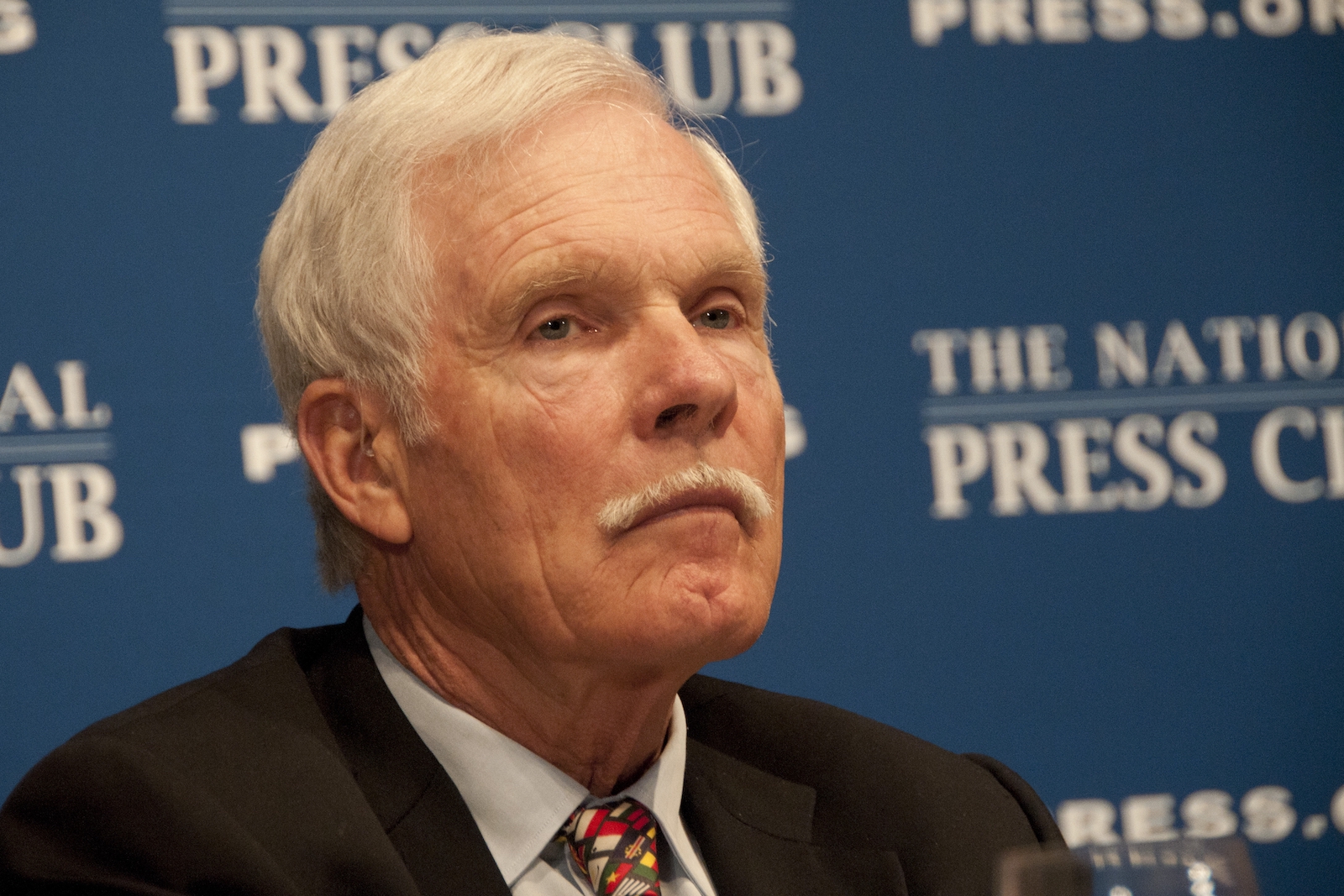
Ted Turner: The Devil Behind Cable News
Being very much the all-American figure that he was, the passing of Ted Turner was bound to enliven the cliché machine with the usual, clotty descriptions: the philanthropist, the conservationist, the yachtsman, sporting proprietor, and twenty-four-hour news pioneer. “He thought big and lived large,” observed Guardian U.S. columnist Margaret Sullivan with irritating triteness. “He was the original,” added former CNN journalist Christiane Amanpour, barely an improvement. “He made us all strive for his vision of a better world.” No doubt the hagiographers will be kept busy with words of statuary on various aspects of his life in due course.
One contribution of his should not be spared a good beating. As the man behind the first 24-hour news network, he has much explaining to do. The time when news could be rationed to times of the day did, at least, concentrate the mind on those behind producing it. Care would be taken assembling the items that would be delivered by an almost affected hauteur on air. This all changed when the news about events became news about news. Turning news into a twenty-four-hour affair had the effect of treating virtually everything before the camera into something worth mentioning and reporting about. Nothing in this world of “Chicken Noodle News” could be too trivial anymore; every item, however tedious, deserved its place in Andy Warhol’s span of 15-minute fame, from inane car chases to watching paint dry.
After Turner’s launching of the Cable News Network (CNN) in 1980, events of varied relevance and proportion could receive the around-the-clock exposure live coverage offered. Relentless, even ghoulish footage beamed across the network of the Space Shuttle Challenger as it exploded 73 seconds after taking off in 1986. In 1987, an 18-month-old Jessica McClure gave voyeuristic delight to viewers over 58 hours of coverage after falling into a well in Midland, Texas. Eyes were glued to screens, wondering if “Baby Jessica” might be rescued. The efforts of rescuers were also the subject of interest.
The argument about cable television news ever being factual is a moot point. CNN’s coverage of the 1991 Gulf War only served to illustrate how subservient a news outlet could be to official narratives. The fact that news had become a continuous and unceasing affair merely concentrated the messages of the administration of President George H.W. Bush, turning CNN into an uncritical annex of the war. Douglas Kellner’s The Persian Gulf TV War is a bracing account of this fact, a polemic against media complicity with establishment drip feed.
The U.S. military establishment had certainly learnt chastening lessons from the Vietnam War, keeping the wandering media hacks on a short lead. The unsuspecting Wolf Blitzer, who continues to labour at the network with perennial sunniness, uncritically recalls in an interview with Poynter the cultivating roles played by the panjandrums of war. “The top Pentagon leadership – Defense Secretary Dick Cheney, Chairman of the Joint Chiefs of Staff Gen. Colin Powell and other senior leaders were quickly reaching out to me – a newcomer and relatively junior reporter at the Pentagon – to brief me on the state of the war.”
This was no time for critical analysis from news reporters. A conduit, a medium, was what was needed, and a twenty-four-hour organ was there to oblige. The likes of Cheney and Powell, accordingly, “knew that everyone around the world was watching CNN and they wanted their analysis reported.” The icing of propaganda was complete with another realisation, not that Blitzer ever clicked. “It also became very evident to me the top Pentagon brass knew that Saddam Hussein’s military leaders in Baghdad were watching CNN.”
The relentless, around-the-clock broadcasts also transformed journalists within the war news cycle into minor celebrities whose contributions were often more atmospheric than revelatory. CNN’s Bernard Shaw, broadcasting from a bunker in Baghdad’s Al Rasheed Hotel as the first bombs of Operation Desert Storm fell, was hardly engaged in investigative journalism. Yet his now-famous line—“The skies over Baghdad have been illuminated”—became emblematic of the moment. Cable news coverage, in turn, helped drain the conflict of its human reality, recasting war as spectacle and simulation, something closer to a crude video game than lived catastrophe. It was this phenomenon the French sociologist Jean Baudrillard famously explored in The Gulf War Did Not Take Place (La Guerre du Golfe n’a pas eu lieu).
With CNN as pioneer, snapping upstarts were bound to follow. By January 2002, Fox News had surpassed the network in the cable news ratings despite being available in 10 million fewer homes. The news in terms of substance had ceased to exist, its undertaker being Fox CEO and chairman Roger Ailes. In its place rose the ranting hysteric and jabbering pontificator, full of what might politely be called “views.”
With constant news coverage firmly in place, the time was ripe for a figure capable of seducing and even shaping it. Donald J. Trump did so with a sinister gusto, the first politician to become the news cycle. With tacit collusion, CNN and other cognate news networks fed and oxygenated the property tycoon’s ignorance, fickleness, the capriciousness, the rants. Every comment, however asinine or vapid or vulgar, warrants mention, analysis, a comb through by perfumed pundits eager to pursue a “fact check.” A Stockholm Syndrome of sorts developed between the network and the reality television star turned president.
With news as surfeit and saturation, the Turner legacy is one we could have done without. With its tendency to feed us stories thin, uneven, and occasionally interesting in continuous fashion, the twenty-four-hour news beast is limping towards the Museum of Media Relics. The studied, rationed podcast and the conspiratorial slime of social media continue to usher it along its doomed way.