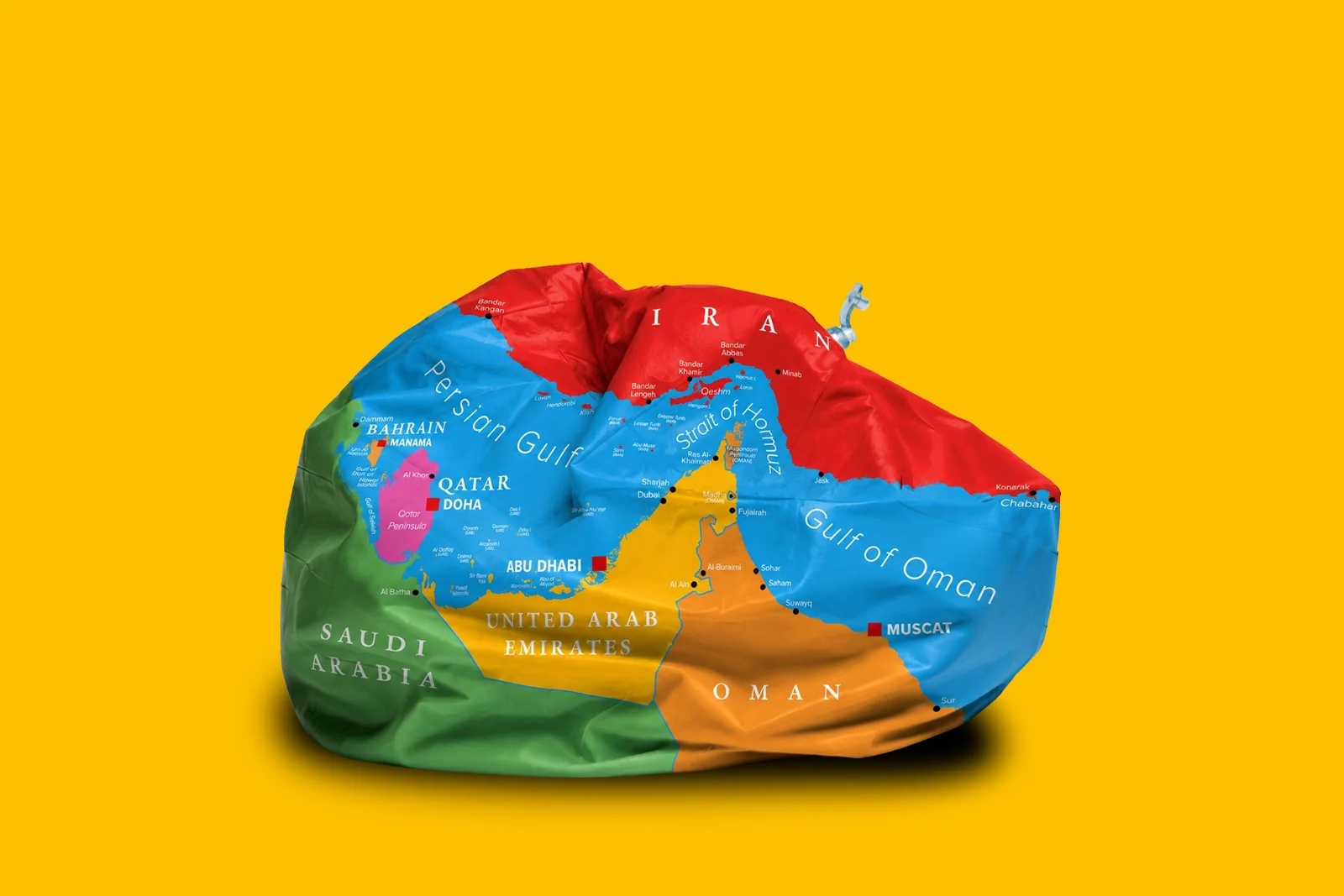

The Moment Hormuz Became Everyone’s Problem
The Strait of Hormuz crisis in 2026 did not remain merely a military confrontation for long. What began as direct exchanges among Iran, Israel, and the United States quickly rippled through shipping schedules, insurance calculations, energy markets, and the economic planning of governments far removed from the Gulf. Once maritime traffic through the Strait became uncertain, the crisis ceased to be solely about retaliation, deterrence, or coercive signaling. It became entangled with interconnected systems on which countless actors depended, but few could readily control.
The immediate belligerents were far from the only parties affected by the escalation. States reliant on Gulf energy, regional exporters, shipping companies, insurers, and energy importers all found themselves exposed to a conflict they had not initiated. They did not become decisive military participants. Instead, they were drawn into a crisis that increasingly intersected with political and economic systems carrying immense strategic weight.
By June, the parties had reached an interim Memorandum of Understanding. The agreement eased immediate tensions and restored movement through the Strait, but it did little to resolve the disputes that had triggered the confrontation. Iran–Israel tensions persisted. U.S.–Iran disagreements over sanctions, regional influence, and broader security issues remained unresolved. The memorandum functioned less as a lasting settlement than as a pause that interrupted an increasingly dangerous cycle of escalation.
Existing theories already help explain why some crises stop short of wider war. Deterrence can discourage governments from taking actions that risk broader conflict. Negotiation can produce limited agreements even between bitter adversaries. Mediation can reopen channels of communication after direct trust has collapsed.
Yet the Hormuz crisis highlights something these approaches often leave in the background.
One way of understanding what happened is through an idea I call the Rivalry Stability Range (RSR). The concept is straightforward. Rivalries can absorb a certain degree of tension, disruption, and conflict without fundamentally changing.
Most crises remain within those boundaries. Occasionally, however, a shock extends beyond the rivals themselves and begins to affect the wider political and economic systems surrounding them. When that occurs, governments confront new pressures, and the ways they negotiate, deter one another, or manage a crisis can begin to shift. The Hormuz crisis provides a clear illustration of this dynamic.
As insecurity spread around the Strait, commercial actors adjusted their behavior almost immediately. Shipping companies rerouted vessels. Some delayed transit altogether. Insurance premiums rose as underwriters reassessed risk. Energy markets reacted sharply to uncertainty surrounding one of the world’s most important maritime chokepoints.
The Strait never closed completely, and energy flows did not cease. But that misses the more important point. Passage through Hormuz was no longer treated as routine. That alone introduced friction into systems built on predictability. Markets, governments, and businesses were suddenly forced to make decisions under conditions of uncertainty about access, delays, and liability.
The decision by the Trump administration to impose a blockade on vessels linked to Iranian ports added another layer of complexity. What had already become a tense maritime environment increasingly assumed the characteristics of a broader contest over access and freedom of movement. Maritime access was no longer merely affected by the conflict; it had become one of its central arenas.
From there, the consequences spread outward in visible, though uneven, ways. Energy markets reacted. Insurance costs climbed. Shipping firms began treating uncertainty as a condition requiring active management rather than temporary disruption. Qatar’s force majeure declarations on some LNG contracts reflected this broader pattern. These developments mattered not simply because they unsettled markets, but because they demonstrated that disruption was affecting the movement of actual cargo rather than merely shaping expectations.
It would be easy to overstate what this means. The economic effects were far from uniform. Some actors adapted quickly. Others absorbed additional costs. Still others sought alternative suppliers or shipping routes. The result was not a coordinated global economic response but a dispersed series of adjustments that nevertheless pointed in the same direction: growing friction in the movement of maritime trade and energy supplies.
The most interesting question is not whether economic disruption “caused” diplomacy. There is simply not enough evidence to support that conclusion. It is one thing to observe disruption; it is quite another to demonstrate that disruption directly altered bargaining positions or reshaped political decisions in a clearly traceable way.
What does seem clearer is that the crisis became progressively more difficult to contain within the original triangle of Iran, Israel, and the United States. As maritime disruption expanded, governments, businesses, and organizations well beyond the immediate confrontation found themselves increasingly exposed to its consequences.
Importantly, these actors did not respond as a unified bloc. Gulf states were concerned with maintaining export continuity while also navigating shifting regional alignments. Asian importers focused primarily on securing energy supplies. European governments emphasized energy stability alongside the broader geopolitical risks. Shipping firms and insurers, meanwhile, concentrated on maintaining commercial continuity. Their priorities often overlapped, but they were rarely identical.
The Hormuz crisis reveals something that discussions of escalation frequently overlook. There are moments when the “outside” ceases to be outside in any meaningful sense. Not because external actors enter the conflict directly, but because they become increasingly bound to its continuation.
That distinction matters. It suggests that the consequences of escalation are not confined to the states exchanging military force or political threats. At times, a crisis expands beyond its principal participants and begins to reshape the wider political and economic systems around them. As that happens, the environment surrounding the crisis changes. The number of actors with a stake in its management grows, even if those actors pursue very different—and sometimes competing—objectives.
None of this means that broader exposure automatically creates pressure for peace. In some circumstances, wider involvement may encourage further escalation rather than restraint. Governments may deploy military assets to safeguard commercial routes. Economic pressure may reinforce coercive policies instead of encouraging compromise. Much depends on how governments and other stakeholders choose to respond.
The events in Hormuz also illustrate another concept at the heart of the theory: what I call a Rivalry Tipping Point (RTP). Some crises grow beyond their familiar patterns and generate new risks that governments can no longer ignore. Their significance lies not only in the fighting itself, but also in the way they reshape the broader political and economic environment surrounding a rivalry. That wider perspective is often missing from conventional discussions of how contemporary crises unfold.
The lesson of Hormuz is not that economic disruption produced diplomacy or that commercial pressure alone yielded the June memorandum. Such claims would go beyond the available evidence. The more modest—and more persuasive—conclusion is that the crisis had outgrown the immediate confrontation before any political exit became possible.
Sometimes the consequences of escalation do not merely follow a crisis; they become part of the crisis itself. The Hormuz episode suggests that once disruption spreads through systems on which many actors depend, the “outside” becomes part of the crisis long before it becomes part of the conflict.