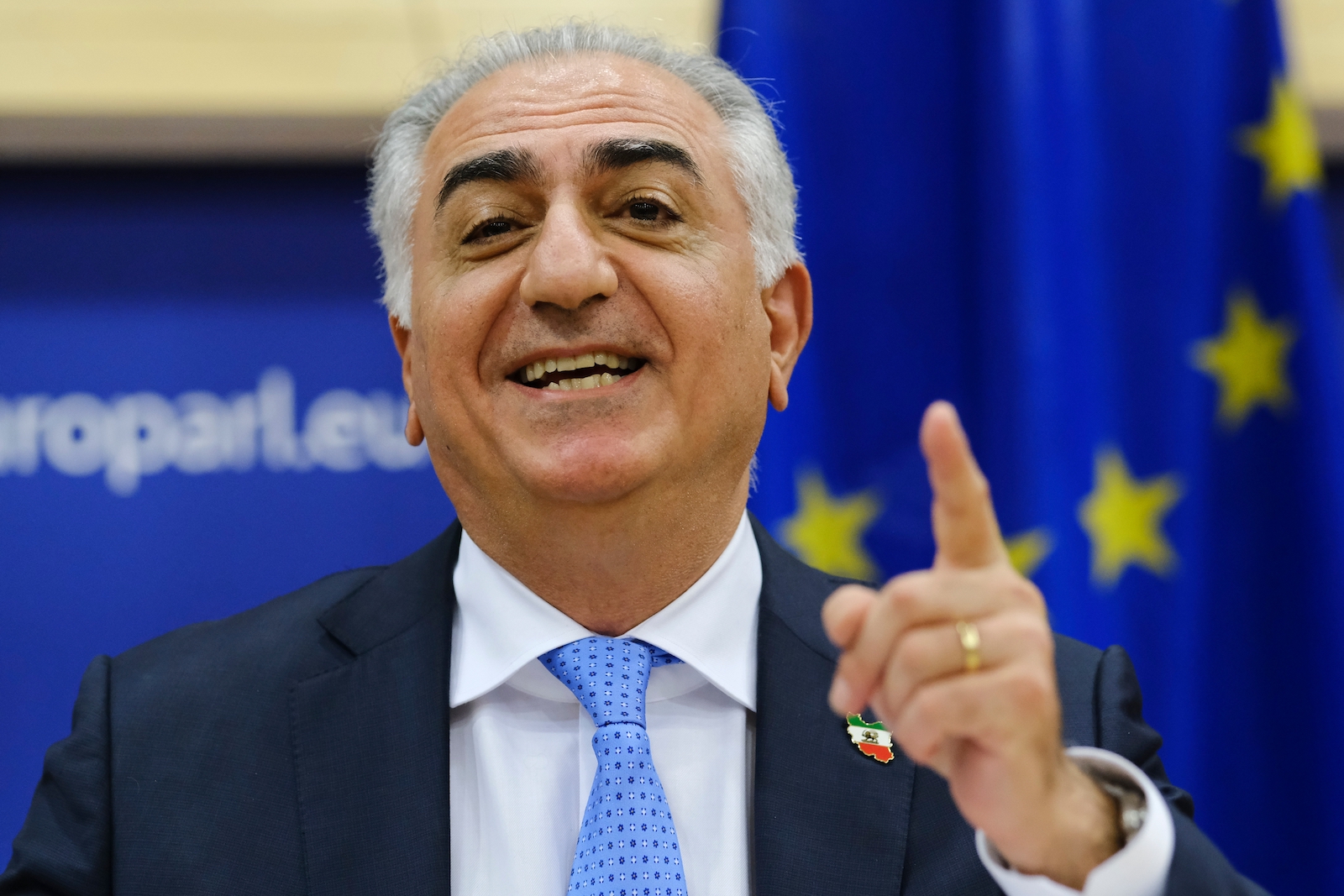

Why Reza Pahlavi Is Not the Successor to Cyrus the Great
Iran’s political memory has never been kind to tyrants. The country’s deepest historical affections have not been reserved for those who ruled by fear or inheritance, but for rulers who governed with restraint, cultural sensitivity, and something approaching moral imagination.
No figure embodies that lineage more fully than Cyrus II of the Achaemenid dynasty. Between 559 and 530 BCE, Cyrus was not merely a conqueror assembling territory by force; he was the architect of an imperial idea rooted in tolerance, pluralism, and respect for human dignity. The Cyrus Cylinder, often regarded as the world’s first charter of human rights, stands as a civilizational rebuke to the logic of domination. It speaks of religious freedom, the abolition of forced servitude, and the honoring of local traditions rather than their eradication.
This legacy is not confined to antiquity. It lives, very uncomfortably, in modern Iran. Each year on October 29, thousands of Iranians quietly defy the Islamic Republic by traveling to Pasargadae to honor Cyrus at his tomb. These gatherings are not nostalgic ceremonies. They function as civic rituals of dissent — public commitments to a vision of Iran that predates and outlives clerical rule. The regime understands this threat instinctively. Security forces routinely surround the site, block roads, and disperse crowds, fearing that remembrance might sharpen into revolt. During the nationwide uprising of 2022, calls once again echoed for mass gatherings at Pasargadae, accompanied by chants that tied Cyrus’s ancient vision of freedom to contemporary demands for political liberation.
It is this symbolism that Reza Pahlavi, the son of Iran’s last Shah, has tried to appropriate. On the anniversary of Cyrus’s death, he posted publicly on X, presenting himself as a modern inheritor of the ancient monarch’s legacy, as though legitimacy might be inherited through poetic association. He referred to Pasargadae as a “national sanctuary of monarchy” and praised his father’s role in restoring the tomb, framing this act as evidence of dynastic continuity. He carried this narrative abroad, repeating it at public appearances, including a ceremony in Toronto, where he invoked Cyrus not as history, but as political branding.
The problem is not merely rhetorical excess. It is a historical contradiction. The Pahlavi dynasty bears no resemblance to the moral universe Cyrus represented. Under Mohammad Reza Pahlavi, Iran devolved into a one-party state by 1975, with the Rastakhiz Party rendered the only legal political expression. The SAVAK intelligence service became synonymous with torture, disappearances, and institutionalized terror. Reza Shah, the dynasty’s founder and Pahlavi’s grandfather, was ultimately forced from power by Allied forces due in part to his flirtations with Nazi Germany. The family’s legacy is not enlightened rule, but repression, corruption, and grotesque inequality — the very pressures that eventually detonated into the 1979 revolution. To drape that record in the language of Cyrus is not homage; it is historical theater, staged for political convenience.
More striking still is Reza Pahlavi’s absence from the lived reality of Iran’s modern resistance. He played no role in the protests of 2017–2018, nor in the mass uprising of 2022, where ordinary Iranians faced bullets, prisons, and gallows. Yet he continues to present himself as a destined savior, performing statesmanship from the safety of exile, mistaking visibility for leadership. He has never explicitly repudiated his father’s authoritarianism. He has never articulated a concrete institutional plan for dismantling the current theocracy or building democratic governance.
Instead, he has openly claimed to maintain contact with senior figures inside the Islamic Revolutionary Guard Corps — the very institution that has crushed dissent, executed protesters, and enforced the regime’s most brutal policies. His political theory appears to hinge on elite defections, as if architects of repression could be coaxed into becoming guardians of democracy. Even more damaging, his advisory circle reportedly includes individuals tied both to the clerical establishment and to the SAVAK, collapsing any pretense of ethical distance from Iran’s most discredited institutions.
There is, in truth, no democratic foundation to his project. What he offers is not popular sovereignty, but dynastic resurrection — monarchy repackaged as modern salvation, restoration dressed in the language of reform.
Iran, however, has already learned this lesson the hard way. One autocracy once replaced another, and in the process etched into the nation’s consciousness a bitter clarity: freedom does not grow from inherited titles, but from collective struggle. Western policymakers, however, remain strangely susceptible to romantic illusions — the fantasy of a “Persian prince” returning to rescue his homeland, astride a white horse and guided by ancient virtue. This is not political analysis; it is Orientalist nostalgia. Until that fantasy is abandoned, meaningful engagement with Iran’s genuine democratic forces will remain clouded by delusion.
The future Iran strains toward bears no resemblance to a restored throne. Its horizon is not behind it, but ahead — not in royal retracing, but in popular reinvention. Change will not descend by decree, nor arrive wrapped in inherited legitimacy. It will be built from resistance: disciplined, organized, and deeply rooted in sacrifice. Iranians have already paid in rivers of blood and oceans of endurance, resisting two forms of tyranny — one clothed in imperial regalia and military splendor, the other wrapped in clerical robes and revolutionary rhetoric. The path toward liberty is not a royal avenue paved in gold, but an uneven road carved by those willing to risk everything in defiance of power.
If Cyrus the Great were alive today, he would almost certainly reject this attempted inheritance. He would likely see in Reza Pahlavi not a successor, but an opportunist — someone borrowing ancient light to disguise modern ambition. No crown, however polished, can compete with the harder authority born of collective will. Iran’s future does not belong to ghosts of monarchy, nor to exiled heirs trading in symbolism. It belongs to those who remain — the daughters and sons of Iran who, without crowns or titles, are forging a political tradition that answers not to bloodlines, but to dignity, courage, and the quiet, stubborn promise of dawn.